Cactaceae
Plains Pricklypear: Complete Care Guide
Opuntia polyacantha
Plant in full sun in very well-drained sandy, rocky or clay-loam soil. Once established it needs almost no watering and survives harsh winters as long as the soil never stays wet. It grows slowly and needs no fertiliser.
Every 21 days
Direct sun
° - °C
% - %
Categories
What is Plains pricklypear?
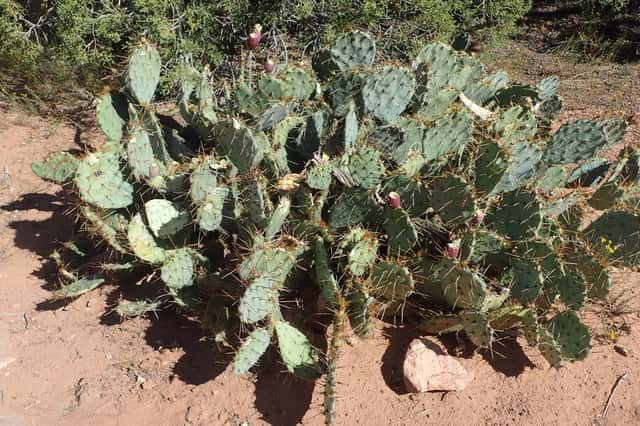
Plains pricklypear (Opuntia polyacantha) is a easy-care plant from the Cactaceae family. Plains pricklypear (Opuntia polyacantha) is a low, mat-forming cactus native to the Great Plains and western North America, from southern Canada to northern Mexico. It forms mats 10 to 30 cm tall and up to 3 metres wide of oval blue-green pads covered in spines and glochids. In spring and early summ...
Plains pricklypear grows up to 30cm, spread of 300cm, watering every 21 days. It is not suitable for indoor environments and safe for pets.
Unlike many tropical plants, Plains pricklypear tolerates watering mistakes. Best for beginners. Unlike many popular species, Plains pricklypear is safe to keep around pets.
How to Care for Plains pricklypear?
TLDR: Plains pricklypear needs Direct sun, watering every 21 days, and temperatures between 15-30°C with 40-70% humidity.
How Often Should You Water Plains pricklypear?
Water every 3 weeks or less during the growing season, and only when the soil is completely dry. Do not water in winter: cold combined with wet soil rots the pads.
How Much Light Does Plains pricklypear Need?
Full sun all day. In shade it stretches and flowers poorly.
What Is the Best Soil for Plains pricklypear?
Poor, sharply drained soil: sandy, rocky or gravelly clay loam. Avoid soils that hold water.
What Pot Should You Use for Plains pricklypear?
Wide, shallow terracotta pot with large drainage holes and a gritty cactus mix; it does best in the ground in a rock garden
What Is Plains pricklypear and Where Does It Come From?
Plains pricklypear (Opuntia polyacantha) is a low, mat-forming cactus native to the Great Plains and western North America, from southern Canada to northern Mexico. It forms mats 10 to 30 cm tall and up to 3 metres wide of oval blue-green pads covered in spines and glochids. In spring and early summer it opens silky yellow flowers, sometimes magenta or red. It is one of the most cold-hardy cacti.
How to Propagate Plains pricklypear?
Pads (stem segments)
Use tongs or folded newspaper: the glochids stick to skin and are hard to remove.
- 1 Detach a pad using tongs or heavy gloves
- 2 Let the cut end dry and callus for a few days
- 3 Set the pad on sand or cactus mix with the base slightly buried
- 4 Do not water until roots form
Materials needed:
Seed
Very slow: propagating from pads is far more practical.
- 1 Remove seeds from ripe fruit and clean them
- 2 Sow on the surface of a sandy mix
- 3 Keep lightly moist in a bright spot
- 4 Transplant the seedlings carefully once established
Materials needed:
How Big Does Plains pricklypear Grow?
TLDR: Plains pricklypear can reach up to 30cm tall with Slow growth rate.
Max height
30cm
Spread
3.0m
Growth rate
Slow
Foliage
Evergreen
Plant Uses
Ornamental
Great for decoration
Edible
Can be consumed
Medicinal
Medicinal properties
Medicinal Uses
- Used as a medicinal plant by Native American peoples
Culinary Uses
- Ripe fruit eaten raw with skin and seeds removed, or made into jelly or candy
- Tender young spring pads, de-spined, cooked or fried
Is your plant showing symptoms?
Click on the symptom to discover possible causes:
What Diseases Commonly Affect Plains pricklypear?
TLDR: Plains pricklypear is susceptible to 2 known diseases. Monitor regularly for early detection.
Sap-sucking Insects
Caterpillars
Caterpillars are the larval stage of moths and butterflies that feed voraciously on plant foliage, stems, flowers, and fruits. Common species include cabbage loopers, tomato hornworms, armyworms, and cutworms. These pests can cause extensive damage by consuming large amounts of plant tissue in a short time. They vary in size from small (1/4 inch) to large (5 inches), with colors ranging from green to brown, often featuring stripes or spots. Caterpillars are highly mobile and can quickly spread throughout gardens, making them one of the most destructive common pests.
Fun Facts
In some areas it makes up more than half of the black-tailed prairie dog's winter diet.
After wildfires burn off its spines, pronghorn eagerly eat it.
A clump 30 cm across can have roots spreading up to 1.8 metres.
Frequently asked questions
Is Opuntia polyacantha cold hardy?
How often should I water plains pricklypear?
Is plains pricklypear toxic?
How do I propagate it?
Compare with similar plants
| Attribute | Difficulty | Light | Watering | Pet Safe |
|---|---|---|---|---|
| Field Maple | Easy | Bright indirect | 14d | ✓ |
| Iberian Houseleek | Easy | Direct sun | 14d | ✓ |
| Silver Birch | Easy | Direct sun | 14d | ✓ |
| Common Blanketflower | Easy | Direct sun | 10d | ✓ |





