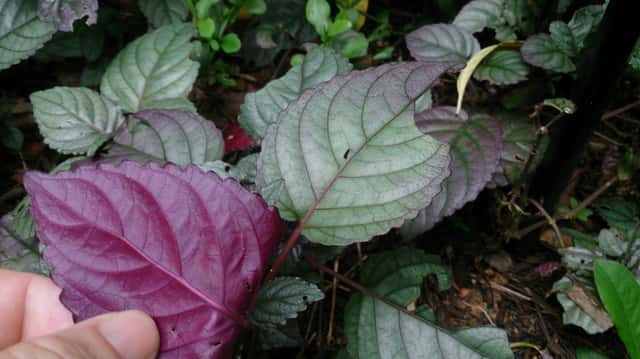
Acanthaceae
Purple Waffle Plant (Hemigraphis alternata)
Hemigraphis alternata
Provide bright indirect light, keep soil consistently moist without waterlogging, and maintain humidity between 50-70%. Fertilize monthly in spring and summer. Non-toxic to pets and children.
Every 4 days
Partial shade
13° - 27°C
50% - 70%
Categories
What is Purple Waffle Plant?
Purple Waffle Plant (Hemigraphis alternata) is a medium-care plant from the Acanthaceae family. Hemigraphis alternata is a striking tropical ground cover from Southeast Asia, prized for its uniquely textured, waffle-like leaves that display metallic silvery-green tops and vivid purple undersides. A member of the Acanthaceae family, it is one of NASA's top-rated air-purifying plants, effectivel...
Purple Waffle Plant grows up to 23cm, spread of 45cm, watering every 4 days, 13°C – 27°C, 50–70% humidity. It is suitable for indoor environments and safe for pets.
Unlike many popular species, Purple Waffle Plant is safe to keep around pets. Without adequate drainage, root rot can develop within 8 days.
How to Care for Purple Waffle Plant?
TLDR: Purple Waffle Plant needs Partial shade, watering every 4 days, and temperatures between 13-27°C with 50-70% humidity.
How Often Should You Water Purple Waffle Plant?
Water when the top quarter inch of soil has dried out. Keep soil consistently moist but never soggy. Reduce watering in winter when growth slows.
How Much Light Does Purple Waffle Plant Need?
Place in bright, indirect light for the best leaf coloration. An east-facing window is ideal. Avoid harsh direct afternoon sun which can scorch and fade the purple coloring.
What Is the Best Soil for Purple Waffle Plant?
Use rich, loamy potting mix with plenty of organic matter. Mix in peat moss or sphagnum for better moisture retention and drainage. Maintain slightly acidic pH between 6.1-6.9.
What Pot Should You Use for Purple Waffle Plant?
Choose a wide, shallow pot with drainage holes. Terracotta or ceramic pots work well as they allow slight moisture evaporation. A hanging basket is also excellent for showcasing the trailing purple foliage.
Care Schedule
Fertilize
Every 30 days
Misting
Every 2 days
Rotate
Every 14 days
Repot
Every 1460 days
What Is Purple Waffle Plant and Where Does It Come From?
Hemigraphis alternata is a striking tropical ground cover from Southeast Asia, prized for its uniquely textured, waffle-like leaves that display metallic silvery-green tops and vivid purple undersides. A member of the Acanthaceae family, it is one of NASA's top-rated air-purifying plants, effectively filtering volatile organic compounds like benzene and toluene from indoor air. While it produces tiny white bell-shaped flowers, it is grown primarily for its dramatic foliage.
How to Propagate Purple Waffle Plant?
Stem cutting
Use clean, sharp scissors. Cuttings root faster in warm conditions above 20C.
- 1 Cut a 4-6 inch stem just below a leaf node
- 2 Remove the lower leaves leaving 2-3 at the top
- 3 Place the cutting in a glass of clean water or moist potting mix
- 4 Cover with a plastic bag to maintain humidity
- 5 Keep in bright indirect light and change water weekly
Materials needed:
Division
Best done during spring repotting. Each division should have at least 3-4 healthy stems.
- 1 Remove the plant from its pot during repotting
- 2 Gently separate the root ball into sections, each with stems and roots
- 3 Plant each division in its own pot with fresh potting mix
- 4 Water well and keep in a warm, humid spot
Materials needed:
Stem layering
This plant naturally roots at nodes that touch soil, making layering very easy.
- 1 Select a healthy trailing stem with visible nodes
- 2 Pin the node into a pot of moist soil while still attached to the mother plant
- 3 Keep the soil moist and wait for roots to develop at the node
- 4 Once rooted, cut the new plant from the mother plant
Materials needed:
How Big Does Purple Waffle Plant Grow?
TLDR: Purple Waffle Plant can reach up to 23cm tall with Slow growth rate.
Max height
23cm
Spread
45cm
Growth rate
Slow
Foliage
Evergreen
Plant Uses
Ornamental
Great for decoration
Air Purifying
Improves air quality
Ground Cover
Soil coverage
Is your plant showing symptoms?
Click on the symptom to discover possible causes:
What Diseases Commonly Affect Purple Waffle Plant?
TLDR: Purple Waffle Plant is susceptible to 7 known diseases. Monitor regularly for early detection.
Root Rot
Root rot is a serious fungal disease that affects the root system of plants, causing them to decay and die. It is primarily caused by overwatering, poor drainage, or soil-borne fungi such as Pythium, Phytophthora, Rhizoctonia, and Fusarium. The disease thrives in waterlogged conditions where roots are deprived of oxygen, making them susceptible to fungal infection.
Powdery Mildew
Powdery mildew is a common fungal disease caused by various fungi species including Erysiphe, Podosphaera, Oïdium, and Leveillula. It affects over 10,000 plant species worldwide. The disease thrives in warm, dry climates with high humidity and appears as a distinctive white powdery coating on plant surfaces.
Scale Insects
Scale insects are small sap-sucking pests that appear as brown, shell-like bumps on plant stems and leaves. There are over 25 species, divided into armored (hard) and unarmored (soft) scales. They feed by piercing plant tissue and extracting sap, which weakens the plant and can lead to yellowing, stunted growth, and even death if left untreated. They also excrete honeydew, which attracts ants and promotes sooty mold growth.
Whiteflies
Whiteflies are small, soft-bodied, winged insects closely related to aphids and mealybugs. They are moth-like in appearance, about 1/16 inch long, triangular in shape, and gray-white in color. These sap-sucking pests feed on plant tissue, causing yellowing, stunted growth, and wilting. They also excrete honeydew, which attracts ants and promotes sooty mold growth. Whiteflies can transmit serious plant viruses.
Meaning & Symbolism
Associated with creativity and spiritual healing; in some Asian cultures linked to protection and good fortune
Fun Facts
NASA ranked the Purple Waffle Plant among its top 5 air-purifying houseplants for filtering toxic compounds
The waffled leaf texture is not just decorative — it increases surface area for better air purification
In its native Southeast Asian habitat, it spreads indefinitely as a ground cover, rooting at every stem node that touches soil
Despite its tropical origins, it produces only tiny, inconspicuous white flowers and is grown almost entirely for its foliage
Frequently asked questions
How often should I water my Purple Waffle Plant?
Is the Purple Waffle Plant toxic to cats and dogs?
Why is my Purple Waffle Plant losing its purple color?
Does the Purple Waffle Plant really purify the air?
Compare with similar plants
| Attribute | Difficulty | Light | Watering | Pet Safe |
|---|---|---|---|---|
| Dark Fieldcap | Medium | Low light | 2d | ⚠️ |
| Azalea | Medium | Partial shade | 3d | ⚠️ |
| Muriel's Bamboo | Medium | Partial shade | 3d | ✓ |
| Bougainvillea | Medium | Direct sun | 7d | ⚠️ |




