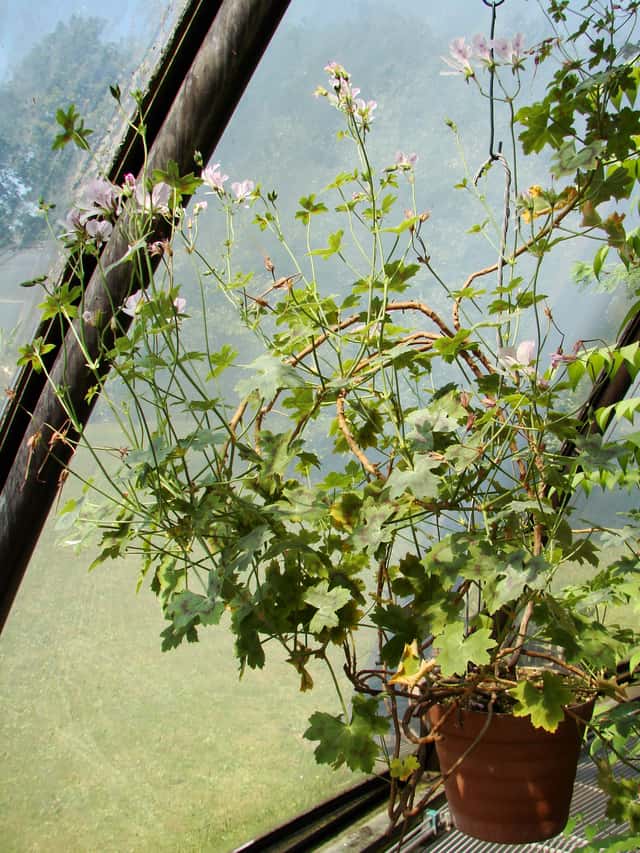
Geraniaceae
Regal Storksbill (Pelargonium grandiflorum): Complete Care Guide
Pelargonium grandiflorum
Moderate difficulty plant. Requires bright direct sunlight (minimum 6 hours daily), weekly watering with well-draining soil, and mild temperatures between 6°C and 24°C. Blooms in spring and early summer. WARNING: toxic to pets.
Every 7 days
Bright indirect
6° - 24°C
30% - 50%
Categories
What is Regal Storksbill?
Regal Storksbill (Pelargonium grandiflorum) is a medium-care plant from the Geraniaceae family. Pelargonium grandiflorum, commonly known as the Regal Pelargonium or Regal Storksbill, is an ornamental plant native to the Cape region of South Africa. It stands out for its large, showy flowers in shades of white, pink, red, and purple, often featuring distinctive dark markings on the upper petals...
Regal Storksbill grows up to 90cm, spread of 60cm, watering every 7 days, 6°C – 24°C, 30–50% humidity. It is suitable for indoor environments and not safe for pets.
Without precautions, ingestion can cause irritation in pets. Keep out of reach of cats and dogs. Without adequate drainage, root rot can develop within 14 days.
How to Care for Regal Storksbill?
TLDR: Regal Storksbill needs Bright indirect, watering every 7 days, and temperatures between 6-24°C with 30-50% humidity.
How Often Should You Water Regal Storksbill?
Water when the top inch of soil feels dry, approximately every 7 days. Avoid waterlogging and never leave standing water in the saucer, as excess moisture causes root rot. In winter, reduce frequency to every 15 days.
How Much Light Does Regal Storksbill Need?
Place in a location with full sun or bright partial shade, with at least 6 hours of direct sunlight daily. South or east-facing positions are ideal. Avoid deep shade, as it significantly reduces flowering.
What Is the Best Soil for Regal Storksbill?
Use well-draining soil with pH between 6.0 and 8.0. Mix equal parts garden soil, coarse sand, and perlite. Ensure pots have adequate drainage holes to prevent waterlogging.
What Pot Should You Use for Regal Storksbill?
Terracotta or ceramic pots with generous drainage holes. Ideal size is 20-25 cm in diameter. Avoid dark plastic pots that overheat the substrate.
Care Schedule
Fertilize
Every 14 days
Rotate
Every 30 days
Repot
Every 365 days
What Is Regal Storksbill and Where Does It Come From?
Pelargonium grandiflorum, commonly known as the Regal Pelargonium or Regal Storksbill, is an ornamental plant native to the Cape region of South Africa. It stands out for its large, showy flowers in shades of white, pink, red, and purple, often featuring distinctive dark markings on the upper petals. It is one of the most elegant species in the Pelargonium genus, widely grown in pots and temperate gardens.
How to Propagate Regal Storksbill?
Stem Cutting
Use clean, sterilized tools. Avoid overwatering during rooting. After 3-4 weeks, gently tug the cutting to check for resistance — a sign that roots have formed.
- 1 Cut a healthy stem of 8-10 cm just below a leaf node
- 2 Remove lower leaves, keeping only 2-3 leaves at the top
- 3 Let the cut end dry for a few hours to callus
- 4 Apply rooting hormone to the base of the cutting
- 5 Plant in a moist peat and perlite mix
- 6 Keep in indirect light at 18-22°C
Materials needed:
Seed Sowing
Seed propagation is less common than cuttings. Prefer cuttings to maintain the varietal characteristics of the parent plant.
- 1 Sow seeds in a tray with moist, well-draining substrate
- 2 Cover lightly with a thin layer of substrate
- 3 Maintain temperature between 21-24°C for germination
- 4 Transplant seedlings when they have 2-3 true leaves
Materials needed:
How Big Does Regal Storksbill Grow?
TLDR: Regal Storksbill can reach up to 90cm tall with Medium growth rate.
Max height
90cm
Spread
60cm
Growth rate
Medium
Foliage
Deciduous
Warning: Toxic Plant
This plant can be toxic if ingested. Keep out of reach of:
Plant Uses
Ornamental
Great for decoration
Is your plant showing symptoms?
Click on the symptom to discover possible causes:
What Diseases Commonly Affect Regal Storksbill?
TLDR: Regal Storksbill is susceptible to 11 known diseases. Monitor regularly for early detection.
Root Rot
Root rot is a serious fungal disease that affects the root system of plants, causing them to decay and die. It is primarily caused by overwatering, poor drainage, or soil-borne fungi such as Pythium, Phytophthora, Rhizoctonia, and Fusarium. The disease thrives in waterlogged conditions where roots are deprived of oxygen, making them susceptible to fungal infection.
Gray Mold (Botrytis Blight)
Gray mold, caused by the fungus Botrytis cinerea, is one of the most common fungal diseases in plants. It affects over 200 plant species, including ornamentals, vegetables, fruits, and houseplants. The disease thrives in cool, humid conditions with poor air circulation, causing grayish spots and soft rot on infected tissues.
Rust
Rust is a common fungal disease caused by fungi in the order Pucciniales that affects a wide variety of plants. The disease gets its name from the characteristic orange, yellow, or reddish-brown pustules that appear on leaves, resembling metal rust. This obligate fungal parasite requires living plants to survive and can cause significant economic losses in agricultural crops.
Alternaria Leaf Spot
Alternaria leaf spot is a common fungal disease caused by Alternaria solani and Alternaria alternata that affects a wide range of plants including tomatoes, potatoes, brassicas, and ornamentals. The disease thrives in warm, humid conditions and can cause significant crop damage if left untreated. Spores overwinter on plant debris and can attach to seeds, making complete elimination difficult.
Meaning & Symbolism
A symbol of floral elegance and sophistication, the Regal Pelargonium is frequently associated with nobility and aesthetic refinement in European gardens.
Fun Facts
Native to the Cape region of South Africa, the Regal Pelargonium is the result of hybridizations between wild Pelargonium species carried out in the 19th century
Unlike common geraniums, the Regal Pelargonium prefers cooler temperatures and needs a winter dormancy period to bloom abundantly in spring
Its flowers can reach up to 5-8 cm in diameter, making it one of the largest-flowered pelargoniums grown in gardens
The compounds geraniol and linalool found in the plant, while toxic to pets, are widely used in the perfumery and cosmetics industry
Frequently asked questions
How often should I water the Regal Pelargonium?
Is the Regal Pelargonium toxic to pets?
Why is my Regal Pelargonium not flowering?
When and how should I prune the Regal Pelargonium?
What is the best soil for Regal Pelargonium?
Compare with similar plants
| Attribute | Difficulty | Light | Watering | Pet Safe |
|---|---|---|---|---|
| Dark Fieldcap | Medium | Low light | 2d | ⚠️ |
| Azalea | Medium | Partial shade | 3d | ⚠️ |
| Muriel's Bamboo | Medium | Partial shade | 3d | ✓ |
| Bougainvillea | Medium | Direct sun | 7d | ⚠️ |




