Ericaceae
Keyhole heath: Pet-Safe Plant
Erica mauritanica
Grow outdoors in full sun, using an acidic, sandy, and very well-drained substrate, similar to its native fynbos habitat. Keep the soil slightly moist without waterlogging, and avoid letting the roots dry out completely. Prefer rainwater or low-lime water, as Ericaceae do not tolerate lime. Fertilize sparingly with products specifically for acid-loving plants. Lightly prune after flowering to maintain a compact shape, avoiding cuts into old wood.
Every 4 days
Bright indirect
5° - 28°C
40% - 70%
Categories
What is Keyhole heath?
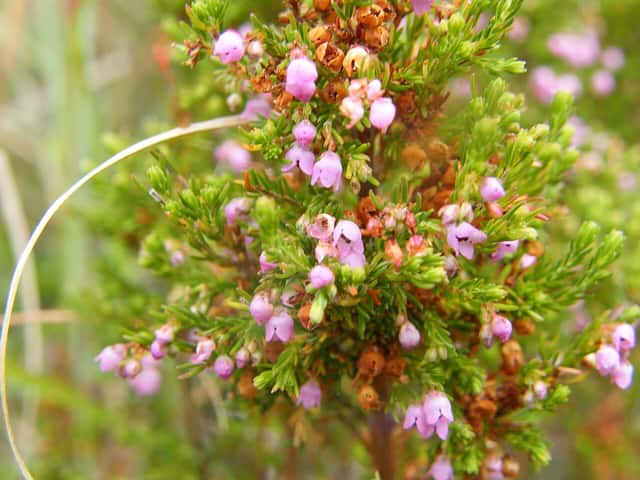
Keyhole heath (Erica mauritanica) is a hard-care plant from the Ericaceae family. Erica mauritanica, commonly known as keyhole heath, is an evergreen shrub in the Ericaceae family, endemic to the fynbos of the Western Cape Province in South Africa, with possible occurrences in the Eastern Cape. It was described by Linnaeus in 1759 and has Erica capensis and Erica rhodantha as syn...
Keyhole heath grows up to watering every 4 days, 5°C – 28°C, 40–70% humidity. It is not suitable for indoor environments and safe for pets.
Unlike easy-care plants, Keyhole heath demands constant attention to humidity and light. Not recommended for beginners. Unlike many popular species, Keyhole heath is safe to keep around pets.
How to Care for Keyhole heath?
TLDR: Keyhole heath needs Bright indirect, watering every 4 days, and temperatures between 5-28°C with 40-70% humidity.
How Often Should You Water Keyhole heath?
Water regularly to keep the substrate slightly moist but never waterlogged; prefer rainwater or lime-free water.
How Much Light Does Keyhole heath Need?
Prefers full sun or high light levels, with good air circulation around the plant.
What Is the Best Soil for Keyhole heath?
Use an acidic, sandy, and very well-drained substrate, such as peat mixed with coarse sand, and avoid calcareous (lime-rich) soils.
What Pot Should You Use for Keyhole heath?
Clay or plastic pot with good drainage holes and acidic substrate for acid-loving plants; the pot should be kept outdoors.
What Is Keyhole heath and Where Does It Come From?
Erica mauritanica, commonly known as keyhole heath, is an evergreen shrub in the Ericaceae family, endemic to the fynbos of the Western Cape Province in South Africa, with possible occurrences in the Eastern Cape. It was described by Linnaeus in 1759 and has Erica capensis and Erica rhodantha as synonyms. Like many Cape heaths, it features fine, needle-like foliage and small tubular flowers that appear primarily in spring. It is a Mediterranean climate species, adapted to poor, acidic soils, dry summers, and wet winters. In nature, it is an outdoor plant suitable for naturalistic gardens or Cape native plant collections. In cultivation, it requires bright light, excellent drainage, and careful watering, as its fine roots are sensitive to both waterlogging and complete drying out.
How to Propagate Keyhole heath?
Semi-hardwood cuttings
Use sterilized substrate and do not allow to dry out, as Erica cuttings are delicate.
- 1 Cut tips of young branches about 5 cm long, without flowers.
- 2 Remove the leaves from the lower part of the cutting.
- 3 Place the cuttings in an acidic, sandy, and moist substrate.
- 4 Keep in a bright spot without direct sun, maintaining constant humidity.
- 5 Transplant when roots and new growth appear.
Materials needed:
Sowing
The seeds are very fine; water from below to avoid displacing them.
- 1 Prepare an acidic, fine, and moist substrate.
- 2 Scatter the tiny seeds on the surface without covering them.
- 3 Keep the substrate moist in a bright, cool location.
- 4 Transplant the seedlings when they are large enough.
Materials needed:
How Big Does Keyhole heath Grow?
TLDR: Keyhole heath can reach up to ?cm tall with Medium growth rate.
Growth rate
Medium
Foliage
Evergreen
Plant Uses
Ornamental
Great for decoration
Is your plant showing symptoms?
Click on the symptom to discover possible causes:
What Diseases Commonly Affect Keyhole heath?
TLDR: Keyhole heath is susceptible to 5 known diseases. Monitor regularly for early detection.
Root Rot
Root rot is a serious fungal disease that affects the root system of plants, causing them to decay and die. It is primarily caused by overwatering, poor drainage, or soil-borne fungi such as Pythium, Phytophthora, Rhizoctonia, and Fusarium. The disease thrives in waterlogged conditions where roots are deprived of oxygen, making them susceptible to fungal infection.
Grey Mould
Aphids
Aphids are small, soft-bodied, pear-shaped insects (1/16 to 1/8 inch long) that feed by sucking nutrient-rich sap from plants. They reproduce rapidly and can quickly weaken plants, causing distorted growth and transmitting plant viruses. Aphids come in various colors including green, black, red, yellow, brown, and gray. They secrete honeydew, a sticky substance that attracts ants and encourages sooty mold growth.
Underwatering
Underwatering or drought stress is a physiological disorder that occurs when the amount of water a plant loses through transpiration exceeds the amount its roots can absorb from the soil. This leads to cellular dehydration and various visible symptoms that can compromise plant health and productivity.
Compare with similar plants
| Attribute | Difficulty | Light | Watering | Pet Safe |
|---|---|---|---|---|
| Azalea | Medium | Partial shade | 3d | ⚠️ |
| Sticky false asphodel | Hard | Bright indirect | 1d | ✓ |
| Creeping bentgrass | Hard | Direct sun | 3d | ✓ |
| Mountain Laurel | Medium | Partial shade | 7d | ⚠️ |