Anacampserotaceae
Spiderweb Anacampseros (Anacampseros arachnoides)
Anacampseros arachnoides
A drought-tolerant succulent that thrives on neglect. Requires direct sunlight, fast-draining sandy soil, and very infrequent watering. Avoid humidity and never mist the leaves.
Every 21 days
Direct sun
10° - 27°C
20% - 50%
Categories
What is Spiderweb Anacampseros?
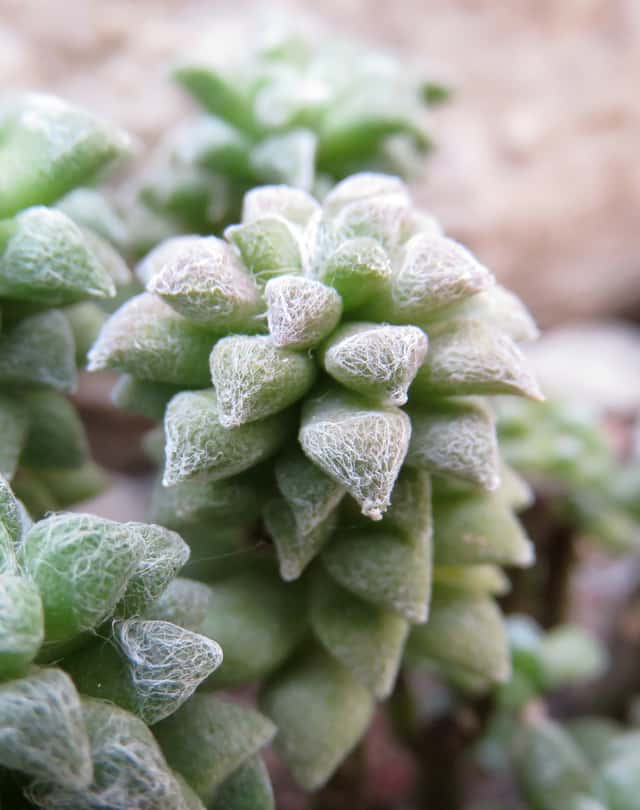
Spiderweb Anacampseros (Anacampseros arachnoides) is a medium-care plant from the Anacampserotaceae family. Anacampseros arachnoides is a small, charming succulent native to South Africa, prized for its compact rosettes adorned with fine white thread-like trichomes that resemble a spider's web. It belongs to the family Anacampserotaceae and thrives in bright, direct sunlight with minimal watering.
Spiderweb Anacampseros grows up to 15cm, spread of 30cm, watering every 21 days, 10°C – 27°C, 20–50% humidity. It is suitable for indoor environments and safe for pets.
Unlike many popular species, Spiderweb Anacampseros is safe to keep around pets. Without adequate drainage, root rot can develop within 42 days.
How to Care for Spiderweb Anacampseros?
TLDR: Spiderweb Anacampseros needs Direct sun, watering every 21 days, and temperatures between 10-27°C with 20-50% humidity.
How Often Should You Water Spiderweb Anacampseros?
Water only when the soil is completely dry — roughly every 3 weeks in summer and once a month in winter. Never let the plant sit in standing water.
How Much Light Does Spiderweb Anacampseros Need?
Place in a south-facing window with at least 4 hours of direct sunlight daily. Insufficient light causes etiolation and loss of the characteristic web-like trichomes.
What Is the Best Soil for Spiderweb Anacampseros?
Use cactus/succulent mix amended with extra perlite at a 2:1 ratio. Fast drainage is critical to prevent root rot.
What Pot Should You Use for Spiderweb Anacampseros?
Unglazed terracotta or ceramic pots with drainage holes. Avoid glass or metal containers that trap moisture.
Care Schedule
Fertilize
Every 30 days
Repot
Every 365 days
What Is Spiderweb Anacampseros and Where Does It Come From?
Anacampseros arachnoides is a small, charming succulent native to South Africa, prized for its compact rosettes adorned with fine white thread-like trichomes that resemble a spider's web. It belongs to the family Anacampserotaceae and thrives in bright, direct sunlight with minimal watering.
How to Propagate Spiderweb Anacampseros?
Leaf cutting
Patience is key — rooting can be slow. Do not bury the leaf, simply rest it on the substrate.
- 1 Gently twist a healthy leaf from the base of the rosette
- 2 Allow the cut end to callus for 2-3 days
- 3 Place leaf on top of slightly moist cactus mix
- 4 Keep in bright indirect light and wait
- 5 Water lightly only once a sprout appears
Materials needed:
Offset division
Offsets root more reliably than leaf cuttings.
- 1 Identify offsets at the base of the mother plant
- 2 Carefully separate with a sterilized knife
- 3 Allow to dry for 1-2 days
- 4 Plant in dry mix and water lightly after 1 week
Materials needed:
How Big Does Spiderweb Anacampseros Grow?
TLDR: Spiderweb Anacampseros can reach up to 15cm tall with Slow growth rate.
Max height
15cm
Spread
30cm
Growth rate
Slow
Foliage
Evergreen
Plant Uses
Ornamental
Great for decoration
Is your plant showing symptoms?
Click on the symptom to discover possible causes:
What Diseases Commonly Affect Spiderweb Anacampseros?
TLDR: Spiderweb Anacampseros is susceptible to 6 known diseases. Monitor regularly for early detection.
Root Rot
Root rot is a serious fungal disease that affects the root system of plants, causing them to decay and die. It is primarily caused by overwatering, poor drainage, or soil-borne fungi such as Pythium, Phytophthora, Rhizoctonia, and Fusarium. The disease thrives in waterlogged conditions where roots are deprived of oxygen, making them susceptible to fungal infection.
Overwatering
Overwatering occurs when plants receive too much water, depriving roots of oxygen and causing root rot. This environmental stress is one of the most common causes of houseplant death, as waterlogged soil prevents roots from breathing and functioning properly.
Mealybugs
Mealybugs are small, soft-bodied insects covered with a white, waxy, cottony material. They are common pests of houseplants and outdoor plants in mild climates. These sap-sucking insects feed on plant tissue, causing damage, stunted growth, and can lead to plant death if left untreated. They produce sticky honeydew which attracts sooty mold.
Scale Insects
Scale insects are small sap-sucking pests that appear as brown, shell-like bumps on plant stems and leaves. There are over 25 species, divided into armored (hard) and unarmored (soft) scales. They feed by piercing plant tissue and extracting sap, which weakens the plant and can lead to yellowing, stunted growth, and even death if left untreated. They also excrete honeydew, which attracts ants and promotes sooty mold growth.
Meaning & Symbolism
Resilience and enduring affection — the name Anacampseros derives from Greek meaning "plant that brings back love."
Fun Facts
The white web-like trichomes are not ordinary hairs — they are specialized structures that help reflect intense South African sunlight and reduce water loss.
The genus name Anacampseros comes from Greek and means "plant that brings back love," historically used in love potions in southern Africa.
Its flowers only open on sunny days and last just a few hours, making each bloom a fleeting spectacle.
Frequently asked questions
How often should I water Spiderweb Anacampseros?
Is Anacampseros arachnoides toxic to pets?
Why are my plant's leaves mushy and translucent?
How much light does it need?
How often should I repot it?
Compare with similar plants
| Attribute | Difficulty | Light | Watering | Pet Safe |
|---|---|---|---|---|
| Dark Fieldcap | Medium | Low light | 2d | ⚠️ |
| Azalea | Medium | Partial shade | 3d | ⚠️ |
| Muriel's Bamboo | Medium | Partial shade | 3d | ✓ |
| Bougainvillea | Medium | Direct sun | 7d | ⚠️ |




