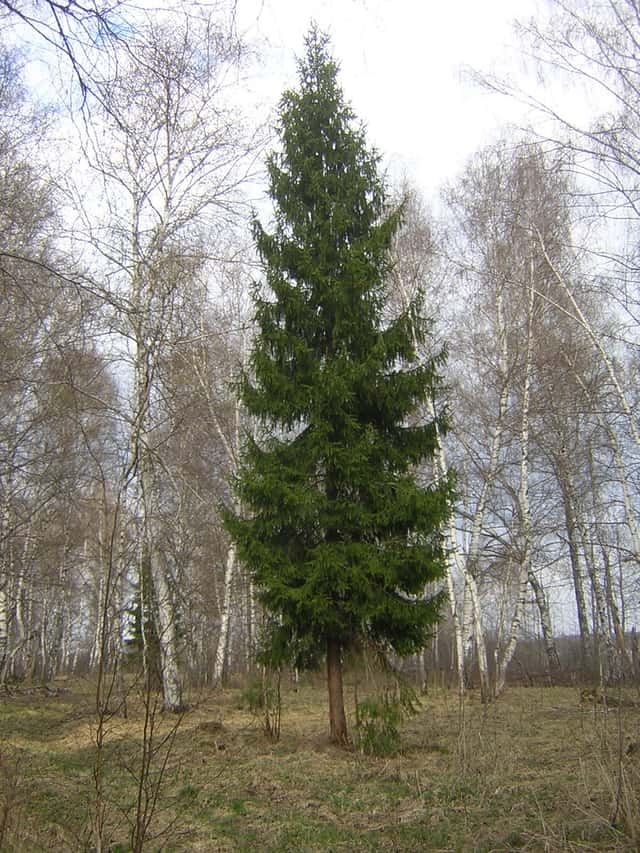
Pinaceae
Spruce (Picea Genus)
Picea
A tree for cold to temperate climates that struggles in humid heat. Plant in full sun, in moist, well-drained, acidic to neutral soil rich in organic matter, away from soggy hollows and compacted ground. The roots are shallow: soak deeply once a week in summer when it does not rain. It needs almost no pruning; if you want, trim only the new tips in spring. Drought-stressed trees are prone to canker and mites.
Every 7 days
Bright indirect
° - °C
% - %
Categories
What is Spruce?
Spruce (Picea) is a easy-care plant from the Pinaceae family. Picea is the spruce genus, conifers in the pine family (Pinaceae). There are about 37 species of evergreen trees from the cold and temperate regions of the Northern Hemisphere, including the taiga. The needles are four-sided and sit on small pegs that stay on the twig after the needles fall, leaving...
Spruce grows up to watering every 7 days. It is not suitable for indoor environments and safe for pets.
Unlike many tropical plants, Spruce tolerates watering mistakes. Best for beginners. Unlike many popular species, Spruce is safe to keep around pets.
How to Care for Spruce?
TLDR: Spruce needs Bright indirect, watering every 7 days, and temperatures between 15-30°C with 40-70% humidity.
How Often Should You Water Spruce?
Water well after planting and watch it for a week. In summer, give a deep soak once a week if less than 25 mm (1 in) of rain falls. Established trees need less, but the soil should stay evenly moist: shallow roots feel drought.
How Much Light Does Spruce Need?
Full sun, 6 or more hours a day. In shade it grows sparse and drops its lower branches.
What Is the Best Soil for Spruce?
Moist, well-drained, acidic to neutral soil with organic matter. Avoid compacted soil and ground that waterlogs.
What Pot Should You Use for Spruce?
Large species belong in the ground, at least 6 m from buildings. Dwarf cultivars take a large pot with drainage holes and free-draining mix, watered often in summer.
What Is Spruce and Where Does It Come From?
Picea is the spruce genus, conifers in the pine family (Pinaceae). There are about 37 species of evergreen trees from the cold and temperate regions of the Northern Hemisphere, including the taiga. The needles are four-sided and sit on small pegs that stay on the twig after the needles fall, leaving it rough. The cones hang downward and measure 2 to 20 cm. Size ranges from 10-20 m in the smallest species to nearly 100 m in Sitka spruce, and there are dwarf cultivars for gardens and pots. They live 100 to 600 years. Norway spruce (Picea abies) is Europe's traditional Christmas tree.
How to Propagate Spruce?
Seed
Dwarf and colored cultivars do not come true from seed; nurseries propagate them by grafting.
- 1 Collect seed from ripe cones in autumn
- 2 Keep the seed in the fridge in a bag of damp sand for 4-6 weeks
- 3 Sow in spring 0.5 cm deep in light, acidic mix
- 4 Keep moist and in part shade during the first year
- 5 Plant out after 2-3 years
Materials needed:
How Big Does Spruce Grow?
TLDR: Spruce can reach up to ?cm tall with Medium growth rate.
Foliage
Evergreen
Plant Uses
Ornamental
Great for decoration
Edible
Can be consumed
Culinary Uses
- Young spring tips used in syrup, tea or as a seasoning
- Spruce beer brewed from the tips
Is your plant showing symptoms?
Click on the symptom to discover possible causes:
What Diseases Commonly Affect Spruce?
TLDR: Spruce is susceptible to 7 known diseases. Monitor regularly for early detection.
Canker
Canker is a disease caused by various fungi and bacteria that create necrotic, sunken areas on bark of branches, stems, and trunks. Pathogens enter through wounds and natural openings, especially when plants are stressed. Canker can gradually weaken or kill branches by disrupting water and nutrient flow.
Rust
Rust is a common fungal disease caused by fungi in the order Pucciniales that affects a wide variety of plants. The disease gets its name from the characteristic orange, yellow, or reddish-brown pustules that appear on leaves, resembling metal rust. This obligate fungal parasite requires living plants to survive and can cause significant economic losses in agricultural crops.
Spider Mites
Spider mites are tiny arachnids (less than 1/20 inch long) related to spiders and ticks that feed on plant sap. They thrive in hot, dry conditions and can cause significant damage to ornamental and vegetable plants. During severe infestations, crop losses can reach 14% or higher as these pests disrupt vital plant processes including photosynthesis, carbon dioxide absorption, and transpiration.
Aphids
Aphids are small, soft-bodied, pear-shaped insects (1/16 to 1/8 inch long) that feed by sucking nutrient-rich sap from plants. They reproduce rapidly and can quickly weaken plants, causing distorted growth and transmitting plant viruses. Aphids come in various colors including green, black, red, yellow, brown, and gray. They secrete honeydew, a sticky substance that attracts ants and encourages sooty mold growth.
Fun Facts
Old Tjikko, a Norway spruce clone in Sweden, is about 9,550 years old.
Spruce is the standard wood for guitar and violin soundboards.
Captain Cook brewed spruce beer to keep scurvy away from his crew.
Frequently asked questions
What is the difference between a spruce and a fir?
Does spruce grow in hot climates?
Why are the lower branches dying?
Can you eat spruce?
Compare with similar plants
| Attribute | Difficulty | Light | Watering | Pet Safe |
|---|---|---|---|---|
| Field Maple | Easy | Bright indirect | 14d | ✓ |
| Iberian Houseleek | Easy | Direct sun | 14d | ✓ |
| Silver Birch | Easy | Direct sun | 14d | ✓ |
| Common Blanketflower | Easy | Direct sun | 10d | ✓ |





