Euphorbiaceae
Euphorbia (Spurge) Genus: Complete Houseplant Care Guide
Euphorbia
Most houseplant Euphorbias are low-maintenance and drought-tolerant. They need bright, direct or intense indirect light, very well-draining soil, and infrequent watering. Overwatering is the primary cause of death. Handle with gloves — the latex sap is a skin and eye irritant. Keep away from children and pets.
Every 14 days
Bright indirect
10° - 35°C
30% - 60%
Categories
What is Spurge?
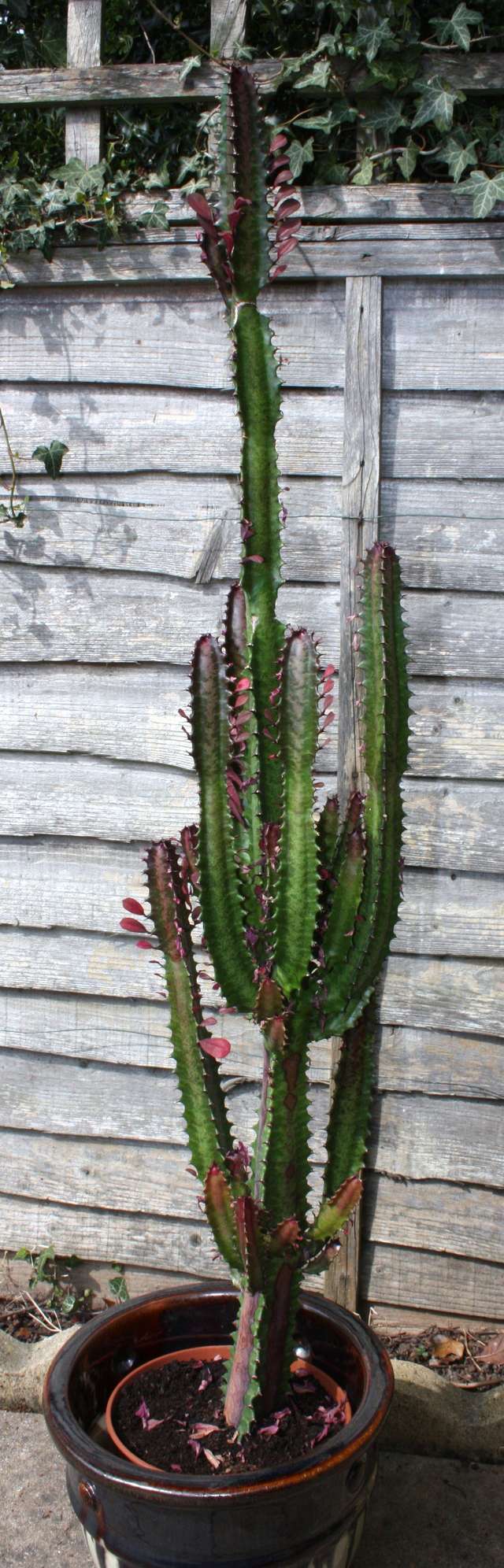
Spurge (Euphorbia) is a medium-care plant from the Euphorbiaceae family. Euphorbia is one of the largest and most diverse plant genera on Earth, comprising over 2,000 species distributed across every continent except Antarctica. The genus spans an extraordinary range of forms — from spiny, cactus-like succulents such as Euphorbia trigona (African milk tree) and Euphorbia...
Spurge grows up to 3.0m, spread of 150cm, watering every 14 days, 10°C – 35°C, 30–60% humidity. It is suitable for indoor environments and not safe for pets.
Without precautions, ingestion can cause irritation in pets. Keep out of reach of cats and dogs. Without adequate drainage, root rot can develop within 28 days.
How to Care for Spurge?
TLDR: Spurge needs Bright indirect, watering every 14 days, and temperatures between 10-35°C with 30-60% humidity.
How Often Should You Water Spurge?
Water every 10–14 days in the growing season (spring–summer), reducing to every 3–4 weeks in autumn and winter. Always allow the soil to dry out completely between waterings — succulents within the genus will rot quickly in persistently moist soil. Never let the pot sit in water.
How Much Light Does Spurge Need?
Euphorbias need bright light — most prefer 2,000–10,000 lux, with direct morning sun being ideal for succulent forms. Indoor specimens should be placed in the brightest spot available: a south- or west-facing window. Insufficient light causes etiolation (stretching) and loss of colour in variegated forms.
What Is the Best Soil for Spurge?
Use a coarse, fast-draining mix designed for cacti and succulents, or blend standard potting soil 50/50 with perlite or coarse grit. A pH of 6.0–7.5 is suitable. Drainage holes are non-negotiable — waterlogging kills Euphorbias quickly.
What Pot Should You Use for Spurge?
A pot with drainage holes is essential. Terracotta or unglazed clay pots are ideal — they are breathable and help the soil dry faster between waterings, reducing root rot risk. For large, upright specimens (like E. trigona), choose a heavy, stable pot to prevent tipping.
Care Schedule
Fertilize
Every 90 days
Rotate
Every 30 days
Repot
Every 730 days
What Is Spurge and Where Does It Come From?
Euphorbia is one of the largest and most diverse plant genera on Earth, comprising over 2,000 species distributed across every continent except Antarctica. The genus spans an extraordinary range of forms — from spiny, cactus-like succulents such as Euphorbia trigona (African milk tree) and Euphorbia milii (crown of thorns), to the iconic holiday plant Euphorbia pulcherrima (poinsettia), and even large shrubs and trees. Despite their wildly different appearances, all Euphorbias share one defining trait: a milky white latex sap that is toxic to humans, cats, and dogs, causing skin and mucous membrane irritation on contact. Native to Africa, the Americas, and Eurasia, Euphorbias have adapted to deserts, tropical forests, and temperate meadows alike, making them among the most ecologically versatile plants known.
How to Propagate Spurge?
Stem Cutting
Never skip the callousing step — placing a fresh cut directly in soil causes rot. Rinse any latex off skin immediately with soapy water.
- 1 Put on gloves — the latex sap is a severe irritant
- 2 Cut a healthy stem 8–15 cm long with a clean, sharp blade
- 3 Allow the cut end to callous in a dry, shaded spot for 24–48 hours until the latex stops flowing
- 4 Insert the calloused end into dry cactus/succulent mix
- 5 Water sparingly after 2 weeks and place in bright indirect light
Materials needed:
How Big Does Spurge Grow?
TLDR: Spurge can reach up to 3.0m tall with Slow growth rate.
Max height
3.0m
Spread
1.5m
Growth rate
Slow
Foliage
Evergreen
Warning: Toxic Plant
This plant can be toxic if ingested. Keep out of reach of:
Plant Uses
Ornamental
Great for decoration
Medicinal
Medicinal properties
Medicinal Uses
- Traditional use of diluted latex in some African and Asian folk medicine (expert-only — raw latex is toxic)
Is your plant showing symptoms?
Click on the symptom to discover possible causes:
What Diseases Commonly Affect Spurge?
TLDR: Spurge is susceptible to 6 known diseases. Monitor regularly for early detection.
Root Rot
Root rot is a serious fungal disease that affects the root system of plants, causing them to decay and die. It is primarily caused by overwatering, poor drainage, or soil-borne fungi such as Pythium, Phytophthora, Rhizoctonia, and Fusarium. The disease thrives in waterlogged conditions where roots are deprived of oxygen, making them susceptible to fungal infection.
Mealybugs
Mealybugs are small, soft-bodied insects covered with a white, waxy, cottony material. They are common pests of houseplants and outdoor plants in mild climates. These sap-sucking insects feed on plant tissue, causing damage, stunted growth, and can lead to plant death if left untreated. They produce sticky honeydew which attracts sooty mold.
Scale Insects
Scale insects are small sap-sucking pests that appear as brown, shell-like bumps on plant stems and leaves. There are over 25 species, divided into armored (hard) and unarmored (soft) scales. They feed by piercing plant tissue and extracting sap, which weakens the plant and can lead to yellowing, stunted growth, and even death if left untreated. They also excrete honeydew, which attracts ants and promotes sooty mold growth.
Spider Mites
Spider mites are tiny arachnids (less than 1/20 inch long) related to spiders and ticks that feed on plant sap. They thrive in hot, dry conditions and can cause significant damage to ornamental and vegetable plants. During severe infestations, crop losses can reach 14% or higher as these pests disrupt vital plant processes including photosynthesis, carbon dioxide absorption, and transpiration.
Meaning & Symbolism
Euphorbia symbolises resilience, perseverance, and protection across many cultures. In parts of Africa, Euphorbia hedges were planted around homesteads as natural protective barriers. The toxic sap, paradoxically, has a long history of medicinal use in controlled doses in traditional medicine.
Fun Facts
The genus Euphorbia contains over 2,000 species, making it one of the five largest plant genera on Earth
All Euphorbias produce a milky white latex sap — the same sap makes the poinsettia (E. pulcherrima) and the African milk tree (E. trigona) closely related despite looking nothing alike
Euphorbia milii (crown of thorns) is believed to be the plant from which Jesus's crown of thorns was made — it was historically common in the Middle East
Some Euphorbia species have evolved to look almost identical to cacti through convergent evolution, despite being completely unrelated
Frequently asked questions
Is Euphorbia toxic to cats and dogs?
How often should I water my Euphorbia?
How much light does Euphorbia need?
Why is my Euphorbia turning yellow?
Can I propagate Euphorbia from cuttings?
Compare with similar plants
| Attribute | Difficulty | Light | Watering | Pet Safe |
|---|---|---|---|---|
| Dark Fieldcap | Medium | Low light | 2d | ⚠️ |
| Azalea | Medium | Partial shade | 3d | ⚠️ |
| Muriel's Bamboo | Medium | Partial shade | 3d | ✓ |
| Bougainvillea | Medium | Direct sun | 7d | ⚠️ |




