Magnoliaceae
Star Magnolia (Magnolia stellata): Complete Care Guide
Magnolia stellata
Plant in full sun with well-drained, slightly acidic soil. Water weekly and protect flower buds from late frosts. Fertilize once a year in spring. Minimal pruning required after flowering.
Every 7 days
Bright indirect
-34° - 35°C
30% - 60%
Categories
What is Star Magnolia?
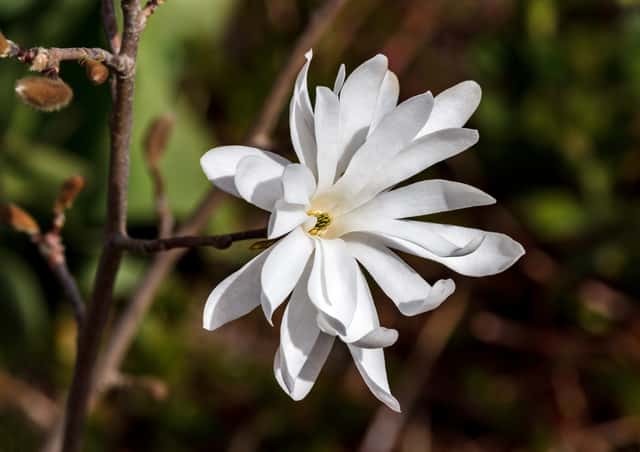
Star Magnolia (Magnolia stellata) is a medium-care plant from the Magnoliaceae family. Star Magnolia (Magnolia stellata) is a small, deciduous tree or large shrub native to Japan. Renowned for its stunning star-shaped white flowers that bloom in early spring before the leaves emerge, it is one of the first ornamental plants to bloom each season, creating a breathtaking display of deli...
Star Magnolia grows up to 3.0m, spread of 250cm, watering every 7 days, -34°C – 35°C, 30–60% humidity. It is not suitable for indoor environments and safe for pets.
Unlike many popular species, Star Magnolia is safe to keep around pets.
How to Care for Star Magnolia?
TLDR: Star Magnolia needs Bright indirect, watering every 7 days, and temperatures between -34-35°C with 30-60% humidity.
How Often Should You Water Star Magnolia?
Water weekly, keeping soil consistently moist but never waterlogged. During the first 6 months after planting, water every 2-3 days to support root establishment. Once established, it has moderate drought tolerance.
How Much Light Does Star Magnolia Need?
Prefers full sun to partial shade, with at least 6-8 hours of direct sunlight daily. In hotter regions, provide afternoon shade to prevent leaf scorch.
What Is the Best Soil for Star Magnolia?
Prefers slightly acidic soil (pH 5.0-6.5), fertile and well-draining, rich in organic matter. Avoid compacted or poorly drained soils, which promote root rot.
What Pot Should You Use for Star Magnolia?
Large pot or garden bed. If growing in a container, use at least a 60 cm diameter pot with good drainage. Prefers to be grown directly in the ground.
Care Schedule
Fertilize
Every 180 days
What Is Star Magnolia and Where Does It Come From?
Star Magnolia (Magnolia stellata) is a small, deciduous tree or large shrub native to Japan. Renowned for its stunning star-shaped white flowers that bloom in early spring before the leaves emerge, it is one of the first ornamental plants to bloom each season, creating a breathtaking display of delicate petals even in late winter conditions.
How to Propagate Star Magnolia?
Stem Cutting
Use sterilized tools to prevent disease. Cover with a plastic bag to retain humidity. Best success rates in late spring.
- 1 Cut a semi-hardwood stem of 10-15 cm with 2-3 healthy buds
- 2 Remove lower leaves, keeping only 2 at the top
- 3 Apply rooting hormone powder to the cut base
- 4 Plant in moist, well-draining rooting medium
- 5 Keep in a humid, shaded location for 6-8 weeks until rooted
Materials needed:
Air Layering
Keep moss consistently moist throughout the process. This method has a high success rate for magnolias.
- 1 Select a healthy 1-2 year old branch
- 2 Make a circular cut in the bark, removing 3-4 cm of bark
- 3 Wrap with moist sphagnum moss and cover with plastic wrap
- 4 Wait 8-12 weeks until roots appear in the moss
- 5 Cut below the rooted section and transplant
Materials needed:
How Big Does Star Magnolia Grow?
TLDR: Star Magnolia can reach up to 3.0m tall with Slow growth rate.
Max height
3.0m
Spread
2.5m
Growth rate
Slow
Foliage
Deciduous
Plant Uses
Ornamental
Great for decoration
Is your plant showing symptoms?
Click on the symptom to discover possible causes:
What Diseases Commonly Affect Star Magnolia?
TLDR: Star Magnolia is susceptible to 6 known diseases. Monitor regularly for early detection.
Powdery Mildew
Powdery mildew is a common fungal disease caused by various fungi species including Erysiphe, Podosphaera, Oïdium, and Leveillula. It affects over 10,000 plant species worldwide. The disease thrives in warm, dry climates with high humidity and appears as a distinctive white powdery coating on plant surfaces.
Leaf Spot
Leaf spot is a common fungal disease caused by various pathogens including Alternaria, Ascochyta, Colletotrichum, Septoria, and Venturia. It primarily affects leaves, causing discolored spots that can lead to premature leaf drop if left untreated.
Verticillium Wilt
Verticillium wilt is a soil-borne fungal disease caused primarily by the fungi Verticillium dahliae and V. albo-atrum. These pathogens infect plant roots and grow within the vascular tissues, blocking water and nutrient transport, resulting in wilting and eventual plant death. The disease affects over 350 plant species including vegetables, fruits, ornamental flowers, and trees. The fungi can survive in soil for more than 10 years as resistant structures called microsclerotia.
Root Rot
Root rot is a serious fungal disease that affects the root system of plants, causing them to decay and die. It is primarily caused by overwatering, poor drainage, or soil-borne fungi such as Pythium, Phytophthora, Rhizoctonia, and Fusarium. The disease thrives in waterlogged conditions where roots are deprived of oxygen, making them susceptible to fungal infection.
Meaning & Symbolism
Symbolizes purity, ephemeral beauty, and the renewal of life. In Japan, its early blooms herald the arrival of spring and represent hope and perseverance.
Fun Facts
It blooms in early spring before leaves emerge — one of the first signs of the season in the garden
Native to Japan, where it is called Shidekobushi and considered an endangered species in its natural habitat
Its flowers have 12-18 strap-like star-shaped tepals, giving it the name Star Magnolia
Can live for decades and some specimens survive for over 100 years under ideal conditions
Frequently asked questions
How often should I water Star Magnolia?
Is Star Magnolia toxic to pets?
Why is my Star Magnolia not blooming?
When should I prune Star Magnolia?
What soil is best for Star Magnolia?
Compare with similar plants
| Attribute | Difficulty | Light | Watering | Pet Safe |
|---|---|---|---|---|
| Dark Fieldcap | Medium | Low light | 2d | ⚠️ |
| Azalea | Medium | Partial shade | 3d | ⚠️ |
| Muriel's Bamboo | Medium | Partial shade | 3d | ✓ |
| Bougainvillea | Medium | Direct sun | 7d | ⚠️ |




