Rosaceae
Swedish Service-tree (Hedlundia hybrida): Care Guide
Hedlundia hybrida
A tree for cool climates, for gardens and streets, not for indoors. Plant it in an open, sunny spot. Water young trees in dry spells until established. Watch for fire blight, a disease that blackens shoots as if scorched.
Every 7 days
Bright indirect
-20° - °C
% - %
Categories
What is Swedish Service-tree?
Swedish Service-tree (Hedlundia hybrida) is a easy-care plant from the Rosaceae family. Swedish service-tree, still widely sold as Sorbus hybrida, is a deciduous tree native to Norway, eastern Sweden, south-western Finland and parts of Latvia. It reaches 10 to 15 metres, with a crown that turns rounded with age. The leaves are green above and white-hairy below, and the two lowest pairs...
Swedish Service-tree grows up to 15.0m, spread of 800cm, watering every 7 days. It is not suitable for indoor environments and safe for pets.
Unlike many tropical plants, Swedish Service-tree tolerates watering mistakes. Best for beginners. Unlike many popular species, Swedish Service-tree is safe to keep around pets.
How to Care for Swedish Service-tree?
TLDR: Swedish Service-tree needs Bright indirect, watering every 7 days, and temperatures between -20-30°C with 40-70% humidity.
How Often Should You Water Swedish Service-tree?
Water young trees during long dry spells, keeping the soil moist but not soggy. Once established it usually manages on rainfall.
How Much Light Does Swedish Service-tree Need?
It prefers full, open sun. It tolerates light shade but fruits better in sun.
What Is the Best Soil for Swedish Service-tree?
It accepts most reasonable soils, from sandy to clay, as long as water drains away. It prefers humus-rich soil that stays moist without being waterlogged.
What Pot Should You Use for Swedish Service-tree?
Not a pot plant. Plant it in the ground with 4 to 8 metres of room for the crown.
What Is Swedish Service-tree and Where Does It Come From?
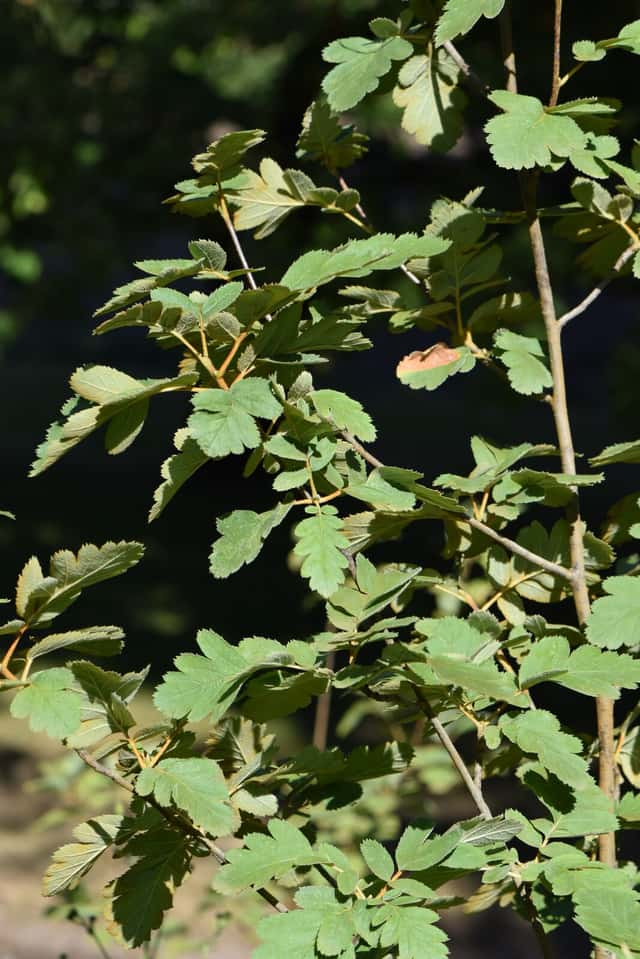
Swedish service-tree, still widely sold as Sorbus hybrida, is a deciduous tree native to Norway, eastern Sweden, south-western Finland and parts of Latvia. It reaches 10 to 15 metres, with a crown that turns rounded with age. The leaves are green above and white-hairy below, and the two lowest pairs of lobes are cut into separate leaflets. White flowers open in late spring and are followed by bunches of red berries. It arose from an old cross involving rowan and usually sets seed without pollination, so seedlings match the parent.
How to Propagate Swedish Service-tree?
Seed
Seedlings barely grow upward in the first year while they build roots. They usually come true to the parent.
- 1 Sow soon after harvest in a sheltered spot outdoors
- 2 If seed was stored, give it 2 weeks warm and then 14 to 16 weeks cold
- 3 Pot up seedlings individually
- 4 Plant out in late spring of the following year
Materials needed:
Grafting
Nurseries use this method for cultivars such as 'Gibbsii'.
- 1 Graft in winter, or chip bud in summer
- 2 Bind the scion firmly to the rootstock
- 3 Protect until shoots appear
Materials needed:
How Big Does Swedish Service-tree Grow?
TLDR: Swedish Service-tree can reach up to 15.0m tall with Slow growth rate.
Max height
15.0m
Spread
8.0m
Growth rate
Slow
Foliage
Deciduous
Plant Uses
Ornamental
Great for decoration
Is your plant showing symptoms?
Click on the symptom to discover possible causes:
What Diseases Commonly Affect Swedish Service-tree?
TLDR: Swedish Service-tree is susceptible to 6 known diseases. Monitor regularly for early detection.
Fire Blight
Fire blight is a highly destructive and contagious bacterial disease caused by Erwinia amylovora. It primarily affects plants in the Rosaceae family, including apple, pear, quince trees, and various ornamental plants. The disease can destroy an entire orchard in a single growing season under ideal conditions, with the bacterium moving approximately 11 inches per week in new growth.
Aphids
Aphids are small, soft-bodied, pear-shaped insects (1/16 to 1/8 inch long) that feed by sucking nutrient-rich sap from plants. They reproduce rapidly and can quickly weaken plants, causing distorted growth and transmitting plant viruses. Aphids come in various colors including green, black, red, yellow, brown, and gray. They secrete honeydew, a sticky substance that attracts ants and encourages sooty mold growth.
Scale Insects
Scale insects are small sap-sucking pests that appear as brown, shell-like bumps on plant stems and leaves. There are over 25 species, divided into armored (hard) and unarmored (soft) scales. They feed by piercing plant tissue and extracting sap, which weakens the plant and can lead to yellowing, stunted growth, and even death if left untreated. They also excrete honeydew, which attracts ants and promotes sooty mold growth.
Spider Mites
Spider mites are tiny arachnids (less than 1/20 inch long) related to spiders and ticks that feed on plant sap. They thrive in hot, dry conditions and can cause significant damage to ornamental and vegetable plants. During severe infestations, crop losses can reach 14% or higher as these pests disrupt vital plant processes including photosynthesis, carbon dioxide absorption, and transpiration.
Fun Facts
Linnaeus suspected in 1762 that this tree came from a cross
It usually sets seed without pollination, so each seedling is a clone of its mother
Its English names point to two countries: Swedish service-tree and Finnish whitebeam
Frequently asked questions
Are Hedlundia hybrida and Sorbus hybrida the same plant?
Can you eat the berries?
What is the main problem with this tree?
Is it cold hardy?
Compare with similar plants
| Attribute | Difficulty | Light | Watering | Pet Safe |
|---|---|---|---|---|
| Field Maple | Easy | Bright indirect | 14d | ✓ |
| Iberian Houseleek | Easy | Direct sun | 14d | ✓ |
| Silver Birch | Easy | Direct sun | 14d | ✓ |
| Common Blanketflower | Easy | Direct sun | 10d | ✓ |





