Ranunculaceae
Threeleaf Goldthread (Coptis trifolia)
Coptis trifolia
Threeleaf Goldthread thrives in cool, moist, shaded conditions mimicking its native boreal woodland habitat. Keep soil consistently moist and acidic, provide deep shade, and avoid disturbance to its shallow root system. It is slow-growing but very hardy once established.
Every 3 days
Low light
-30° - 22°C
60% - 80%
Categories
What is Threeleaf Goldthread?
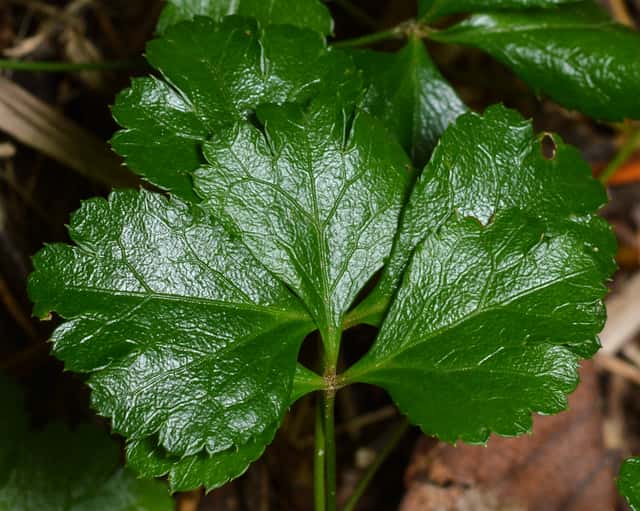
Threeleaf Goldthread (Coptis trifolia) is a medium-care plant from the Ranunculaceae family. Coptis trifolia, commonly known as Threeleaf Goldthread or Canker Root, is a small evergreen perennial native to boreal forests of North America and East Asia. It forms low-growing mats of glossy trifoliate leaves, with delicate white flowers in spring and summer. Its most distinctive feature is its...
Threeleaf Goldthread grows up to 15cm, spread of 30cm, watering every 3 days, -30°C – 22°C, 60–80% humidity. It is not suitable for indoor environments and not safe for pets.
Without precautions, ingestion can cause irritation in pets. Keep out of reach of cats and dogs.
How to Care for Threeleaf Goldthread?
TLDR: Threeleaf Goldthread needs Low light, watering every 3 days, and temperatures between -30-22°C with 60-80% humidity.
How Often Should You Water Threeleaf Goldthread?
Water regularly to maintain consistently moist soil. Water every 2–3 days in warm months, less frequently in winter. Never let the soil dry out — this plant is extremely drought-sensitive.
How Much Light Does Threeleaf Goldthread Need?
Provide deep shade or dappled light. Avoid direct sunlight, which will scorch leaves. Best placed under tree canopy or in north-facing positions with indirect light.
What Is the Best Soil for Threeleaf Goldthread?
Use a humus-rich, acidic, moist soil (pH 4.5–6.0). A mix of peat moss and leaf mould works well. Good drainage is important despite the need for consistent moisture.
What Pot Should You Use for Threeleaf Goldthread?
Terracotta or ceramic shallow pot with drainage holes, or an open woodland bed
Care Schedule
Fertilize
Every 90 days
What Is Threeleaf Goldthread and Where Does It Come From?
Coptis trifolia, commonly known as Threeleaf Goldthread or Canker Root, is a small evergreen perennial native to boreal forests of North America and East Asia. It forms low-growing mats of glossy trifoliate leaves, with delicate white flowers in spring and summer. Its most distinctive feature is its bright golden-yellow underground rhizomes, from which it derives its common name. The plant contains berberine alkaloids and was historically used by indigenous peoples for treating mouth ulcers and as a bitter tonic.
How to Propagate Threeleaf Goldthread?
Rhizome Division
Divide in early spring or late autumn when temperatures are cool. Keep divisions consistently moist to prevent desiccation.
- 1 Carefully lift the plant in early spring before new growth begins
- 2 Separate the golden rhizomes by hand or with a clean blade
- 3 Replant sections in moist acidic soil at the same depth
- 4 Water well and keep shaded until new growth appears
Materials needed:
Seed Propagation
Seeds require cold stratification to break dormancy. Germination is slow and irregular.
- 1 Collect ripe seeds in late summer
- 2 Cold-stratify seeds for 60–90 days in moist sand in the refrigerator
- 3 Sow on surface of moist acidic seed mix, do not cover
- 4 Keep in cool, shaded location and maintain moisture
Materials needed:
How Big Does Threeleaf Goldthread Grow?
TLDR: Threeleaf Goldthread can reach up to 15cm tall with Slow growth rate.
Max height
15cm
Spread
30cm
Growth rate
Slow
Foliage
Evergreen
Warning: Toxic Plant
This plant can be toxic if ingested. Keep out of reach of:
Plant Uses
Medicinal
Medicinal properties
Ornamental
Great for decoration
Ground Cover
Soil coverage
Medicinal Uses
- Traditional remedy for mouth ulcers and canker sores (direct root application)
- Used as a bitter digestive tonic by indigenous peoples of North America
- Berberine alkaloids studied for antimicrobial and anti-inflammatory properties
- Root tea used for sore throats and as a general tonic
Is your plant showing symptoms?
Click on the symptom to discover possible causes:
What Diseases Commonly Affect Threeleaf Goldthread?
TLDR: Threeleaf Goldthread is susceptible to 5 known diseases. Monitor regularly for early detection.
Root Rot
Root rot is a serious fungal disease that affects the root system of plants, causing them to decay and die. It is primarily caused by overwatering, poor drainage, or soil-borne fungi such as Pythium, Phytophthora, Rhizoctonia, and Fusarium. The disease thrives in waterlogged conditions where roots are deprived of oxygen, making them susceptible to fungal infection.
Powdery Mildew
Powdery mildew is a common fungal disease caused by various fungi species including Erysiphe, Podosphaera, Oïdium, and Leveillula. It affects over 10,000 plant species worldwide. The disease thrives in warm, dry climates with high humidity and appears as a distinctive white powdery coating on plant surfaces.
Spider Mites
Spider mites are tiny arachnids (less than 1/20 inch long) related to spiders and ticks that feed on plant sap. They thrive in hot, dry conditions and can cause significant damage to ornamental and vegetable plants. During severe infestations, crop losses can reach 14% or higher as these pests disrupt vital plant processes including photosynthesis, carbon dioxide absorption, and transpiration.
Aphids
Aphids are small, soft-bodied, pear-shaped insects (1/16 to 1/8 inch long) that feed by sucking nutrient-rich sap from plants. They reproduce rapidly and can quickly weaken plants, causing distorted growth and transmitting plant viruses. Aphids come in various colors including green, black, red, yellow, brown, and gray. They secrete honeydew, a sticky substance that attracts ants and encourages sooty mold growth.
Meaning & Symbolism
Symbol of indigenous healing traditions and the quiet resilience of boreal forest ecosystems.
Fun Facts
The bright golden-yellow rhizomes give this plant its evocative common name, Goldthread
Native Americans used Coptis trifolia root as a remedy for mouth ulcers — hence the alternative name Canker Root
This plant is listed as a species at risk by United Plant Savers due to overharvesting for medicinal use
Coptis trifolia has the highest coptisine content of all Coptis species
Frequently asked questions
How often should I water Threeleaf Goldthread?
What light conditions does Threeleaf Goldthread need?
Is Threeleaf Goldthread toxic?
What are the medicinal uses of Threeleaf Goldthread?
How do I propagate Threeleaf Goldthread?
Compare with similar plants
| Attribute | Difficulty | Light | Watering | Pet Safe |
|---|---|---|---|---|
| Dark Fieldcap | Medium | Low light | 2d | ⚠️ |
| Azalea | Medium | Partial shade | 3d | ⚠️ |
| Muriel's Bamboo | Medium | Partial shade | 3d | ✓ |
| Bougainvillea | Medium | Direct sun | 7d | ⚠️ |




