Begoniaceae
Tuberous Begonia: Complete Care Guide
Begonia x tuberhybrida
Requires bright indirect light, soil rich in organic matter, and constant moisture without waterlogging. Needs protection from strong winds and direct sun.
Every 7 days
Partial shade
10° - 30°C
50% - 70%
Categories
What is Tuberous Begonia?
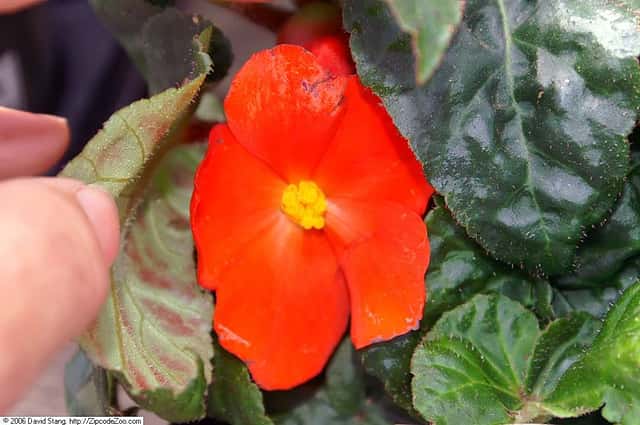
Tuberous Begonia (Begonia x tuberhybrida) is a medium-care plant from the Begoniaceae family. Begonia x tuberhybrida is a perennial herbaceous plant prized for its lush and varied flowers, which can be single or double, resembling roses or camellias. They grow from fleshy tubers and are famous for their ability to brighten shaded garden areas or interiors with vibrant colors. As a tuberous p...
Tuberous Begonia grows up to 30cm, spread of 30cm, watering every 7 days, 10°C – 30°C, 50–70% humidity. It is suitable for indoor environments and not safe for pets.
Without precautions, ingestion can cause irritation in pets. Keep out of reach of cats and dogs. Without adequate drainage, root rot can develop within 14 days.
How to Care for Tuberous Begonia?
TLDR: Tuberous Begonia needs Partial shade, watering every 7 days, and temperatures between 10-30°C with 50-70% humidity.
How Often Should You Water Tuberous Begonia?
Always water at the base of the plant. Avoid wetting the foliage and flowers, as this encourages the growth of fungi such as powdery mildew.
How Much Light Does Tuberous Begonia Need?
Prefers filtered light or partial shade. Direct sun during the hottest hours can burn the petals and succulent leaves.
What Is the Best Soil for Tuberous Begonia?
The ideal mix should be rich in humus, lightweight, and very well-drained. A mixture of peat moss, perlite, and organic compost works well.
What Pot Should You Use for Tuberous Begonia?
Ceramic pots with good drainage or hanging baskets for trailing varieties.
Care Schedule
Fertilize
Every 14 days
Misting
Every 7 days
Rotate
Every 30 days
Repot
Every 365 days
What Is Tuberous Begonia and Where Does It Come From?
Begonia x tuberhybrida is a perennial herbaceous plant prized for its lush and varied flowers, which can be single or double, resembling roses or camellias. They grow from fleshy tubers and are famous for their ability to brighten shaded garden areas or interiors with vibrant colors. As a tuberous plant, it undergoes a mandatory dormancy period during the winter months, when the aerial part dies back and the tuber must be stored in a dry place.
How to Propagate Tuberous Begonia?
Tuber Division
- Use a sterilized knife to prevent infections
- Keep the soil only slightly moist until growth is visible
- 1 Identifying Buds
In early spring, locate tubers that are starting to show small pink buds.
- 2 Cutting the Tuber
Cut the tuber into sections, ensuring each piece has at least one healthy bud.
- 3 Callusing
Let the cut pieces dry for 24 hours to prevent rot after planting.
- 4 Planting
Plant the sections in light soil with the bud facing up, covering lightly with earth.
Materials needed:
Stem Cuttings
- Maintain high humidity by covering with a clear plastic bag
- Avoid direct sunlight during rooting
- 1 Taking the Cutting
Cut a healthy stem piece about 4 inches (10 cm) long, preferably with a node.
- 2 Preparation
Remove the lower leaves and any flower buds present on the cutting.
- 3 Rooting
Insert the base of the cutting into a moist propagation medium, such as perlite or sand mixed with peat moss.
Materials needed:
How Big Does Tuberous Begonia Grow?
TLDR: Tuberous Begonia can reach up to 30cm tall with Medium growth rate.
Max height
30cm
Spread
30cm
Growth rate
Medium
Foliage
Deciduous
Warning: Toxic Plant
This plant can be toxic if ingested. Keep out of reach of:
Plant Uses
Ornamental
Great for decoration
Is your plant showing symptoms?
Click on the symptom to discover possible causes:
What Diseases Commonly Affect Tuberous Begonia?
TLDR: Tuberous Begonia is susceptible to 12 known diseases. Monitor regularly for early detection.
Powdery Mildew
Powdery mildew is a common fungal disease caused by various fungi species including Erysiphe, Podosphaera, Oïdium, and Leveillula. It affects over 10,000 plant species worldwide. The disease thrives in warm, dry climates with high humidity and appears as a distinctive white powdery coating on plant surfaces.
Gray Mold (Botrytis Blight)
Gray mold, caused by the fungus Botrytis cinerea, is one of the most common fungal diseases in plants. It affects over 200 plant species, including ornamentals, vegetables, fruits, and houseplants. The disease thrives in cool, humid conditions with poor air circulation, causing grayish spots and soft rot on infected tissues.
Root Rot
Root rot is a serious fungal disease that affects the root system of plants, causing them to decay and die. It is primarily caused by overwatering, poor drainage, or soil-borne fungi such as Pythium, Phytophthora, Rhizoctonia, and Fusarium. The disease thrives in waterlogged conditions where roots are deprived of oxygen, making them susceptible to fungal infection.
Overwatering
Overwatering occurs when plants receive too much water, depriving roots of oxygen and causing root rot. This environmental stress is one of the most common causes of houseplant death, as waterlogged soil prevents roots from breathing and functioning properly.
Meaning & Symbolism
Represents cordiality, gratitude, and care in interpersonal relationships.
Compare with similar plants
| Attribute | Difficulty | Light | Watering | Pet Safe |
|---|---|---|---|---|
| Dark Fieldcap | Medium | Low light | 2d | ⚠️ |
| Azalea | Medium | Partial shade | 3d | ⚠️ |
| Muriel's Bamboo | Medium | Partial shade | 3d | ✓ |
| Bougainvillea | Medium | Direct sun | 7d | ⚠️ |




