Dieback (Dead Wood): Environmental Stress | How to Fix
This is an environmental condition where the woody parts of the plant dry out and die. It is often caused by extreme frost, prolonged water deficiency, or physical damage. Since it is non-infectious, it does not spread to other plants, but the weakened sections can provide an entry point for fungal pathogens.
Slow
30 days
What is Dieback (Dead Wood)?
Dieback (Dead Wood) is a environmental condition with moderate severity that affects plants. This is an environmental condition where the woody parts of the plant dry out and die. It is often caused by extreme frost, prolonged water deficiency, or physical damage. Since it is non-infectious, it does not spread to other plants, but the weakened sections can provide an entry point for fungal...
Dieback (Dead Wood) is a environmental disease with moderate severity that spreads at a slow rate. Recovery typically takes approximately 30 days with proper treatment.
Unlike infectious diseases, Dieback (Dead Wood) is caused by environmental conditions. Without correcting the environment, symptoms return even after treatment. Unlike many common diseases, Dieback (Dead Wood) is not contagious between plants.
🔍 What Are the Symptoms of Dieback (Dead Wood)?
TLDR: Dieback (Dead Wood) presents 4 main symptoms. Early identification is crucial for effective treatment.
Main Symptoms
- ! Dry, brittle branches
- ! Cracking or peeling of the bark
- ! Absence of a green cambium layer under the bark
- ! Lack of foliage growth on affected branches
Visual Signs
❓ What Causes Dieback (Dead Wood) in Plants?
- → Extreme winter frosts
- → Prolonged periods of drought
- → Severe mechanical injury
- → Weakness due to nutrient deficiency
💊 How to Treat Dieback (Dead Wood)?
Step by Step
- 1
Inspect the branches using a scratch test to find live tissue
- 2
Prune away dead parts back to the healthy, green tissue
- 3
Clean and disinfect the cut surfaces
- 4
Apply a wound dressing or sealant
🧪 Natural vs Chemical: Which Treatment Works for Dieback (Dead Wood)?
🌱 Natural Solutions
- ✓ Waxy wound sealants
- ✓ Compost tea to boost the plant's immune system
- ✓ Mulching to retain soil moisture
💉 Chemical Solutions
- ✓ Copper-based dormant spray to prevent secondary infections
🛡️ How to Prevent Dieback (Dead Wood)?
TLDR: Prevent Dieback (Dead Wood) with 4 essential care practices. Regular monitoring is key for early detection.
- ✓ Winter frost protection using covers or wrapping
- ✓ Regular irrigation during drought periods
- ✓ Using proper pruning techniques
- ✓ Adequate nutrient supplementation
🔗Related Diseases
Severe Defoliation
HighThis condition involves a sudden and massive loss of leaves caused by adverse environmental factors. The plant sheds its foliage in an attempt to survive extreme stress, such as abrupt temperature changes, improper watering, or transplant shock. If the underlying cause is not addressed, the plant may completely wither and die.
Low Light Stress
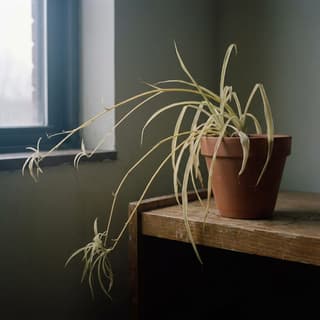
MediumLow light stress, also known as etiolation, occurs when plants do not receive adequate light for proper growth and development. This leads to abnormal growth patterns characterized by elongated stems, pale leaves, and weakened overall structure as the plant attempts to reach toward available light sources.
Underwatering
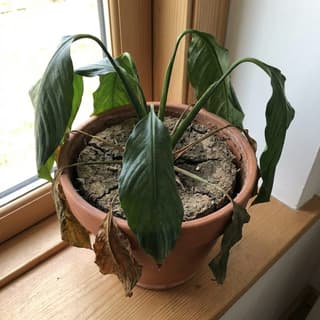
HighUnderwatering or drought stress is a physiological disorder that occurs when the amount of water a plant loses through transpiration exceeds the amount its roots can absorb from the soil. This leads to cellular dehydration and various visible symptoms that can compromise plant health and productivity.
Low Humidity Stress
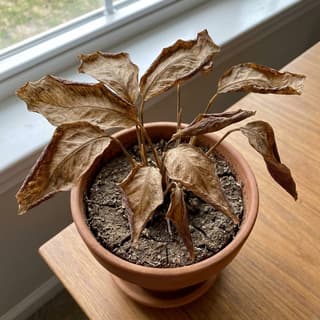
MediumLow humidity stress occurs when indoor air becomes too dry, causing plants to lose moisture faster than they can absorb it through their roots. This is especially common during winter heating periods, near radiators and heating vents, or in air-conditioned spaces. Tropical plants are particularly susceptible to low humidity damage.