Underwatering: Environmental Stress | How to Fix
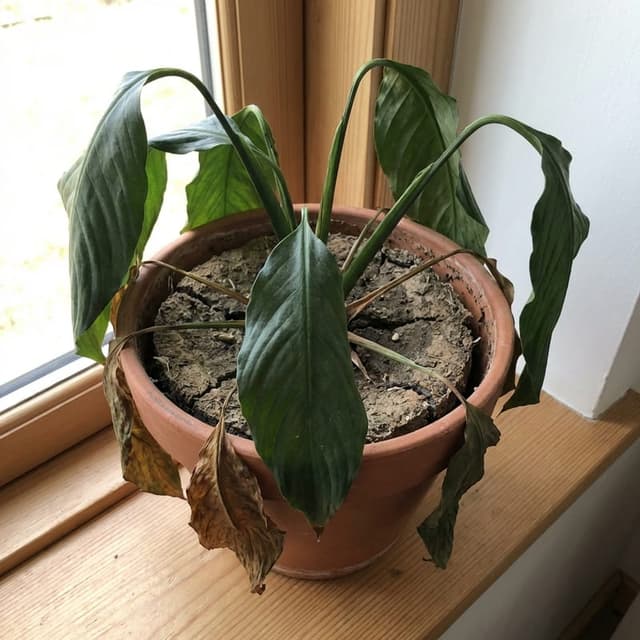
Underwatering or drought stress is a physiological disorder that occurs when the amount of water a plant loses through transpiration exceeds the amount its roots can absorb from the soil. This leads to cellular dehydration and various visible symptoms that can compromise plant health and productivity.
Slow
14 days
What is Underwatering?
Underwatering is a environmental condition with high severity that affects plants. Underwatering or drought stress is a physiological disorder that occurs when the amount of water a plant loses through transpiration exceeds the amount its roots can absorb from the soil. This leads to cellular dehydration and various visible symptoms that can compromise plant health and productivit...
Underwatering is a environmental disease with high severity that spreads at a slow rate. Recovery typically takes approximately 14 days with proper treatment. It affects 10 plant species in our database.
Unlike infectious diseases, Underwatering is caused by environmental conditions. Without correcting the environment, symptoms return even after treatment. Not recommended to ignore early signs. Without early intervention, recovery can take twice as long. Unlike many common diseases, Underwatering is not contagious between plants.
🔍 What Are the Symptoms of Underwatering?
TLDR: Underwatering presents 10 main symptoms. Early identification is crucial for effective treatment.
Main Symptoms
- ! Wilting leaves that feel dry and crispy to touch
- ! Brown, crispy edges on leaves (marginal scorch)
- ! Leaf curling or rolling inward
- ! Loss of glossy, healthy leaf appearance
- ! Yellowing leaves, especially older ones (chlorosis)
- ! Premature leaf drop
- ! Stunted growth and reduced leaf size
- ! Branch tip dieback
- ! Flower or fruit drop
- ! Early autumn coloration on deciduous plants
Visual Signs
❓ What Causes Underwatering in Plants?
- → Insufficient watering frequency or amount
- → High temperatures increasing transpiration rates
- → Low humidity accelerating water loss
- → Strong, drying winds
- → Sandy soil that drains too quickly
- → Compacted clay soil preventing water penetration
- → Small or damaged root systems with reduced absorption capacity
- → Container plants with limited soil volume
- → Root-bound plants with restricted root systems
💊 How to Treat Underwatering?
TLDR: Treat Underwatering with 7 days of quick treatment or 14 days of organic treatment. Full recovery takes approximately 14 days.
Quick Fixes
~7 days
Step 1
Water plant immediately with generous amount until soil is moist
Step 2
Check drainage holes - water should flow through freely
Step 3
Wait 30 minutes and check if soil absorbed water completely
Step 4
Repeat watering if soil still feels dry throughout
Step 5
Mist leaves to maximize water uptake
Step 6
Move away from heat sources and direct sun
Materials needed:
Organic Treatment
~14 days
Step 1
Remove plant from direct sunlight to reduce water stress
Step 2
Check soil moisture by inserting finger 2 inches deep
Step 3
Water slowly and thoroughly until water drains from bottom
Step 4
For severe cases, submerge bottom half of pot in water bucket for 10 minutes
Step 5
Mist foliage lightly to reduce water loss through leaves
Step 6
Prune any crispy, brown, or yellowed leaves
Step 7
Move to partial shade location during recovery period
Materials needed:
Expert Treatment
~21 days
Step 1
Assess severity: check if leaves are wrinkled vs leathery texture
Step 2
Use bottom-watering method: submerge pot halfway in water bucket for 10-15 minutes
Step 3
Remove when bubbling stops indicating full soil saturation
Step 4
Allow excess water to drain completely
Step 5
Prune all severely damaged foliage (brown, crispy, or leathery leaves)
Step 6
Apply foliar spray with seaweed extract to boost recovery
Step 7
Relocate to humidity-controlled environment (50-60% RH)
Step 8
Monitor leaf water potential recovery over 24-48 hours
Step 9
Establish consistent watering schedule based on soil moisture meter readings
Step 10
Supplement with diluted liquid fertilizer after 2 weeks to support new growth
Step by Step
- 1
Water plant thoroughly and deeply, ensuring water reaches entire root zone
- 2
Apply water slowly at base using soaker hose or drip irrigation
- 3
Add 2-3 inch layer of organic mulch around base
- 4
Continue consistent watering schedule based on plant needs
- 5
Monitor soil moisture regularly at 4 inch depth
- 6
Avoid fertilizing or pruning until plant recovers
- 7
Provide temporary shade if heat stress is severe
🧪 Natural vs Chemical: Which Treatment Works for Underwatering?
🌱 Natural Solutions
- ✓ Deep watering to reach entire root zone
- ✓ Apply 2-3 inch organic mulch layer (wood chips, bark, compost)
- ✓ Install soaker hose or drip irrigation system
- ✓ Add compost to improve soil water retention
- ✓ Use self-watering containers or ollas for consistent moisture
- ✓ Group plants to create microclimate with higher humidity
💉 Chemical Solutions
- ✓ No chemical treatments needed - this is water management issue
- ✓ Avoid fertilizing stressed plants
- ✓ Do not use growth stimulants on drought-stressed plants
Treatment Comparison
| Type | Estimated time | Steps | Difficulty | Best For |
|---|---|---|---|---|
| ⚡Quick | ~7 days | 6 | Advanced | Urgent cases |
| 🌿Organic | ~14 days | 7 | Advanced | Indoor plants |
| 🔬Expert | ~21 days | 10 | Advanced | Severe infections |
🛡️ How to Prevent Underwatering?
TLDR: Prevent Underwatering with 9 essential care practices. Regular monitoring is key for early detection.
- ✓ Check soil moisture at 4 inches depth before watering
- ✓ Water deeply and infrequently rather than shallow frequent watering
- ✓ Water early morning to reduce evaporation
- ✓ Apply 2-3 inch layer of organic mulch around base
- ✓ Use soaker hoses or drip irrigation for even distribution
- ✓ Improve soil structure with organic matter
- ✓ Group plants with similar water needs together
- ✓ Monitor container plants more frequently
- ✓ Prepare plants before vacation with deep watering and mulching
🔗Related Diseases
Severe Defoliation
HighThis condition involves a sudden and massive loss of leaves caused by adverse environmental factors. The plant sheds its foliage in an attempt to survive extreme stress, such as abrupt temperature changes, improper watering, or transplant shock. If the underlying cause is not addressed, the plant may completely wither and die.
Severe Defoliation and Dormancy
HighThis condition is triggered by extreme environmental stress, such as sudden temperature fluctuations, insufficient light, or improper watering. In an effort to survive, the plant sheds its leaves and enters a dormant state to conserve energy.
Leaf Drop (Environmental Stress)
MediumLeaf drop occurs when a plant undergoes sudden environmental changes, such as insufficient light, excessive wind, or temperature fluctuations. It is not a fungal disease, but rather a physical response to stress.
Physical Leaf Damage
LowThis is not an infectious disease, but rather the result of external mechanical or environmental factors. It occurs due to rough handling, strong winds, hail, or pets. Leaves exhibit tears, cuts, or frayed edges, but the rest of the plant typically remains healthy and green.
🌿 Which Plants Are Most Affected by Underwatering?
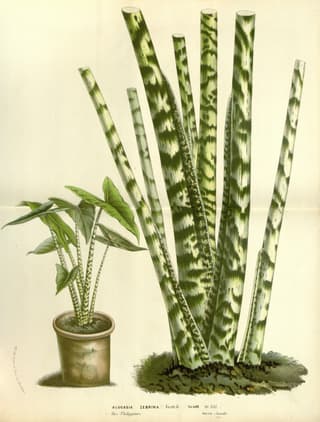
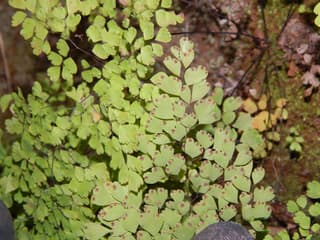
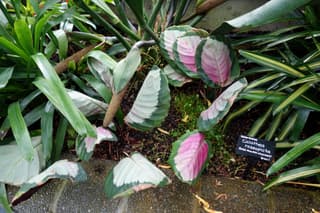

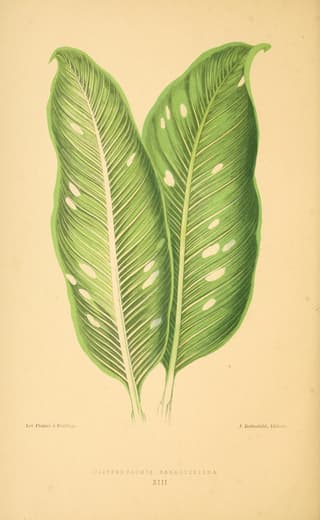
Sources & References
- Drought Stress Impacts on Plants and Different Approaches to Alleviate Its Adverse Effects - PMC
- Drought Stress | The Morton Arboretum
- How to Tell If You're Underwatering Your Plants
- Keeping your plants healthy: Dealing with dry soils and drought – Wisconsin Horticulture
- Water Stress in Plants: Causes, Symptoms, and Strategies to Protect Crop Performance