Mechanical Damage in Plants — Causes, Symptoms & Treatment
Mechanical damage occurs when plant tissue is physically disrupted by external forces — including pets knocking over pots, children playing, strong winds, hail, accidental contact during gardening, improper pruning, or tools hitting stems and bark. The resulting wounds break vascular tissue, interrupt water and nutrient transport, and create open entry points for fungal and bacterial pathogens. Severity ranges from cosmetic (a torn leaf) to life-threatening (a fully girdled trunk).
30 days
What is Mechanical Damage?
Mechanical Damage is a environmental condition with moderate severity that affects plants. Mechanical damage occurs when plant tissue is physically disrupted by external forces — including pets knocking over pots, children playing, strong winds, hail, accidental contact during gardening, improper pruning, or tools hitting stems and bark. The resulting wounds break vascular tissue, interru...
Mechanical Damage is a environmental disease with moderate severity. Recovery typically takes approximately 30 days with proper treatment.
Unlike infectious diseases, Mechanical Damage is caused by environmental conditions. Without correcting the environment, symptoms return even after treatment. Unlike many common diseases, Mechanical Damage is not contagious between plants.
🔍 What Are the Symptoms of Mechanical Damage?
TLDR: Mechanical Damage presents 8 main symptoms. Early identification is crucial for effective treatment.
Main Symptoms
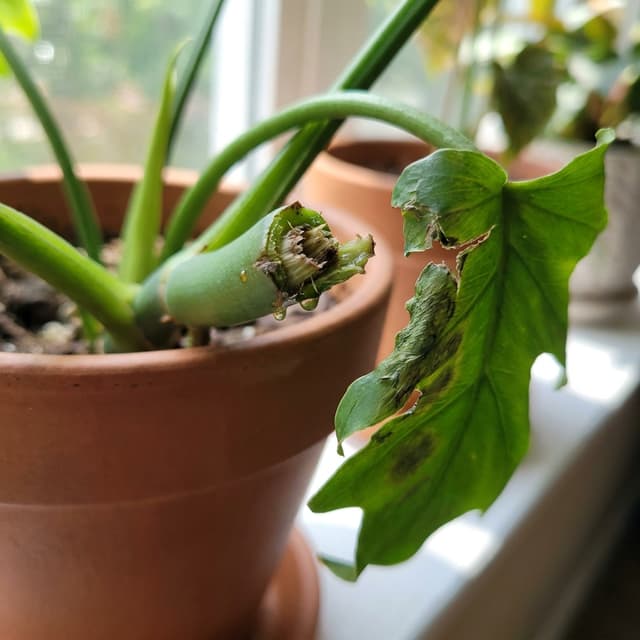
- ! Torn or shredded leaf edges
- ! Broken, bent, or snapped stems
- ! Visible bark wounds or missing bark sections
- ! Sap (resin or latex) oozing from wounds
- ! Wilted or drooping detached portions
- ! Visible scarring or callus tissue forming over older injuries
- ! Discoloration (yellowing, browning) around the wound site
- ! Branch dieback above the injury in severe cases
Visual Signs
❓ What Causes Mechanical Damage in Plants?
- → Pets (cats knocking plants, dogs chewing stems)
- → Children playing near or handling plants
- → Strong wind and hail storms snapping branches
- → Heavy objects falling on branches or stems
- → Accidental bumps during cleaning or moving plants
- → Improper pruning with dull or unsterile tools
- → Lawn mower or weed trimmer contact with trunks
- → Rodents and deer gnawing or stripping bark
- → Overloaded or unsupported branches bending under their own weight
💊 How to Treat Mechanical Damage?
Step by Step
- 1
1. Assess severity: determine if damage is cosmetic (leaf tear), moderate (broken stem), or severe (girdled trunk).
- 2
2. Remove dangling parts: use sterile pruners to make a clean cut just above the nearest healthy node or bud.
- 3
3. Clean the wound: wipe cut surfaces with a cloth dampened with 10% isopropyl alcohol.
- 4
4. Apply natural protection: dust wound with cinnamon powder or dab aloe vera gel.
- 5
5. Support if needed: for partially snapped stems, apply a splint secured loosely with soft tape.
- 6
6. Optimize recovery: move plant away from wind, direct sun, or further disturbance; maintain consistent watering.
- 7
7. Monitor for infection: check wound weekly for fungal growth or bacterial soft rot; act immediately if detected.
- 8
8. Allow callus formation: do not disturb the forming callus — it is the plant's natural protective scar layer.
🧪 Natural vs Chemical: Which Treatment Works for Mechanical Damage?
🌱 Natural Solutions
- ✓ Trim partially broken or dangling parts cleanly using sterile scissors — a clean cut heals faster than a ragged tear.
- ✓ Apply powdered cinnamon to fresh cut surfaces as a natural antifungal barrier.
- ✓ Dab aloe vera gel on minor wounds to retain moisture and accelerate callus formation.
- ✓ For bark injuries on woody plants, clean wound edges and leave exposed to air for natural callus formation.
- ✓ For bent but unbroken stems, create a splint with a toothpick or bamboo stick secured with soft florist tape.
💉 Chemical Solutions
- ✓ Commercial wound sealants are generally NOT recommended by modern horticulture — they can trap moisture and pathogens.
- ✓ Exception: grafting wax or water-based asphaltum emulsion for bridge grafting repairs on girdled tree trunks.
- ✓ Copper-based fungicide spray on open wounds is only advisable in high-humidity environments with elevated secondary infection risk.
🛡️ How to Prevent Mechanical Damage?
TLDR: Prevent Mechanical Damage with 7 essential care practices. Regular monitoring is key for early detection.
- ✓ Place fragile plants out of high-traffic areas and away from pets and children.
- ✓ Stake tall or top-heavy stems with bamboo canes or plant supports before storms.
- ✓ Use trunk guards to prevent lawn mower and weed trimmer injury.
- ✓ Always use sharp, clean pruning tools — dull blades crush rather than cut cleanly.
- ✓ Install wind barriers (netting or fabric) for outdoor plants before storm season.
- ✓ Secure hanging baskets and elevated pots to prevent wind-related falls.
- ✓ Remove dead or weakened branches proactively before wind can snap them.
🔗Related Diseases
Severe Defoliation
HighThis condition involves a sudden and massive loss of leaves caused by adverse environmental factors. The plant sheds its foliage in an attempt to survive extreme stress, such as abrupt temperature changes, improper watering, or transplant shock. If the underlying cause is not addressed, the plant may completely wither and die.
Severe Defoliation and Dormancy
HighThis condition is triggered by extreme environmental stress, such as sudden temperature fluctuations, insufficient light, or improper watering. In an effort to survive, the plant sheds its leaves and enters a dormant state to conserve energy.
Leaf Drop (Environmental Stress)
MediumLeaf drop occurs when a plant undergoes sudden environmental changes, such as insufficient light, excessive wind, or temperature fluctuations. It is not a fungal disease, but rather a physical response to stress.
Physical Leaf Damage
LowThis is not an infectious disease, but rather the result of external mechanical or environmental factors. It occurs due to rough handling, strong winds, hail, or pets. Leaves exhibit tears, cuts, or frayed edges, but the rest of the plant typically remains healthy and green.