Spider Mites: Pest Control | Identify & Treat
Spider mites are tiny arachnids (less than 1/20 inch long) related to spiders and ticks that feed on plant sap. They thrive in hot, dry conditions and can cause significant damage to ornamental and vegetable plants. During severe infestations, crop losses can reach 14% or higher as these pests disrupt vital plant processes including photosynthesis, carbon dioxide absorption, and transpiration.
Fast
21 days
What is Spider Mites?
Spider Mites is a pest condition with high severity that affects plants. Spider mites are tiny arachnids (less than 1/20 inch long) related to spiders and ticks that feed on plant sap. They thrive in hot, dry conditions and can cause significant damage to ornamental and vegetable plants. During severe infestations, crop losses can reach 14% or higher as these pests disru...
Spider Mites is a pest disease with high severity that spreads at a fast rate. Recovery typically takes approximately 21 days with proper treatment. It affects 10 plant species in our database. This condition is contagious and can spread between plants.
Unlike fungal diseases, Spider Mites can be controlled quickly with integrated management. Without immediate action, the infestation spreads to nearby plants. Not recommended to ignore early signs. Without early intervention, recovery can take twice as long. Without isolation, nearby plants can become infected within days.
🔍 What Are the Symptoms of Spider Mites?
TLDR: Spider Mites presents 7 main symptoms. Early identification is crucial for effective treatment.
Main Symptoms
- ! Pale discoloration spots on leaves
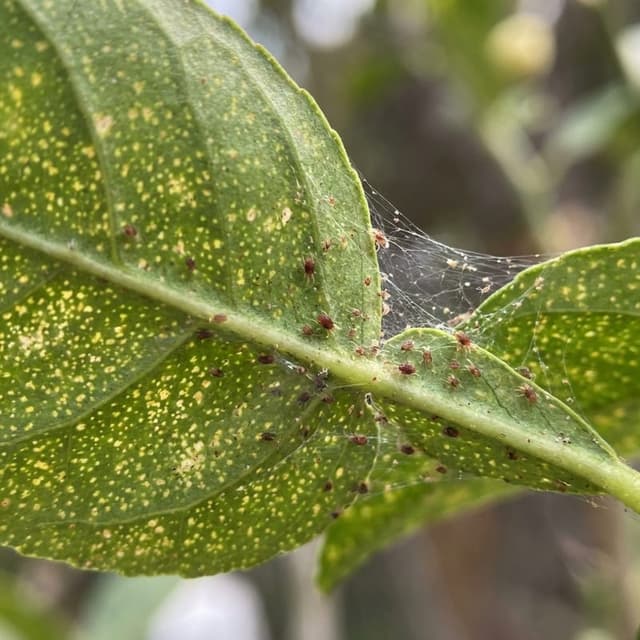
- ! Fine silk webbing covering leaves and stems
- ! Tiny yellow or white speckles on leaf surface (stippling)
- ! Leaves taking on yellow or bronzed appearance
- ! Flecking and scorching of foliage
- ! Reduced chlorophyll content
- ! Premature leaf drop and potential plant death
Visual Signs
❓ What Causes Spider Mites in Plants?
- → Hot and dry weather conditions
- → Low humidity environments
- → Water-stressed plants
- → Dusty conditions on foliage
- → Overuse of pesticides killing natural predators
- → Poor air circulation around plants
- → Bringing infested plants indoors or near healthy plants
💊 How to Treat Spider Mites?
TLDR: Treat Spider Mites with 11 days of quick treatment or 21 days of organic treatment. Full recovery takes approximately 21 days.
Quick Fixes
~11 days
Step 1
Immediately spray all affected plants with rubbing alcohol (70% isopropyl) diluted 1:1 with water
Step 2
Apply insecticidal soap or horticultural oil directly to visible mites
Step 3
Wipe leaves with damp cloth to physically remove mites and webbing
Step 4
Spray undersides of all leaves thoroughly with water mist
Step 5
Repeat alcohol or soap treatment every 3 days for 2 weeks
Materials needed:
Organic Treatment
~21 days
Step 1
Isolate infected plants immediately to prevent spread
Step 2
Spray undersides of leaves with strong water stream daily to dislodge mites
Step 3
Apply neem oil solution (mix with Coco-Wet) every 3-5 days, covering all plant parts
Step 4
Use insecticidal soap spray at 3-day intervals until control is achieved
Step 5
Apply diatomaceous earth to soil surface and lower leaves
Step 6
Introduce beneficial predatory mites (Phytoseiulus persimilis) for ongoing control
Step 7
Monitor plant daily and repeat treatments as needed
Materials needed:
Expert Treatment
~32 days
Step 1
Conduct thorough inspection and identify infestation severity
Step 2
Implement full Integrated Pest Management (IPM) protocol
Step 3
Apply selective miticides (pyrethrins, azadirachtin) at recommended intervals
Step 4
Release commercial beneficial insects: ladybugs, lacewings, and predatory mites
Step 5
Use petroleum-based horticultural oils or plant-based oils (neem, canola, cottonseed)
Step 6
Install sticky traps for monitoring and scouting
Step 7
Maintain optimal environmental conditions (humidity >50%, temperature <80°F)
Step 8
Apply systemic treatments if infestation is severe
Step 9
Schedule follow-up treatments every 5-7 days for 3-4 weeks
Step 10
Establish long-term biological control with sustained predatory mite populations
Step by Step
- 1
Isolate infested plants immediately to prevent spread
- 2
Spray plants forcefully with water to reduce population
- 3
Apply insecticidal soap to all plant surfaces, including undersides of leaves
- 4
Reapply treatments every 2-3 days for soap, 10-14 days for miticides
- 5
Introduce biological controls if available
- 6
Monitor daily for signs of improvement
- 7
Continue preventive measures after recovery
🧪 Natural vs Chemical: Which Treatment Works for Spider Mites?
🌱 Natural Solutions
- ✓ Regular forceful water spraying to knock off mites, eggs, and larvae
- ✓ Insecticidal soap applications - spray all plant surfaces thoroughly
- ✓ Horticultural oil sprays applied to affected areas
- ✓ Introduce biological controls: Swirski mite (works best above 68°F), predatory mites, small lady beetles
- ✓ Predatory thrips and big-eyed bugs for population control
- ✓ Increase humidity around plants to create unfavorable conditions
- ✓ Prune and dispose of heavily infested plant parts
💉 Chemical Solutions
- ✓ Insecticidal soap (requires repeated contact applications)
- ✓ Horticultural oils for smothering mites
- ✓ Miticides (note: most do not affect eggs)
- ✓ Neem oil treatments
Treatment Comparison
| Type | Estimated time | Steps | Difficulty | Best For |
|---|---|---|---|---|
| ⚡Quick | ~11 days | 5 | Advanced | Urgent cases |
| 🌿Organic | ~21 days | 7 | Advanced | Indoor plants |
| 🔬Expert | ~32 days | 10 | Advanced | Severe infections |
🛡️ How to Prevent Spider Mites?
TLDR: Prevent Spider Mites with 9 essential care practices. Regular monitoring is key for early detection.
- ✓ Maintain adequate irrigation and soil moisture levels
- ✓ Inspect plants weekly for early signs of webbing or stippling
- ✓ Wash trees and vines with water mid-season to remove dust
- ✓ Install drip irrigation systems for consistent moisture
- ✓ Track hot and dry weather and increase watering during high-risk periods
- ✓ Provide shading during extreme heat
- ✓ Encourage natural predators like lady beetles, predatory mites, and minute pirate bugs
- ✓ Quarantine new plants before introducing them to your collection
- ✓ Maintain optimal growing conditions through proper fertilization and temperature control
🔗Related Diseases
Whitefly
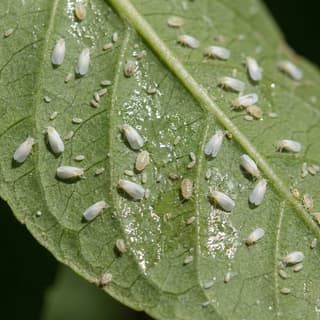
Whiteflies (family Aleyrodidae) are tiny, sap-sucking insects that thrive in warm, still air. They are common on houseplants, greenhouse crops, and garden plants such as tomatoes, peppers, cucumbers, fuchsias, hibiscus, poinsettias, citrus, and many herbs. You’ll often see small white adults flutter up when you touch the plant, sticky honeydew on leaves or nearby surfaces, black sooty mould growing on that honeydew, and leaves that yellow, curl, or drop. Check the undersides of leaves for pale, scale-like nymphs and tiny eggs laid in small arcs. Heavy infestations weaken plants and slow growth.
Woolly Beech Aphid
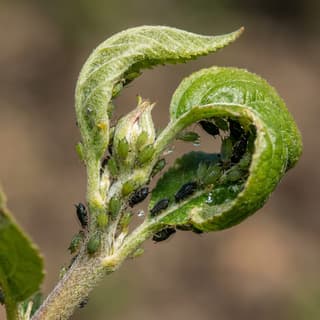
Phyllaphis is a genus of woolly aphids that primarily attack beech (Fagus), typically common beech and copper beech in hedges and as trees. They suck plant sap from young shoots and the undersides of leaves in spring and early summer. Signs of infestation include curled or rolled leaves, sticky honeydew, black sooty mold, and a white, cottony coating around the colonies. The plants usually survive, but heavy infestations can weaken new growth and make the hedge sticky and unsightly. The aphids often overwinter as eggs on thin twigs near buds.
Flea beetle damage
MediumFlea beetles are small, jumping insects that feed on the leaves of many vegetable crops. They chew numerous small, circular holes, creating a characteristic 'shothole' appearance. While established plants can often tolerate the damage, young seedlings are highly susceptible and can be stunted or killed if the infestation is severe.
Woolly Aphid
Prociphilus is a genus of woolly aphids that feed by sucking sap from plants. They produce a fluffy, white, cotton-like coating on leaves, shoots, or sometimes roots. Signs include sticky honeydew, black sooty mold growing on the honeydew, leaf curling or distortion, and clusters of tiny, soft-bodied insects hidden in the "wool." Ants are often active around them because they feed on the honeydew. These aphids commonly affect alder and maple (woolly alder aphid) and ash (woolly ash aphid). They rarely kill established trees, but they can stress young plants and create a messy, sticky problem.