Sunburn (Sun Scorch): Environmental Stress | How to Fix
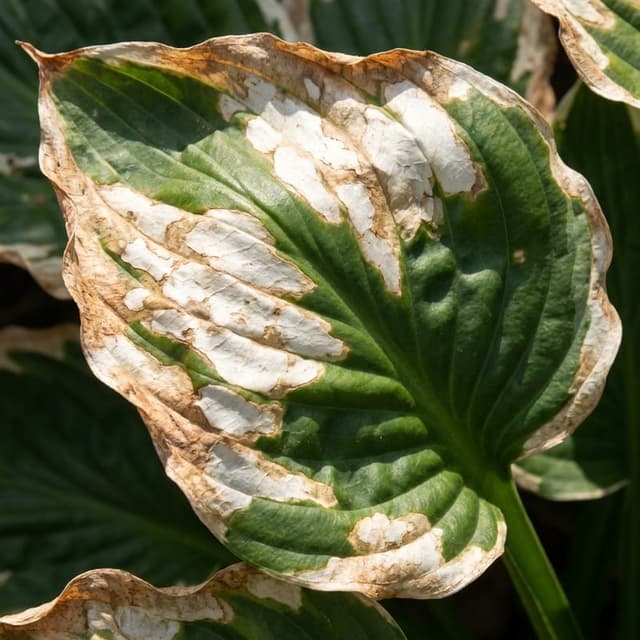
Sunburn or sun scorch is an environmental condition that occurs when plants are exposed to intense, direct sunlight beyond their tolerance level. This causes the breakdown of chlorophyll in the leaves, resulting in bleached, dried, and damaged foliage. The damage can happen rapidly, sometimes within just a few hours of exposure.
Fast
21 days
What is Sunburn (Sun Scorch)?
Sunburn (Sun Scorch) is a environmental condition with moderate severity that affects plants. Sunburn or sun scorch is an environmental condition that occurs when plants are exposed to intense, direct sunlight beyond their tolerance level. This causes the breakdown of chlorophyll in the leaves, resulting in bleached, dried, and damaged foliage. The damage can happen rapidly, sometimes within...
Sunburn (Sun Scorch) is a environmental disease with moderate severity that spreads at a fast rate. Recovery typically takes approximately 21 days with proper treatment. It affects 10 plant species in our database.
Unlike infectious diseases, Sunburn (Sun Scorch) is caused by environmental conditions. Without correcting the environment, symptoms return even after treatment. Unlike many common diseases, Sunburn (Sun Scorch) is not contagious between plants.
🔍 What Are the Symptoms of Sunburn (Sun Scorch)?
TLDR: Sunburn (Sun Scorch) presents 6 main symptoms. Early identification is crucial for effective treatment.
Main Symptoms
- ! Pale, bleached, or washed-out white areas on leaves
- ! Affected areas turn yellow, then brown, and become brittle
- ! Damage appears primarily on top leaves or sun-exposed surfaces
- ! Leaf edges become completely dry and crispy
- ! Underlying leaves remain unaffected
- ! Rapid onset of symptoms (within hours)
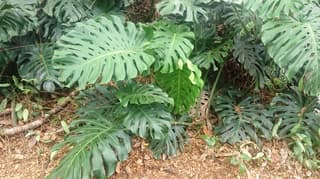
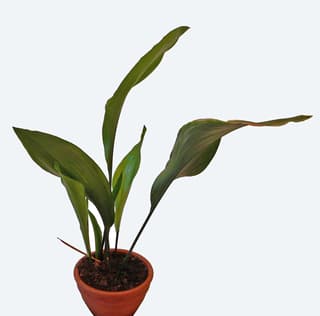
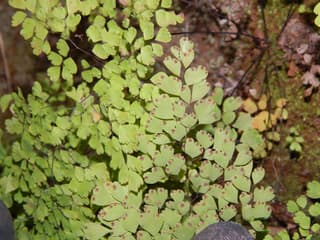
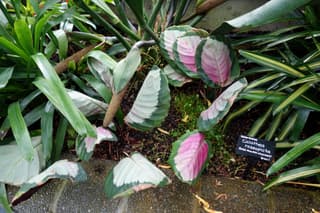
Visual Signs
❓ What Causes Sunburn (Sun Scorch) in Plants?
- → Abrupt exposure to bright, direct sunlight
- → Moving plants from low-light to high-light environments too quickly
- → Intense sun combined with dry soil conditions
- → Hot temperatures and high winds increasing water loss
- → Lack of gradual acclimation (hardening off)
- → Water droplets on leaves acting as magnifying lenses in bright sun
💊 How to Treat Sunburn (Sun Scorch)?
TLDR: Treat Sunburn (Sun Scorch) with 11 days of quick treatment or 21 days of organic treatment. Full recovery takes approximately 21 days.
Quick Fixes
~11 days
Step 1
Immediately provide shade using umbrellas, cardboard, or shade cloth during hottest hours (10am-4pm)
Step 2
Give a deep watering in the early morning to reduce plant stress
Step 3
Remove completely scorched leaves to prevent rot
Step 4
Monitor daily and adjust shade as needed
Materials needed:
Organic Treatment
~21 days
Step 1
Move the plant to a shaded area or use shade cloth to block direct afternoon sun
Step 2
Prune away severely damaged leaves and stems to prevent disease
Step 3
Apply a thick layer of organic mulch (2-3 inches) around the base to retain soil moisture
Step 4
Deep water in the morning to help the plant recover from stress
Step 5
Wait one week, then apply liquid seaweed fertilizer to speed healing
Step 6
Gradually reintroduce the plant to sunlight over 2-3 weeks
Materials needed:
Expert Treatment
~32 days
Step 1
Assess damage severity: light (yellowing), moderate (brown patches), severe (crispy leaves)
Step 2
Relocate plant to receive morning sun only, or install 40% shade cloth
Step 3
Remove damaged tissue with sterile tools, cutting back to healthy growth
Step 4
Deep soak soil to 6-8 inches depth in early morning hours
Step 5
Apply kaolin clay foliar spray to remaining healthy foliage for UV protection
Step 6
After 7 days, apply diluted liquid kelp fertilizer (half strength) to stimulate new growth
Step 7
Maintain consistent soil moisture without overwatering
Step 8
Gradually acclimate plant to more light over 3 weeks, increasing exposure by 30 minutes daily
Step by Step
- 1
Immediately move plant to a shaded or less bright location
- 2
Water the plant if soil is dry to reduce stress
- 3
Resist the urge to remove scorched leaves right away
- 4
Allow the plant to recover and produce new growth
- 5
Once new healthy leaves emerge, trim or remove damaged leaves
- 6
Gradually reintroduce to brighter light if needed, using proper acclimation
🧪 Natural vs Chemical: Which Treatment Works for Sunburn (Sun Scorch)?
🌱 Natural Solutions
- ✓ Move affected plant to shaded location immediately
- ✓ Maintain consistent moisture levels in soil
- ✓ Do not remove scorched leaves initially - they provide shade for new growth
- ✓ Mist the plant gently to increase local humidity
- ✓ Once new leaves emerge, gently remove dead foliage if desired
💉 Chemical Solutions
- ✓ No chemical treatment needed - this is an environmental condition
- ✓ Focus on environmental adjustments rather than chemicals
Treatment Comparison
| Type | Estimated time | Steps | Difficulty | Best For |
|---|---|---|---|---|
| ⚡Quick | ~11 days | 4 | Medium | Urgent cases |
| 🌿Organic | ~21 days | 6 | Advanced | Indoor plants |
| 🔬Expert | ~32 days | 8 | Advanced | Severe infections |
🛡️ How to Prevent Sunburn (Sun Scorch)?
TLDR: Prevent Sunburn (Sun Scorch) with 8 essential care practices. Regular monitoring is key for early detection.
- ✓ Gradually acclimate plants to bright sun over 2-3 weeks (hardening off)
- ✓ Start with full shade, then introduce 1-2 hours of morning sun
- ✓ Keep plants out of direct sunlight during extremely hot days
- ✓ Use sheer curtains or shade cloth to filter intense light
- ✓ Water adequately, especially on hot and windy days
- ✓ Water in morning or evening to avoid droplets during peak sun
- ✓ Apply organic mulch to conserve soil moisture and reduce temperature
- ✓ Provide temporary shading on extremely hot days
🔗Related Diseases
Severe Defoliation
HighThis condition involves a sudden and massive loss of leaves caused by adverse environmental factors. The plant sheds its foliage in an attempt to survive extreme stress, such as abrupt temperature changes, improper watering, or transplant shock. If the underlying cause is not addressed, the plant may completely wither and die.
Severe Defoliation and Dormancy
HighThis condition is triggered by extreme environmental stress, such as sudden temperature fluctuations, insufficient light, or improper watering. In an effort to survive, the plant sheds its leaves and enters a dormant state to conserve energy.
Leaf Drop (Environmental Stress)
MediumLeaf drop occurs when a plant undergoes sudden environmental changes, such as insufficient light, excessive wind, or temperature fluctuations. It is not a fungal disease, but rather a physical response to stress.
Physical Leaf Damage
LowThis is not an infectious disease, but rather the result of external mechanical or environmental factors. It occurs due to rough handling, strong winds, hail, or pets. Leaves exhibit tears, cuts, or frayed edges, but the rest of the plant typically remains healthy and green.