Cyclamen in Winter: Can It Tolerate Cold and Frost?
Potted cyclamen cannot tolerate frost, while garden cyclamen withstand −10 °C to −15 °C. Learn which one you have, where to keep it in winter, and what to do if it gets frosted.
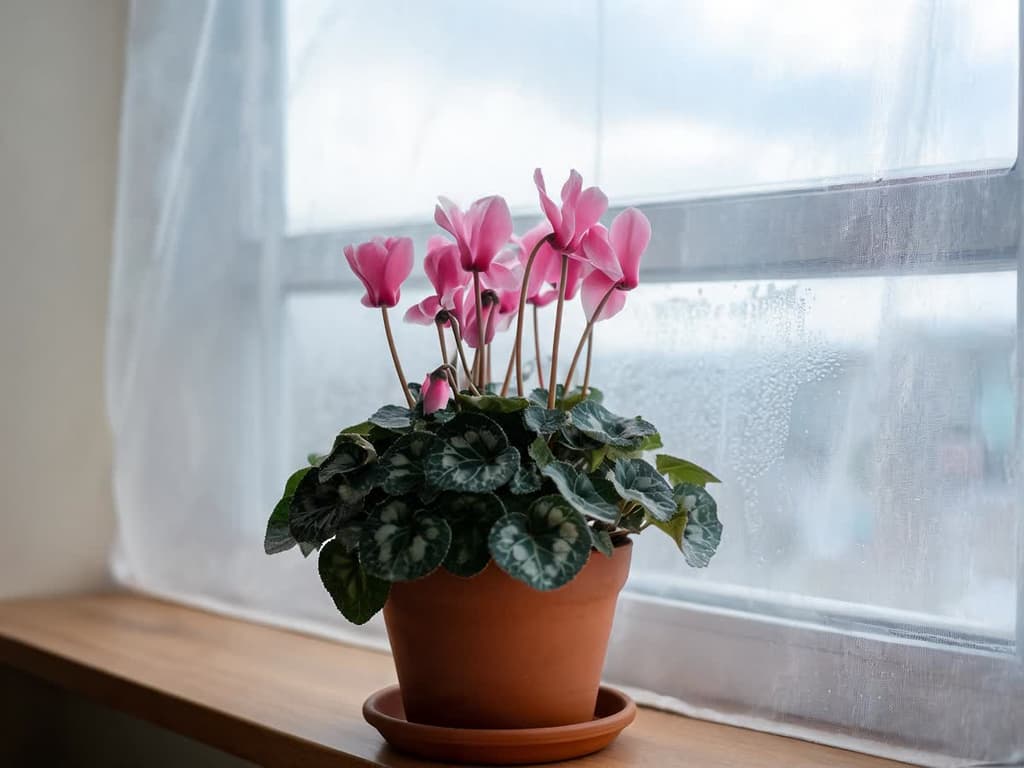
Cyclamen in winter tolerates cold, but not frost, when it is the potted florist cyclamen (Cyclamen persicum). It likes nights around 10 °C and needs shelter when the low drops below 5 °C. Garden cyclamens, Cyclamen hederifolium and Cyclamen coum, handle much more cold. The Royal Horticultural Society (RHS), the British horticultural society, classifies them as hardy to winters of −15 °C to −10 °C.
In Brazil, almost all cyclamen for sale is potted cyclamen. Where winter days stay below 21 °C, this is the best time of year for it. The exception is frosty nights in the South and the mountains.
Cyclamen | Where it lives | Cold tolerance | Source |
|---|---|---|---|
Potted cyclamen (C. persicum) | Indoors or on a sheltered porch | Shelter when the low drops below 5 °C (the RHS calls for a heated greenhouse, with a minimum of 5 to 10 °C); dies at the first outdoor frost | RHS (rating H1c, heated greenhouse); University of Arkansas |
Ivy-leaved cyclamen (C. hederifolium) | Garden, in partial shade | −15 °C to −10 °C | RHS (rating H5, hardy in severe winters) |
Cyclamen coum | Garden, in partial shade | −15 °C to −10 °C | RHS (rating H5, hardy in severe winters) |
Which cyclamen do you have: potted or garden cyclamen
The cyclamen bought in a pot, in bloom, at a florist shop or supermarket in Brazil is Cyclamen persicum. The flowers measure about 5 cm and the plant reaches 15–23 cm in height, according to NC State Extension. The same factsheet states that it does not withstand frost and grows best in a greenhouse.
Garden cyclamens are smaller: they reach 10–15 cm in height and have flowers around 2.5 cm, according to the University of Arkansas. To tell the three species apart:
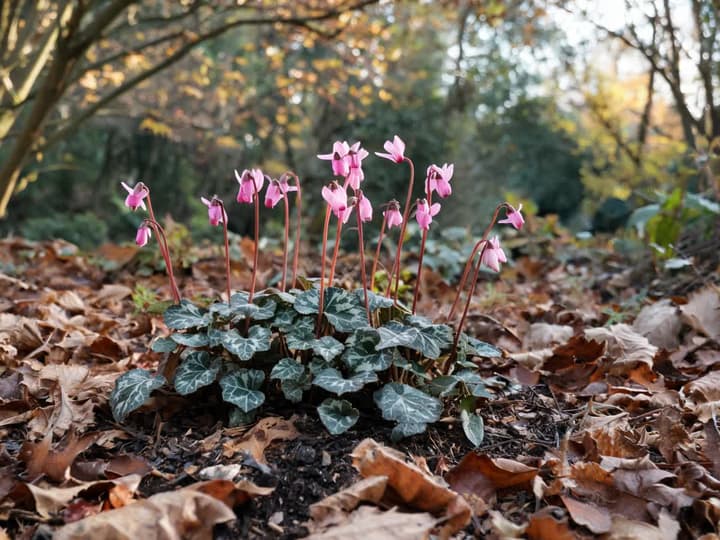
Ivy-leaved cyclamen (*C. hederifolium*): pink flowers appear in early fall, before the leaves. Then come the leaves, which resemble those of ivy, according to the RHS hardy cyclamen guide.
Cyclamen *C. coum*: blooms in the dead of winter, in pink or magenta, and has rounded, dark green leaves, often with silver patterns (RHS).
Potted cyclamen (*C. persicum*): blooms from early winter to early spring, with much larger flowers, and is almost always kept in a pot (NC State).
Small pink flowers with patterned leaves that sprout on their own in a shaded garden bed in fall are almost always C. hederifolium. It spreads by seed in the bed and is not a weed. If you do not know the plant's name, the Bloom app identifies the species from a photo.
How much cold potted cyclamen can tolerate
Potted cyclamen tolerates cool nights, around 10 °C, but dies from frost. The University of Arkansas notes that florist cyclamen is sensitive to frost and dies at the first one. The University of Wisconsin Extension confirms that it does not tolerate frost and is therefore grown as a houseplant.
The RHS places C. persicum in class H1c of the RHS hardiness rating, the scale that indicates how much cold each plant tolerates. H1c is a heated greenhouse, with a minimum of 5 to 10 °C, and the plant only stays outdoors while the days are warm enough for it to grow. No source measured potted cyclamen on a porch with nights of 5 to 10 °C. That is why this text uses the lower limit of the class, 5 °C, as the time to bring the pot indoors.
Potted cyclamen blooms best in mild cold. Clemson University recommends 16–18 °C during the day and around 10 °C at night. The same factsheet warns that above 21 °C the buds stop developing. Because of this, cyclamen blooms better in the cool months than in a warm room.
NC State diverges from the other sources. It lists C. persicum in zones 9 to 11 of the US Department of Agriculture (USDA) hardiness map, and in zone 9 the low reaches −7 °C. The same factsheet calls the plant frost tender. This text follows the RHS, Arkansas, and Wisconsin, because all three say frost kills the plant. The 5 °C limit to bring the pot inside comes from the RHS.
Cyclamen in winter in Brazil: frost in the South and mountains, mild winter elsewhere
In Brazil, winter runs from June to August, and frost is the only real risk for potted cyclamen. A study used data from the National Institute of Meteorology (INMET) from 8 cities in Rio Grande do Sul, from 2003 to 2018. It counted an average of 107 frosts per year across all the cities, about 13 per city. According to the authors (Tazzo and colleagues, 2024), 81% of them occurred in winter, 13% in fall, and 6% in spring.
The same study recorded frosts from March to November, and Bom Jesus, in the Rio Grande do Sul highlands, had the highest frequency. Where frost occurs, such as in the South and the mountains, a porch cyclamen needs a plan for cold nights:
When frost or a low below 5 °C is forecast, bring the pot indoors before nightfall.
Leave the pot in an unheated room with bright light.
Return the pot to the porch once the low climbs back above 5 °C.
Outside frost regions, days below 21 °C from June to August are the best time for cyclamen to bloom. Where days exceed 21 °C, cyclamen's problem is the heat.
Where to place and how to water cyclamen in winter
In winter, keep cyclamen in the coolest and brightest room in the house, away from heaters and stoves. Clemson warns that the soil dries out too quickly near hot air vents. An east-facing window is a good spot, according to Wisconsin Extension. In their winter, the same extension notes that a window on the sunny side may be better, and in Brazil that side is north. At a north-facing window, use a sheer curtain if direct sun hits the leaves for hours.
Water when the surface of the soil feels dry to the touch, without wetting the center of the plant. The Wisconsin Extension warns that the center of the plant rots if it stays wet. That is where leaves and stems emerge from the tuber, the rounded base that stores the plant's food reserves. The two safe methods:
From the bottom: leave the pot for 15 minutes in a saucer of water, as Wisconsin suggests, then remove the pot and let it drain.
Around the rim: pour water slowly along the edge of the pot until it runs out the bottom drainage hole, as NC State recommends.
In a cool room, potted soil takes longer to dry out. Touch the soil before each watering instead of watering on a fixed schedule. If the surface is still damp, wait another day. Cyclamen also requires fertilizer and the removal of spent flowers to keep blooming. The guide on how to care for cyclamen explains both.
Cyclamen got frosted: can it be saved?
A cyclamen caught in frost can survive if the tuber remains firm. Press the top of the tuber with your finger, which sits slightly above the soil line. If it is hard, the frost killed the leaves and flowers, but the tuber can still sprout, since all leaves and stems grow from it. If it feels soft or mushy, it is rotten, and the plant will not recover: discard the plant and the soil.
Soft, dark leaves and stems after a frost usually do not recover. UF/IFAS, the University of Florida Extension, uses color to separate live from dead tissue in shrubs and trees. Green under the bark is alive; black or brown is dead. In cyclamen, a firm tuber makes the difference.
If the tuber is firm, follow these steps:
Bring the pot indoors into a cool, bright room.
Remove mushy leaves, flowers, and stems by hand, pulling each from the base, flush against the tuber.
Clear away any debris that fell onto the soil.
Water only when the surface of the soil dries out, around the rim or from the bottom.
Wait for new leaves to sprout from the tuber over the coming weeks. If none appear, press the tuber again: if it is soft, discard the plant.
UF/IFAS gives different advice for garden plants: delay pruning, because damaged leaves provide some insulation from the cold for the rest of the plant. For cyclamen indoors, this text follows Ohio State University. It explains that the gray mold fungus (Botrytis) lives on dead tissue and enters the plant through weak or dead tissue. Indoors, the dead leaf does not protect the plant from any cold, and that is how the fungus can enter.
No source has measured how many potted cyclamens resprout after a frost. If the symptom does not look like cold damage, the guide what is wrong with my plant helps pinpoint the cause in 3 questions.
Cold-hardy cyclamens: C. hederifolium and C. coum
According to the University of Arkansas, the two cold-hardy cyclamens most commonly sold are Cyclamen hederifolium and Cyclamen coum. C. hederifolium blooms in fall, and C. coum blooms in winter. The RHS rates both species as H5: hardy to winters of −15 °C to −10 °C across most of the UK.
US extensions go beyond the RHS. NC State lists C. hederifolium starting from USDA zone 5, with lows of −29 °C to −23 °C. Arkansas says it survives down to zone 4, which is even colder. This text uses the RHS number because it is the most cautious and the only one that covers both species.
To plant a garden cyclamen:
Location: partial shade, sheltered from the wind, such as under trees (RHS).
Soil: rich in organic matter and well-draining (RHS).
Depth: tuber 3–5 cm below the surface; planted too deep, it may fail to bloom (RHS). NC State and Arkansas recommend planting even shallower, with the tuber barely covered; when in doubt, plant shallower.
Mulch: each year, once the cyclamen leaves die back, spread leaf mold (well-rotted leaves) over the bed; where it freezes, create a deep, loose layer (RHS).
In pots, the risk increases. The RHS scale itself notes that H5-rated plants face greater risk in containers than in the ground. On a shaded porch, bring the pot indoors on frosty nights, just as you would with a florist cyclamen.
No source has tested garden cyclamens in Brazil. The RHS advises avoiding excessive moisture in summer. NC State states that the tuber does not tolerate poorly drained soil during the summer, when the plant loses its leaves and stops growing (dormancy). Summer is rainy in much of Brazil. Because of this, these cyclamens can suffer more from rain than from cold, and require a bed that drains very well.
When the cold ends, cyclamen enters dormancy
When days warm up in spring, potted cyclamen stops blooming and goes dormant: the leaves turn yellow one by one and drop. According to NC State, most people throw the plant away when the leaves drop. A firm tuber remains alive and sprouts again in fall. In Brazil, the leaves begin to yellow between October and November.
Yellowing leaves after blooms fade, with a firm tuber, signal dormancy rather than disease: cut back watering gradually and stop fertilizing. If leaves yellow while the plant is still blooming, check your watering: Wisconsin Extension lists soggy or overly dry soil, heat, and low light as causes. The guide on how to care for cyclamen explains how to manage dormancy and get the plant to bloom again in fall.
Cyclamen is toxic to cats and dogs
Cyclamen is toxic to cats, dogs, and horses, according to the ASPCA. The toxic substances are terpenoid saponins, natural compounds in the plant. They cause salivation, vomiting, and diarrhea; if the animal eats a large amount of the tuber, the ASPCA reports heart rhythm abnormalities, seizures, and death.
Garden cyclamen is also toxic: NC State lists C. hederifolium as toxic to humans, cats, dogs, and horses. On a porch or in garden beds, place cyclamen out of a cat's reach. If an animal chews the plant, contact a veterinarian.
The list of toxic plants for pets highlights other house and porch plants that require the same precaution.
Frequently asked questions
Is cyclamen an annual or a perennial?
Cyclamen is a perennial: the tuber lives for several years. Potted cyclamen blooms during cool months, goes dormant in the heat, and sprouts again in fall. According to NC State, many people discard the plant when leaves turn yellow, assuming it died. If the tuber is firm, it remains alive.
Can cyclamen stay on the porch in winter?
Potted cyclamen can stay on a covered porch in winter if the forecast low stays above 5 °C. On nights with predicted frost or temperatures below 5 °C, bring the pot indoors. No source has evaluated cyclamen on a porch during nights between 5 °C and 10 °C.
Does cyclamen need direct sun in winter?
Cyclamen needs bright light in winter, but not strong direct sun for hours. An east-facing window is a good spot. In Brazil, a north-facing window also works in winter, with a sheer curtain if direct sun hits the leaves for hours. Low light makes the plant weak, with smaller flowers and lighter leaves, according to NC State.
Which cyclamen tolerates hard frost?
The cyclamens that withstand hard frost are garden varieties, such as C. hederifolium and C. coum. The RHS rates them as hardy to winters of −15 °C to −10 °C, and C. coum blooms in the dead of winter. Florist potted cyclamens cannot tolerate frost or snow.
Conclusion
Potted cyclamen prefers mild cold, with nights around 10 °C, and requires shelter below 5 °C. When frost threatens, move the pot indoors; after frost damage, assess the tuber: if firm, wait for new leaves; if soft, discard the plant. Garden cyclamens withstand −10 °C to −15 °C and are rare in retail trade in Brazil. There, the greater risk to them may be summer rainfall rather than cold.
If your plant develops soft leaves or spots unrelated to cold, the Bloom app analyzes the photo and flags the likely issue. Plant diagnostics are included with the Premium plan, and the app is available exclusively for iOS.
Related articles
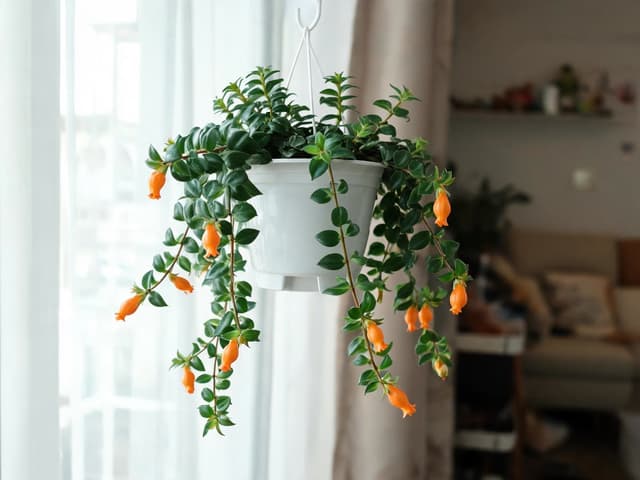
How to Care for a Goldfish Plant: Light, Watering, and Blooms
How to care for a goldfish plant: bright light without strong sun, water when the soil surface dries, and humid air. Learn how to tell a Nematanthus from a Columnea, why it drops leaves, and how to get it to bloom again.
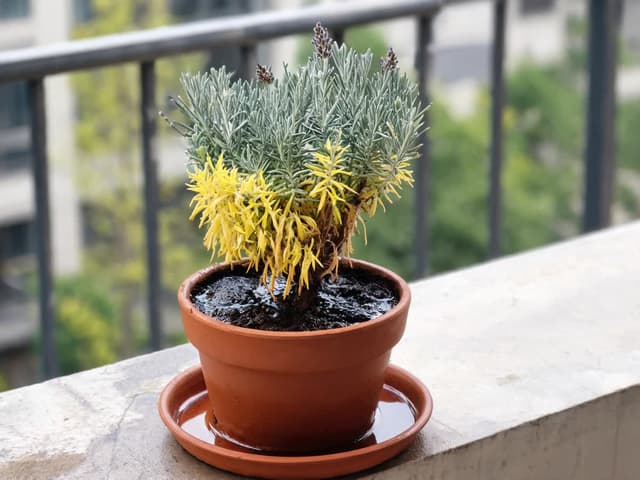
Lavender Leaves Turning Yellow: Where the Yellowing Starts Shows the Cause
Lower leaves turning yellow with moist soil means overwatered roots, the most common cause. Old leaves drying one by one on woody stems is normal. Take the stem and root test, see if your plant can still be saved, and find out what to do today.
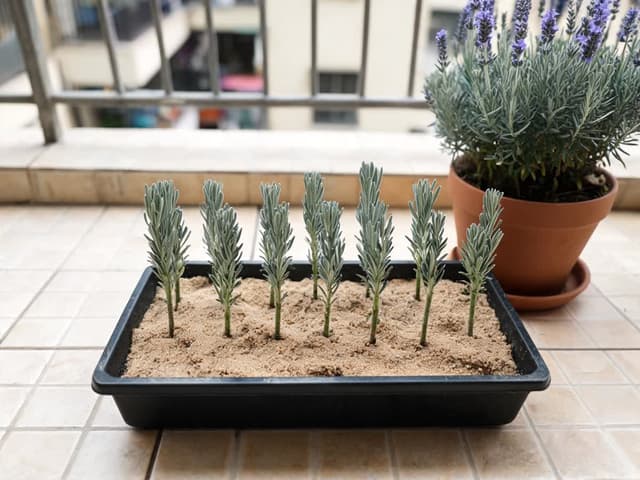
How to Propagate Lavender: Where to Cut and Why Cuttings Rot
A lavender cutting comes from a non-flowering branch tip, about 4 inches long, planted in sandy soil that never stays soggy. Learn where to cut, rooting times, seasonality in Brazil, and what to do if the base turns black.