Cyclamen Care: How to Keep It from Wilting and Get It to Rebloom
How to care for potted cyclamen: placement, watering without rotting the tuber, removing spent blooms, and what to do through flowering and summer dormancy.
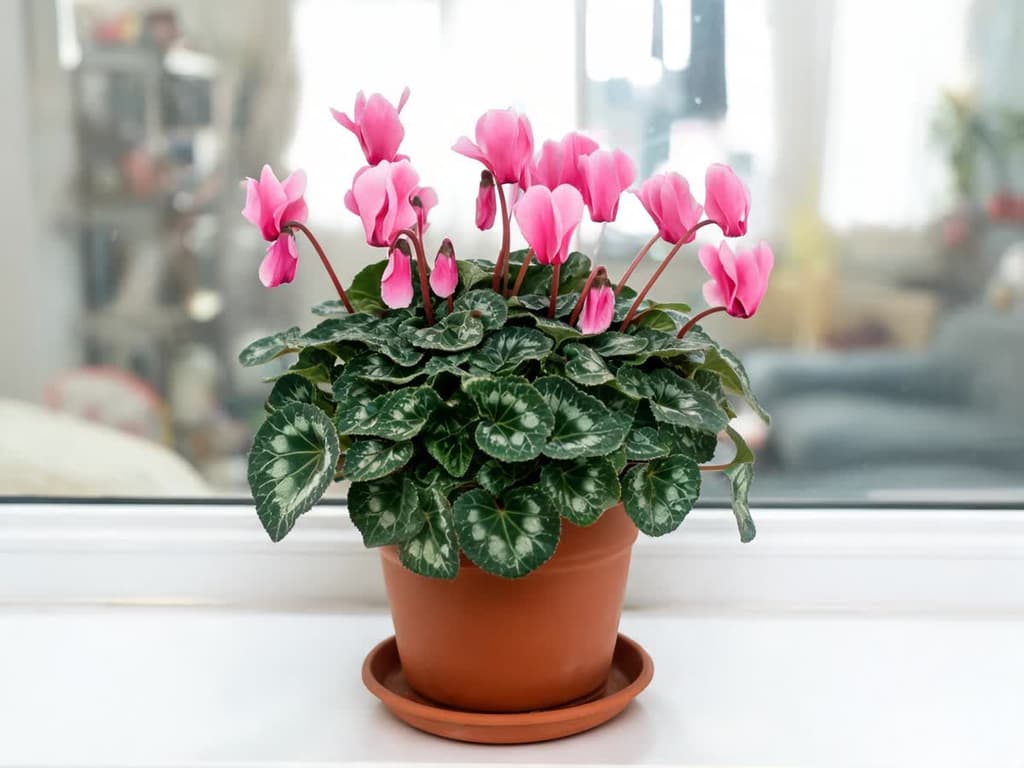
To care for cyclamen (Cyclamen persicum), keep the plant in a cool spot with bright light, away from harsh direct sun. Keep daytime temperatures at 16–18 °C and around 10 °C at night. Water along the edge of the pot or from the bottom, only when the surface of the soil dries out, without wetting the center of the plant where the leaves emerge. Remove spent blooms by grasping the stem right at the base, twisting, and pulling.
In Brazil, cyclamen usually wilts for two reasons: heat and watering mistakes, with too much or too little water. And not every yellow leaf is a disease. After blooming, cyclamen enters dormancy: a summer rest where the leaves drop. Only the tuber (the round base that stores water and reserves) stays alive in the soil.
Care | What to do |
|---|---|
Temperature | 16–18 °C during the day and around 10 °C at night; above 21 °C the flower buds fail to develop |
Light | Bright, indirect light; an east-facing window |
Watering | Along the rim or from the bottom, once the soil surface dries out |
Spent flowers | Pull the stem flush with the base using a quick twist |
Fertilizer | Low-nitrogen fertilizer, only while the plant has new leaves and active blooms |
After flowering | Dormancy for 2 to 3 months, with minimal water |
Cats and dogs | Toxic, especially the tuber |
Cyclamen wilted or turned yellow: what is happening?
A wilted or yellowing cyclamen usually comes down to five causes: thirst, rot, heat, watering mistakes, or the plant's natural life cycle. What distinguishes one from the other is the soil, the base of the plant, and the time of year. On almost any potted houseplant, yellow leaves point to water, light, or nutrients, as covered in the guide on yellow leaves. For cyclamen, there is one more factor: the calendar.
What you see | Probable cause | What to do |
|---|---|---|
Entire plant drooping, soft leaves, dry soil | Thirst | Water from the bottom by setting the pot in a saucer of water for 15 minutes |
Plant collapsed, wet soil, base soft to the touch | Tuber rot | Gently squeeze the tuber and follow the rot section below |
Yellow leaves with soil that is constantly soggy or bone-dry | Watering mistake | Water only when the surface of the soil dries out |
Yellow leaves and buds drying up before opening, in a warm room | Heat, dry air, or low light | Move the plant to a cooler, brighter location |
Leaves yellowing one by one after blooming, in spring | Dormancy | Gradually cut back on watering; this is not a disease |
Gray powder on flowers, stems, or soil | Gray mold (Botrytis fungus) | Remove affected parts and improve ventilation |
Distorted new leaves curling inward, darker with mottled patches | Cyclamen mite (microscopic pest) | Isolate the plant from others and discard it |
Soft leaves are the quickest sign of thirst. The University of Wisconsin Extension, a service that guides the public on plants, says cyclamen foliage should stay firm and upright. If it softens, the plant likely needs water. The same source warns that a plant kept too wet or too dry develops yellow leaves. Heat, dry air, and low light cause the same symptom.
If the symptom does not match any row, check the guide what is wrong with my plant. It diagnoses the issue in 3 questions: where the symptom appears, what it looks like, and what the soil and roots feel like.
Which cyclamen you have at home
The potted cyclamen sold at flower shops is Cyclamen persicum, also known as florist's cyclamen. According to the Wisconsin Extension, it cannot tolerate frost and blooms in winter, which is why it is almost exclusively grown as an indoor plant. The leaves are heart-shaped, often with silver marbled patterns, and the flowers face downward with petals swept upward.
Cold-hardy cyclamen species, such as Cyclamen hederifolium and Cyclamen coum, are outdoor garden perennials from Europe and are rarely sold here. Advice written for them, such as planting directly in garden beds or leaving them under snow, does not apply to potted florist's cyclamen.
Cyclamen is a tuberous plant: everything grows from a tuber (a rounded, firm, brown base sitting partially buried that stores water and nutrients). The leaves and flower stems sprout directly from it. That is why irrigation water should never land directly on the tuber.
Where to place cyclamen: light and temperature
The ideal temperature for cyclamen is between 16 °C and 18 °C during the day and around 10 °C at night, according to the Wisconsin Extension. The cyclamen factsheet from Clemson University gives the heat threshold: above 21 °C, buds fail to develop. The cooler the spot, the longer each flower lasts.
Clemson's heat threshold explains why a cyclamen bought in full bloom wilts so quickly in warm indoor spaces. In a room that climbs past 21 °C during the day, buds fail to develop. Look for the coolest room in the house, well away from stoves, space heaters, and direct afternoon sun.
Light should be bright and indirect. The Wisconsin Extension points to an east-facing window, which receives only weak morning sun. In winter, a north-facing window also works because it receives the strongest light of the season. If direct sun hits the leaves for hours, filter it with a sheer curtain. Too little light is also a problem. The NC State Extension notes that a lack of light leaves the plant weak, with smaller flowers and lighter leaves.
A covered porch or balcony works well during cool months, provided it receives no harsh afternoon sun or direct rain. Potted cyclamen cannot withstand frost: on freezing nights, bring the pot indoors.
How to water cyclamen without rotting the tuber
Water cyclamen when the surface of the soil feels dry to the touch, and never wet the center of the plant. The Wisconsin Extension warns that the crown (where leaves and stems emerge from the tuber) rots if it stays wet. There are two safe ways to water:
From the bottom: set the pot in a saucer of water for 15 minutes, as recommended by the Wisconsin Extension. The soil draws moisture up through the drainage holes. Afterward, lift the pot from the saucer and let it drain completely.
Along the rim: pour water slowly against the inner rim of the pot, well away from the center, as recommended by NC State and Clemson. Stop as soon as water begins draining out the bottom.
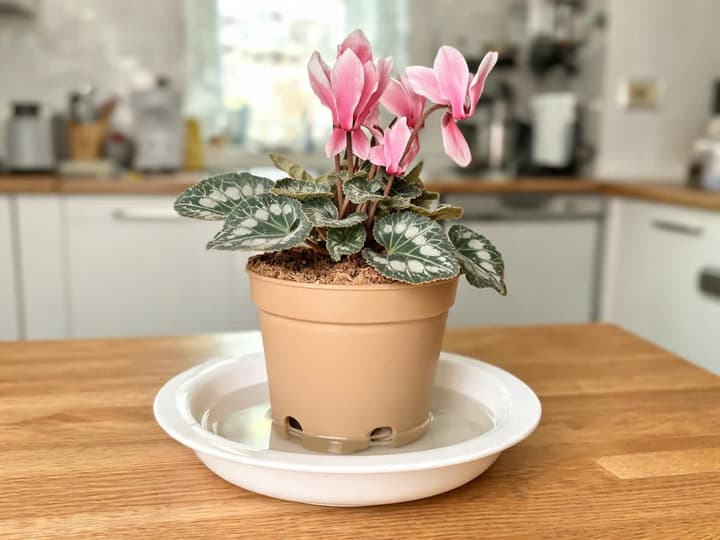
With both methods, discard any excess water left standing in the saucer. Between waterings, let the soil approach dryness. A pot without drainage holes will not work for cyclamen, because stagnant water at the bottom rots the tuber.
Watering on a fixed schedule does not work for cyclamen. An Italian gardening shop suggests "a little water every 3–4 days." Yet the soil in that same pot dries rapidly in a warm room and stays wet for days in a cold one. Feel the soil before watering: if the surface is still moist, wait another day.
Spent flowers and yellow leaves: pull with a twist
To remove a spent flower, grip the stem close to the base, twist, and pull firmly until it snaps cleanly away from the tuber. The Wisconsin Extension describes this technique and explains that it encourages the plant to keep blooming. Clemson gives the identical instruction: grasp the stem of the faded flower and pull. Do the same for every yellow leaf.
An Italian plant shop tells you to cut the stem at the base. Here the instruction follows the university extensions, and Viridea, another Italian shop, explains why: the stub left behind after cutting can rot. Gray mold enters through weak or dead tissue, such as the stub of a cut stem, according to Ohio State University.
Also pick up any dropped petals or leaves resting on the soil surface. That same Ohio State publication notes that infected petals falling onto healthy leaves cause leaf spots.
Fertilizing cyclamen: how much and when
Fertilize cyclamen only while it is producing new leaves and flowers, using a low-nitrogen liquid fertilizer formulated for flowering houseplants. The Wisconsin Extension recommends feeding every 2 weeks; Clemson suggests once a month. Wisconsin warns that excess fertilizer produces soft, weak foliage that is far more vulnerable to disease. Stick to a monthly application at the label rate. This is the safest approach, as neither source compared the two frequencies directly.
Stop fertilizing as soon as the leaves begin yellowing after the blooming cycle ends. A dormant plant cannot use nutrients, and unused salts will build up in the soil.
Soil and pot selection for cyclamen
Use a light, well-draining potting mix formulated for indoor plants. When repotting, leave the top half of the tuber sitting above the soil line, as directed by the Wisconsin Extension. Cornell University also recommends shallow planting in a well-draining medium to prevent bacterial soft rot.
The pot should be only slightly larger than the tuber itself and must have drainage holes at the bottom. An oversized container holds excess moisture around the root zone for too long.
The year of the cyclamen in Brazil, month by month
Cyclamen comes from regions with hot, dry summers and cool, humid winters (Mediterranean climate). That is why it grows in autumn, blooms in winter and early spring, and goes dormant all summer. The Wisconsin Extension and NC State describe this rhythm for the Northern Hemisphere. In Brazil, the seasons are reversed, and the months below are already adjusted.
Months in Brazil | Cyclamen stage | What to do |
|---|---|---|
March to May (autumn) | New leaves and buds | Resume watering when new leaves emerge; fertilize until the buds form |
June to September (winter and early spring) | Flowering | Cool, bright spot; water along the edge or from the bottom; remove spent flowers; fertilize once a month |
October and November (spring) | End of flowering, leaves turn yellow | Reduce watering gradually; stop fertilizing |
December to February (summer) | Dormancy, 2 to 3 months | Keep the pot in the shade, water sparingly when the surface dries out, and use no fertilizer |
In warm cities, flowering ends sooner because days exceed 21 °C earlier in spring. A plant purchased already in bloom in autumn enters this same calendar from the moment of purchase.
Between September and November, in spring, cyclamen flowering draws to a close. As long as buds remain, keep the plant in the coolest room available and continue plucking spent flowers. When the leaves start turning yellow one by one while the tuber remains firm, the plant is entering dormancy.
Dormant cyclamen: what to do when leaves drop
A dormant cyclamen is not dead. NC State notes that leaves turn yellow and drop in summer, and most people throw the plant away at this stage. The tuber remains alive and can sprout fresh foliage again in autumn. The Wisconsin Extension notes that dormancy lasts 2 to 3 months.
You have two options for managing summer dormancy:
Tuber left in the pot: gradually cut back on watering as foliage yellows and remove dried leaves. Place the pot in a shaded, well-ventilated spot. The Wisconsin Extension warns against keeping soil wet while the plant has no leaves. Clemson advises never letting the potting mix dry out completely. Neither source quantified the exact dormancy water volume. Water along the edge only when the soil surface dries out, using just enough moisture to darken the top layer lightly.
Tuber lifted from the pot: once all foliage dies back, gently lift the tuber from the soil. The Wisconsin Extension instructs storing the tuber in dry vermiculite (a mineral potting medium sold at garden centers) at roughly 10 °C for 6 to 12 weeks.
In the Brazilian summer, it is difficult to find a room that stays near 10 °C for weeks. For that reason, leaving the tuber in the pot is the method that works best for most homes.
How to get cyclamen to rebloom
To rebloom, a cyclamen needs three things: a firm tuber following dormancy, fresh foliage in autumn, and cool temperatures. When the first new leaves appear, typically in March or April, repot into fresh mix with the top half of the tuber sitting exposed. Resume watering whenever the soil surface dries out and fertilize until buds develop, following the Wisconsin Extension's guidance.
Getting cyclamen to rebloom at home is far harder than maintaining its initial display. The Wisconsin Extension notes that many people treat cyclamen as a temporary seasonal plant because replicating ideal reblooming conditions is difficult. In areas where autumn and winter daytime temperatures stay above 21 °C, the plant may push out foliage with very few flowers.
Gray mold and rot: can you save a cyclamen?
You can save a cyclamen as long as its tuber stays firm. Press the tuber with your fingertip: if it feels solid, the problem is usually confined to the leaves, stems, or blooms. If it feels mushy, smells foul, or collapses, rot has reached the tuber and the plant cannot recover. There is one exception: the plant wilts and collapses despite proper moisture and a firm tuber. If slicing the tuber reveals brown or purplish discoloration inside, it has Fusarium wilt, and Cornell advises discarding it.
The gray powder on flowers, stems, or soil is gray mold, caused by the fungus Botrytis cinerea. Cornell University notes that, in cyclamen, it spots petals, and when the base of the plant rots, the leaf petioles collapse. Ohio State explains that the fungus thrives with humidity levels above 85%, low air movement, and standing water on the plant.
If the tuber is firm, follow these steps:
Gently pull away all moldy flowers, stems, and leaves by hand, snapping them at the base, and seal them in a trash bag.
Clear away any fallen petals and foliage resting on the soil surface.
Allow the top layer of soil to dry out before watering again.
Move the pot to a well-ventilated spot free of drafts and separated from other houseplants.
Water only along the rim or from below, keeping the leaves and crown dry.
If the tuber is mushy, discard both the plant and its soil. Cornell University describes bacterial soft rot as a complete breakdown of the tuber that fells the entire plant. No published source details a cure for soft rot, and Cornell instructs growers to rogue and destroy plants showing other tuber rots. Wash the pot thoroughly before reusing it.
Cyclamen pests
Cyclamen pests include aphids, mealybugs, spider mites, and thrips, according to NC State and Wisconsin Extension. Against these, Wisconsin Extension recommends insecticidal soap or a product registered for indoor plants. Follow the dose and application interval on the label.
The cyclamen mite is the most serious pest. It is microscopic and attacks new leaves. The University of Kentucky describes infested leaves as distorted, often curled inward, darker, and flecked. The Wisconsin Extension and Clemson recommend discarding a plant with this mite, because it is very difficult to control.
Cyclamen toxicity to dogs and cats
Cyclamen is toxic to dogs, cats, and horses, according to the ASPCA. The toxic substances are terpenoid saponins (toxins produced by the plant itself), and the tuber is the most dangerous part, according to NC State. Signs include salivation, vomiting, and diarrhea; if an animal ingests a large amount of the tuber, the ASPCA notes heart rhythm abnormalities, seizures, and death.
Keep the pot well out of reach of pets, especially during dormancy when the bare tuber sits exposed. If your pet chews on the plant, contact a veterinarian immediately and bring a plant sample along. NC State notes that plant sap can also cause skin irritation. If you have sensitive skin, wear gloves when handling the tuber. The guide to toxic plants for pets lists other household species that require the same care.
Frequently asked questions
Is cyclamen an annual or a perennial?
Cyclamen is a perennial: the underground tuber lives for years, sending up fresh foliage every autumn. Many growers throw the plant out when leaves turn yellow after flowering, assuming it has died. In most cases, it is simply entering its 2- to 3-month summer dormancy, according to the Wisconsin Extension.
How long does cyclamen flowering last?
Cyclamen blooms can last up to three months, according to the Wisconsin Extension and NC State. Flowering extends longer in a cool location, between 16 °C and 18 °C during the day, and when spent flowers are plucked cleanly from the base. In a room that climbs over 21 °C, unopened buds abort and blooming ends early.
Can cyclamen tolerate direct sunlight?
Cyclamen tolerates soft morning sunlight, but harsh midday and afternoon sun will burn it. Strong sunlight heats up the room, and Clemson warns that temperatures over 21 °C stop flower buds from developing. An east-facing window with bright, indirect light provides the best exposure.
Should you mist cyclamen leaves?
Do not mist cyclamen. Wet foliage and blooms invite gray mold, which flourishes in standing water on the plant according to Ohio State. To raise humidity, the Wisconsin Extension suggests placing the pot on a tray filled with moist pebbles. The bottom of the pot must not touch standing water. Use a pebble tray only if your indoor air is dry, and keep the room well ventilated: Ohio State connects air humidity above 85% directly to gray mold outbreaks.
How do you choose a healthy cyclamen at the nursery?
Pick a cyclamen loaded with buds just beginning to open and stiff, sturdy foliage, as advised by the Wisconsin Extension. A plant whose blooms are already fully open has less flowering time left ahead. Inspect the base as well: look for a firm tuber free of gray mold and mushy stems.
Conclusion
Cyclamen lasts longest when kept cool, given bright indirect light, watered from below or along the pot rim, and cleared of spent flowers with a clean twist. Yellowing leaves in spring alongside a firm tuber indicate natural dormancy, not disease. Keep the potted tuber in a shaded spot with minimal water until fresh growth sprouts in autumn.
If your plant shows a symptom not listed in the diagnostic chart, the Bloom app analyzes a photo of the leaf and identifies the likely issue. Plant diagnosis is part of the Premium plan, and the app is available exclusively for iOS.
Related articles
How to Care for a Maidenhair Fern: Light, Water, and Revival Tips
Learn how to care for a maidenhair fern indoors: bright indirect light, consistently moist soil, high humidity, and how to revive it if it dries out completely.
How to Propagate Spider Plants: Root the Pup Before Cutting
The safest spider plant cutting comes from a pup still attached to the mother plant: rest the plantlet on soil in a small pot, wait for roots to establish, and only then cut the stolon. Learn when the pup is ready, whether rooting in water is worth it, how to divide the clump, and why plants fail to produce babies.
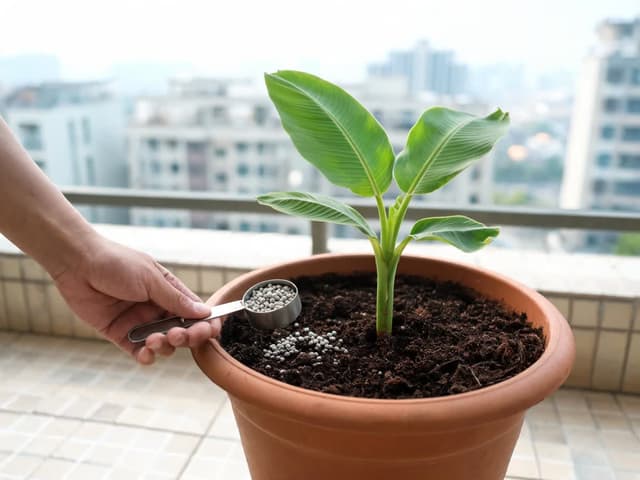
Banana plant fertilizer: fertilizing potted and backyard plants
Banana plant fertilizer needs more potassium than nitrogen, in a 3-1-6 ratio. For a potted plant on a balcony, use the label dose in spring and summer. In the backyard, fertilize every 2 months, adjusting the amount by mat age. Learn the formula, timing in Brazil, and signs of deficiency or excess.