How to Care for Hibiscus: Sun, Watering, Fertilizer, and Pruning for Flowers
How to care for hibiscus: 6 hours of direct sun, evenly moist soil without waterlogging, half-strength fertilizer in spring and summer, and pruning in early spring. Find out why the flower lasts one day and why buds drop before opening.
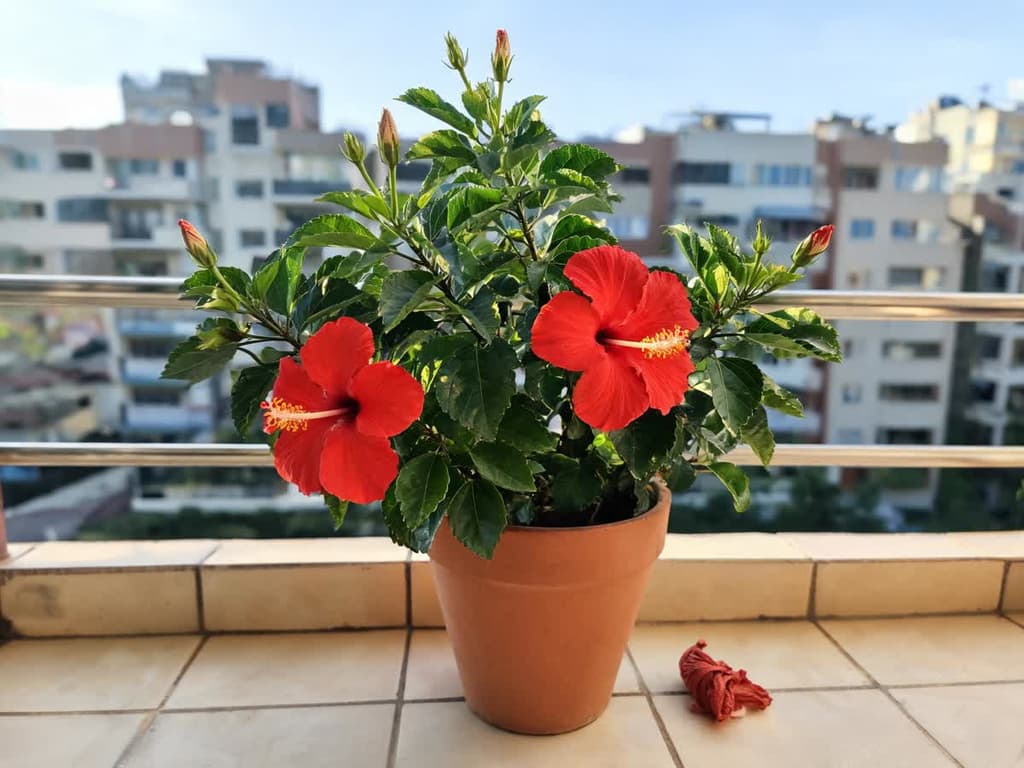
To care for hibiscus, keep the plant where it gets 6 hours or more of direct sunlight per day. Keep the soil consistently slightly moist, without waterlogging it. In spring and summer, fertilize with half the dose indicated on the label. Prune in early spring, because flowers form on new growth. Each flower lasts a single day, and the plant produces others to replace it.
This guide covers common hibiscus, Hibiscus rosa-sinensis, a shrub with large red, pink, orange, yellow, or white flowers native to Asia. NC State Extension records a height of 1.2 to 3 m for it. Rose of Sharon (Hibiscus syriacus) is another species: it loses its leaves in winter and tolerates frost, and the care instructions below do not apply to it. In Brazil, common hibiscus lives outdoors year-round in warm regions. Where winter nights drop to 12 °C or lower, such as in the South and in the mountains, the plant needs protection.
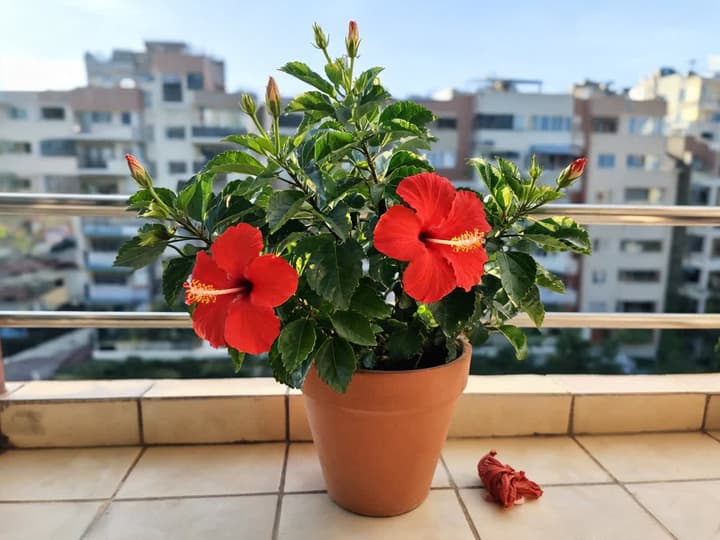
How to care for hibiscus: quick reference
Care | What to do |
|---|---|
Light | 6 hours or more of direct sunlight outdoors; indoors, 4 to 5 hours or more of direct sunlight in a north- or west-facing window (in Brazil) |
Watering | Water when the top inch of soil is dry, until water drains from the bottom hole, and empty the saucer right away |
Soil | Rich in organic matter with good drainage; a 12-inch or larger pot for a mature plant |
Fertilizer | Balanced fertilizer (10-10-10 or 20-20-20) at half the label dose: every 2 to 3 weeks in outdoor pots, from September to March, in Brazil |
Pruning | From late August to September in Brazil, removing up to half the height (NC State) or a third of the old wood (Clemson) |
Temperature | 64 to 75 °F during the day to set buds; protect when nights drop to 54 °F or below |
Flowering | Lasts 1 day; buds that drop while closed are a sign of stress |
Pets | The ASPCA has no profile for Chinese hibiscus; only for rose of Sharon, which it classifies as non-toxic |
How much sun hibiscus needs
According to Minnesota, hibiscus blooms more the more light it receives. NC State indicates full sun, which is 6 hours or more of direct sun per day, and tolerates partial shade, from 2 to 6 hours. On a balcony or in the garden, choose a spot that receives 6 hours or more of direct sun, preferably starting in the morning.
Indoors, the University of Minnesota Extension calls for at least 4 to 5 hours of strong direct light. Scotts, an American gardening company, calls for 6 hours. This guide follows Minnesota, which is a university extension. The university writes for the Northern Hemisphere and recommends a south- or west-facing window. In Brazil, the window that gets the most sun is north-facing, and west-facing also works.
Move the plant into the sun gradually. Minnesota instructs moving the pot from shade to filtered light under a tree, and only then into full sun. According to Minnesota, this precaution prevents bud drop and reduces leaf drop. A hibiscus that goes straight from nursery shade into harsh sun can burn. The American nursery Hidden Valley Hibiscus describes large white patches on the leaves. It recommends increasing sun exposure a little each day over about 2 weeks.
The RHS, the British horticultural society, advises protecting hibiscus from direct sun. The RHS guidance is for greenhouse and windowsill plants in the United Kingdom. This guide follows NC State and Minnesota, which are university extensions and cover the plant outdoors and indoors. Both call for direct sun, with gradual acclimation.
How to water hibiscus
Water hibiscus so that the soil stays consistently slightly moist, without getting soggy. Minnesota advises never letting the soil dry out to the point where the plant wilts. To check the timing, stick your finger into the soil: if the top inch feels dry to the touch, water. That is the test taught by Costa Farms, an American plant grower, for hibiscus.
Hidden Valley Hibiscus prefers watering a little every 1 to 2 days, so the soil never dries out. Neither source cites a study. This guide follows the finger test because it adjusts to hot and cool weather and avoids overwatering, which rots roots.
Water from above the soil until water runs out of the drainage hole. Minnesota explains that water running through the pot wets the roots at the bottom and leaches away fertilizer salts. A few minutes after watering, discard the water in the saucer. Hidden Valley Hibiscus notes that a pot must not sit in standing water for more than 1 to 2 hours. Standing water keeps the soil waterlogged, and roots rot.
In summer heat, a potted hibiscus may need water every day, according to Scotts. In winter, from June to August, the plant grows less and the soil takes longer to dry out. Minnesota recommends letting the soil dry a bit more between waterings during this period: recheck with the finger test before every watering.
Soil and potting for hibiscus
According to NC State, hibiscus wants soil rich in organic matter (decomposed plant debris, such as humus and compost). The soil needs to retain moisture and drain well. Minnesota gives a potting mix recipe: 2 parts commercial potting soil, 2 parts peat moss, and 1 part perlite or vermiculite. Peat moss is decomposed moss, sold in bags. Perlite and vermiculite are lightweight minerals, sold at garden centers, that keep the soil loose and aerated.
Use a pot with a drainage hole at the bottom. Texas A&M AgriLife, the Texas university extension, recommends a pot at least 12 inches (30 cm) in diameter. Hidden Valley Hibiscus warns that a small sapling in an oversized pot ends up with waterlogged soil, because the roots cannot reach all the soil. Nobody has measured this limit. For a small sapling, the safest option is a pot just one size larger than the previous one, until reaching 12 inches (30 cm).
The RHS directs repotting potted hibiscus in fresh soil in late winter, before new growth starts. In Brazil, this falls in August or early September. Hidden Valley Hibiscus warns not to remove or wash the soil from the roots when repotting, because fine roots get damaged.
How to fertilize hibiscus
Hibiscus needs plenty of fertilizer to flower. Minnesota recommends a balanced fertilizer, such as 20-20-20 or 10-10-10, always at half the label rate. The three numbers represent the proportions of nitrogen, phosphorus, and potassium. The schedule changes depending on where the plant is located:
Outdoor potted plants, in spring and summer: half strength every 2 to 3 weeks (Minnesota). In Brazil, this period runs from September to March.
Indoor potted plants: half strength roughly once a month during spring and summer, and less in winter (Minnesota).
In-ground plants: extensions disagree. Texas A&M recommends small doses every month in spring and summer. UF/IFAS Nassau, in Florida, says once a month is too much and that 4 times a year is already generous fertilizing. Neither cites a study, and the safer option for the plant is the lower one: 4 times a year.
Texas A&M states that a potted plant needs fertilizer more often than one in the ground. Too much fertilizer also causes problems. According to UF/IFAS, excess fertilizer makes the plant produce abundant foliage while dropping buds before they open.
Scotts says that phosphorus buildup in the soil harms hibiscus and recommends fertilizer for acid-loving plants. Minnesota, which is a university extension, recommends balanced fertilizer. Neither cites a study on the matter. This guide follows Minnesota: balanced fertilizer at half the label rate.
Why hibiscus flowers last only one day
The hibiscus flower opens in the morning and wilts at the end of the same day, and this is the normal cycle for the species. NC State, UF/IFAS, and Minnesota record the single-day flower. Texas A&M states that most varieties last one day, especially in the heat. RHS and Scotts mention 1 to 2 days, and this guide follows the university extensions.
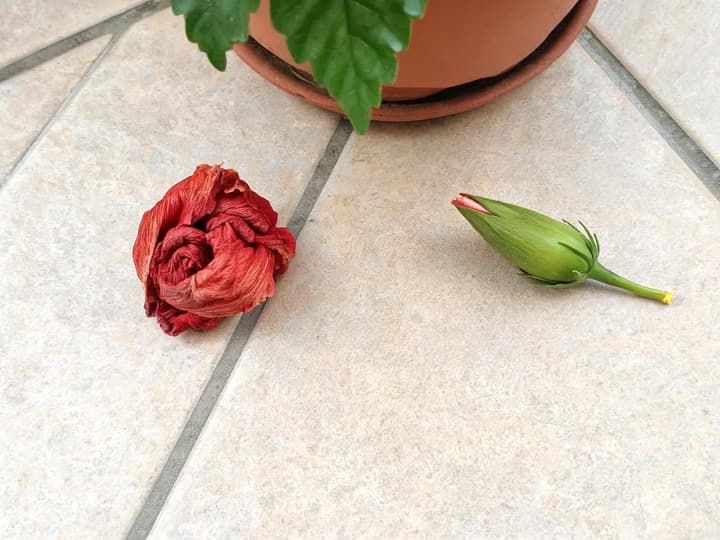
The spent flower closes, rolls inward, and drops off entirely. Minnesota also describes the calyx, the cup-shaped green base holding the flower: it dries up and falls off a few days later. A rolled flower on the ground, or a dry calyx dropping days later, does not indicate a problem with the plant.
UF/IFAS notes that the plant opens new blossoms over a long blooming season. In South Florida, it flowers nearly year-round. To produce flowers every day, the plant needs many developing buds, and buds form on new plant growth.
Why hibiscus buds drop before opening
A bud that falls while still closed indicates stress. It differs from a spent flower: it drops firm, green, or showing just a tip of color, without ever opening. Here are the causes, each paired with its source:
Moving the plant. NC State notes that moving hibiscus causes the plant to drop leaves and buds. This happens with newly bought plants: they moved from the nursery to a different light environment. Choose a sunny spot, keep the plant there, and only move it to shelter it from cold.
Irregular watering. UF/IFAS Nassau County cites soil that alternates between dry and waterlogged. Underwatering and then overwatering repeats this cycle. Follow the finger test: water only when the top inch is dry, without skipping waterings and without watering just in case.
Temperatures outside the ideal range. UF/IFAS Nassau County notes that most cultivars prefer 50 to 90 °F. Minnesota calls for 64 to 75 °F during the day for buds to form. It lists cold and heat as causes of bud drop. Use 64 to 75 °F as your target and 50 to 90 °F as the limits the plant can tolerate.
Drafts. Minnesota recommends moving the plant away from entryways and heaters.
Low light. Minnesota lists weak light among the causes. If the plant gets less than 6 hours of direct sun, increase sunlight gradually, as detailed in the sun section.
Too much fertilizer. The plant fills with dark green leaves and drops buds. UF/IFAS Nassau instructs to stop fertilizing until the following spring (September, in Brazil).
Some cultivars drop buds more readily than others. UF/IFAS Nassau attributes this to intensive hybridization among cultivars. If the plant is healthy, with firm leaves and new growth, keep its location and watering routine steady. No source provides a recovery timeline, so inspect new buds weekly. Do not prune stems to fix bud drop, because pruning removes the very buds that are preparing to form.
How to prune hibiscus for more blooms
Prune hibiscus in early spring, because flowers form on new growth. NC State recommends cutting back the plant by up to half its height at this time. Clemson Extension mentions removing one-third of the old wood in spring. In Brazil, prune from late August to September, when the cold ends and the plant begins to sprout.
Cut out thin, weak stems and any branches crowding the center. Then shorten the remaining branches by up to half their height, leaving a structure of sturdy limbs. RHS advises cutting back growth from the previous season, since new flowering shoots emerge from this framework. On young plants, pinch back soft stem tips to make the plant bushier.
Minnesota states that hibiscus tolerates hard pruning, but pruning removes forming flower buds. Blooms take longer to return after a heavy cutback. Mandevilla follows the same rule: flowers on new growth and pruning in late winter. Azaleas represent the opposite case: they form the following year's buds in summer, and pruning occurs right after flowering.
Hibiscus care in cold weather
Common hibiscus does not tolerate frost: the top growth burns and, if the base survives, the plant resprouts. UF/IFAS notes that even a mild cold snap can yellow and drop the lower leaves. In Brazil, the greatest risk occurs during the winter in the South and in mountain regions, from June to August. In the rest of the country, check the forecast: if the nighttime low reaches 12 °C (54 °F) or lower, protect the plant.
Protect the plant when night temperatures fall to 50–54 °F. Clemson advises bringing potted hibiscus indoors within this range. RHS advises doing so before temperatures dip below 54 °F. Indoors, RHS gives 45 to 50 °F as the nighttime minimum. Place the pot in the brightest window, away from heaters and drafts.
Leave pruning for early spring, as advised by NC State and Clemson. For in-ground hibiscus, mulch the base with a loose layer of straw or dried leaves before frost hits. Texas A&M states this covering sometimes prevents severe damage. If cold kills the top growth, the plant can resprout from the base the following spring. Wait for September growth before cutting away dead wood.
Yellow leaves, pests, and other hibiscus problems
Yellow leaves on hibiscus stem from four common causes, according to Minnesota. The first is sudden swings in soil moisture, temperature, or drafts. Overwatering also yellows foliage. A few yellow leaves during seasonal transitions are normal, and yellowing sometimes indicates nutrient deficiency. Each cause has a remedy: stabilize watering and location, space out waterings if soil is waterlogged, and fertilize if nutrients are lacking. The page on yellow leaves on hibiscus details each scenario. If the plant is losing many leaves all at once, the guide on hibiscus dropping leaves breaks down causes by leaf drop patterns.
Sticky foliage and tiny white insects point to sap-sucking pests feeding on plant juices. UF/IFAS lists aphids, whiteflies, and mealybugs, which gather on leaf undersides and buds. These pests excrete a sweet, sticky fluid called honeydew, on which a black fungus, sooty mold, grows. NC State also notes scale insects.
Mealybugs are soft-bodied insects covered in white, cotton-like wax:
Whiteflies are tiny, winged white insects that congregate beneath leaves:
UF/IFAS says that, at the beginning of an infestation, insecticidal soap or horticultural oil easily controls these insects. UF/IFAS directs you to inspect the plant by turning the leaves over: do this once a week to catch the pest early. UF/IFAS also warns that the insecticide malathion must never be used on hibiscus. Before bringing the pot indoors for the winter, Iowa State advises checking the leaves, especially for whiteflies. If there are insects, wash the plant with insecticidal soap.
When you cannot identify what is affecting your plant, match its symptoms against the pictures in the what is wrong with my plant guide. Bloom (available for iOS) also diagnoses issues from leaf photos in its Premium version. The page on hibiscus pests gathers the most common insects for this species.
How to propagate hibiscus
The easiest way to propagate hibiscus is through cuttings (cut stem segments that root), according to Minnesota. Cut 3- to 5-inch segments from healthy, vigorous stems. Dip the cut base in rooting hormone, a powder sold at garden centers, and insert it into a small pot with lightweight potting mix. Keep the soil slightly moist in a bright spot.
Roots form in 3 to 5 weeks, according to Minnesota. The RHS recommends taking cuttings in late spring or early summer. In Brazil, this corresponds to November and December. When the cutting roots, prune off the top 1 inch (2.5 cm), just above a leaf, so the plant branches out.
Is hibiscus toxic to dogs and cats?
The ASPCA, the American animal poison control center, does not have a profile for common hibiscus (Hibiscus rosa-sinensis). The ASPCA hibiscus profile is for rose of Sharon (Hibiscus syriacus), which it classifies as non-toxic to dogs, cats, and horses. This classification applies to rose of Sharon and does not extend to other species. Without an ASPCA profile, you cannot claim that common hibiscus is safe. As a precaution, keep the pot out of reach of dogs and cats. If your pet ate a leaf or flower and got sick, call the veterinarian.
Frequently asked questions
Does hibiscus grow better in a pot or in the ground?
In the ground, hibiscus reaches 10 feet tall, according to NC State, and requires less fertilizer. In pots, you can bring the plant indoors during cold weather. During spring and summer, outdoor potted plants need half-strength fertilizer every 2 to 3 weeks. Indoors, once a month. Use at least a 12-inch container for mature plants.
Can you grow hibiscus indoors?
Yes, as long as the plant stays next to the sunniest window in the house. Minnesota calls for at least 4 to 5 hours of direct sunlight per day and states that the more light, the more flowers. In Brazil, a north-facing window receives the most sun. Away from the window, hibiscus drops buds and flowers poorly.
How big does a mature hibiscus get?
According to NC State, Chinese hibiscus reaches 4 to 10 feet in height and spreads 5 to 8 feet wide. RHS reports heights up to 6.5 feet for plants grown in containers or greenhouses. Annual pruning in early spring maintains a smaller plant, though it delays flowering by removing forming buds.
What are the most common mistakes with hibiscus?
The sources in this guide point to four mistakes: relocating the plant, letting soil swing between dry and waterlogged, leaving water in saucers, and pruning out of season. Relocating and erratic watering cause bud drop. Standing water rots roots. Out-of-season pruning removes developing flower buds.
Summary of hibiscus care
Hibiscus needs 6 hours or more of direct sun and consistently slightly moist soil, without standing water in the saucer. Fertilize with half the dose on the label in spring and summer. Prune in early spring, from late August to September in Brazil. Keep the plant in the same spot so it keeps the bud until it opens. Move it only to acclimate it gradually to the sun or to shelter it from the cold.
Related articles

Do Ferns Like Sun or Shade? It Depends on the Type
Ferns prefer bright shade: plenty of light, but no direct sun on their fronds. Tuberous sword fern is the exception that handles sun. Here is the ideal light for each type, where to place pots, and how fronds show too much or too little light.

African Violet Yellow Leaves: Causes and What to Do
Yellow leaves on an African violet usually stem from overwatering, and the first place to check is the center of the plant. Losing one lower leaf at a time is normal. Identify whether age, watering, cold water, sunlight, cold drafts, or fertilizer is the culprit based on the yellowing pattern, and see what to do today.
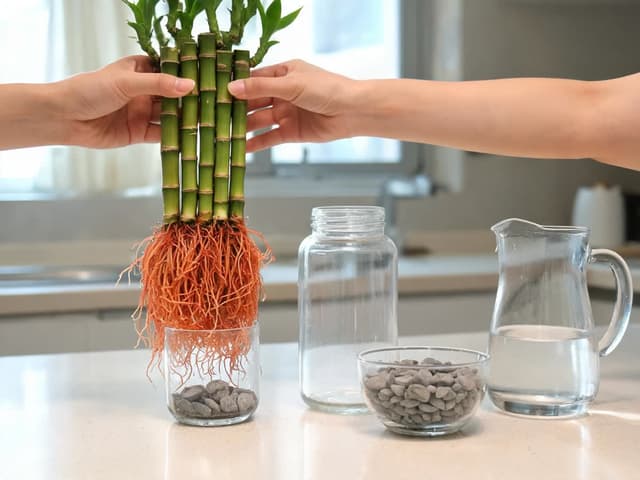
How to Repot Lucky Bamboo in Water and Soil
How to repot lucky bamboo: in water, clean pot and pebbles plus rainwater or distilled water; in soil, a pot 2 inches wider, with drainage. See when to repot, how to handle roots and braided stalks, and how to tell normal stress from rot.