Hibiscus Not Blooming? How to Get Blooms and Stop Bud Drop
How to get hibiscus to bloom: more direct sun, prune only in late winter, and fertilize at half strength. See whether yours fails to set buds or drops them before opening, and what to do.
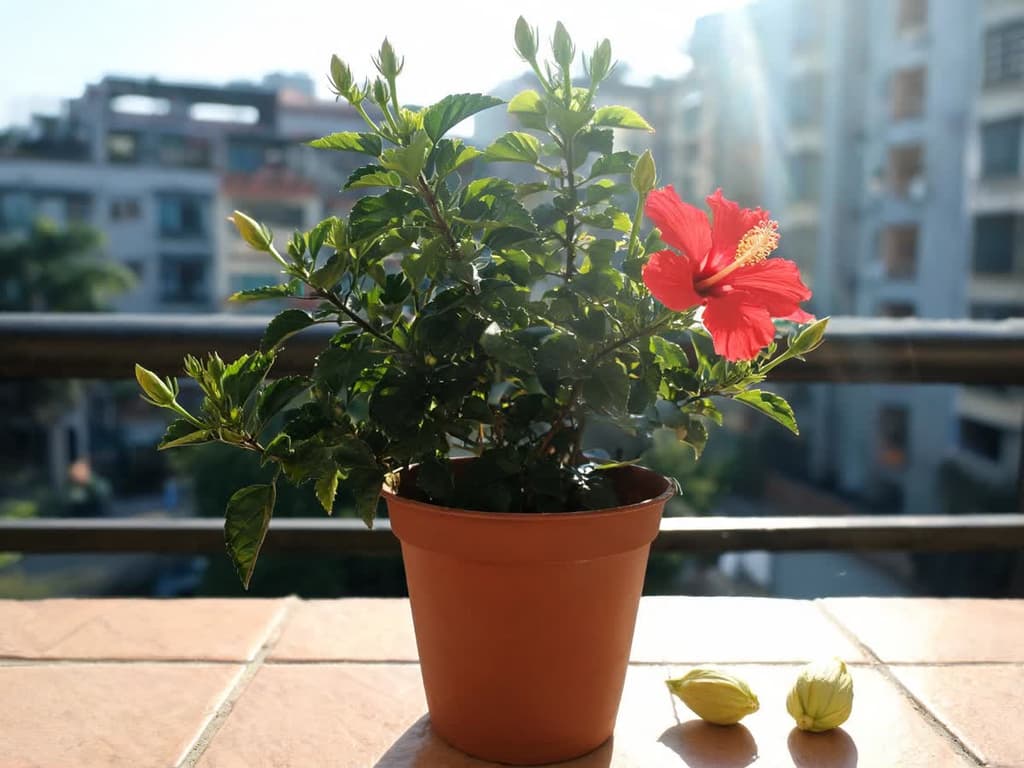
To make hibiscus bloom, start with the sun. The University of Minnesota Extension, the university service that guides plant growers, writes that the plant blooms more the more light it receives. Outdoors, give it 6 hours or more of direct sun per day. Indoors, place the pot in a window with at least 4 to 5 hours of direct sun.
After sunlight, look at what the plant is doing. A hibiscus that does not form buds suffers from low light, pruning at the wrong time, or too much fertilizer. A hibiscus that forms buds and drops them closed suffers from relocation, irregular watering, cold, heat, or pests. Each open flower lasts one day, and a flower dropping after it opens is normal.
Tropical hibiscus or rose of Sharon: which one is yours
Two hibiscus species are common in pots and gardens, and the main pruning is done at the same time for both. The difference lies in cold tolerance and blooming season:
Tropical hibiscus (Hibiscus rosa-sinensis) | Rose of Sharon (Hibiscus syriacus) | |
|---|---|---|
Foliage | Dark green and glossy year-round | Loses all leaves in winter |
Cold | Does not tolerate frost | Tolerates frost |
Bloom time | Long period, as long as there is heat and sun | Summer and early fall |
Where flowers form | On new wood, growth from that year | On new wood, growth from that year |
Common hibiscus is the shrub with large red, pink, orange, yellow, or white flowers that many people grow in pots. The plant profiles for common hibiscus and rose of Sharon, also sold as garden hibiscus, show both plants. Hibiscus tea comes from a third species, roselle (Hibiscus sabdariffa). NC State Extension notes the use of its calyx, the base that surrounds the flower, in tea.
Not setting buds or buds dropping: how to find the cause
Observe branch tips for 2 weeks and note what happens. If no buds appear at all, the cause is light, pruning, fertilizer, or cold. If buds appear and drop closed, something is stressing the plant after the bud has already formed.
What you see | Likely cause | What to do |
|---|---|---|
Lots of foliage, no buds, plant away from sun | Low light | Move the pot gradually to a spot with 6 hours or more of direct sun outdoors, or 4 to 5 hours indoors |
No buds after hard pruning | Pruning at the wrong time | Wait for new shoots; prune only from late August through September |
Lots of dark green foliage, no buds or buds dropping | Too much fertilizer | Stop fertilizing until September and resume at half strength |
Buds dropping right after moving the pot | Relocation | Leave the plant in its new spot without moving it |
Buds yellowing and dropping, soil alternating dry and soggy | Irregular watering | Water whenever the top inch (2.5 cm) of soil dries out |
Buds dropping in cold weather or near doors and heaters | Cold or drafts | Move the pot away from drafts and heaters; protect the plant from cold |
Fallen bud with small white larvae inside | Hibiscus bud midge | Pick up and dispose of all fallen buds |
Hibiscus flowers dropping after opening is normal
The common hibiscus flower usually lasts one day: it opens in the morning, closes at the end of the day, and drops whole, rolled up. Minnesota, UF/IFAS, the University of Florida extension, and Texas A&M AgriLife record the one-day flower. Minnesota also describes the calyx, the green base that supports the flower from underneath. It dries up and drops a few days after the flower.
You do not need to cut off faded flowers from common hibiscus, because they drop on their own. Pick up fallen flowers and buds from the ground. On rose of Sharon, Purdue Extension also states that each flower is short-lived. Heat, heavy rain, and wind hasten the drop of an already open flower.
To have flowers every day, the plant needs many buds forming at the same time. The hibiscus care guide explains the watering, soil, and fertilizer that sustain this production.
Hibiscus not blooming: light, pruning, and fertilizer
For a hibiscus that fails to form buds, check three causes in this order: low sunlight, pruning that removed new growth, and excess fertilizer. Cold temperatures and short days also delay flowering.
How much sun hibiscus needs to flower
NC State Extension, from North Carolina State University, recommends full sun for tropical hibiscus. Full sun means 6 or more hours of direct sun per day. It tolerates partial shade, from 2 to 6 hours per day. For flowering, this guide follows Minnesota, which links more light to more flowers, and therefore recommends 6 or more hours. With less light, the plant blooms less.
Indoors, Minnesota calls for very bright light for the plant to flower: at least 4 to 5 hours of direct sun. The university writes for the Northern Hemisphere and recommends a south- or west-facing window. In Brazil, the window that gets the most sun faces north, and a west-facing one also works.
Move the plant into the sun in 3 stages. Minnesota recommends a covered porch first, then filtered light under a tree, and only then full sun. The source does not state how many days each stage lasts. According to Minnesota, this gradual transition prevents bud drop.
Pruning at the wrong time removes buds
Hibiscus flowers form on new growth, and pruning cuts off buds that were already developing. Minnesota cautions that after hard pruning, the plant takes longer to flower. NC State recommends pruning tropical hibiscus in early spring, cutting the plant back by up to half its height.
In Brazil, prune from late August to September, when the cold ends and the plant begins to sprout. If you pruned at another time, do not prune again: wait for the new branches to grow and form buds.
Rose of Sharon follows the same rule. Purdue explains that it blooms on branches that grow that year and recommends pruning in late winter or early spring. NC State says that spring pruning increases flower size. Purdue also mentions a second pruning in late spring (November in Brazil). It reduces the number of buds per branch and yields fewer, but larger, flowers. It is the only pruning outside of August and September, and it applies only to Rose of Sharon.
Too much fertilizer produces leaves instead of flowers
Excess fertilizer fills the hibiscus with leaves and causes buds to drop. UF/IFAS Nassau describes the case: plants in full sun, with healthy, dark green leaves, that dropped all their buds. Fertilizer was applied once a month, and the extension considered this excessive. It states that 4 times a year is already generous fertilization, without specifying whether the plant was in the ground or in a pot.
UF/IFAS Charlotte points to excess nitrogen as a common cause of bud drop. Nitrogen is the nutrient that makes the plant grow leaves. If the plant is doing this, stop fertilizing until next spring (September) and resume with half the label rate.
Texas A&M states that potted hibiscus requires fertilizer more often than plants in the ground. Minnesota recommends a balanced fertilizer with equal parts nitrogen, phosphorus, and potassium, such as 10-10-10 or 20-20-20, at half the label dose. Outdoors, it advises this dose every 2 to 3 weeks during spring and summer (from September to March, in Brazil). Indoors, use the same dose about once a month. Minnesota's frequency is higher than UF/IFAS Nassau's; this guide follows Minnesota, which addresses potted hibiscus.
Cold weather and short days delay flowering
Common hibiscus needs warmth to form buds. Minnesota calls for 65 to 75 °F (18 to 24 °C) during the day and warns: in the cold, buds drop or fail to form altogether. Iowa State adds that the plant needs long days and short nights to keep blooming in the winter.
UF/IFAS records blooming almost year-round in South Florida, where winters are warm. In Brazil, it is normal for hibiscus to bloom less from June to August, when nights cool down and days get shorter. Blooming returns with the heat and longer days, starting in September.
Hibiscus buds dropping before opening
Hibiscus buds dropping while still closed signal stress after they have already formed. They drop firm, green or yellowish, without opening. Here are the causes, each with its source:
Relocation. NC State notes that tropical hibiscus is sensitive to change, dropping leaves and buds when moved. This often happens with newly purchased plants. Pick a sunny spot and leave the plant there.
Irregular watering. UF/IFAS Nassau cites too little and too much water. For rose of Sharon, Purdue points to too little or too much moisture. Water when the top inch (2.5 cm) of soil feels dry, and do not water before that, not even as a precaution.
Drafts and temperature changes. Minnesota advises moving the plant away from entryways, where cold air hits, and away from heaters.
Intense heat. UF/IFAS Nassau states that most varieties prefer 50 to 90 °F (10 to 32 °C). Outside that range, buds drop. UF/IFAS Charlotte lists excessive heat as a cause of aborted buds. Use Minnesota's 65 to 75 °F (18 to 24 °C) target for bud formation. The 50 to 90 °F (10 to 32 °C) range is the tolerance limit for the plant.
Alkaline soil and nematodes. UF/IFAS Charlotte lists high pH soil (alkaline soil, the opposite of acidic). The same extension cites nematodes, microscopic worms that attack roots. The source does not state how to treat either issue.
Double flowers. UF/IFAS Charlotte notes that double-flowered hibiscus cultivars, with many petal layers, drop more buds than single-flowered ones. Texas A&M states that single-flowered types bloom more profusely. If yours has double blooms, keep placement, watering, and fertilizer consistent, and check the buds every week.
When buds drop, do not prune, do not increase fertilizer, and do not move the pot around. Relocating the plant and overfertilizing are among the causes of bud drop, and pruning removes developing buds. The only move worth making is pulling the pot away from drafts or heaters. Keep the location and watering stable, and monitor new buds every week.
Open fallen buds and look for hibiscus bud midge
If the spot, watering, and fertilizer are right and buds keep dropping, slice a fallen bud in half. Charlotte County UF/IFAS in Florida describes the hibiscus bud midge (Contarinia maculipennis). It is a tiny flying insect that lays eggs in the developing bud. The source does not say whether the pest exists in Brazil. The larvae are about 2 mm long, and you can see them with the naked eye inside the sliced bud.
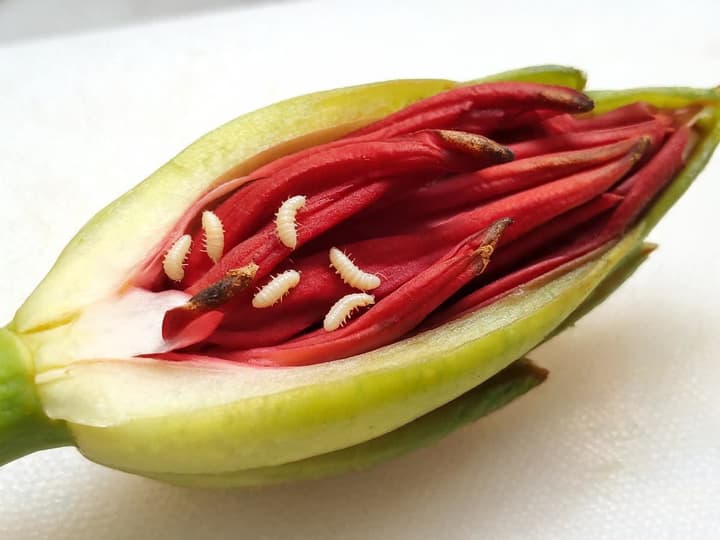
The larva feeds from the inside, causing the bud to drop before opening. UF/IFAS Charlotte also mentions small caterpillars eating the inside of the bud with the same outcome. Because the larvae stay protected inside the bud, insecticides struggle to reach them. The measure recommended by the extension is collecting and destroying fallen buds to bring down the pest population.
Aphids and other insects on hibiscus buds
A sticky bud surrounded by clustered bugs indicates sap-sucking insects like aphids. UF/IFAS notes aphids, whiteflies, and mealybugs clustered on hibiscus leaves and buds. These insects suck sap and excrete a sticky, sweet honeydew on which sooty mold develops.
Early in the infestation, UF/IFAS says that insecticidal soap or horticultural oil easily controls these insects. Horticultural oil is an oil formulated for spraying plants, sold in garden centers. It also warns that the insecticide malathion should never be used on hibiscus. According to the University of Connecticut Extension, neem oil, soap, and horticultural oil burn leaves when applied in heat or strong sun. Apply these products during a cool time of day and out of strong sun. The guide to hibiscus with yellow leaves gives the maximum temperature for applying these products.
On rose of Sharon, Purdue notes thrips, very tiny insects that feed on the bud and cause it to drop. It also cites botrytis, a fungus that turns buds brown and makes them fall before or right after opening.
The page on hibiscus pests shows the species' most common insects. Aphids on the bud are easy to control early in the infestation, according to UF/IFAS. Apply insecticidal soap according to the label and wait for new buds.
Rose of Sharon: some bud drop may be normal
Rose of Sharon produces buds in large numbers, and bud drop is common on this plant. Purdue admits that no one knows precisely why. The extension hypothesizes that some bud drop is natural: the plant shedding excess buds. If the plant blooms well while shedding some buds, keep watering consistent and inspect the plant once a week.
Hibiscus dropping flowers and leaves in the cold
When cold weather arrives, tropical hibiscus can drop flowers, buds, and leaves all at once. Minnesota lists cold, drafts, and sudden temperature fluctuations as causes. Newly brought-in pots and containers sitting near doors that open to cold air undergo these shifts.
Do not prune at this time: it removes buds that have already formed and delays flowering. Also, do not move the pot, unless it is to keep it away from the heater and drafts. Leave the pot in the brightest window in the house, away from the heater and drafts. Wait until the end of August to prune. The guide to hibiscus in winter shows how to protect each species.
When hibiscus blooms in Brazil
Tropical hibiscus blooms as long as there is warmth and sun, and the timing varies by region and winter severity. This calendar gathers recommendations from sources, adjusted for the Southern Hemisphere:
Season in Brazil | What happens | What to do |
|---|---|---|
June to August | Cold nights and short days: fewer blooms, buds may drop | Protect from cold, water less, do not prune |
Late August to September | The plant resumes new growth | Prune; resume fertilizer at half strength |
September to March | Warmth and long days: peak flowering period | Direct sun, consistent watering, half-strength fertilizer |
Summer and early fall | Rose of Sharon bloom time | Regular watering during dry spells |
April and May | Days grow shorter | Fertilize less frequently and monitor cold forecasts |
Frequently asked questions
Do I need to deadhead wilted hibiscus flowers?
No. On tropical hibiscus, the wilted bloom closes, rolls up, and falls off intact by the end of the day, according to Minnesota. The calyx drops a few days later. Pick up fallen flowers and buds from the soil and pot. If the plant drops unopened buds, this cleanup also helps control hibiscus bud midge.
How long does a hibiscus flower last?
Tropical hibiscus blooms usually last one day. They open in the morning and wither by evening, according to Minnesota, UF/IFAS, and Texas A&M. The plant makes up for this by opening new blooms over a prolonged period. On rose of Sharon, Purdue also reports short-lived flowers.
What should I do when a newly bought hibiscus stops blooming?
Bud drop after purchase is a reaction to relocation, recorded by NC State. The plant moved from the nursery to different light and a different temperature. Pick the sunniest spot in the house, leave the plant there, and keep watering steady. No source says how long adaptation takes: check new buds each week.
Does high-phosphorus fertilizer make hibiscus bloom?
No. Minnesota does not recommend extra phosphorus: it advises a balanced fertilizer with equal parts nitrogen, phosphorus, and potassium at half the label rate. UF/IFAS lists excess fertilizer among the causes of bud drop. Before switching fertilizers, check your light levels and feeding schedule.
Summary: how to make hibiscus bloom
Give it 6 hours or more of direct sun outdoors, or at least 4 to 5 hours in the window that receives the most sun (in Brazil, the north-facing one).
Prune only from late August through September, because flowers develop on new shoots.
Fertilize at half the label rate from September through March. Outdoors, feed every 2 to 3 weeks; indoors, about once a month. Too much fertilizer fuels leaves and drops buds.
Water when the top inch (2.5 cm) of soil feels dry.
Once you pick a sunny location, keep the pot in place while buds are developing. The only exception is shifting it away from drafts and heaters.
Unexplained bud drop: cut a fallen bud open and look for larvae.
When you cannot tell what is attacking the buds, a photo helps. Bloom (available for iOS) identifies the plant from a photo and, in the Premium version, diagnoses the problem.
Related articles
Is Hibiscus Toxic to Dogs and Cats? What Each Source Says by Species
Is hibiscus toxic? The ASPCA classifies rose of Sharon as non-toxic, and CliniTox does the same for tropical hibiscus. See what these records leave out, the risk of potted soil fertilizer, and what to do if your pet ate some.
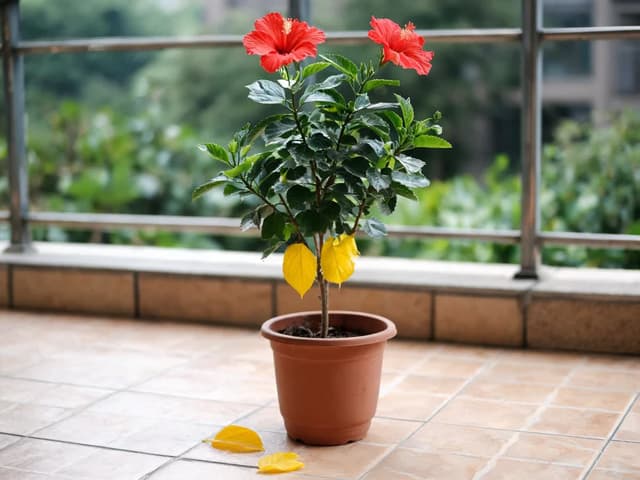
Hibiscus with Yellow Leaves: Causes and What to Do
Hibiscus with yellow leaves: yellowing is a distress signal, and the plant grows new leaves once the trigger is gone. Identify the cause from the leaf and soil, know which leaves to remove, and see what to do in pots and gardens.
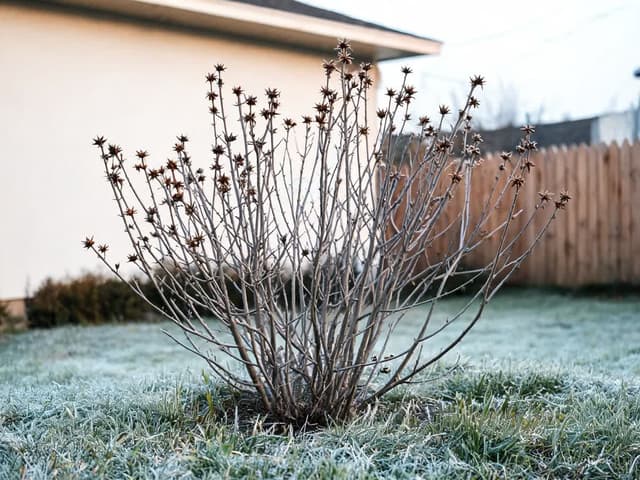
Hibiscus in winter: which ones withstand cold and how to care for each
Hibiscus in winter: rose of Sharon tolerates frost and stays leafless until late spring, while tropical hibiscus needs protection when nights reach 12 °C. Learn how to recognize yours and check if a bare branch is still alive.