Hibiscus with Yellow Leaves: Causes and What to Do
Hibiscus with yellow leaves: yellowing is a distress signal, and the plant grows new leaves once the trigger is gone. Identify the cause from the leaf and soil, know which leaves to remove, and see what to do in pots and gardens.
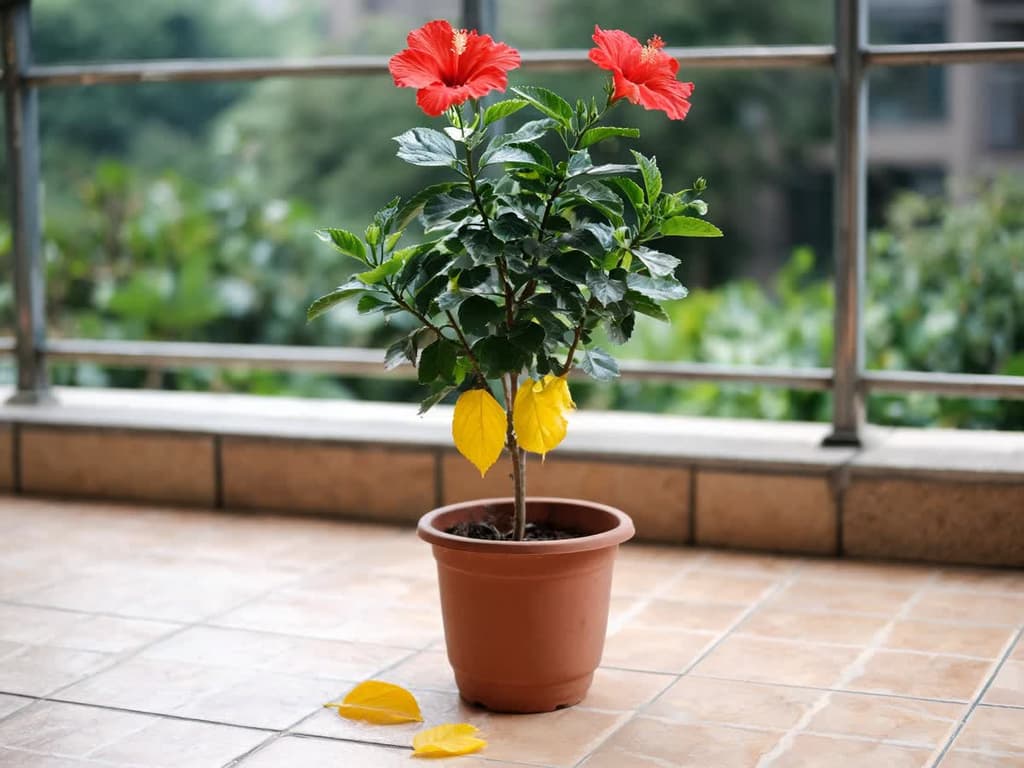
On a hibiscus with yellow leaves, the first cause to check is watering. The University of Minnesota Extension lists sudden changes in soil moisture as the primary cause. The same extension also cites temperature changes and drafts, and advises avoiding overwatering.
Yellowing is a stress signal, and your hibiscus puts out new leaves once the issue resolves. Do not cut back stems just because leaves turned yellow: remove only the ones that are entirely yellow.
This guide covers tropical hibiscus (Hibiscus rosa-sinensis), the broadleaf evergreen shrub with large blooms. Rose of Sharon (Hibiscus syriacus) drops all its leaves in autumn, which is completely normal for it. To pinpoint the trigger, check three factors: which leaves turned yellow, the yellowing pattern, and the condition of the soil.
Hibiscus with yellow leaves: diagnosing the cause by leaf appearance
You can identify why hibiscus leaves turn yellow by pairing the look of the foliage with the state of the potting mix. Do the finger test before checking the table: press your finger 1 inch deep into the soil. Then flip a few leaves over to inspect their undersides.
Leaf condition | Soil condition | Probable cause | What to do |
|---|---|---|---|
Bottom leaves soft and yellow, wilting plant | Damp or waterlogged | Overwatering or root rot | Hold off on watering until the top 1 inch dries out; empty the saucer |
Yellow, wilted leaves | Dry | Underwatering | Water until runoff drains out the bottom and recheck with the finger test daily in hot weather |
Sudden wave of yellow leaves dropping within a week | Moist, not waterlogged | Change in location, light, or temperature | Keep the plant in one spot, away from doors and vents |
An occasional old leaf, always at the base | Moist, not waterlogged | Natural leaf aging | Nothing; pull the leaf off once it loosens |
Yellow tissue between veins, green veins | Moist, not waterlogged | Nutrient deficiency or damaged roots | Check watering practices first, then address fertilizer |
Yellow stippling, fine webbing underneath | Any | Spider mites (tiny sap-sucking pests) | Hose down leaf undersides with water and apply insecticidal soap |
Yellow, sticky leaf, or covered in black powder | Any | Aphids, whiteflies, or scale insects | Apply insecticidal soap or horticultural oil in late afternoon |
Even yellowing on sun-exposed leaves after heat waves | Any | Heat wave | Water according to the finger test and wait it out |
A plant can suffer from two problems at once. The SoCal Hibiscus Society, a growers' association in California, notes that spider mites multiply rapidly during heat waves. The page on yellow leaves on hibiscus covers the 11 pests and diseases that turn foliage yellow on this species.
Should I remove yellow leaves from hibiscus?
Remove only the leaves that are fully yellow and come off with a gentle pull. The American nursery Hidden Valley Hibiscus explains that a leaf that has already turned yellow will fall off anyway. A leaf that still has green parts continues working for the plant: leave that leaf on the branch.
Do not prune branches to fix yellowing. Pruning fails to remove the underlying cause, and on hibiscus, it cuts off developing flower buds. According to Hidden Valley Hibiscus, pruning a branch that only has a few leaves left at the tip is a last resort. Before doing that, adjust your watering with the finger test, correct the issue identified in the chart, and wait for fresh growth.
No cited source in this guide measured whether pulling leaves harms the plant. The safest route is removing only fully yellow leaves that the hibiscus is already shedding. The guide on yellow leaves on plants explains when a yellow leaf can turn green again and when it cannot.
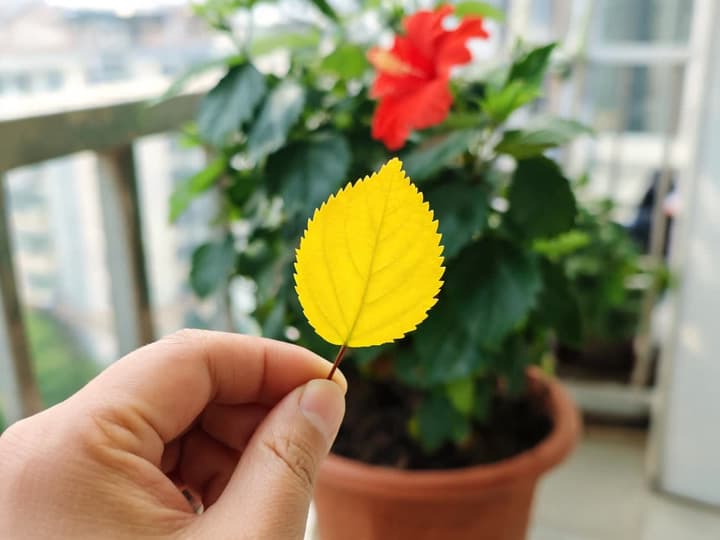
Soggy soil: overwatering and root rot
Yellow leaves paired with soggy soil point to overwatering. The University of Minnesota Extension advises avoiding overwatering, especially with older hibiscus varieties. Constantly wet soil suffocates roots and causes them to rot.
Root rot (a disease caused by fungi that live in waterlogged soil) is deceptive. According to the Iowa State University Extension, the first sign is wilting of the lower leaves. People often mistake this wilting for a lack of water and water the plant more. Without treatment, the wilting spreads upward from the bottom leaves until the entire plant wilts completely.
To verify, slide the plant out of its container: rotted roots turn dark brown or reddish, according to Iowa State. Root rot also has a dedicated hibiscus reference:
To nurse the plant back, space out your waterings. Water only when the top 1 inch of soil feels dry to the touch, and empty drainage saucers immediately after watering. Iowa State recommends watering based on plant needs rather than a rigid weekly calendar. The guide to hibiscus care highlights well-draining pots and potting mixes.
The SoCal Hibiscus Society notes another indicator of excess water. Top leaves turn pale with prominent green veins, while lower leaves yellow. This pattern mirrors iron chlorosis, which UF/IFAS also links to root health issues: rule out watering problems before applying fertilizer. SoCal also points out that rootbound pots clog drainage holes, trapping water inside.
Dry soil and wilted leaves: underwatering
Wilted, yellowing leaves in bone-dry soil signal underwatering. Hidden Valley Hibiscus explains that hibiscus requires substantial moisture during hot weather. Faced with a water deficit, the plant sheds foliage to reduce water loss, and these leaves yellow before dropping.
In summer heat, a hibiscus can demand daily watering, according to Hidden Valley Hibiscus. Use the finger test every day during hot spells and water until moisture flows from the pot's drainage holes. Never water preemptively if the soil still feels moist.
Swinging between underwatering and overwatering also yellows leaves. Minnesota cites sudden shifts in soil moisture as a trigger: soil swinging from parched to saturated stresses root systems. Doing the finger test before every watering prevents these drastic swings.
Sudden wave of yellow leaves after moving your hibiscus
Hibiscus drops many leaves when moved to a new spot. NC State Extension states that common hibiscus is sensitive to environmental changes and that moving the plant causes leaf and bud drop. This is the case with a newly purchased hibiscus: it left the nursery and shifted to different light and temperature conditions.
Iowa State describes the same effect on houseplants. Cold during transport from the store to the house yellows and drops leaves. A blast of cold or hot air from a door, window, or vent does the same.
Select a location that receives 6 or more hours of direct sun for your hibiscus, as NC State recommends, and keep it there. Position pots away from exterior doors, air conditioners, and heaters, as advised by Minnesota. If the new spot gets more light than the previous one, acclimate the plant gradually over roughly 2 weeks.
A newly purchased plant can recover. If the youngest foliage at the branch tips remains green and firm, the plant is adapting. Keep watering based on the finger test and avoid moving the pot around again.
Lower leaves yellowing one by one: normal aging
An occasional mature lower leaf turning yellow while the rest of the shrub stays green is simply normal aging. Minnesota notes that some yellowing is expected during spring and fall, as daylight and temperatures transition between seasons.
The SoCal Hibiscus Society describes a leaf drop in late winter and spring. The hibiscus sheds the previous year's leaves and grows new leaves in their place. In Southern California, this happens from February to mid-April. By calendar conversion, in Brazil this change would fall from August to mid-October.
Some cultivars do not push new leaf growth until older foliage turns yellow and falls, according to the society. If the plant feels sturdy and is pushing out shoots, do not alter your watering or feeding routines over these isolated leaves.
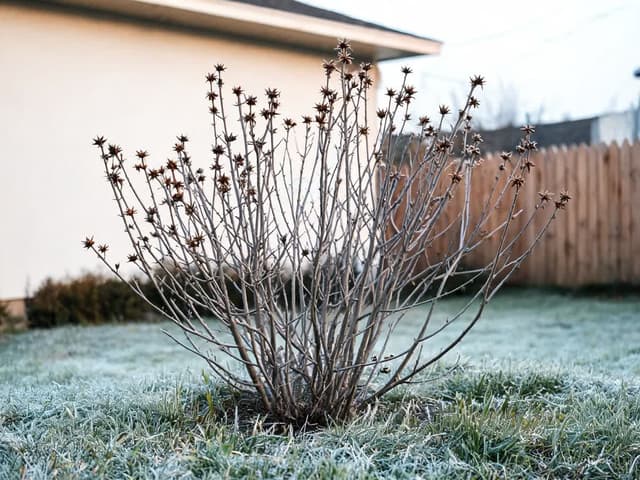
Rose of Sharon turns yellow and drops all its leaves in the fall, from March to May in Brazil. It is deciduous, meaning it loses its leaves during a season of the year. The guide on hibiscus in winter shows how to tell if a leafless branch is alive.
Interveinal yellowing: nutrient deficiencies
A yellow leaf with green veins is chlorosis, the yellowing caused by a nutrient deficiency. The position of the leaf on the plant indicates which nutrient is missing. UF/IFAS, the University of Florida extension, describes the symptoms for shrubs in general:
Iron: yellowing between the veins on young foliage at branch tips, with distinct, dark green veins.
Magnesium: wide yellowing between the veins or along the margins of older, lower leaves. Severely affected plants drop their lower leaves.
Nitrogen: uniform light green or yellow, starting on the oldest leaves. Later, the entire plant turns light green.
Iron chlorosis does not always mean the soil lacks fertilizer. UF/IFAS points out it commonly stems from alkaline soil (high pH) or poor drainage. It also shows up on plants with damaged root systems, including those suffering from root rot. Inspect watering and drainage before applying fertilizer.
Minnesota states that hibiscus is a heavy feeder and that yellow leaves can indicate nutrient deficiency. Use a balanced fertilizer at half the label strength, following the frequency in the hibiscus care guide. Epsom salt and coffee grounds are not complete fertilizers. The guide on yellow leaves on plants explains when Epsom salt helps.
Small, crinkled, dark green new growth is not iron deficiency. UF/IFAS regularly documents boron deficiency in tropical hibiscus. That symptom is different: new foliage cups upward and becomes brittle rather than turning yellow. The source offers no container-specific fix: maintain watering guided by the finger test and continue with balanced feeding.
Stippled leaves with fine webbing: spider mites on hibiscus
Foliage showing yellow stippling combined with fine webbing beneath indicates spider mites. Minnesota highlights aphids and spider mites as the most prevalent hibiscus pests. The spider mite is a tiny arachnid relative that pierces and sucks out leaf contents from the underside.
University of Wisconsin Extension describes the first sign: yellow stippling on the leaf. Heavily infested leaves turn pale, dry up, and drop. The mite multiplies in hot, dry weather, and indoors it stays active through the winter.
Spider mites are barely visible to the naked eye. Wisconsin suggests a simple test: tap a branch over a sheet of white paper and check for moving specks. According to Hidden Valley Hibiscus, yellowing caused by spider mites does not stop on its own. The count of yellow leaves climbs steadily over 2 to 3 weeks, even if the weather changes.
Wisconsin notes that many houseplants get spider mites and shows mite webbing on a hibiscus:
Wisconsin highlights insecticidal soap as the primary control method for spider mites. A forceful spray of water directed at the undersides of leaves removes only a fraction of mites and webs, according to the university. Hidden Valley Hibiscus favors repeated water spraying, 5 to 6 times every 5 to 7 days. This guide follows Wisconsin as a university extension source: use insecticidal soap as the main fix, supplemented by water spraying.
Spray insecticidal soap onto leaf undersides during early morning or late afternoon. Wisconsin notes that soap only kills mites that receive direct contact during spraying. Repeat applications following the product label until new growth stops showing stippling.
When a pest is too tiny to spot, a clear photo of the leaf helps. Bloom (available for iOS) diagnoses plant issues from a leaf photo on its Premium plan and identifies the likely pest or disease.
Sticky yellow foliage: aphids, whiteflies, and scale
Yellow, sticky leaves indicate sap-sucking insects that drain plant sap. UF/IFAS cites aphids, whiteflies, and mealybugs on hibiscus. These insects live in clusters under leaves and on buds. NC State adds scale insects.
These insects excrete a sticky, sweet waste fluid known as honeydew. Sooty mold, a black fungus that covers foliage like soot, grows directly on honeydew. According to UF/IFAS, sooty mold helps pinpoint pest activity: once you see black mold, turn the leaves over to locate the insects.
UF/IFAS notes that light infestations are easily managed with insecticidal soap or horticultural oil. Spray leaf undersides thoroughly to full coverage, and treat again whenever new pests hatch. UF/IFAS also warns that the insecticide malathion must never be sprayed on hibiscus.
Using insecticidal soap, horticultural oil, and neem oil without leaf burn
Insecticidal soap, horticultural oil, and neem oil (oil extracted from the seeds of the neem tree) also burn leaves when applied at the wrong time. The University of Connecticut Extension advises against applying them above 90 °F (32 °C), in full sun, or on thirsty plants. It also advises against applying them when the air is so humid that leaves do not dry quickly.
Apply sprays in early morning or late afternoon when soil is moist. According to the same extension service, neem oil suppresses aphids, scale insects, spider mites, and whiteflies.
Heat, intense sun, and cold temperatures
Extreme heat also causes hibiscus leaves to yellow. The SoCal Hibiscus Society notes that yellow foliage emerges 1 to 2 weeks after a heat wave sets in. They cite temperatures topping 35 °C under direct sun in dry California weather. The hibiscus care guide identifies 32 °C as the typical upper comfort limit for the plant.
During heat waves, leaves turn solid yellow without the stippling pattern of spider mites, showing the heaviest impact on sun-drenched middle and lower foliage. Water guided by the finger test and keep the plant in its place. Hidden Valley Hibiscus notes that yellowing that subsides once weather cools down is not an ongoing concern.
Harsh direct sun on a plant previously kept in shade scorches foliage. Hidden Valley Hibiscus describes broad white blotches resembling sunburn. While this does not kill the plant, it sheds sunburned leaves. Gradually increase sun exposure over a 2-week span.
Cold temperatures trigger yellowing on the lower leaves of tropical hibiscus. UF/IFAS explains that even a mild cold front prompts lower leaf yellowing and drop. Bring containers indoors whenever nighttime temperatures drop to 12 °C or lower.
In Brazil, the risk is higher during winter in the South and in mountain regions, from June to August. The guide on hibiscus in winter shows how to protect in-ground hibiscus and what to do after a frost.
Yellow leaves on in-ground garden hibiscus
In outdoor garden beds, soggy soil also turns hibiscus leaves yellow. The SoCal Hibiscus Society cautions that heavy clay soil (dense soil that balls up in your hand) traps standing water around root zones. When planting, dig a wide, deep hole. During rainy summer spells, check soil moisture with the finger test before turning on the hose.
Rain naturally suppresses spider mite populations. Hidden Valley Hibiscus points out that mites cannot thrive on foliage that gets wet frequently. Wisconsin notes that humid conditions disrupt mite reproduction, while a single rainless month can trigger an outbreak. On garden-grown hibiscus, spider mites flare up most during hot, dry weeks.
Frequently asked questions
Why are my hibiscus leaves turning yellow with brown spots?
Yellow leaves with brown spots can indicate bacterial leaf spot, a disease that the hibiscus yellow leaves page lists. In late winter and spring, the SoCal Hibiscus Society notes that brown spots can mark the start of leaf turnover. It also cites fertilizer burn, which begins at the leaf tip. In that case, reduce fertilizer on hot days.
How long does it take for a hibiscus to grow new leaves?
No study has measured an exact timeframe. Hidden Valley Hibiscus states that hibiscus pushes out fresh green foliage quickly once the source of stress is removed. Following a heavy spider mite infestation, recovery takes several weeks, according to the nursery. Inspect branch tips weekly: firm, vibrant green shoots indicate the plant is bouncing back.
Do Epsom salts or coffee grounds fix yellow leaves on hibiscus?
None of the university or specialist sources cited in this guide recommend Epsom salts or coffee grounds for hibiscus. Epsom salt is magnesium sulfate, and magnesium deficiency causes interveinal chlorosis on lower leaves. For hibiscus, use a balanced fertilizer at half the label rate.
Will yellow hibiscus leaves turn green again?
A leaf that has turned entirely yellow will not regain its green color and will drop, according to Hidden Valley Hibiscus. Leaves that still have green patches may persist once the underlying cause is resolved. Recovery shows through new shoots at the branch tips. Judge your plant's progress by fresh growth rather than yellowed leaves.
What to do today for a hibiscus with yellow leaves
Insert your finger 1 inch into the soil and turn over 3 or 4 leaves to inspect their undersides. If the soil is waterlogged, hold off on watering until the top 1 inch dries; if it is dry, water until it drains out the base. Fine webbing or sticky leaves call for a water wash and insecticidal soap in the late afternoon. Pick off only fully yellow leaves and wait for fresh foliage to emerge.
Related articles
Is Hibiscus Toxic to Dogs and Cats? What Each Source Says by Species
Is hibiscus toxic? The ASPCA classifies rose of Sharon as non-toxic, and CliniTox does the same for tropical hibiscus. See what these records leave out, the risk of potted soil fertilizer, and what to do if your pet ate some.
Hibiscus Not Blooming? How to Get Blooms and Stop Bud Drop
How to get hibiscus to bloom: more direct sun, prune only in late winter, and fertilize at half strength. See whether yours fails to set buds or drops them before opening, and what to do.
Hibiscus in winter: which ones withstand cold and how to care for each
Hibiscus in winter: rose of Sharon tolerates frost and stays leafless until late spring, while tropical hibiscus needs protection when nights reach 12 °C. Learn how to recognize yours and check if a bare branch is still alive.