Is Hibiscus Toxic to Dogs and Cats? What Each Source Says by Species
Is hibiscus toxic? The ASPCA classifies rose of Sharon as non-toxic, and CliniTox does the same for tropical hibiscus. See what these records leave out, the risk of potted soil fertilizer, and what to do if your pet ate some.
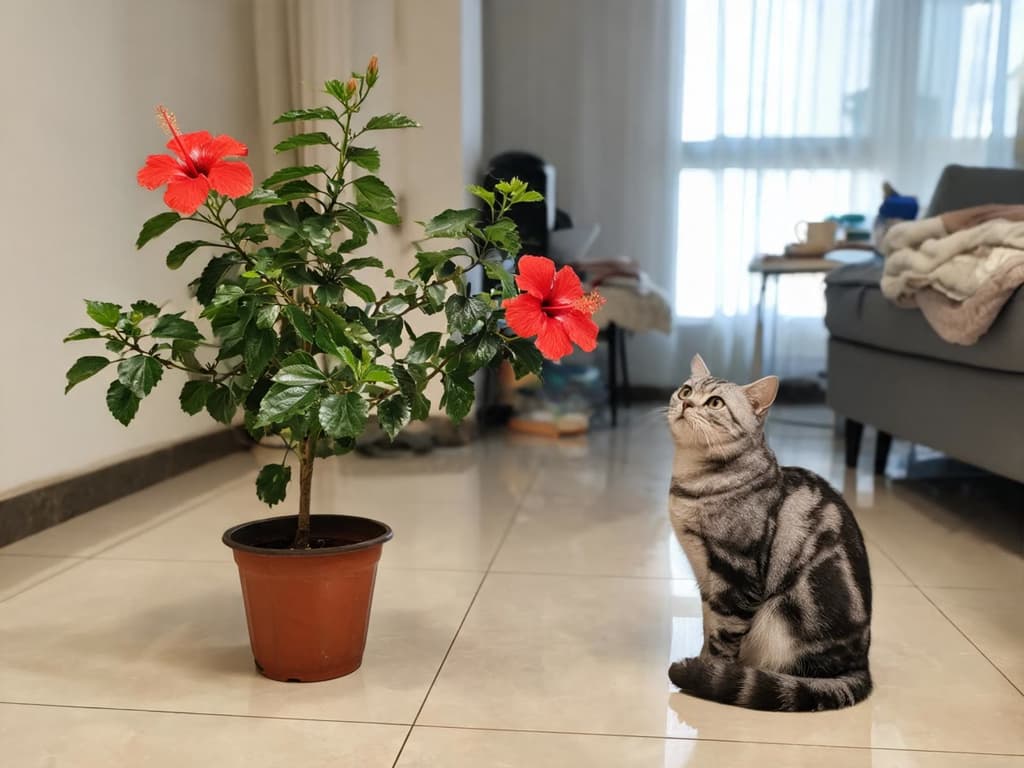
The ASPCA, an American animal poison control center, classifies rose of Sharon (Hibiscus syriacus) as non-toxic to dogs, cats, and horses. CliniTox, a veterinary database from the University of Zurich, classifies tropical hibiscus (Hibiscus rosa-sinensis) as a non-toxic plant. For the question "is hibiscus toxic?", each covers only one species: the ASPCA has no entry for tropical hibiscus, and CliniTox has no entry for rose of Sharon.
A search on PubMed, the public health research database, on November 2, 2026, found no reports of dog, cat, or horse poisoning from these plants. The severe cases we found come from the pot: castor bean meal fertilizer has killed dogs. Before making any decisions, confirm that the plant really is a hibiscus. Oleander has similar flower colors, and the ASPCA classifies it as toxic.
Source | Tropical hibiscus (H. rosa-sinensis) | Rose of Sharon (H. syriacus) | Applies to |
|---|---|---|---|
ASPCA | No entry | Non-toxic to dogs, cats, and horses | Dog, cat, horse |
CliniTox (Zurich) | Non-toxic plant; not suitable as animal feed | No entry | Animals |
NC State Extension | Entry does not address the topic | Non-toxic to dogs, cats, and horses | Dog, cat, horse |
Poison Information Center of Finland | Harmless plant | Harmless plant (genus entry) | Humans |
Poison Information Center of Sweden | No known poisonings (genus entry) | No known poisonings (genus entry) | Humans |
What the ASPCA and CliniTox say about hibiscus
The ASPCA has 3 entries for hibiscus, and all 3 are for rose of Sharon: Hibiscus, Rose of Sharon, and Rose of China. All 3 give the same result for dogs, cats, and horses: non-toxic. The difference is in the toxic principle field, the substance that would cause harm. One entry says "Non-toxic," and the other two say "Unknown."
The name "Rose of China" causes confusion. At the ASPCA, this name points to rose of Sharon. On CliniTox, "China rose" is a name for tropical hibiscus. Anyone searching in English might read the profile of one species thinking it is the other.
Tropical hibiscus does not appear on the ASPCA plant lists for dogs and cats. Its absence does not prove that the plant is safe, because the ASPCA itself warns that the list does not include every plant. NC State is the extension service of North Carolina State University. It repeats the pattern: it marks rose of Sharon as non-toxic, and the profile for tropical hibiscus does not address toxicity.
CliniTox covers tropical hibiscus, with two caveats. The tropical hibiscus entry says "Ungiftige Pflanze" (non-toxic plant), and adds that it is not suitable as animal feed. The only reference in the profile is a plant encyclopedia from 1998, with no veterinary cases.
This guide treats both classifications as the best available information, rather than a guarantee. A veterinary database carries more weight than a store or a blog, but the CliniTox entry relies on an encyclopedia. We also found no studies involving dogs, cats, or horses that ate the plant.
The laboratory data we found on tropical hibiscus come from rodents and extracts, and they do not show what happens to a pet. In mice, a 2015 study saw no harm from a single high dose of leaf extract. The same study saw liver and kidney damage after 14 days of a high dose. In rats, a 2025 study with flower powder and extract saw no adverse effects over 28 days.
How to tell which hibiscus you have
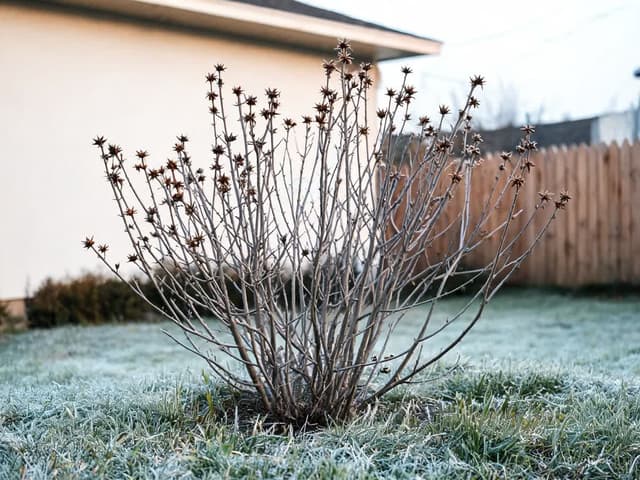
The simplest way to tell the two species apart is to look at the plant in winter. Tropical hibiscus keeps its leaves year-round, while rose of Sharon loses all its leaves in winter. The guide on hibiscus in winter provides a table detailing the differences in leaves, flowers, and growth habit.
The pages for tropical hibiscus and garden hibiscus, which is rose of Sharon, feature photos for comparison. Swamp rose mallow (Hibiscus moscheutos), which dies back to the ground in winter, has no entry on either ASPCA or CliniTox.
Confirm that the shrub is really a hibiscus
If you do not know the name of the red-flowered shrub in your garden, identify the plant before letting your dog near it. Oleander (Nerium oleander) has pink or red flowers and is toxic to dogs, cats, and horses, according to the ASPCA. Signs include drooling, abdominal pain, diarrhea, and death. Azalea (Rhododendron) is also toxic to all three: it causes vomiting (except in horses), diarrhea, weakness, and heart failure.
Look at the flower and the leaf to tell hibiscus and oleander apart:
Tropical hibiscus: a large flower, 6 to 10 cm across, that emerges singly between the leaf and the branch, according to CliniTox. A long column, a tube that carries the pollen, extends from the center of the flower. The leaf is broad, oval, and has serrated edges.
Oleander: flowers 2.5 to 4 cm across, in clusters at the tip of the branch, according to NC State. The leaf is long and narrow, 10 to 18 cm long and less than 2.5 cm wide.
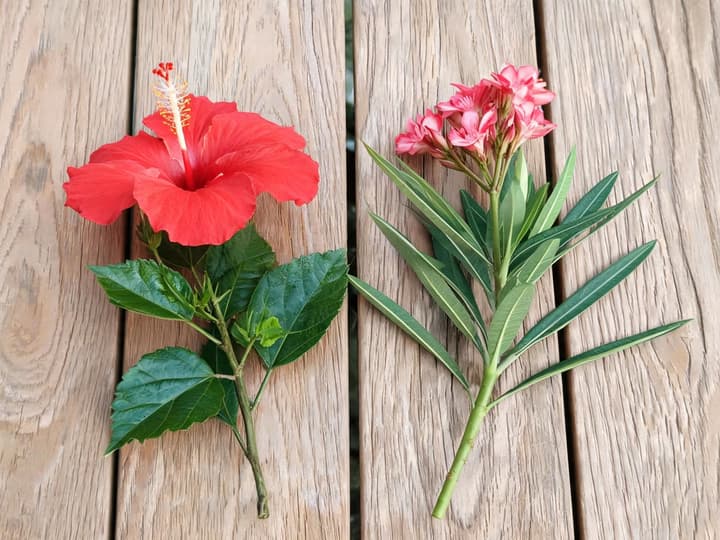
When the flower does not match either description, treat the plant as unknown and keep the pet away from it. Bloom (available for iOS) identifies plants from a photo of a leaf or flower. The list of toxic plants for pets shows 12 plants in order of severity. If the plant really is a hibiscus, none of the profiles cited here recommend pulling it up. The ASPCA classifies rose of Sharon as non-toxic, and CliniTox does the same for tropical hibiscus.
Dog or cat ate hibiscus: what to do
After your pet bites the hibiscus, follow the steps the ASPCA recommends for any plant:
Move your pet away from the pot and pick up any leaf pieces from the floor.
Over the next few hours, watch whether they act normally, vomit, or have diarrhea.
If they vomit or have diarrhea, call your veterinarian. Share the name of the plant and all products used in the pot.
Take your pet straight to the clinic if they are unresponsive, having trouble breathing, bleeding, or having seizures.
Vomiting after eating a leaf can happen even with a non-toxic plant. The ASPCA notes that eating any plant can cause vomiting and stomach upset in dogs and cats. It also states that symptoms from non-toxic plants should not be life-threatening. Call your vet anyway, because only a professional can tell poorly digested foliage apart from a potting product.
Do not try to make the animal vomit at home. The ASPCA explains that salt, frequently used for this purpose, can raise blood sodium to a dangerous level. It also warns that sticking a finger down the throat, giving olive oil, or giving syrup of ipecac does not work or is dangerous. Only a veterinarian can decide whether the animal should vomit, and how.
The risk may be in the pot: fertilizer and pesticide
Among the products in the pot, the most severe reports we found involve castor bean meal. Castor bean meal is a fertilizer made from the residue of castor oil seeds (Ricinus communis) after extracting the oil. It can contain ricin, a very strong poison. In an outbreak described by veterinarians in South Korea, 15 dogs became ill and 13 died after eating a soil-improvement product containing 10% castor bean meal.
There are 2 more reports involving castor bean fertilizer. In Belgium, 2 dogs died after eating this type of fertilizer. Death came 2 to 3 days after the first signs: vomiting and bloody diarrhea. The University of São Paulo described the death of a dog from the meal used as fertilizer. Read the organic fertilizer label: if the ingredients list castor bean, do not use the product where a dog could dig or lick.
Other fertilizers are also harmful in large amounts. The Pet Poison Helpline, an American animal poisoning service, states that a small amount of fertilizer usually causes only an upset stomach. A large amount can cause severe poisoning. Bone meal and blood meal, in large quantities, can form a mass that blocks the intestines. Signs include drooling, vomiting, diarrhea, abdominal pain, and difficulty breathing. Too much fertilizer also makes hibiscus produce lots of leaves and few flowers, as shown in the guide on how to make hibiscus bloom. Use the dose indicated in that guide and store the closed bag away from the animal.
Two pesticides require caution in a home with pets:
Neem oil (oil extracted from the seed of the neem tree): the University of Connecticut Extension gives it low toxicity for people and animals. The NPIC, an American pesticide information center, records reactions in cats: weakness, salivation, tremors, and seizures. Some cats died, and most recovered within 1 to 5 days. These cats received the oil on their bodies against fleas, rather than eating treated leaves.
Systemic insecticide: the plant absorbs it and carries it to the leaves and flowers. The NPIC explains that imidacloprid, a common substance in these insecticides, works this way, and that animals vomited or drooled heavily after swallowing the product. Ask the store if the plant received this type of product, and do not use a systemic insecticide on a plant your pet chews.
With a cat in the house, this guide follows the NPIC and prefers insecticidal soap over neem oil. The NPIC records reactions in cats, and the University of Connecticut refers to animals in general, without citing cats. It also states that insecticidal soap is practically non-toxic to humans. The guide on hibiscus with yellow leaves shows when to use soap and how to apply it. With any product, the NPIC advises keeping the animal away until the plant dries and the area is ventilated. Granular products may require 24 hours or more, according to the label.
Is hibiscus toxic to children or adults?
For humans, two European poison control centers give the same answer. The center in Finland classifies tropical hibiscus as a harmless plant and gives the same answer for the genus Hibiscus. The center in Sweden states, regarding hibiscus species, that no poisonings are known and that tasting a small amount can be considered harmless. If the child felt sick or ate a product from the pot, call the poison control center in your region. The guide to toxic plants provides the phone number for Brazil and the next steps to take.
Frequently asked questions
Can I keep a hibiscus at home with a cat?
The ASPCA does not list rose of Sharon as toxic, and CliniTox does not list tropical hibiscus as toxic. For a cat that chews on plants, keep the pot out of reach, avoid neem oil and systemic insecticides, and store fertilizer away. The guide on how to care for hibiscus shows where to place the pot for the most blooms.
Is hibiscus toxic to horses?
The ASPCA classifies rose of Sharon as non-toxic to horses. It has no entry for tropical hibiscus. The CliniTox entry states the plant is non-toxic, without distinguishing horses from other animals. That same entry notes the plant is not suitable as animal feed. If your horse ate the plant and became lethargic, stopped eating, or showed signs of pain, call a veterinarian.
Can I feed hibiscus flowers to my pet?
Do not feed them. CliniTox states that the root, leaf, and flower of tropical hibiscus are edible, without specifying for whom. The same entry warns that the plant is not suitable as animal feed. We found no established safe amounts for dogs or cats.
Is the hibiscus used for tea the same plant in the pot?
No. Hibiscus tea comes from roselle (Hibiscus sabdariffa), according to NC State. The tea uses the calyx, the part that wraps around the base of the flower. The ASPCA and CliniTox have no entry for this species, and nothing they say about the others applies to the tea.
What to do now
Find out which plant you have: check the flower and leaf, and if needed, take a photo to a nursery.
Read the fertilizer and pesticide labels on the pot, checking for castor bean, bone meal, blood meal, neem, and imidacloprid.
If your pet chewed the plant and is acting fine, keep watching them. If they vomit or develop diarrhea, call your vet and report the name of the plant and any products used.
Sources
ASPCA Animal Poison Control: Hibiscus, Rose of Sharon, and Rose of China (Hibiscus syriacus), Oleander, Azalea fact sheets; toxic and non-toxic plant list; What to Do if Your Pet Is Poisoned; Is It Ever Safe to Induce Vomiting?.
CliniTox, Institute of Veterinary Pharmacology and Toxicology at the University of Zurich: Hibiscus rosa-sinensis. Accessed on November 2, 2026.
NC State Extension, North Carolina Extension Gardener Plant Toolbox: Hibiscus rosa-sinensis, Hibiscus syriacus, Hibiscus sabdariffa, Nerium oleander.
HUS, Poison Information Center of Finland: Hibiskus (Hibiscus rosa-sinensis) and Hibiskus (Hibiscus).
Giftinformationscentralen, Sweden: Hibiskus.
Hong I.-H. et al. Fetal death of dogs after the ingestion of a soil conditioner. Experimental and Toxicologic Pathology, 63(1-2), 2011.
Roels S. et al. Lethal ricin intoxication in two adult dogs. Journal of Veterinary Diagnostic Investigation, 22(3), 2010.
Soto-Blanco B. et al. Ricinus communis cake poisoning in a dog. Veterinary and Human Toxicology, 44(3), 2002.
Sutton N. M., Bates N., Campbell A. Apparent adverse reactions to neem (margosa) oil in cats. Veterinary Record, 164(19), 2009.
Nath P., Yadav A. K. Acute and sub-acute oral toxicity assessment of the methanolic extract from leaves of Hibiscus rosa-sinensis L. in mice. Journal of Intercultural Ethnopharmacology, 4(1), 2015.
Raza H. et al. Toxicological Evaluation ... of Hibiscus rosa-sinensis Flowers. Food Science & Nutrition, 13(12), 2025.
Pet Poison Helpline: Fertilizers.
NPIC, National Pesticide Information Center: Neem Oil, Imidacloprid, pet protection.
University of Connecticut Extension: Insecticides: Low Toxicity Options.
Related articles
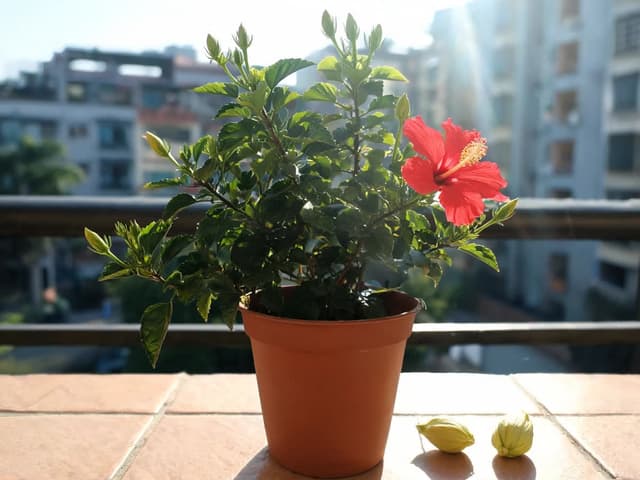
Hibiscus Not Blooming? How to Get Blooms and Stop Bud Drop
How to get hibiscus to bloom: more direct sun, prune only in late winter, and fertilize at half strength. See whether yours fails to set buds or drops them before opening, and what to do.
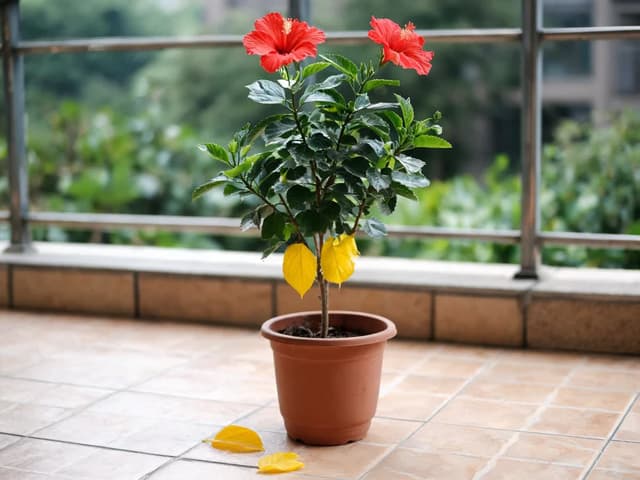
Hibiscus with Yellow Leaves: Causes and What to Do
Hibiscus with yellow leaves: yellowing is a distress signal, and the plant grows new leaves once the trigger is gone. Identify the cause from the leaf and soil, know which leaves to remove, and see what to do in pots and gardens.
Hibiscus in winter: which ones withstand cold and how to care for each
Hibiscus in winter: rose of Sharon tolerates frost and stays leafless until late spring, while tropical hibiscus needs protection when nights reach 12 °C. Learn how to recognize yours and check if a bare branch is still alive.