How to Care for a Banana Plant: Light, Water, Cold, and Pups
How to care for ornamental banana plants in pots or outdoors: full sun, watering without waterlogging, warmth above 16 °C, and cold protection where frost occurs. Split leaves are normal, and the trunk dies after fruiting to make way for pups.
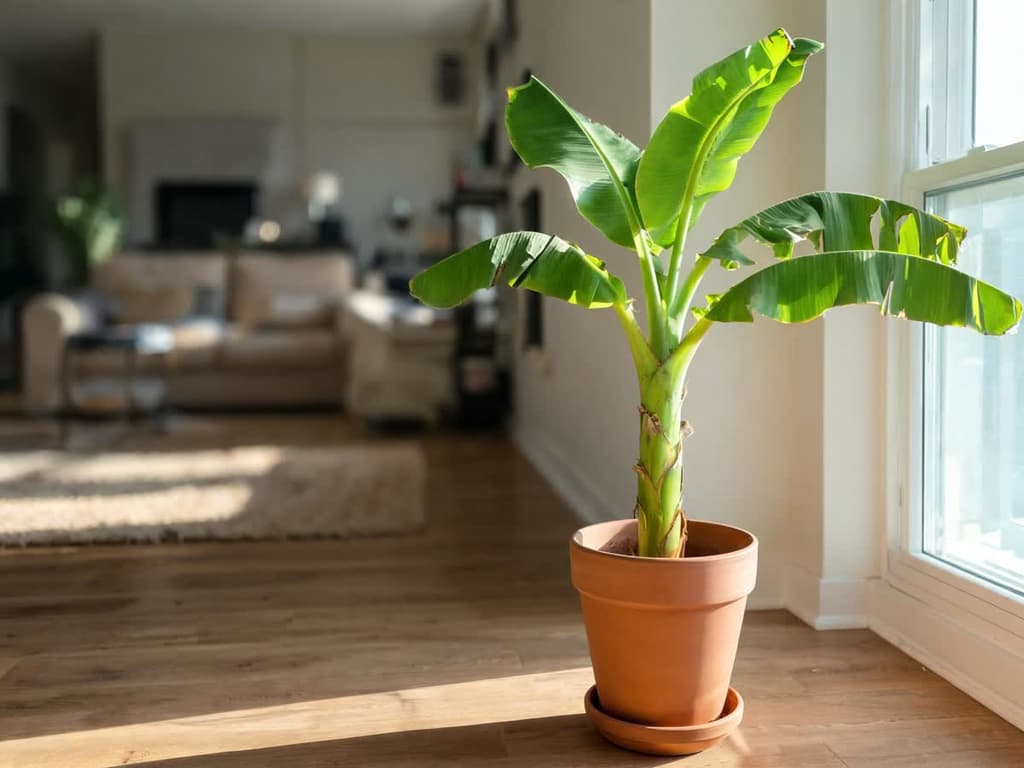
To care for an ornamental banana plant, give it full sun or the brightest spot in the house, warmth, and moist soil that is never waterlogged. Water until liquid drains through the drainage hole when the soil surface feels dry to the touch. Banana plants grow best between 26 and 28 °C and stop growing at 10 °C, according to the University of Florida.
Two things that startle first-time banana owners are completely normal. Leaves split in the wind, and mild shredding does not harm the plant. Also, the "trunk" that produced a flower or bunch dies afterward: the pup growing at the base takes its place.
Ornamental banana quick care sheet
Care | What to do |
|---|---|
Light | Full sun (6 hours or more of direct sun); tolerates partial shade, but grows slower |
Watering | Until water drains from the hole, whenever the soil surface dries; never leave standing water |
Temperature | Ideal between 26 and 28 °C; minimal growth below 16 °C and stops at 10 °C |
Cold | Frost (0 °C) burns leaves and trunk; below -2 °C top growth can die back, and the plant can resprout from the base |
Split leaves | Mild wind tearing is normal and does not harm the plant |
Pot | With drainage; in spring, every 1 to 2 years (large plant: every 2 to 3 years), moving up to a pot 10 to 15 cm wider |
After fruiting | The trunk dies; cut it flush with the ground and let the pup grow |
Dogs and cats | The ASPCA lists Musa acuminata as non-toxic |
Which banana plant do you have
The name "ornamental banana" covers different plants, and the amount of cold each can handle varies considerably. Check which one you have before following the numbers in this guide:
Flowering ornamental banana (Musa ornata): reaches up to 2.7 m. It features yellow-orange flowers covered by pink or lilac bracts (modified leaves surrounding the bloom). The fruit is small and full of seeds, rarely eaten by anyone, according to NC State Extension.
Dwarf potted banana (Musa acuminata 'Dwarf Cavendish'): stays between 1.5 and 1.8 m and is the most common variety sold for pots. It is the same species as grocery-store bananas.
Outdoor banana: fruiting banana varieties can reach 6 m. Care instructions for pots and garden beds are in the banana plant care guide.
Hardy banana (Musa basjoo): the most cold-tolerant species, according to the Royal Horticultural Society (RHS). In milder regions of the United Kingdom, it can spend the winter outdoors in the garden if well protected.
The Abyssinian banana (Ensete ventricosum) looks like a banana plant, but it does not produce pups and only multiplies by seed. Heliconia and bird of paradise have similar foliage but are not bananas: their care requirements are different.
If your plant came without a tag, gently squeeze the "trunk." On a banana plant, it consists of rolled leaf layers rather than wood. The RHS calls this trunk a pseudostem (false stem) and classifies the banana as an herbaceous plant (non-woody), not a tree. A photo of the leaves and trunk in Bloom (available for iOS) will also identify the species and show its care needs.
Light: full sun or the brightest spot in the house
The banana plant needs full sun, meaning 6 hours or more of direct sun per day, according to the NC State Extension. It tolerates partial shade, especially light shade during the hottest hours. The University of Florida measured that the banana plant can handle up to 50% shade, but grows more slowly.
Indoors, place the pot in the brightest spot you have, as recommended by the University of Illinois Extension. In Brazil, the window that receives the most sun is the north-facing one. A south-facing window gets almost no direct sun in the winter.
Bananas that stay small and grow slowly even in warm weather may lack light: the University of Florida notes that plants kept in deep shade stay small and weak. Move the pot closer to the window or out onto the patio. Excessive heat is also harmful. At 37 °C and above, leaves can scorch and emerging leaves grow narrow, according to the University of Florida.
How to water a banana plant
The banana plant needs a lot of water and is very sensitive to drought. According to the University of Florida (UF/IFAS) guide, drought folds the leaves and causes them to turn yellow and dry out prematurely. Meanwhile, soil that stays constantly wet slows growth and also yellows the leaves. The same guide states that standing water kills the banana plant quickly.
Water the potted banana plant until water drains through the hole, whenever the soil surface feels dry to the touch (stick your finger in to check). Empty the saucer after watering. In the summer heat, potted soil in the sun dries out in a few days: check the soil with your finger every day.
Soft, drooping leaves occur with both underwatering and overwatering, according to the RHS. To tell the two apart, stick your finger into the soil:
Soil completely dry and the pot feels light: underwatering. Water slowly until it drains out the bottom hole.
Soil moist and heavy for days: overwatering. Stop watering until the surface dries and check that the pot's drainage hole is not clogged.
In cold weather, banana plants grow less and consume less water. When temperatures drop below 16 °C, wait until the soil is also dry deeper in the pot (finger inserted halfway down) before watering again. The RHS recommends the same practice for bananas overwintering indoors.
Yellow bottom leaves: should you trim them?
An older bottom leaf turning yellow and drying out from time to time is part of the normal banana life cycle. The RHS recommends removing the old leaf once it begins to die, using a clean knife cut flush with the base of the leaf stalk. Texas A&M AgriLife suggests cutting torn leaves when they snap and hang down against the trunk.
Multiple leaves turning yellow at once while the soil stays wet points to overwatering. In this case, space out your waterings before cutting off any leaves. The yellow leaves on banana plants page lists other causes for this symptom.
Split leaves and dry air
Wind-torn leaves are normal on banana plants. The RHS explains that tearing is a natural adaptation to tropical storms and does not harm the plant. According to the University of Florida, mild tearing can even be beneficial, but strong, constant wind shreds the leaf into ribbons and dries out the edges. Embrapa treats severe tearing as damage because the plant loses leaf area. This guide follows the RHS and the University of Florida: mild tearing can stay, and strong wind calls for a sheltered spot.
If you prefer intact leaves for aesthetics, plant your banana in a spot protected from wind, such as beside a wall or fence.
Brown, crispy margins are different from splitting. According to the RHS, brown edges indicate underwatering or dry air. Indoors, air dries out when running air conditioning. Illinois Extension recommends grouping plants near the banana, as grouping increases surrounding air humidity.
Temperature and cold: where banana plants suffer in Brazil
Banana plants grow best between 26 and 28 °C, according to the University of Florida. Below 16 °C, growth slows down; at 10 °C, it halts. At 0 °C or lower, frost scorches leaves and the trunk, which take on a water-soaked look and then dry up. Below -2 °C, the entire top growth may die, but the plant usually sprouts anew from the base once warm weather returns.
In Brazil, banana plants experience this cold in the South and in mountain regions from June to August. In most of the country, there is no frost, and banana plants stay outdoors year-round.
If you live where it gets cold, follow the steps for your banana type:
Potted bananas: when night forecasts drop below 10 °C, bring the pot indoors to the brightest spot in the house. Water sparingly until warm weather returns.
In-ground bananas: before a cold front hits, cover the base of the plant with a thick layer of straw or dry leaves. Texas A&M AgriLife recommends mounding soil around the trunk to protect underground buds.
Hardy banana (Musa basjoo): NC State Extension notes that the rhizome (the underground stem) can survive down to -23 °C when mulched. Top growth dies back in severe cold and resprouts in spring.
After a hard frost, if top growth died completely, cut it back to ground level within 2 weeks, as recommended by Texas A&M AgriLife: dead tissue rots and becomes harder to cut cleanly later. The buried base remains alive: wait until September to see what resprouts.
Pot, soil, and repotting
Use a pot with drainage holes at the bottom and fertile soil that lets water drain freely. The RHS recommends rich potting compost that stays neither waterlogged nor parched. If your potting mix stays wet for days, mix in coarse sand to improve drainage, as recommended by the RHS.
The banana plant grows quickly and fills the pot with roots. According to the RHS, potted banana plants should be repotted into a larger container in the spring, every year or every two years. A large, vigorous plant can stay in the same pot for two or three years and then move into a container that is four to six inches wider. In Brazil, spring runs from September to November.
If you just brought a banana plant home, let it acclimate to its new location before repotting. Only repot immediately upon arrival if roots are poking out the drainage hole or if the mix fails to retain any moisture.
Fertilizing banana plants
Bananas grow fast and use plenty of nutrients, especially in containers. The RHS recommends feeding with liquid fertilizer in spring and summer, following the dosage and frequency on the label. The same source notes that high-potassium fertilizer can help the plant produce flowers and fruit. Do not fertilize during cold periods when growth stops.
Pups and the "trunk" that dies after fruiting
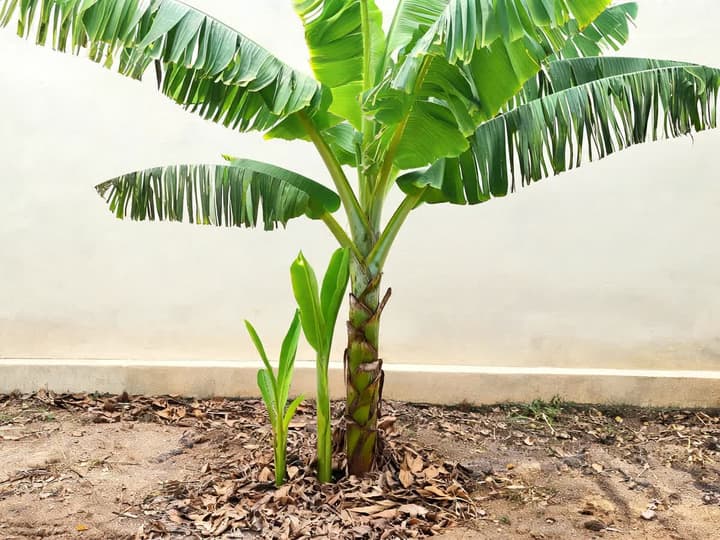
A banana trunk flowers and fruits only once, then dies. NC State Extension describes this cycle in Musa acuminata and Musa ornata: the pseudostem dies after flowering and fruiting, while the root system produces pups that grow into new trunks. A trunk turning yellow after bearing a bunch is not diseased.
After harvest, cut the old trunk flush with the ground, as recommended by Texas A&M AgriLife. Chop the trunk into 3 or 4 pieces and split each one lengthwise: this allows it to decompose quickly in the compost or as mulch for garden beds.
How long it takes to flower depends on cold exposure and where you start counting. According to NC State Extension, young bananas only bloom in their second or third year. Texas A&M AgriLife counts 10 to 15 months starting from a pup in warm climates. Nobody has measured this timeline for indoor potted bananas: expect 2 to 3 years. Potted bananas brought indoors and cut back annually may never flower.
How to propagate from a pup
Wait until spring and pick a pup with a trunk between 5 and 15 cm in diameter, the size recommended by Texas A&M AgriLife.
Dig down around the base until you reach the rhizome and sever the connection between the pup and parent plant using a sharp spade.
Lift the pup with as much root system as possible, as directed by the RHS.
Trim off a few lower leaves and plant it in a pot only slightly larger than the root system, set at the same depth the pup was growing originally.
Banana plant with a soft stem base: can it be saved?
You can save the plant as long as a firm section remains: either a healthy pup or a hard rhizome. A soft stem base usually indicates rot caused by overwatering, worsened by cold temperatures. According to the RHS, dieback of the top growth often stems from cold, but can also result from rot caused by excessive moisture, especially during winter.
Follow these steps in order:
Stop watering until the soil surface dries and move the pot to the warmest, brightest spot in the house.
Remove the plant from its pot and inspect the base and roots. Healthy roots are firm; rotten roots are dark and disintegrate when squeezed.
Look for a firm pup at the base and separate it flush against the mother plant's rhizome. Texas A&M AgriLife notes that to ensure plant survival, the easiest method is to remove small suckers close to the rhizome and pot them up.
Pot the pup in fresh, lightly moist soil inside a container with drainage, and water only when the surface dries out.
If the entire base is mushy and no firm pups remain, no viable tissue is left to replant. The steps above avoid chemical products, making them safe for homes with cats. The banana stem rot guide covers other causes of softened stems.
Pests and diseases on banana plants
Outdoors, banana plants rarely suffer from pests, according to the RHS. Indoors, they pick up standard greenhouse pests, particularly mealybugs (white cottony patches in leaf axils) and two-spotted spider mites. NC State Extension adds aphids, scale, and thrips.
Two-spotted spider mites appear in dry, warm conditions. The foliage develops fine pale stippling and, during severe infestations, delicate webbing on leaf undersides.
NC State Extension also lists anthracnose (sunken dark spots), wilt, and mosaic virus (mottled yellow patterns on leaves). The University of Florida recommends buying nematode-free stock (microscopic worms that damage roots) as the best preventive control, and notes that no chemical treatment exists for fusarium wilt, a soil-borne fungal disease. To compare symptoms side by side, visit the banana plant pests guide.
Are banana plants toxic to dogs and cats?
The ASPCA is an American animal welfare organization that maintains a list of toxic plants. It lists the banana plant (Musa acuminata) as non-toxic to dogs, cats, and horses. Musa ornata and Musa basjoo are not listed by the ASPCA. If your pet chewed on one of these, call your vet.
Banana plants frequently share living spaces with toxic houseplants, such as dumb cane, which burns a pet's mouth. The toxic plants for pets list ranks 12 species by severity.
Frequently asked questions about ornamental bananas
How long does it take for a banana plant to produce bananas?
Young banana plants typically bloom in their second or third year, according to NC State Extension. Starting from a pup, Texas A&M AgriLife estimates 10 to 15 months. To yield mature fruit, the RHS states that an adult plant needs 9 to 15 months above 15 °C, plus another 2 to 4 months for the bunch to ripen. Flowering ornamental varieties rarely yield edible fruit.
Which banana leaves should you cut off?
Cut off old leaves that turn yellow and dry up, as well as shredded leaves that snap and hang along the trunk. Use a clean knife and make the cut flush at the base of the leaf stalk, as recommended by the RHS. Do not remove green leaves simply because they are torn: wind tears do not harm banana plants.
How often should you water a banana plant?
Water whenever the soil surface feels dry to the touch, pouring until liquid drains from the pot holes. In summer heat, container soil in full sun dries out within a few days, so check it daily. During cold weather below 16 °C, wait until the soil dries halfway down the pot before watering, and never leave standing water in the saucer.
When should you cut back a banana plant?
Cut the trunk flush to the ground after it finishes fruiting, as that stem will not bear again. After a frost kills the upper foliage, prune it back within 2 weeks. If the plant grows too tall, the RHS notes you can saw back the stem leaving at least 60 cm above ground level.
What to do with your banana plant today
Check the soil with your finger before your next watering and position the pot in the brightest spot indoors. If a leaf has turned yellow or the stem feels soft, match the symptom against the causes in this guide before adjusting your watering routine.
Related articles
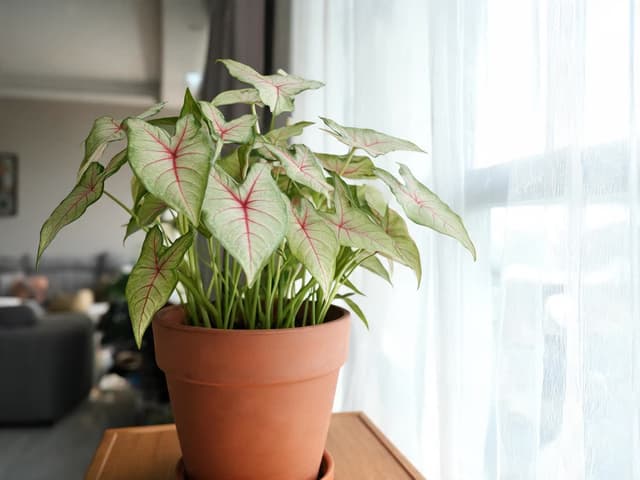
How to Care for Syngonium: Light, Watering, Cuttings, and Pests
How to care for syngonium indoors: bright indirect light, watering when the soil surface dries, 64 to 81°F (18 to 27°C), and 40 to 60% humidity. Also cover water cuttings, thrips, yellow leaves, and pet toxicity.
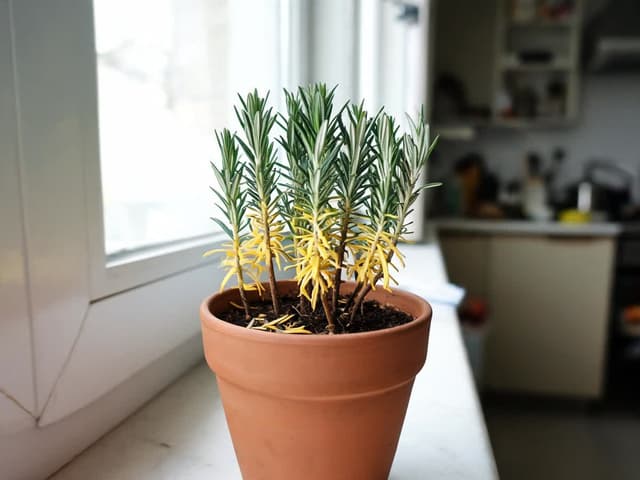
Rosemary Leaves Turning Yellow: Causes and Solutions
Rosemary with yellow leaves usually has overly wet roots. Check where the yellowing appears to see if it stems from wet roots, low light, spider mites, powdery mildew, or normal leaf shed, and learn how to save the plant.
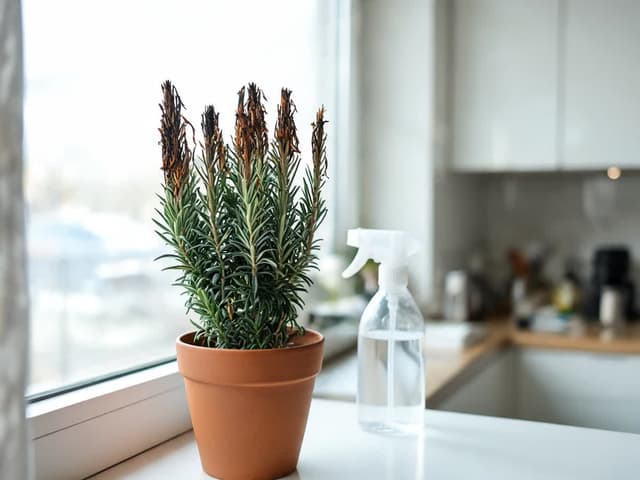
Is Your Rosemary Dying? How to Save Soap-Burned Rosemary
Rosemary with soap-burned leaves can usually be saved: the damage stays on the affected needles. Rinse the leaves, wait a week, scrape the stems, and prune only what is brown inside.