How to Care for a Venus Flytrap: Water, Sun, and Black Traps
Store-bought Venus flytraps usually die in weeks for three reasons: tap water, potting soil, and low light. Here is how to avoid each one, when a black trap is normal, and how winter works in Brazil.
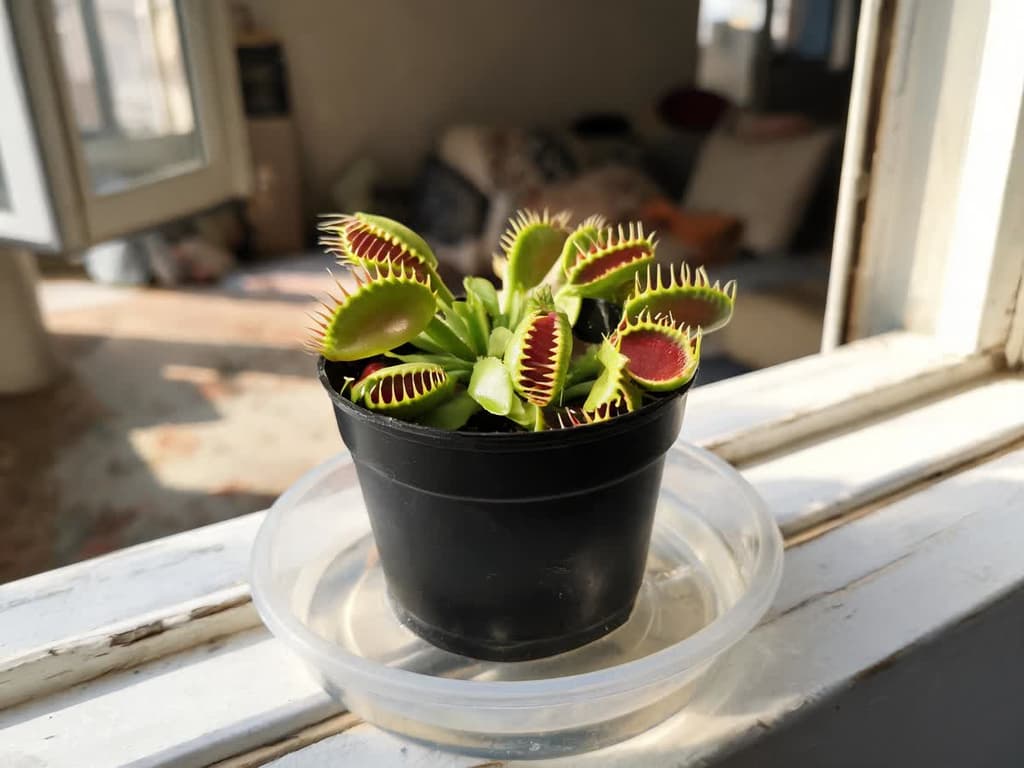
To care for a Venus flytrap (Dionaea muscipula), use only mineral-free water, such as distilled water or rainwater. Keep the pot sitting in a saucer with 1 to 2 cm of this water at all times. Give it at least 6 hours of direct sunlight every day and pot it in sphagnum peat moss (decomposed moss, low in nutrients, that retains moisture) mixed with sand, with no fertilizer.
If one or two traps turn black, your plant is probably fine. Each Venus flytrap leaf lives for a few months before turning dark and drying out, while a healthy plant continuously grows new leaves from its center. Outside of winter, the real sign of trouble is when nearly all the leaves turn black at once, or when the base of the plant becomes black and mushy.
Venus flytrap quick guide
What | How |
|---|---|
Light | At least 6 hours of direct sunlight per day; in Brazil, a north-facing window |
Water | Only distilled, rain, or reverse osmosis water; never tap, mineral, or filtered water |
Watering | Pot sitting in a saucer with 1 to 2 cm of water that must never dry out; during winter rest (dormancy), just damp soil |
Soil | Equal parts sphagnum peat moss and silica sand, or pure sphagnum moss; no fertilizer |
Pot | Plastic, with drainage holes, about 8 cm wide and 10 cm deep |
Food | Insects it catches on its own; indoors, 1 or 2 traps every 1 to 2 weeks |
Winter in Brazil | June to August; indoors, it does not need a refrigerator or forced cold |
Pets | The ASPCA lists the Venus flytrap as non-toxic to dogs and cats |
Black traps on a Venus flytrap: when it is normal and when it is a problem
An isolated black trap is the natural end of that leaf's life. The International Carnivorous Plant Society (ICPS) explains that each leaf lasts only a few months. A healthy plant is always putting out new leaves while the old ones die. The New York Botanical Garden says the same thing and tells you not to worry.
Traps also tend to turn dark after digesting a large meal. The New York Botanical Garden recommends prey no larger than one-third the size of the trap. Larger prey takes longer to digest and can rot inside it.
What you see | What it usually is | What to do |
|---|---|---|
1 or 2 black traps, with new leaves emerging from the center | Normal leaf aging | Cut the leaf off once it is completely black |
Black trap after snapping shut over large food | Prey too large for that trap | Offer smaller prey, up to one-third the size of the trap |
Nearly all traps turn black in a few weeks, plant watered with tap water | Salt buildup in the soil | Switch to mineral-free water and repot in fresh soil |
Weak, elongated new leaves lacking red coloration inside | Insufficient light | Move to direct sunlight or add an LED grow light |
Black leaves from June to August, plant stopping growth | Winter dormancy | Nothing; see the dormancy section |
Base of the plant black, soft, or foul-smelling | Rot | See the section on saving a dying Venus flytrap |
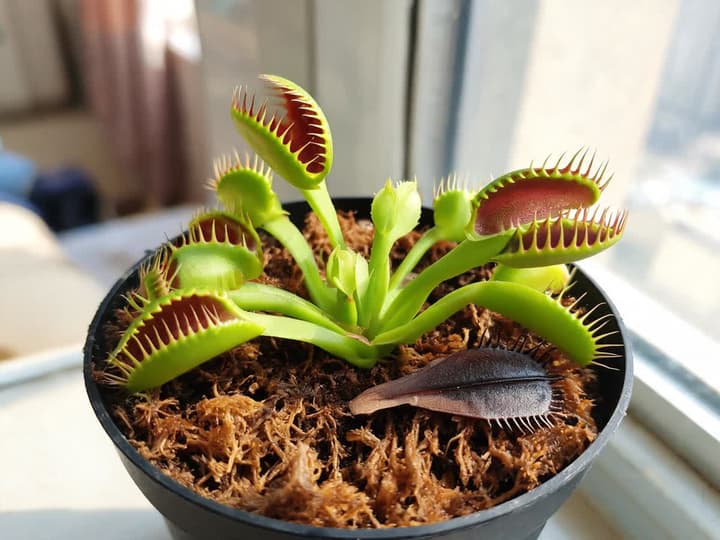
Cut off the black leaf only when it has turned entirely black, as recommended by the New York Botanical Garden. Use small, clean scissors and cut close to the base of the leaf. A leaf that is still partially green is still feeding the plant.
The three mistakes that kill store-bought Venus flytraps
Three mistakes kill Venus flytraps bought from flower shops or supermarkets: mineral-rich water, the wrong soil, and insufficient light. None of them relate to watering more or less. Adjusting the amount of water will not fix the issue when the problem is the water quality itself.
Tap, mineral, or filtered water. The Venus flytrap naturally grows in bogs with nutrient-poor soil. Minerals and salts in water accumulate in the soil and kill the roots.
Regular potting soil or fertilizer. The North Carolina State University Extension (NC State) calls for peat or sphagnum moss and advises against fertilizing.
Insufficient light. According to the ICPS, a Venus flytrap needs more light than a standard windowsill usually provides.
Supermarket Venus flytraps usually come covered with a plastic cup. The ICPS advises removing this cup: the grower placed it there to protect the plant during shipping and retail display, not because the plant needs it. The plant takes some time to adapt to the drier air inside your home, and the ICPS assures that it will adjust.
Water for carnivorous plants: only mineral-free water
Water your Venus flytrap exclusively with distilled water, rainwater, or reverse osmosis water. NC State cautions that treated municipal water or hard water can kill the plant. The ICPS states that bottled mineral water "is death to a Dionaea".
Filtered water does not work either. The ICPS explains that typical home filters do not remove dissolved salts from the water. The New York Botanical Garden says the exact same thing regarding filtered and bottled water. This applies to pitcher filters and clay water filters alike.
In Brazil, distilled water is sold in pharmacies and supermarkets. Rainwater works if you collect it directly in a clean container. A reverse osmosis purifier also works, because osmosis is a process that removes salts.
The ICPS notes one exception: tap water is acceptable if it contains fewer than 90 ppm of total dissolved solids. You measure this with a TDS meter, a pocket-sized pen-style device. Without testing, stick to distilled water or rainwater.
Watering is also quite different from most common houseplants. Outside of dormancy, always keep the pot sitting in a saucer filled with 1 to 2 cm of mineral-free water. The ICPS stresses that this saucer must never go dry. The potting medium wicks water upward from the bottom, staying constantly moist.
How much light does a Venus flytrap need?
A Venus flytrap needs at least 6 hours of direct sun per day, according to the New York Botanical Garden and the ICPS. Without this light, the plant quickly weakens. New leaves come in long and floppy, and the traps close slowly.
In Brazil, the window that gets the most sun is the north-facing one. American and British sources mention south-facing windows, because there the sun travels through the south. Here, it is the opposite. East- or west-facing windows provide sun for only part of the day.
Color helps check whether the plant gets enough light. English grower Tom's Carnivores explains that the inside of the traps on most Venus flytraps turns red when they receive plenty of sun. Green trap interiors and long leaves indicate the plant needs more light.
If no window in your home receives 6 hours of direct sun, the ICPS recommends an LED grow light. A standard desk lamp with a regular cool-white LED bulb works well, without requiring expensive specialized grow bulbs. Run this light for 12 to 16 hours a day, placed close to the plant.
Many growers worry that direct sunlight will burn their flytrap. According to the ICPS, full sun is ideal in humid environments or mild summer climates. In hot, dry regions, the society suggests providing full morning sun followed by light afternoon shade.
Soil and pots for Venus flytraps
Pot your Venus flytrap in equal parts sphagnum peat moss and washed silica sand, or in pure sphagnum moss. Peat and sphagnum moss are nutrient-free substrates that hold water exceptionally well. Check package labels carefully: the ICPS specifies using peat without added fertilizers. The society also warns that construction sand should never be used.
Regular potting soil, garden soil, and compost are completely out of the question. These substrates contain rich nutrients and salts that a Venus flytrap cannot tolerate. NC State strictly prohibits fertilizing, and the New York Botanical Garden notes that fertilizer slowly kills the plant.
Many commercial growers add perlite to their mix. The ICPS suggests avoiding perlite and pumice, as these materials can leach unwanted minerals over time. This guide follows the ICPS, the primary scientific society in the field, and excludes perlite.
Use a plastic pot with bottom drainage holes. The ICPS suggests a pot around 8 cm wide and 10 cm tall. Top the soil with a 1 cm layer of clean silica sand. According to the ICPS, this sand layer reduces the chance of decaying lower leaves rotting out. The New York Botanical Garden adds that a sand top layer helps keep fungus gnats out of the moist soil.
Do not repot a newly purchased Venus flytrap right away. The New York Botanical Garden states that it can stay in its original nursery pot for 2 years or longer. The ICPS advises waiting until the plant acclimates and resumes active growth before attempting to repot. When repotting is needed, spring is the best season.
What to feed a carnivorous plant
A Venus flytrap grown outdoors catches all the insects it needs on its own. Indoors, feed 1 or 2 traps every 1 to 2 weeks, as recommended by the New York Botanical Garden. There is no need to feed every trap on the plant.
Offer live insects, such as small flies, small crickets, and spiders. Another convenient option is freeze-dried bloodworms, widely sold as fish food in aquarium shops. Rehydrate the bloodworms with a few drops of water before feeding.
A Venus flytrap only digests prey that moves inside the closed trap. With dead food, massage the closed trap with your fingers for a few seconds, as the ICPS explains. This lets the plant know the prey is alive and begins digestion.
Never feed raw meat, ham, or hamburger: the New York Botanical Garden is explicit about this restriction. Prey must never exceed one-third the size of the trap. Do not add fertilizer to the soil to "feed" the plant either, since flytraps take in nutrients strictly through their traps.
Food helps the Venus flytrap grow, but it is not what keeps it alive. The Sydney Botanic Garden notes that the plant photosynthesizes like any other. According to this botanical garden, feeding the Venus flytrap is not essential for survival, and a fed plant grows better.
Can you trigger the trap with your finger?
Yes, according to the ICPS: the society notes that you can trigger traps as much as you like without killing the plant. A trap triggered without prey will reopen the next day. Eventually, that trap loses its ability to close, which the ICPS considers entirely normal.
Some retail garden centers advise against unnecessary tripping, arguing that each trap has a limited number of closures before it dies. This guide follows the ICPS, the scientific authority on carnivorous plants. Mineral-heavy water, wrong potting mix, and insufficient sunlight are what truly kill flytraps.
Venus flytrap dormancy in Brazil
Dormancy is the Venus flytrap's winter rest: the plant stops growing and many leaves turn dark. American and English sources refer to dormancy from November to February, which is their winter. In Brazil, the same period falls from June to August.
Sources disagree on whether dormancy is mandatory. Growers and specialty shops in the United States and England say that the Venus flytrap needs a cold winter to survive. One of them tells growers to store the plant in the refrigerator for months. The ICPS says that the Venus flytrap does not need dormancy to live for many years indoors. For the ICPS, placing an indoor plant in the refrigerator is a waste.
The New York Botanical Garden likewise notes that expert opinions diverge and that dormancy is not strictly necessary for flytraps kept indoors year-round. This guide follows the ICPS and the botanical garden as scientific authorities. Do not put your Venus flytrap in the refrigerator.
What you should do depends on where you grow your flytrap:
On a windowsill with natural light: in June, as daylight hours shorten and temperatures drop, the plant may slow down and several leaves will turn black. Take the pot out of its water saucer and water only enough to keep the mix lightly damp. This is the routine advised by both the New York Botanical Garden and Tom's Carnivores. Stop feeding and trim away completely blackened leaves. The plant resumes active growth in spring, at which point you return the pot to its water saucer.
Under LED grow lights: maintain the same photoperiod and care routine year-round. The ICPS recommends avoiding switching back and forth between natural windowsill light and artificial LED setups across seasons.
Outdoors in the South Region of Brazil, with frost: the ICPS reports that a Venus flytrap in full dormancy can withstand being frozen for up to a week. The condition is that the soil does not dry out.
The Sydney Botanic Gardens, located in the southern hemisphere like Brazil, confirms that black leaves in winter are completely normal. The same source advises keeping the soil moist during this period.
Can you save a dying Venus flytrap?
Yes, provided the center of the plant is still alive. The earliest indicator of life is a new leaf emerging from the core rosette. If new leaves appear, even miniature ones, the plant is alive and the issue lies in your cultural conditions.
If your plant was watered with tap water for weeks, switch to pure, mineral-free water immediately. Repot in fresh, unfertilized substrate, since mineral salts build up in the soil. The ICPS highlights a classic sign of toxic salt accumulation: new leaves emerge deformed without developing functional traps.
To check if the crown is viable, experienced hobbyists unpot the plant to inspect the rhizome. The rhizome is the thick, white bulb-like base from which roots and leaves emerge. While this test is not officially published by universities or botanical gardens, growers rely on it: a firm, white rhizome is healthy, while a mushy, blackened rhizome indicates fatal rot.
If your plant displays other symptoms not covered here, taking a photo helps diagnose what is wrong with your plant before changing your care routine.
Venus flytrap flowers: cut or keep?
In spring, a mature Venus flytrap sends up a tall flower stalk with white blooms. The New York Botanical Garden, the ICPS, and Tom's Carnivores all recommend cutting this stalk off. Flowering drains significant energy that the plant would otherwise invest in producing vigorous new traps.
Clip the stalk off once it reaches roughly 5 cm in height, cutting close to the base with clean shears. Leave the flower stalk intact only if you specifically intend to harvest seeds.
Other potted carnivorous plants: what changes
In Brazil, "carnivorous plant" can mean a Venus flytrap, sundew, Nepenthes (pitcher plant), or Sarracenia. All of them require mineral-free water, and none tolerate fertilizer in the soil. Dormancy and water requirements vary significantly among them.
Plant | Winter dormancy | Water in the pot | Light |
|---|---|---|---|
Venus flytrap | Natural dormancy from June to August; indoors it is not mandatory | Saucer filled with water, always | Direct sunlight, 6 hours or more |
Sarracenia | Yes, from fall to spring (NC State) | Saucer with water that never dries out (ICPS) | Full sun |
Subtropical sundew | No (ICPS) | Moist soil, without waterlogging (UF/IFAS) | More light than an ordinary windowsill provides |
Nepenthes (pitcher plant) | No; tropical plant, 21 to 35 °C in lowland species (NC State) | Moist, well-draining soil | Bright light |
Nepenthes differs the most from the Venus flytrap. NC State describes Nepenthes as a tropical plant requiring warmth, elevated humidity, and moist yet sharply draining soil. Subtropical Drosera thrives between 10 and 35 °C and does not undergo winter dormancy, according to the ICPS.
If you are unsure which carnivorous plant you have, the Bloom app identifies your specimen from a photo. With an accurate identification, you can easily verify whether your plant needs winter rest or a standing saucer of water.
Frequently asked questions
How long can a Venus flytrap go without food?
A Venus flytrap can survive for a very long time without catching prey, according to the New York Botanical Garden. Without food, it simply grows at a slower pace. When a flytrap declines, the most probable culprit is a lack of sufficient sunlight, according to the same botanical garden.
Can I feed dead insects to my Venus flytrap?
Yes. Place the dead insect inside the trap and, once the lobes snap shut, gently massage the outside of the trap with your fingers for a few seconds. The ICPS notes that the plant triggers digestion only when it detects movement inside. Without this gentle massage, the trap will usually reopen without digesting the prey.
Are Venus flytraps toxic to cats and dogs?
The ASPCA, an American animal protection association, lists the Venus flytrap as non-toxic to dogs, cats, and horses. If your pet chewed on a plant and became ill, consult a veterinarian. The plant it ate might not be the one you think.
Why shouldn't you take Venus flytraps from the wild?
Because the Venus flytrap is threatened in the wild, and poaching the plant there is a felony in North Carolina, according to the New York Botanical Garden. The Venus flytrap only exists in the wild along a small strip of the coast of the Carolinas in the United States. Flytraps sold in stores come from commercial production and do not impact wild populations.
How often should you water a carnivorous plant?
Venus flytraps do not follow a fixed watering schedule. Outside of dormancy, keep the pot permanently sitting in a saucer with 1 to 2 cm of mineral-free water. Refill the saucer before it runs dry. During hot weather, the water evaporates faster and needs to be replenished more frequently.
Related articles
How to Care for a Maidenhair Fern: Light, Water, and Revival Tips
Learn how to care for a maidenhair fern indoors: bright indirect light, consistently moist soil, high humidity, and how to revive it if it dries out completely.
How to Propagate Spider Plants: Root the Pup Before Cutting
The safest spider plant cutting comes from a pup still attached to the mother plant: rest the plantlet on soil in a small pot, wait for roots to establish, and only then cut the stolon. Learn when the pup is ready, whether rooting in water is worth it, how to divide the clump, and why plants fail to produce babies.
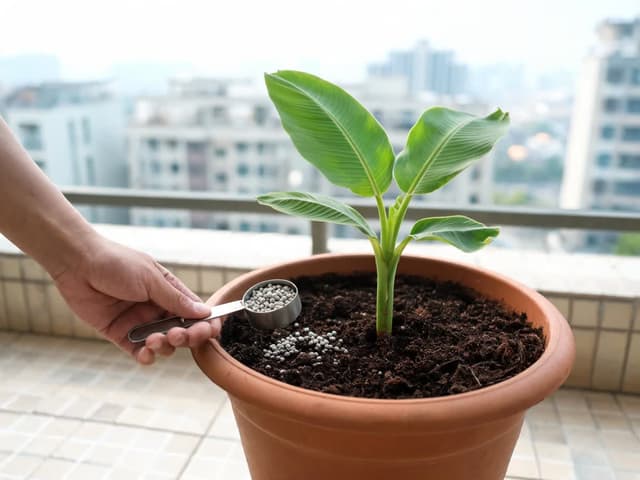
Banana plant fertilizer: fertilizing potted and backyard plants
Banana plant fertilizer needs more potassium than nitrogen, in a 3-1-6 ratio. For a potted plant on a balcony, use the label dose in spring and summer. In the backyard, fertilize every 2 months, adjusting the amount by mat age. Learn the formula, timing in Brazil, and signs of deficiency or excess.