How to Propagate Palms: Division, Seeds, and What Doesn't Work
Palms will not grow from cuttings, leaves, or trunk pieces. Learn which species can be divided, how long seeds take to germinate, and what to do with pots that contain multiple plants.
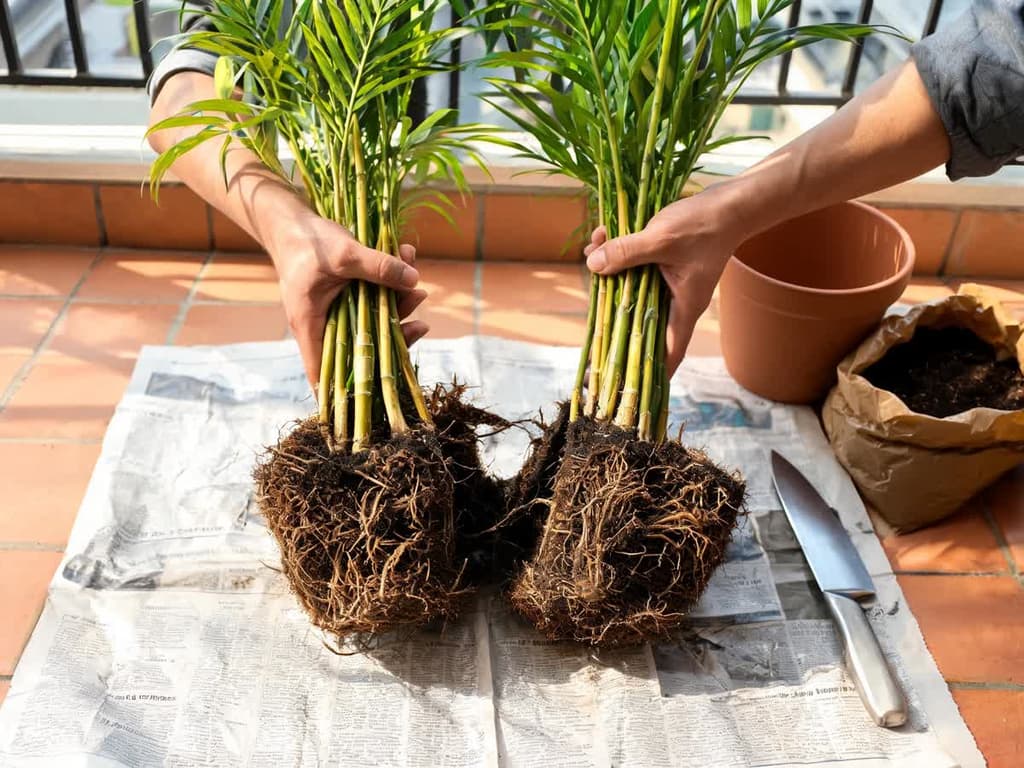
To propagate palms, there are two methods that actually work: clump division or growing from seed. Division only works for clustering palms, such as areca palms, lady palms, and bamboo palms. Seeds work for any palm, but they can take anywhere from 3 weeks to over a year to germinate, depending on the species.
Palms cannot be propagated from cuttings, leaves, or trunk segments. Also, many pots sold as "a single palm" actually contain 3 or more plants sown together: simply separating these plants gives you new specimens. Once your new plant establishes itself, you can find lighting, watering, and fertilizing instructions in the guide on how to care for palms.
Quick summary:
Clustering palms (areca, lady palm, bamboo palm) are divided with a sharp knife or spade, and every division must come away with roots. Divided plants take 4 to 6 months to become established.
Single-trunk palms (parlor palm, kentia, majesty palm, Bismarck palm, royal palm) can only be propagated from seed.
Areca palm seeds begin to germinate in 3 to 4 weeks. Cuban royal palm seeds take 5 to 8 months, and Bismarck palm seeds take 6 to 12 months.
Which method works for each palm
The method depends on whether the palm has a single stem or forms a clump. A clump is a group of stems that grows from the same base. UF/IFAS (University of Florida) explains that a clustering palm produces shoots from buds at the base of the stem. A single-stem palm does not produce these shoots.
Palm | Trunk type | Division | Seed: germination time |
|---|---|---|---|
Areca palm (Dypsis lutescens) | Clustering | Yes | Begins in 3 to 4 weeks |
Lady palm (Rhapis excelsa) | Clustering | Yes, the easiest to divide | No published measurement |
Bamboo palm (Chamaedorea seifrizii) | Clustering | Yes | No published measurement |
Parlor palm (Chamaedorea elegans) | Single-trunk | No (pots usually contain several plants) | Several months, with germination continuing for over 1 year |
Pygmy date palm (Phoenix roebelenii) | Single-trunk in cultivation | No (pots usually contain 3 to 5 plants) | No published measurement |
Majesty palm (Ravenea rivularis) | Single-trunk | No (pots usually contain 3 or more plants) | No published measurement |
Kentia palm (Howea forsteriana) | Single-trunk | No | No published measurement |
Bismarck palm (Bismarckia nobilis) | Single-trunk | No | 6 to 12 months |
Royal palm (Roystonea) | Single-trunk | No | 5 to 8 months for the Cuban royal palm (Roystonea regia) |
Footstool palm (Livistona rotundifolia) | Single-trunk | No | No published measurement |
Germination times come from UF/IFAS, in the publications Palm Seed Germination, ST574, and ST101. The stem type and method for each species come from the NC State Extension (North Carolina State University) plant profiles. "No published measurement" means that none of these sources provides a figure for the species.
If you are not sure what kind of palm you have, Bloom identifies the species from a single photo. The species name determines which of the methods above will work.
Why palms cannot be propagated from cuttings or trunk segments
Each palm trunk grows from a single point, the apical bud, also called the palm heart or heart of palm. UF/IFAS notes that all new leaves originate from this bud. The trunk dies when this bud dies.
Because of this, a trunk section cut without the apical bud has no way to produce new leaves. It will slowly dry out, even if planted in moist soil, and there is no way to save it. None of the cited sources describes propagating a palm from a single leaf.
A watermelon peperomia (Peperomia argyreia) develops roots and a new plantlet from a cut leaf, as detailed in the guide on how to propagate watermelon peperomia. Palms, however, always require an active shoot with its own root system or a seed.
How to propagate palms by clump division
Clump division separates the palm into two or more parts, each with its own stems and roots. The UF/IFAS production guide notes that the lady palm is the easiest to divide. Its new stems emerge slightly spaced apart from the old ones. Areca palms and bamboo palms can also be divided, according to NC State.
You will need a large knife or a clean, sharp spade, pots with drainage holes, and well-draining potting soil. UF/IFAS recommends disturbing palm roots during the warm months, when root growth is fastest (in the Southern Hemisphere, October through March).
Remove the palm from its pot and locate where the clumps of stems separate naturally at the base.
Cut between the clusters using the knife or spade. Each section must have at least 1 stem with healthy roots attached.
Keep as much of the root ball intact as you can with each division.
Plant each section into a pot only slightly larger than its root ball, keeping it at the exact same depth it was growing before.
Place the new plants in partial shade and keep the soil evenly, lightly moist until they establish. According to UF/IFAS, this process takes 4 to 6 months.
UF/IFAS recommends keeping as much of the intact root ball as possible with each division. If your knife severs a stem completely devoid of roots, it will have no way to support itself during the months needed to establish.
Variegated lady palms (with light stripes) have their own rule. According to UF/IFAS, division is the only way to get a plant that keeps the stripes. Seedlings do not guarantee variegation.
Higher light levels encourage clustering palms to produce more shoots. The UF/IFAS production guide notes that full sun stimulates suckering (the emergence of new baseline shoots) in clustering palms. Indoors, the practical step is moving your pot next to your brightest window well before planning to divide it.
The physical technique is the same as dividing other clumping houseplants, like in the guide on how to propagate peace lilies. With palms, the divided clump takes 4 to 6 months to become fully established.
Store-bought pots are often several plants grouped together
Many potted palms sold in stores have multiple plants sown together. UF/IFAS outlines the method: nurseries scatter areca palm seeds close together in a 4-inch pot and transplant all the small plants together to create a full pot.
NC State describes the same for majesty palms (3 or more plants), parlor palms (3 or more), and pygmy date palms (3 to 5). Regarding the majesty palm, the plant profile notes that you can separate the plants and pot each one individually.
With single-trunk palms, dividing the pot merely yields the same number of individual plants that were already there, and none will develop baseline shoots later. For parlor palms, NC State notes that over the years, some individual plants in the pot lose out in competition with their neighbors and die off.
To separate them, remove the root ball from the pot and gently tease the plants apart with your fingers, slowly untangling the roots. Never cut roots simply to make separation easier: UF/IFAS advises against pruning the roots of young palms.
How to grow palms from seed
Seeds are the method that works for any palm. The publication Palm Seed Germination, from UF/IFAS, states that, with few exceptions, palms can only be propagated by seed. The palm seed is the small nut inside the fruit.
Harvest fruit when fully ripe, showing its final mature color, or pick freshly fallen fruit from the ground. Seeds of some palm species remain viable for only 2 to 3 weeks.
Remove the fleshy pulp. Soak the fruits in water, changing the water daily, until the pulp rubs away easily between your fingers. Wear gloves when handling royal palm and parlor palm fruit: their pulp contains calcium oxalate crystals that cause severe skin irritation.
Soak the cleaned seeds in water for 1 to 7 days, changing the water daily, and sow immediately afterward.
Choose a deep pot with drainage holes and fill it with an equal-parts blend of peat moss and perlite. A pot is much better than a shallow seed tray because the palm's first taproot grows deep.
Sow the seed shallowly if the pot will stay in the shade: simply press the seed into the soil surface so the top remains visible. If the container sits in full sun, cover the seed with soil to prevent it from drying out.
Keep the soil warm. Germination occurs between 70 °F and 100 °F (21 °C and 38 °C), with the best results between 85 °F and 95 °F (29 °C and 35 °C).
Keep the soil uniformly moist; do not allow it to dry out, but never leave standing water on the surface. Covering the pot with a clear plastic bag helps lock in humidity.
Do not apply fertilizer. The seed's internal food reserves sustain the young seedling for the first 2 months following germination.
When it comes to soaking pygmy date palm seeds, two studies cited by UF/IFAS reached contradictory conclusions: one reported improved germination following a soak, while the other observed reduced rates. UF/IFAS recommends a 1-to-7-day soak for palms generally, since it carries minimal risk to the seed. This guide follows that advice.
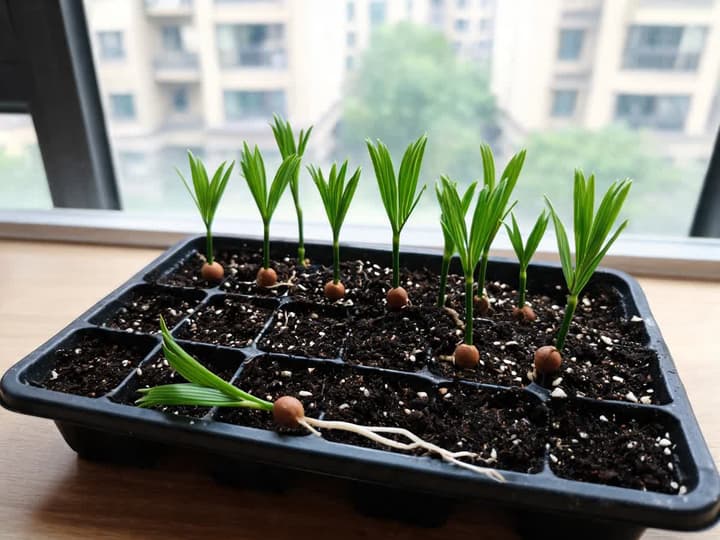
For Bismarck palms, plant just 1 seed per deep pot. UF/IFAS explains that the seedling pushes its stem deep down into the soil before emerging with its first leaf. The same source lists Bismarck palms among the species that are difficult to transplant.
How long palm seeds take to germinate
Germination times for palms range from 3 weeks to over a year, depending on the species and seed batch. UF/IFAS notes that more than 25% of palm species take over 100 days to germinate.
Areca palm: starts germinating in 3 to 4 weeks (UF/IFAS).
Parlor palm: can take several months to start, with sporadic germination continuing for over 1 year (UF/IFAS).
Cuban royal palm (Roystonea regia): 5 to 8 months after planting, at 35 °C (UF/IFAS). For the Brazilian imperial palm (Roystonea oleracea), none of the sources give a number.
Bismarck palm: 6 to 12 months, between 32 °C and 38 °C (UF/IFAS).
A seed that has not sprouted within the standard window is not necessarily dead. To check viability, slice one seed open: the internal white tissue should feel firm and solid, with a small embryo filling its niche at one end. Soft, brown endosperm or a shriveled embryo indicates the seed is dead.
Volunteer palm seedlings in your yard: how to pot them
A shoot that emerges on its own in the ground, near a palm tree, is almost always a seedling from a fallen seed. The FAO (Food and Agriculture Organization of the United Nations) explains the difference in date palms. A seed seedling has roots all around the base and no connection to the mother palm. An offshoot (a shoot that grows from the base of the mother plant) has no roots on the side where it was attached and bears a scar on that side.
Seedlings can be moved to a container once they have 1 or 2 leaves. UF/IFAS recommends the following care:
Dig widely around the plant with a hand trowel, without tugging on the leaf, and lift the seedling with its root ball and surrounding soil intact.
Leave the seed attached. If the seed is still clinging to the base, let it rest on the soil surface or against the rim of your container.
Never trim the roots. Use a container deep enough to comfortably accommodate the seedling's long primary root without bending it.
Plant the seedling at the exact depth it was naturally growing. UF/IFAS notes that planting even 0.5 inches (1.3 cm) too deep can severely set back growth or kill the seedling outright.
Keep the potted palm in light shade for several weeks until new leaves begin to unfurl.
Basal offshoots: common for date palms, rare for potted pygmy date palms
Offshoots are the traditional way to propagate date palms (Phoenix dactylifera). The FAO recommends taking only offshoots that are 3 to 5 years old, have a base diameter of 20 to 35 cm, and have their own roots. In the Southern Hemisphere, the best time is September and October. The offshoot spends 1 to 2 years in a nursery before going into the ground permanently.
The potted pygmy date palm, another species in the same genus (Phoenix roebelenii), almost never produces offshoots. NC State explains that it forms clumps in the wild, but most cultivated plants do not sucker. A full pot of pygmy date palms typically contains 3 to 5 plants growing together, and separating these plants is the most realistic way to propagate new plants from it.
Early care for young palms
Young palms require filtered light and consistently moist soil until new leaves emerge. UF/IFAS recommends 30% to 50% shade for the first several weeks after potting. Indoors, this corresponds to a bright position near a window with no harsh direct sun falling onto the foliage.
Keep the potting mix evenly moist, never letting it dry out completely and never allowing standing water to pool in the drip tray.
Do not fertilize seed-grown palms during their first 2 months following emergence.
Step up to a slightly larger pot only when roots begin circling the bottom of the container, always maintaining the exact original planting depth.
Once the young palm is actively producing new fronds, transition it to standard adult palm care as outlined in the guide on how to care for palms.
Cycads and ponytail palms are not true palms
The sago palm (Cycas revoluta), also called cycad, is not a palm, although many people search for "sago palm seedling." The ASPCA (an American animal protection organization) classifies the sago palm as toxic to dogs, cats, and horses. Keep the plant and its offshoots out of reach of pets.
The ponytail palm (Beaucarnea recurvata) is also not a palm, and propagating it follows its own rules, detailed in the guide on how to propagate ponytail palms.
Frequently asked questions
How do you separate a new plant from a palm?
With clustering palms like areca palms or lady palms, remove the plant from its container. Slice cleanly between stem groupings with a sharp knife or spade. Every separated piece must retain healthy roots and as much of its root ball as possible. Replant at the original soil depth and keep in partial shade for 4 to 6 months until established.
Can you propagate a palm from a branch or leaf cutting?
No. Palms do not produce true branches, and their stems only expand upward from a single apical growth bud at the top. Detached leaves or trunk logs have no cells capable of generating new growing points and will dry out and rot even in moist soil. The only viable methods are clump division for clustering palms and growing from seed.
How long does a young palm take to grow?
The initial germination stage varies dramatically: areca palm seeds begin sprouting in 3 to 4 weeks, while Bismarck palm seeds take 6 to 12 months. After germination, palms develop at a deliberate pace. UF/IFAS reports that Bismarck palms grow slowly as juveniles, then shift to a moderate growth rate once a visible trunk develops.
How do you propagate a palm without roots?
It is not possible. UF/IFAS emphasizes keeping as much intact root system as possible during division. Even with viable roots, divisions take 4 to 6 months to establish. When dividing clumps, plan your cuts carefully so every single division has functional roots attached directly to the stem base.
Where to begin
First, determine whether your palm naturally clusters. If multiple stems emerge from the soil line, like an areca or lady palm, divide it during warm months using a clean, sharp knife. If it grows on a single trunk, gently untangle the clumped seedlings in your pot or plant fresh seeds in warm, consistently moist potting soil.
Bloom is an iPhone (iOS) app that identifies palms from a quick photo and automatically creates an accurate watering schedule.
Sources
University of Florida IFAS, EDIS: Palm Seed Germination (BUL274/EP238), Alan W. Meerow and Timothy K. Broschat. Accessed September 22, 2026.
University of Florida IFAS, EDIS: Container Production of Palms (CN010), Alan W. Meerow and Timothy K. Broschat. Accessed on September 22, 2026.
University of Florida IFAS, EDIS: Palm Morphology and Anatomy (EP473), Timothy K. Broschat. Accessed on September 22, 2026.
University of Florida IFAS, EDIS: Rhapis excelsa: Lady Palm (FP501), Timothy K. Broschat. Accessed on September 22, 2026.
University of Florida IFAS, EDIS: Roystonea regia: Royal Palm (ST574). Accessed on September 22, 2026.
University of Florida IFAS, EDIS: Bismarckia nobilis: Bismarck Palm (ST101). Accessed on September 22, 2026.
NC State Extension Gardener Plant Toolbox: Dypsis lutescens, Rhapis excelsa, Chamaedorea seifrizii, Chamaedorea elegans, Phoenix roebelenii, Ravenea rivularis, and Howea forsteriana. Accessed September 22, 2026.
FAO: Date Palm Cultivation, Chapter V: Date Palm Propagation. Accessed on September 22, 2026.
ASPCA Animal Poison Control: Sago Palm. Accessed on September 22, 2026.
Related articles
How to Care for a Maidenhair Fern: Light, Water, and Revival Tips
Learn how to care for a maidenhair fern indoors: bright indirect light, consistently moist soil, high humidity, and how to revive it if it dries out completely.
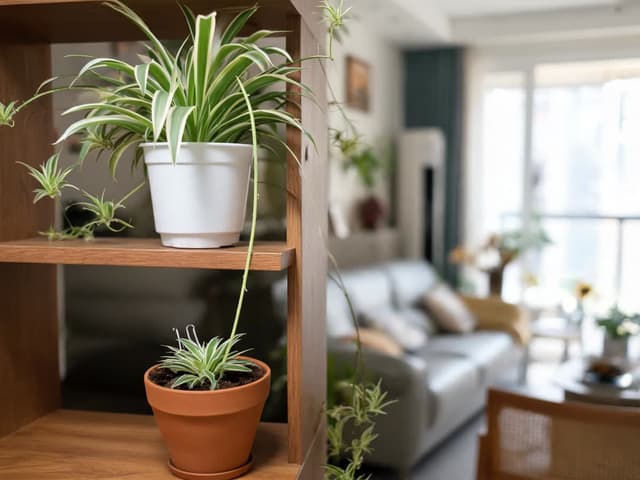
How to Propagate Spider Plants: Root the Pup Before Cutting
The safest spider plant cutting comes from a pup still attached to the mother plant: rest the plantlet on soil in a small pot, wait for roots to establish, and only then cut the stolon. Learn when the pup is ready, whether rooting in water is worth it, how to divide the clump, and why plants fail to produce babies.
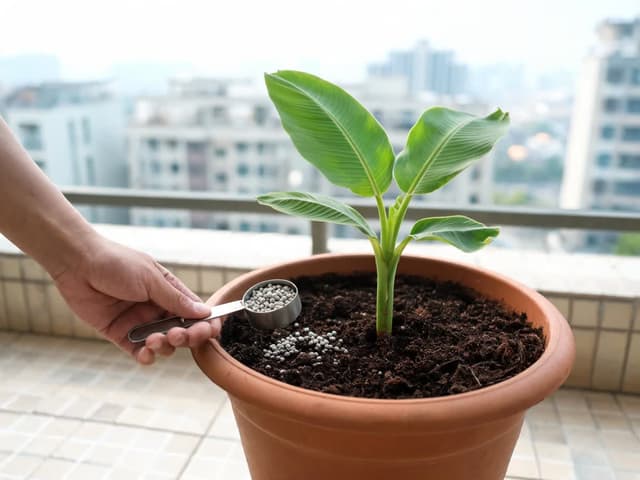
Banana plant fertilizer: fertilizing potted and backyard plants
Banana plant fertilizer needs more potassium than nitrogen, in a 3-1-6 ratio. For a potted plant on a balcony, use the label dose in spring and summer. In the backyard, fertilize every 2 months, adjusting the amount by mat age. Learn the formula, timing in Brazil, and signs of deficiency or excess.