Propagating Peace Lily (And Why the Leaf in Water Never Roots)
A single leaf will never grow into a new peace lily because the plant's growth points are hidden underground. The only method that actually works is division: here is how to split them, when to do it, and what to do during the first ten days.

There is only one way to propagate a peace lily: dividing the clump, which means taking the plant out of its pot and splitting the root system into smaller sections, each with its own leaves and roots. Putting a cut leaf in water will not work, and a stem cutting won't grow roots either. This species simply has no growth nodes above the soil.
If you have already tried putting a leaf in water and it stayed green for weeks without growing a single root, the method was the problem, not you. Below, you will find out why leaves do not root, exactly where to split the plant, and what to expect in the following days, which is the part that usually scares people.
Quick summary:
The only method that works is dividing the clump. Every new division must have its own leaves and its own roots; a piece without roots is not a viable division.
The best time is when the plant is actively growing and rootbound in its pot. In Brazil, this falls during the spring, between September and November.
Wilting during the first few days is completely normal and cannot be fixed by adding more water.
Does the peace lily propagate from leaves?
Peace lilies do not grow from leaf or stem cuttings because they do not have above-ground stems. Each leaf grows straight out of the soil on its own petiole, and this petiole does not contain any buds capable of growing into a new plant. The growth points of this species are located in the rhizome, the thick stem that lives buried underground.
That is why the comparison with the pothos misleads so many people. With pothos, monstera, and philodendron, you cut a piece of stem with a node, that little ring where roots and leaves emerge, put it in water, and it works. The peace lily does not have this node because it has no stem. The Clemson Cooperative Extension describes the plant exactly like this in factsheet HGIC 1512, revised in February 2022: the leaves "rise directly from the soil." What a person cuts imagining it to be a stem is a petiole, the leaf stalk.
The second confusion lies in the name itself: the peace lily (Spathiphyllum) is not a lily. It belongs to the Araceae family, the same as the anthurium, the calla lily, and the yam. What we call the white flower is a modified leaf, the spathe, which surrounds the spike where the real flowers are. If you have read that "lilies propagate by bulbs," it was a different plant.
An isolated leaf, whether in water or soil, can stay green for a month or more. It is simply keeping itself alive with the moisture it has left. Without a growth bud, it cannot produce new shoots, and it will eventually rot at the base.
The five methods, and what to expect from each
Four of the five methods you see in videos and tutorials lead nowhere with this species. It is worth knowing what they are before you ruin a perfectly good leaf.
Method | Does it work? | What to expect |
|---|---|---|
Dividing the clump | Yes, this is the only way | The division already has roots and keeps growing right from where it left off |
Leaving the division in water before potting | Yes, as an optional step | It helps you check the roots, not grow new ones |
Leaf in water | No | The leaf stays green, grows no roots, and rots at the base |
Stem cutting | No | The stem is actually a petiole, has no growth bud, and will not sprout |
Seed | Practically no | It requires pollination which does not happen indoors, and the seedling takes months to look like a real plant |
Water propagation is the one you see most often in videos, and for a good reason: a peace lily that already has roots can survive in a jar of water for a while. What they do not show you is where those roots came from: they came from division, not from the water. Water does not grow new roots on this plant, it only keeps existing roots alive.
The best time to propagate a peace lily
The best time to propagate a peace lily is spring, from September to November in Brazil, and only when the plant is in active growth and tight in its pot. Dividing a dormant or sick plant delays the recovery of both halves, because new roots only form while the plant is growing.
These two tests come before the calendar. Active growth means new leaves have appeared in recent months; a tight pot is recognized by roots growing out of the drainage holes or circling the soil surface. The Clemson Extension recommendation for repotting houseplants (fact sheet HGIC 1458) is direct on both points: repot only during spring and summer, while the plant is growing, and never repot a sick, dormant, or flowering plant.
An English guide tells you to divide in the spring, and this is an instruction that reverses in translation: spring over there runs from March to May, which is autumn here. The Royal Horticultural Society recommends dividing the established clump in the spring, and Clemson allows repotting in the spring and summer. Both refer to the Northern Hemisphere calendar, which in ours corresponds to September to February.
The second window is the most practical of all, and that is during any repotting. The plant will already be out of its pot with the roots exposed, which is the hardest part of division. If your peace lily is asking for a larger pot, take the opportunity to do both things at once. The step-by-step guide is in como replantar o lírio da paz.
Can you divide it outside of spring? Yes, and the plant will probably survive. It will just take longer to recover because it grows slowly in the cold, and new roots take longer to form.
What to gather before you start
Set aside about forty minutes and have everything ready before you pull the plant out of its pot, because once the roots are exposed, rushing will only cause problems.
Pots with drainage holes, one for each division, about 1 to 2 inches larger than the root ball going inside. Clemson recommends going up only one or two inches at a time: a pot that is too large stays too wet and leads to root rot.
A lightweight, well-draining soil mix. Plain garden soil compacts and suffocates new roots. What to use is in qual a terra certa para o lírio da paz.
Clean scissors or a knife, wiped with rubbing alcohol. Dirty cuts are an open invitation for rot.
Newspaper or a plastic bag on the floor, because soil will get everywhere.
Gloves. Peace lily sap contains calcium oxalate crystals, the same ones that make the plant toxic to cats, dogs, and children, according to Clemson. On sensitive skin, they cause itching.
Water the mother plant the day before. A moist root ball slips out of the pot in one piece, and the roots pull apart from each other with much less tearing. A dry root ball crumbles and takes roots with it.
Step-by-step: dividing a peace lily clump
Dividing the clump takes thirty to forty minutes and requires no prior experience. The only step that needs close attention is the third one, finding where the plant naturally wants to separate. The other five steps are purely mechanical.
1. Remove the plant from its pot
Lay the pot on its side, hold the base of the plant with your open hand between the leaves, and pull the pot, not the plant. If it is stuck, squeeze the sides of the pot (if it is plastic) or run a butter knife along the inside edge. Never lift a peace lily by its leaves: they tear away from the rhizome easily, and you will lose the leaves without getting the plant out.
2. Clean away the soil until you can see the structure
Once the plant is out of the pot, gently brush the soil off the roots with your fingers, without washing them. You need to see where each clump of leaves originates. If the roots are a tight, tangled mass, loosen them with your fingers; if they will not budge, score the sides of the root ball with a knife, as Clemson advises for repotting. Losing a few fine roots during this process is normal and will not harm the plant.
3. Find the natural divisions
Looking from above, a mature peace lily is not a single plant: it is a cluster of crowns, each crown a clump of leaves growing from the same point. That is why it is called a clump. Between one crown and another, there is a narrower connection on the rhizome, and that is where the plant separates. You do not choose where to cut; you find where it is already divided.

4. Pull them apart, and only cut what will not release
Hold two neighboring crowns, one in each hand, and gently wiggle them apart with a twisting motion. Most of the time, they will separate on their own. Use a knife only where the rhizome will not split, making a single, clean cut instead of sawing back and forth.
Each division must have at least three mature leaves and a healthy clump of its own roots. The RHS describes the same standard, "plenty of roots and several strong stems" on each piece. A single crown with one leaf and two tiny roots is not a viable division; it is just a leaf cutting with extra steps. It is much better to get two strong divisions from a large plant than five weak ones.
5. Pot each division at the same depth
Put some soil in the bottom of the pot, place the division inside, and fill in around it. The base of the crown should sit at soil level, exactly as it did before. Burying the base will rot the crown, and Clemson explicitly warns not to add soil above the original level of the root ball. Press the soil down only gently with your fingers, without packing it tight.
6. Water until it drains and move it out of bright light
Water slowly until water runs out of the bottom drainage hole, which settles the soil around the roots much better than pressing it down with your hands. Then, move the divisions to a spot with indirect light, away from direct sun. Direct sunlight on a plant that has just lost roots will burn the leaves because they cannot replace the water that evaporates.
The first ten days, and what is normal to worry about
The division will wilt. Almost always, and sometimes heavily, during the first two or three days. This is not a sign of failure: dividing the plant removed some of the roots, and what is left cannot yet supply all the leaves. Until new roots grow, the leaves will hang limp.
What you must not do during this phase is the exact thing you will feel tempted to do:
Do not water more because of the wilting. The leaves are limp from a lack of roots, not a lack of water, and soggy soil around damaged roots is a recipe for root rot.
Do not fertilize. Fertilizer on newly cut roots will burn the tissue. Wait until the plant starts producing new leaves.
Do not move it into the sun to "give it energy." Bright light increases water loss at the exact moment the plant cannot replace it.
What you should do is very little: keep the soil lightly moist, leave it in indirect light, and let it be. The sign that it has established itself is the first new leaf, rolled up like a cigar, emerging from the center of the crown.
The division will also not bloom anytime soon. Clemson notes that a lack of flowers is normal for plants under a year old or those kept in low light. Your division has just started over, so expect leaves first, flowers later. What speeds up blooming is explained in como cuidar do lírio da paz.
When things go wrong: four symptoms and what they mean
After dividing, the same sad look can have different causes. You can tell them apart by where the symptom appears and how the soil feels.
Yellow leaves starting from the bottom, with soil that feels wet to the touch. This is overwatering. Space out your waterings until the soil dries out about an inch deep, and check to make sure the drainage hole is not clogged.
Wilting that lasts for more than two weeks without improving. The division was left with too few roots for the number of leaves it is carrying. Cut off one or two of the oldest leaves: fewer leaves to support means a better chance for the roots to catch up.
Brown, dry leaf tips with the rest of the leaf staying green. Low humidity or fertilizing too soon. Stop all fertilizer and move the division away from air conditioning vents and hot drafts.
No new leaves after two months. Too little light or a pot that is too large. A pot that is much larger than the root ball keeps the soil wet, and the roots will not grow into the empty space.
When the symptom does not fit any of these four descriptions, comparing a photo of the leaf to similar cases helps more than reading another list. This is where Bloom comes in: you snap a photo of the plant, and the app identifies the species and tells you exactly what is wrong. Photo identification includes two free searches per month on the free plan, and photo disease diagnosis is a Premium feature. The app is available only for iPhone and iPad.
Frequently asked questions
Can you propagate a peace lily in water?
Only if the piece already has roots. A division with its own roots can live in a jar of clean water for a few weeks, provided you change the water every two or three days and keep the leaves out of the liquid. However, water does not grow new roots on this species: it only keeps the existing ones alive.
Do peace lilies root in water? Can you leave them in water forever?
They can stay alive in water for a long time, but they will not thrive. In soil, roots find oxygen and nutrients that standing water cannot provide. Plants kept only in water tend to grow smaller and bloom less, so treat water as a transition phase, not a permanent home.
Can you grow a peace lily from a single leaf in water?
No. A peace lily leaf has no growth node, the point from which a new plant would sprout, because the growth points are located in the underground rhizome. A leaf in water will stay green for weeks, giving the impression that it is working, before eventually rotting at the base without ever growing roots.
What is the best time to plant a peace lily?
Spring, from September to November in Brazil, when the plant is in active growth and recovers faster. The English guide also says spring, but their spring is our autumn. Any repotting is also a good time: the plant is already out of the pot and the division is done in the same process.
How many divisions can you get from a peace lily?
It depends on how many leaf crowns the clump has, not the size of the pot. A mature, full plant usually yields two to four viable divisions. Each new plant needs to have at least three mature leaves and its own roots, so it is better to make fewer, stronger divisions.
Conclusion
Understanding why a leaf will not root saves you from your next frustrating attempt, with this plant or any other that grows from a rhizome: where there is no node above the soil, there is no growing a plant from cuttings.
Your next step is to look at your plant from above and count the crowns. If you see two or more, and it has been pushing out new leaves, it is ready to be divided next spring.
Related articles
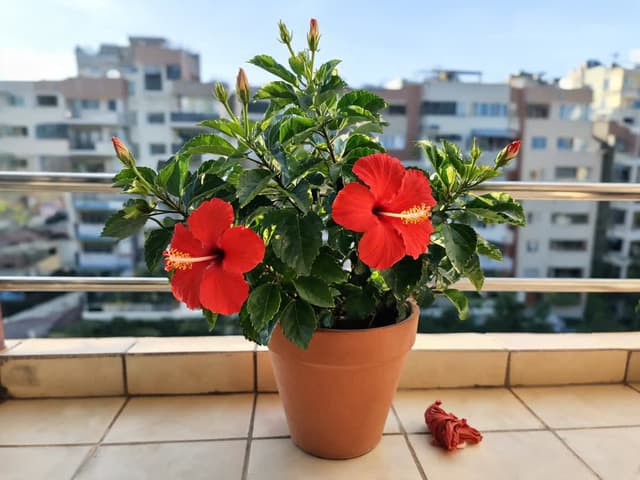
How to Care for Hibiscus: Sun, Watering, Fertilizer, and Pruning for Flowers
How to care for hibiscus: 6 hours of direct sun, evenly moist soil without waterlogging, half-strength fertilizer in spring and summer, and pruning in early spring. Find out why the flower lasts one day and why buds drop before opening.
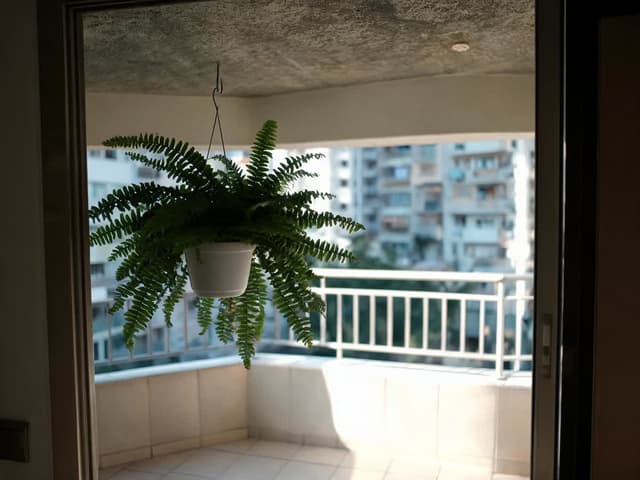
Do Ferns Like Sun or Shade? It Depends on the Type
Ferns prefer bright shade: plenty of light, but no direct sun on their fronds. Tuberous sword fern is the exception that handles sun. Here is the ideal light for each type, where to place pots, and how fronds show too much or too little light.
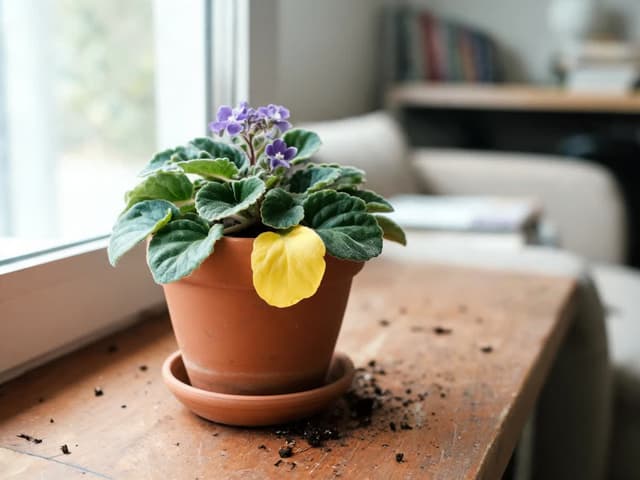
African Violet Yellow Leaves: Causes and What to Do
Yellow leaves on an African violet usually stem from overwatering, and the first place to check is the center of the plant. Losing one lower leaf at a time is normal. Identify whether age, watering, cold water, sunlight, cold drafts, or fertilizer is the culprit based on the yellowing pattern, and see what to do today.