How to care for palm trees: guide for areca, lady palm, parlor palm, and more
To care for palms, first find out which one you have: areca, lady palm, parlor palm, and kentia require different light and watering. Learn why you should never cut yellowing leaves and what causes brown tips.
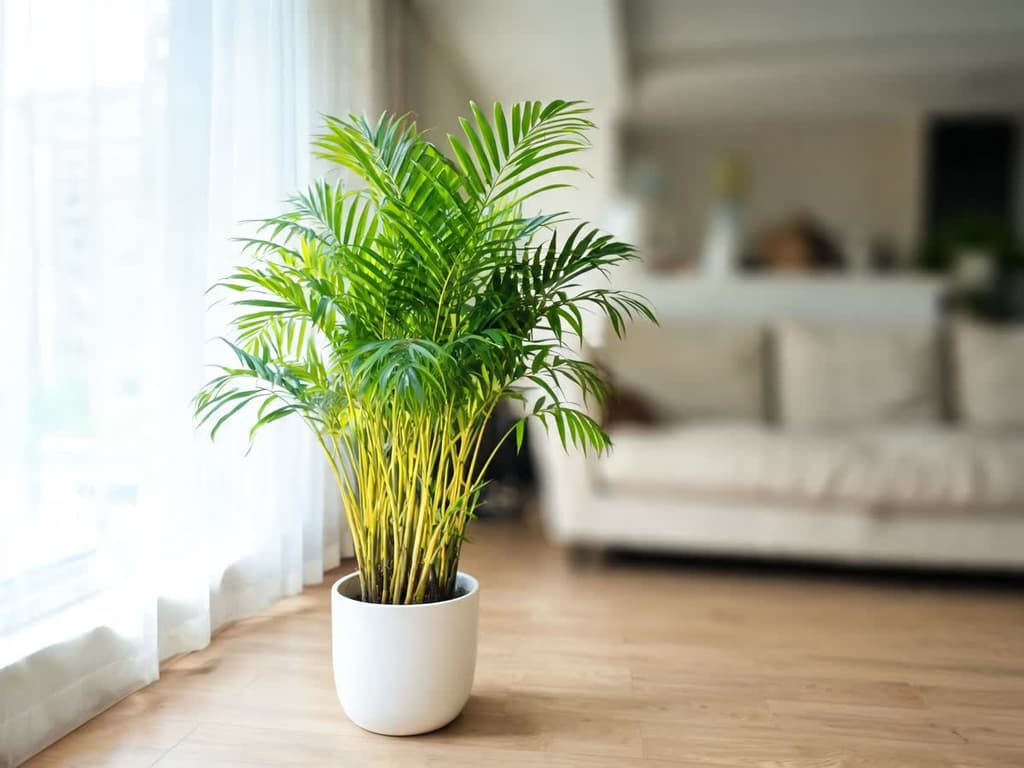
To care for palms, start by finding out which one you have, because areca, lady palm, parlor palm, and kentia require different light and watering. Three rules apply to all of them: water when the top layer of soil dries out, without leaving standing water in the saucer. Prune only completely dry fronds. And never damage the center bud, from which all new fronds emerge.
The pruning rules and the fertilizing season (only in spring and summer) apply to both potted palms and garden palms, because both share the same biology. What changes is light, water quantity, and fertilizer formulation.
Quick summary:
A yellowing lower frond is donating potassium to the new fronds. Cutting it off before it dries completely forces the palm to draw potassium from the next green frond.
Each palm stem grows from a single apical bud at the top. If this bud dies, a single-stemmed palm dies entirely.
Brown tips on potted palms have three causes documented by the University of Florida: salt buildup in the soil, lack of water, and excess boron.
Which palm is yours?
"Indoor palm" refers to a group of species, not a single plant. The table below shows seven common potted palms. Light and watering requirements for each come from North Carolina State University Extension (NC State). If you do not know the name of yours, Bloom identifies the species from a photo of the plant.
Palm | Indoor light | Soil between waterings | Key note |
|---|---|---|---|
Areca palm (Dypsis lutescens) | Very bright spot, no harsh sun | Moist, never waterlogged | Multiple stems from the same base; likes humid air |
Lady palm (Rhapis excelsa) | Tolerates deep shade | Regular watering, less in winter | Tolerates cold drafts near doorways |
Parlor palm (Chamaedorea elegans) | Indirect light; tolerates low light | Let dry out slightly between waterings | Each stem is an individual plant; pots usually contain 3 or more |
Bamboo palm (Chamaedorea seifrizii) | Medium light; survives in low light | Lightly moist | Multiple stems; watch out for spider mites and mealybugs |
Kentia (Howea forsteriana) | Low to medium, no direct sun | Do not let dry out completely | The most serious issue is potassium deficiency |
Pygmy date palm (Phoenix roebelenii) | Medium to bright, avoiding intense afternoon sun | Lightly moist | Features spines at the base of the fronds |
Majesty palm (Ravenea rivularis) | Bright indirect light, no direct sun | Consistently moist | Can be challenging indoors; attracts spider mites in dry air |
Each of these species has its own care sheet in Bloom, including temperature, humidity, and a care calendar:
Is your "palm" really a palm?
Three plants sold with "palm" in their name are not palms and follow different rules. Sago palm (Cycas revoluta), also called cycad, is not related to true palms, according to the University of Florida (UF/IFAS). Sago palm is toxic to dogs and cats, and the ASPCA lists liver failure and death among the signs.
The ponytail palm (Beaucarnea recurvata) belongs to the asparagus family and stores water in its swollen stem, according to NC State. Because it stores water, it requires less frequent watering than a palm, and the right way to water it is in the guide on how to water a ponytail palm.
Yucca is also mistaken for a palm because it forms a trunk topped by a tuft of stiff, pointed leaves.
How much light an indoor palm needs
An indoor palm needs bright light without harsh direct sunlight hitting the foliage, but each species tolerates a different level of shade. Lady palm, parlor palm, bamboo palm, and kentia are the most shade-tolerant. NC State classifies lady palm and parlor palm as capable of thriving with less than 2 hours of direct sun per day. Areca, pygmy date palm, and majesty palm need a very bright spot near a window.
A palm that just arrived from the nursery needs acclimatization. UF/IFAS explains that a frond produced in full sun does not survive in indoor light. For this reason, the same university recommends shade-acclimatizing large palms for at least 1 year while still at the nursery. A palm that has not gone through this acclimatization can lose its sun-grown fronds after arriving home.
A frond with pale, dry patches in the center of the leaflet (each "finger" of the leaf) is showing sunburn. NC State cites low light as a cause of yellowing leaves on majesty palms.
How to water a potted palm
Water your potted palm when the top layer of soil feels dry to the touch, until water drains through the drainage hole at the bottom. Then, empty the excess water left in the saucer. Frequency depends on the species. Majesty palm and areca palm prefer evenly moist soil, while parlor palm prefers the soil to dry out slightly between waterings.
Waterlogged soil causes root rot in potted palms. UF/IFAS explains that roots in oxygen-deprived soil cannot breathe and fail to absorb iron, causing new foliage to emerge yellow. The same publication warns against planting palms in oversized pots, as excess potting mix stays wet longer.
Bloom care sheets provide an initial interval, such as "every 7 days" for lady palm and parlor palm. Use that number purely as a reminder to check the soil. The real rule is checking with your finger: during winter or in cool homes, the soil of that same palm takes longer to dry out.
Soil, pots, and fertilizer for palms
Use a well-draining soil mix that does not break down rapidly, in a pot with drainage holes at the bottom. According to UF/IFAS, palm potting mix must provide 10% to 15% air space. In practice, the right soil remains loose after watering rather than compacting into a dense block.
NC State recommends repotting areca palm every 2 to 3 years and parlor palm only when necessary, generally every 2 years. Always use a pot that is only slightly larger. Over time, the bark and peat in the soil break down into an airless muck. UF/IFAS links this muck to iron deficiency in new leaves.
Fertilize only during the growing season (spring and summer) and stop in winter. Palms need plenty of potassium and magnesium. The fertilizer that UF/IFAS recommends for landscape palms has an 8-2-12 formula with 4% magnesium. In this fertilizer, all of the nitrogen, potassium, and magnesium are slow-release. For potted palms, UF/IFAS uses a fertilizer with more nitrogen, such as an 18-6-12. Preferably, choose one with magnesium and micronutrients, always applied at the label rate.
Excess fertilizer leads to salt buildup in the soil, and UF/IFAS highlights this accumulation as one of the causes of burnt leaf tips.
Yellowing fronds: do not cut before they dry
Do not prune a palm frond while it remains yellow or partly green. Prune it only once it is entirely brown and dry. Potassium is mobile within palm tissue: when soil potassium is lacking, the plant mobilizes this nutrient from older leaves to support new growth.
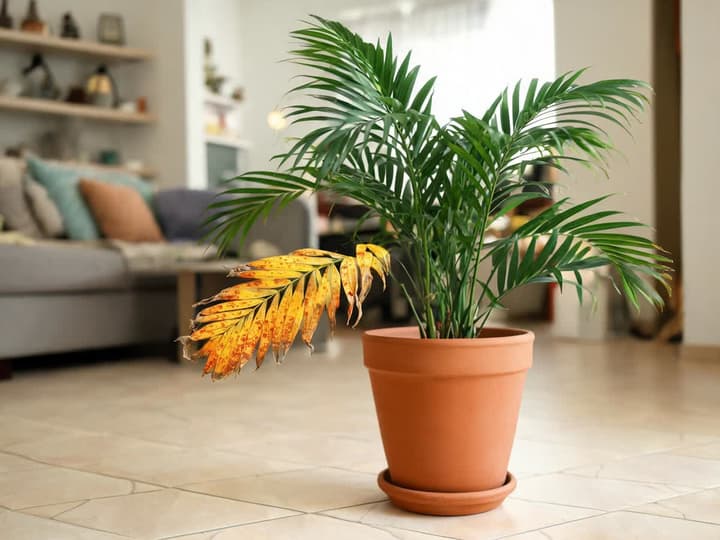
That is why the oldest frond turns yellow first. If you cut this frond, the palm begins drawing potassium from the next frond, which was still green. UF/IFAS shows that repeatedly cutting old potassium-deficient fronds reduces the number of green fronds. In severe cases, this cutting accelerates the death of the palm.
The position of yellowing leaves aids in diagnosis. When only the bottom leaves turn yellow, marked by orange spotting or dry tips, it points to a potassium or magnesium deficiency, or simply natural senescence. If all leaves turn yellow simultaneously, it indicates nitrogen deficiency, overwatering, or insufficient light. The guide on why plant leaves turn yellow breaks down these causes step by step.
Brown tips on palms: salts, water, or boron
Dry, brown tips on potted palm fronds stem from three causes documented by UF/IFAS. All three produce identical markings. The first is salt accumulation in the soil, resulting from overfertilization or saline water. The second is insufficient watering. The third is boron toxicity, which the university experimentally reproduced on areca and parlor palms.
UF/IFAS states that only leaf analysis distinguishes boron from salt and underwatering, because the symptoms are similar. At home, the plant's history separates the causes:
White crust on soil or pot rim, frequent feeding: salt buildup. At each watering, let water drain freely from the bottom hole, as UF/IFAS advises, because this flushing removes salts. Apply fertilizer only at label rates.
Soil drying out completely to the bottom between waterings: under-watering. Water before the soil mix dries out entirely.
Fertilizer containing boron on the label, applied above recommended rates: suspect boron toxicity. UF/IFAS advises avoiding heavy doses of boron-containing fertilizers and water high in boron.
Fluoride in tap water does not make this list. UF/IFAS documents fluoride damage on dracaenas, but not in its publications on palms.
Dried-out leaf tips will not turn green again. Trim only the brown section using clean scissors, following the natural shape of the leaflet. Leave a thin brown margin to avoid injuring live green tissue. Once the underlying cause is resolved, new fronds will emerge free of brown tips.
Never cut the center bud of a palm
The palm's center bud is the stem's only growing point. Palms have no other growing point on the stem. UF/IFAS explains that all new leaves and flowers emerge from this bud, also called the heart (which is where hearts of palm come from).
If the bud dies, the stem dies with it. In single-stemmed palms, such as the parlor palm, the entire plant dies. In multi-stemmed palms, such as the areca, lady palm, and bamboo palm, only that stem dies and the others survive.
For this reason, palms cannot be pruned to reduce their height. Topping a palm that has grown too tall kills that entire stem. If a palm outgrows your room, the solution is moving it to another location or, for multi-stemmed varieties, dividing the clump.
Common pests on indoor palms
The most frequent pests on indoor palms are spider mites and mealybugs, and both thrive in dry air. Spider mites cause light stippling across the fronds and fine webbing between leaflets. Mealybugs form brown scales or white cottony clusters on the undersides of leaves and on stems.
NC State lists spider mites, mealybugs, and whiteflies on majesty palm and notes that dry air attracts pests. UF/IFAS records that water on the fronds reduces twospotted spider mites. Take the palm to the shower and rinse both sides of the fronds with room-temperature water. The guide to indoor plant pests covers the treatment for each pest.
A wilting palm infested with spider mites can still be saved if its apical bud remains firm. Gently tug the spear leaf, which is the newest unopened leaf: if it holds firm, the bud is alive. If it pulls out easily, with a soft, darkened base, the bud has rotted, and single-stemmed palms cannot recover from this. UF/IFAS uses this same spear-leaf pull test to evaluate freeze damage on palms.
Palms in the garden or landscape
In-ground palms follow the same pruning and bud-care rules, with three additional precautions. The first is pruning technique. Never perform a "hurricane cut," which strips fronds to leave only an upright tuft at the top. UF/IFAS surveyed palms following the 2004 and 2005 Florida hurricanes, finding that over-pruned specimens lost their entire canopies more frequently than palms left with full canopies.
The second precaution is the pruning threshold. The American national standard for tree pruning cited by UF/IFAS prohibits removing fronds whose tips sit above the horizontal plane. On a clock face, this line runs from 9 o'clock to 3 o'clock. If the palm exhibits potassium deficiency, the threshold is stricter: remove only completely dead fronds.
The third precaution is cold. After a frost, do not cut burned fronds until the risk of another cold snap passes. According to UF/IFAS, even dead leaves protect the bud. The same university measured less cold damage on coconut palms fertilized with an 8-2-12 formula containing magnesium than on unfertilized coconut palms.
Frequently asked questions
Should I cut off brown palm fronds?
Cut only fronds that have turned completely brown and dry, slicing close to the stem. A yellow or partially green frond continues to supply potassium to emerging growth. Cutting off that frond forces the palm to draw potassium from the next green leaf, according to the University of Florida. Dry tips on otherwise green leaflets can be trimmed, leaving a narrow strip of brown tissue.
How to care for a potted palm?
Place your potted palm in a bright location away from intense afternoon sun directly on the foliage, and water when the top layer of potting mix dries out. Use a container with drainage holes. Fertilize during spring and summer with a fertilizer containing potassium and magnesium. Repot every 2 to 3 years, always stepping up to a pot only slightly larger.
Does Epsom salt (magnesium sulfate) benefit palms?
Epsom salt provides magnesium, but it dissolves quickly and leaches out of the soil during the first heavy rainfall or watering. The University of Florida recommends applying magnesium in slow-release form within a complete palm fertilizer. Epsom salt alone does not correct potassium deficiency, which is the most common deficiency in landscape palms.
Are palms toxic to cats and dogs?
It depends on the species. The ASPCA lists areca palm, parlor palm, lady palm, kentia, pygmy date palm, and majesty palm as non-toxic to dogs and cats. Sago palm, which is not a true palm, is toxic and causes severe liver injury. Always check your plant's botanical identity before keeping it within reach of pets.
Conclusion
Caring for palms begins with identifying the species: the light and watering requirements in the chart vary from one to another. The remaining rules apply universally: remove only dead fronds, protect the apical growing point, and address brown tips based on their cause. If your palm displays different symptoms, the guide on what is wrong with my plant helps pinpoint the issue through symptom photos.
To identify your palm species and receive a tailored watering schedule, Bloom recognizes your plant from a photo (iPhone app).
Related articles
How to Care for a Goldfish Plant: Light, Watering, and Blooms
How to care for a goldfish plant: bright light without strong sun, water when the soil surface dries, and humid air. Learn how to tell a Nematanthus from a Columnea, why it drops leaves, and how to get it to bloom again.
Lavender Leaves Turning Yellow: Where the Yellowing Starts Shows the Cause
Lower leaves turning yellow with moist soil means overwatered roots, the most common cause. Old leaves drying one by one on woody stems is normal. Take the stem and root test, see if your plant can still be saved, and find out what to do today.
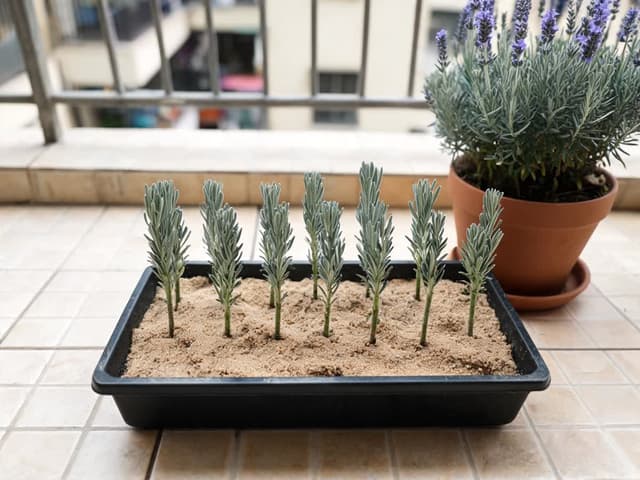
How to Propagate Lavender: Where to Cut and Why Cuttings Rot
A lavender cutting comes from a non-flowering branch tip, about 4 inches long, planted in sandy soil that never stays soggy. Learn where to cut, rooting times, seasonality in Brazil, and what to do if the base turns black.