Snake Plants in Low Light: Surviving, Stalling, and Drinking Less
Snake plants can survive in low light between 25 and 75 foot-candles (roughly 270 to 800 lux), but growth stalls and their water needs plummet. Here are the exact numbers, window placements, and watering habits that keep their rhizomes from rotting in dark corners.
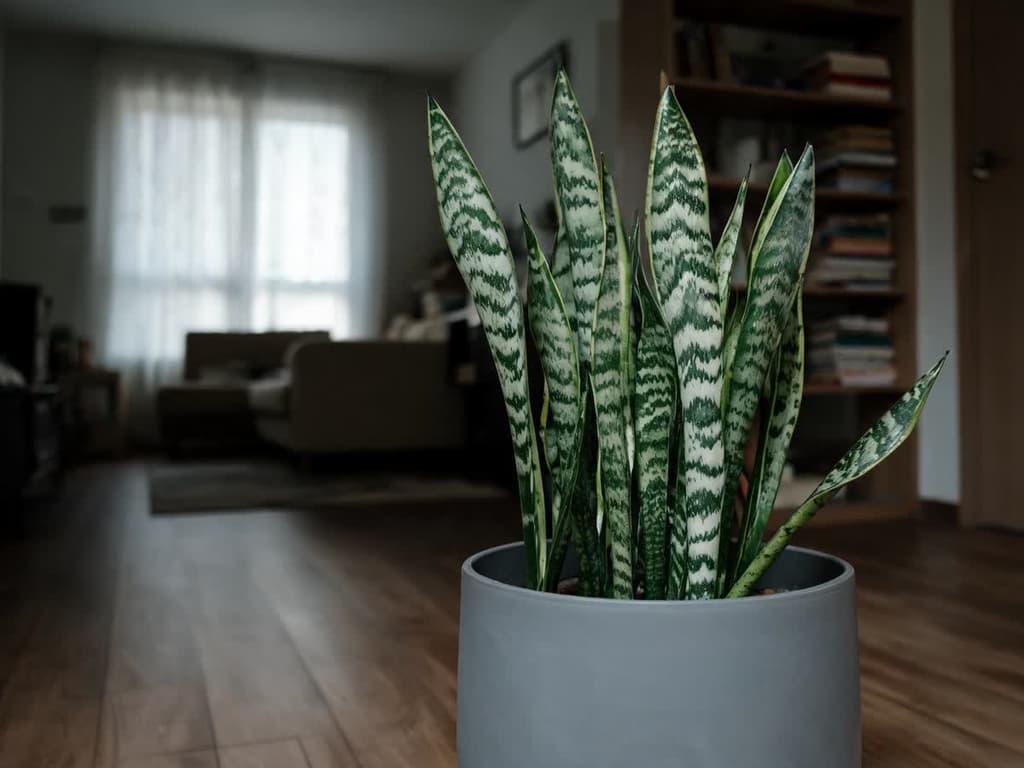
The snake plant survives in low light: it is among the few plants that university extensions list for the lowest light range. The University of Georgia (UGA) Extension defines low light as the range from 25 to 75 foot-candles, about 270 to 800 lux. The foot-candle is the unit of light used in the United States. In this light, the plant stays alive, but it barely grows and uses far less water. Standard watering in a dark corner is what rots the rhizome (the thick stem that sits underground and produces the leaves).
The plant has two scientific names, and both apply to the same species. The name accepted today by Plants of the World Online, from the Kew Royal Botanic Gardens, is Dracaena trifasciata. The old name, Sansevieria trifasciata, remains on plant tags, in books, and across many university extension services.
Quick summary:
Low light is enough for a snake plant to survive. To actively grow, it needs 75 to 200 foot-candles (800 to 2,150 lux), according to UGA.
In a dim corner, new leaves grow tall, weak, and solid dark green, losing their distinct light bands.
Less light translates directly to less water. Water only when the potting soil dries out completely to the bottom, never on a set schedule.
In Brazil, the darkest window faces south, and the brightest faces north. In American guides it is the opposite, because the United States is in the northern hemisphere.
It can handle full sun, but an indoor plant will scorch if moved into the sun all at once. The transition takes 10 to 14 days.
The Bloom plant profile summarizes the snake plant's light needs as "low light." In the profile, low light is the bare minimum the plant tolerates. To grow, it needs more light:
How much light a snake plant needs, by the numbers
A snake plant needs at least 25 to 75 foot-candles to maintain itself and 75 to 200 to grow. 1 foot-candle equals 10.76 lux (Iowa State University Extension). Lux is the unit a phone light meter displays.
Light Range | Foot-candles | Lux (approximate) | Source |
|---|---|---|---|
Low light: minimum maintenance level for low-light plants | 25 to 75 | 270 to 800 | UGA Extension, 2022 |
Low light, including snake plants on the list | 25 to 100 | 270 to 1,100 | |
Low light, including snake plants on the list | 75 | 800 | |
Good light for a low-light plant to actively grow | 75 to 200 | 800 to 2,150 | UGA Extension |
Greenhouse where the grower gets the snake plant ready for sale | 1,000 to 6,000 | 10,800 to 64,600 | UF/IFAS |
Full-sun field bed at midday in Florida | 8,000 to 14,000 | 86,000 to 151,000 | UF/IFAS |
Extension services disagree on where low light ends: 75 foot-candles for UGA and Illinois, 100 for the University of Maryland (UMD). Penn State Extension notes that 100 foot-candles is the most common benchmark and that every source draws the line at a different point. This guide uses UGA's range. Of the three, it is the only one that separates light for survival (25 to 75) from light for growth (75 to 200).
The last two rows of the table come from the University of Florida production guide (UF/IFAS, Henley, Chase, and Osborne). Growers produce market-ready snake plants under 1,000 to 6,000 foot-candles and call a spot with "a few hundred" heavy shade. A low-light corner in a living room has 13 to 240 times less light than the greenhouse where the plant was grown.
In terms of light, the snake plant requires much less than store-bought succulents. Iowa State calls for at least 6 to 8 hours of bright indirect light per day for most succulents. The snake plant lives in a corner where an echeveria stretches and loses its shape. Testing the soil before watering is the same for both plants. The guide on how much light succulents need shows the hours of sunlight and the transition to full sun.
What low light actually does to a snake plant
In low light, the snake plant uses the energy it produces just to stay alive and stops growing new leaves. UGA Extension explains the mechanism for indoor plants in general. Under insufficient light, maintenance comes before growth, and the plant does not grow. If light is insufficient even for maintenance, the plant eventually dies.
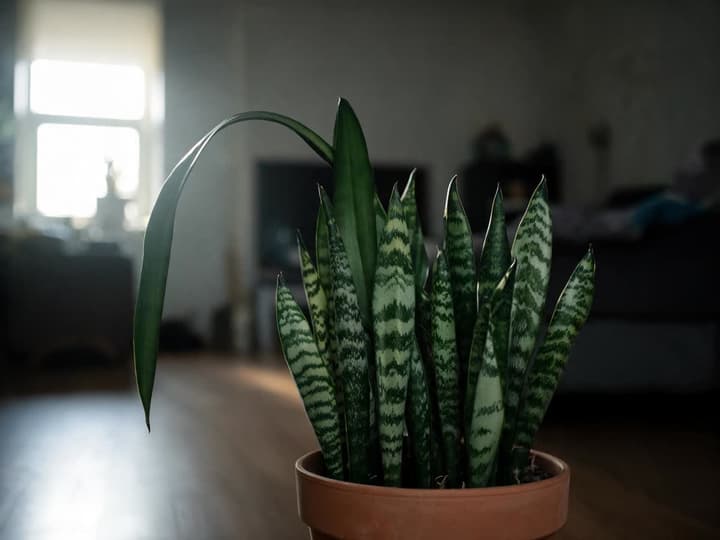
The UF/IFAS production guide details what happens to snake plants in this scenario. Under heavy shade around a few hundred foot-candles, leaves grow slowly, ending up elongated, weak, and dark green. They lose the characteristic pale crossbanding patterns. Long, floppy foliage that leans toward a window is classic etiolation: the plant stretches searching for light and loses its rigidity.
A snake plant kept by a Penn State Extension volunteer illustrates the difference in practice. She participates in Master Gardener, an extension program that trains amateur gardeners. In medium light, from spring through summer, the plant grew from roughly 9 inches (23 cm) to 17 inches (43 cm). The following winter, a light meter registered just 25 foot-candles mid-morning, and the tips of the oldest leaves began to wrinkle. She began using supplemental light with an LED bulb.
Signs of low light versus other problems
Lack of light in a snake plant appears slowly, over months, because the plant already grows little. Illinois Extension warns that these plants already grow slowly, so it takes months to notice if the light is wrong. These are the signs that sources link to low light:
Little to no new foliage throughout the warm growing season.
New leaves that emerge longer, narrower, and softer than older ones, flopping outward.
The entire plant leaning noticeably toward the nearest window.
Solid dark green new foliage lacking the pale transverse bands of established leaves.
Pale or yellow leaves, or leaves that are mushy at the base, are not on this list. Illinois Extension cites pale foliage for low-light houseplants in general. For snake plants, UF/IFAS describes shade leaves as darker. If your snake plant is pale or yellowing in a dark corner, check the base of the leaves and the soil first.
Low-light snake plants need significantly less water
A snake plant in a dark corner uses much less water, and the soil in the pot stays wet much longer. UGA Extension writes that plants in high light lose more water through their leaves than plants in low light. The same publication points to low light and excess water as the most common causes of stress in houseplants. Together, both conditions favor soilborne diseases, which attack the roots and the base of the plant.
No one has measured how much less water the snake plant uses at each light level. The NC State Extension gives the longest interval among the sources in this guide: watering every 1 to 2 months in winter, when light levels also drop. In Brazil, winter runs from June to August. In a low-light corner, the soil can take that long to dry out outside of winter as well.
Watering a snake plant in low light follows the same basic rule as anywhere else, just with much longer gaps between waterings. Water only when the potting mix is bone dry down to the bottom of the container. A wooden skewer pushed deep into the pot will show you: if it emerges completely clean and dry, water until it runs out the drainage hole. If it comes out damp with soil clinging to it, wait another week and retest.
The snake plant profile in Bloom defaults to a 14-day watering suggestion and flags both conditions with separate cards. Low-light stress is one:
The other is root rot, triggered by soil sitting wet for weeks on end. In a dark-corner snake plant, the two problems go hand in hand. Low light makes the plant drink less, and watering every 14 days soaks soil that has not dried out yet. The low-light stress fact sheet lists general houseplant symptoms, such as elongated stems. The snake plant has no stems that stretch.
Soft, yellowing leaf bases in a dark corner: what to do right now
A mushy, yellowing base points straight to root issues rather than insufficient lighting. Stop watering immediately, unpot the plant today, and check the rhizomes and root system. Firm roots and rhizomes are healthy; anything squishy, black, and foul-smelling has rotted.
On a rotted root, the outer layer slides off with a gentle pull and leaves only a thin thread in the center, according to UMD Extension.
Trim away all mushy leaves and soft rhizome sections back to clean, firm tissue.
If the entire rhizome has turned soft, salvage any firm, healthy leaves to propagate fresh plants.
Dry surface soil does not mean the container is dry throughout. In a large container tucked into a dark spot, the bottom half can stay soaked for weeks.
Repot the healthy sections into fresh, dry potting soil in a pot with drainage, and move it to a brighter spot. A recovering plant needs less water, not more.
Where to place the snake plant in a home in Brazil
The right place for a snake plant to grow is near a window, with bright light and little to no direct sun hitting the leaves. The distance from the window determines the light, and the window's direction determines how much that distance matters. Illinois Extension publishes this relationship for the United States, which is in the Northern Hemisphere.
In the Southern Hemisphere, the table is reversed. The brightest window is always the one that points toward the equator: in Brazil, the one facing north. The south-facing window is the darkest. East and west are the same in both hemispheres, with morning sun in the east and afternoon sun in the west.
Light Level (Illinois) | South-facing window | East or west window | North-facing window |
|---|---|---|---|
Low light (75 foot-candles, roughly 800 lux) | about 3 feet (1 m) | 3 to 10 feet (1 to 3 m) | 15 to 20 feet (4.5 to 6 m) |
Medium light (150 foot-candles, roughly 1,600 lux) | right at the glass | about 3 feet (1 m) | 3 to 10 feet (1 to 3 m) |
High light (300 foot-candles, roughly 3,200 lux) | not listed | right at the glass | up to 5 feet (1.5 m) |
Direct sunlight (1,500 foot-candles, roughly 16,000 lux) | not listed | not listed | right at the glass |
The table directions are already inverted for the southern hemisphere. Near the equator, in the North and in part of the Northeast, the midday sun passes almost straight overhead. There, it changes sides throughout the year. In these regions, observe which window the sun hits in each season.
In practice, the snake plant grows well in the medium light range. That means placing it right up against a south-facing window, or about 3 feet (1 m) from an east- or west-facing window. At a north-facing window, the distance can be 3 to 10 feet (1 to 3 m). Heavy curtains, an adjacent building, trees, and covered balconies block light. In any of these cases, measure before deciding.
There are two ways to measure. The first is the shadow test: place your hand between the window and the plant at midday on a clear day. Iowa State defines bright indirect light as light strong enough to cast a shadow, without direct sun. If your hand casts no shadow at all, the spot is well below that light level. The second way is a light meter: the Bloom app (for iOS) has one that reads lux through the phone camera, and any lux meter app also works. Take the reading right where the leaves sit, in the middle of the day, and use the number to compare spots around the house.
Windowless hallways and bathrooms: can a snake plant survive?
Without any natural light, a snake plant depends entirely on artificial lighting. UGA Extension explains that the plant dies when light is insufficient even for maintenance. UMD Extension includes rooms lit solely by artificial light in the low-light bracket. It notes that this light varies depending on the type of bulb.
Viability hinges on how many hours the artificial fixture stays illuminated. UGA calculations for light ranges assume 8 hours of light per day. A hallway where lights only turn on in passing at night falls well short of this threshold. A windowless office where overhead fixtures run through an entire eight-hour workday might provide enough light to sit within the low-light bracket.
A windowless hallway kept dark all day will not support a snake plant. Choose a different location or mount a dedicated grow light set to a timer. A bathroom with a small window follows the placement distances from the chart. If the glass is frosted, run a shadow test or check light levels with a meter, as obscure glass reduces intensity. Higher ambient humidity lowers leaf transpiration according to UGA, meaning potting mix in a bathroom takes even longer to dry out.
The peace lily also tolerates shade, and the cost of low light differs between the two plants. In the peace lily, shade cuts off flowering. In the snake plant, shade reduces growth and water consumption, shifting the risk to watering.
Artificial lighting setups for snake plants
A grow light solves windowless corners and dark winters. The Iowa State University Extension outlines the setup for indoor plants:
Type: full-spectrum LED, commonly sold as daylight balanced.
Distance: 12 to 24 inches (30 to 60 cm) above the foliage. Fluorescent tubes sit closer, between 6 and 12 inches (15 to 30 cm).
Duration: 14 hours daily, managed by an automatic timer.
Limits: no less than 8 hours and no more than 16 hours per day.
Both Illinois Extension and UMD Extension repeat the 16-hour limit, because the plant also needs a dark period. The snake plant is tall and light drops off quickly with distance, so the lower part of the leaves receives less light than the tips. A standard ceiling bulb, on only at night, does not replace a grow light.
Do variegated snake plants require more light?
Variegated snake plants, whether yellow-edged or silver-leaved, lose part of their pattern in low light. UGA Extension writes that variegated leaf color tends to fade in low light. The UF/IFAS production guide provides the details by variety:
Even standard green snake plants with light crossbanding depend on adequate light for clear patterns. Leaves developed below 2,000 foot-candles (21,500 lux) emerge nearly solid dark green.
'Moonshine', with silvery pale leaves, darkens significantly under deep shade.
'Silver Queen', another silvery cultivar, darkens naturally with age, but low light accelerates the process.
Sources disagree on the need for more light. The Bloom profile states that variegated varieties need more light, and darker varieties tolerate low light better. The UGA table places the yellow-edged 'Laurentii' in the same light range as 'Hahnii', which is green. No source found has measured whether the yellow border of 'Laurentii' loses its color in the shade.
This guide follows the safest option for color: give the variegated snake plant the brightest spot in the house, without direct sun on the leaf. The plant loses nothing with more light, and UF/IFAS confirms that leaf patterning depends on it. Even the brightest window in the Illinois table falls below 2,000 foot-candles. According to UF/IFAS, a new indoor snake plant leaf tends to emerge with a duller pattern than that of a greenhouse-grown plant. For the darkest corner, choose an all-green snake plant.
Do snake plants like sun? Can they sit in direct sunlight?
Snake plants tolerate full sun when acclimated to it. In Brazil, it is common to see the plant in outdoor garden beds with all-day sun. In Florida, it is produced in full-sun beds at 8,000 to 14,000 foot-candles at midday, according to UF/IFAS. Iowa State University Extension notes that it tolerates conditions from very dark areas to full sun.
The problem with sunlight is the sudden change. A leaf that grew indoors was built for that light and burns if it moves into full sun all at once. Iowa State University Extension advises never taking an indoor plant directly into full sun. The Bloom card describes the sunburn as pale or whitish areas that later turn yellow and brown:
To move the snake plant to a porch or a garden bed, follow Iowa State's approach. Start with the plant in full shade, outdoors. Then gradually increase the sun exposure over 10 to 14 days. The American nursery White Flower Farm suggests about a week. This guide follows the university extension, which allows more time and is therefore safer for the foliage.
Indoors, sources disagree on direct sunlight through a window. NC State Extension accepts 2 to 6 hours of direct sun per day. Penn State advises keeping the plant out of direct sun because the leaves burn. This guide sticks with the middle ground from the Missouri Botanical Garden, which calls for protection from hot afternoon sun. Morning sun is fine. Harsh afternoon sun is only for plants that have already transitioned.
Frequently Asked Questions
How long can a snake plant survive in a dark room?
No one has measured this timeline. UGA Extension explains that the plant dies when light is not even enough to sustain it, without specifying how long it takes. The snake plant tracked by Penn State reached 25 foot-candles in winter, and the tips of the old leaves wrinkled. In a dark corner, the snake plant stops growing and needs much less water.
Do snake plants bloom in low light?
A snake plant flower is rare indoors, whether in low light or bright light. The Missouri Botanical Garden writes that flowers and fruit rarely appear on indoor plants. None of the sources in this guide measured the light required for flowering, and none link the flower to a dark location.
Why is my snake plant leaning toward the window?
A snake plant tilting toward a window is reaching for light. Iowa State Extension explains that plants leaning or stretching toward a light source are signaling a need for a brighter spot. UF/IFAS connects leaf structure directly to light exposure: foliage grown in dense shade emerges elongated and weak. Moving the plant to a brighter location produces shorter, stiffer new growth.
Can a snake plant stay in a bedroom?
Yes, provided the bedroom has a window and the plant sits within the lighting distances listed above. Placed deep in a dim corner away from windows, it will survive but stall, and the potting soil will dry out very slowly. For a low-light bedroom, choose a solid green variety and water only after checking that the soil has dried out completely to the bottom of the pot.
What to do with your snake plant today
Check the distance between your snake plant and the nearest window, note the exposure direction, and compare your setup against the window chart. In the low-light range, a snake plant survives, but growth stalls and water needs decline sharply. To encourage steady new leaves, shift the pot into medium light. Wherever you keep it in the house, always test the soil down to the base of the pot with a skewer before watering.
Related articles
How to Care for a Goldfish Plant: Light, Watering, and Blooms
How to care for a goldfish plant: bright light without strong sun, water when the soil surface dries, and humid air. Learn how to tell a Nematanthus from a Columnea, why it drops leaves, and how to get it to bloom again.
Lavender Leaves Turning Yellow: Where the Yellowing Starts Shows the Cause
Lower leaves turning yellow with moist soil means overwatered roots, the most common cause. Old leaves drying one by one on woody stems is normal. Take the stem and root test, see if your plant can still be saved, and find out what to do today.
How to Propagate Lavender: Where to Cut and Why Cuttings Rot
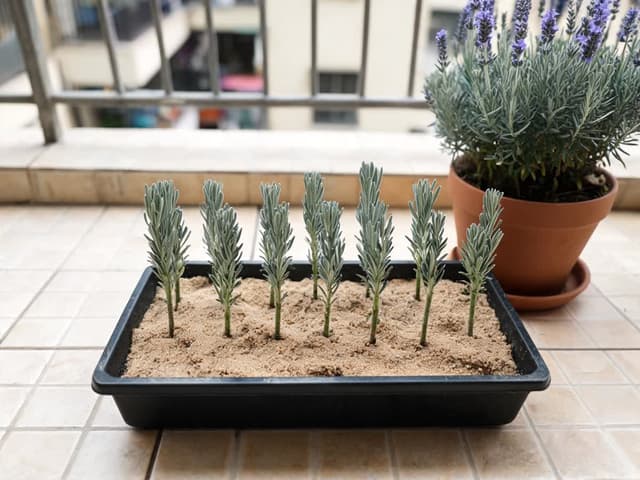
A lavender cutting comes from a non-flowering branch tip, about 4 inches long, planted in sandy soil that never stays soggy. Learn where to cut, rooting times, seasonality in Brazil, and what to do if the base turns black.