Monstera Light Requirements: Windows, Direct Sun, and Leaf Holes
Monstera light requirements in foot-candles and lux, the right window in a Brazilian home, how much direct sun it tolerates, and why new leaves lack holes.
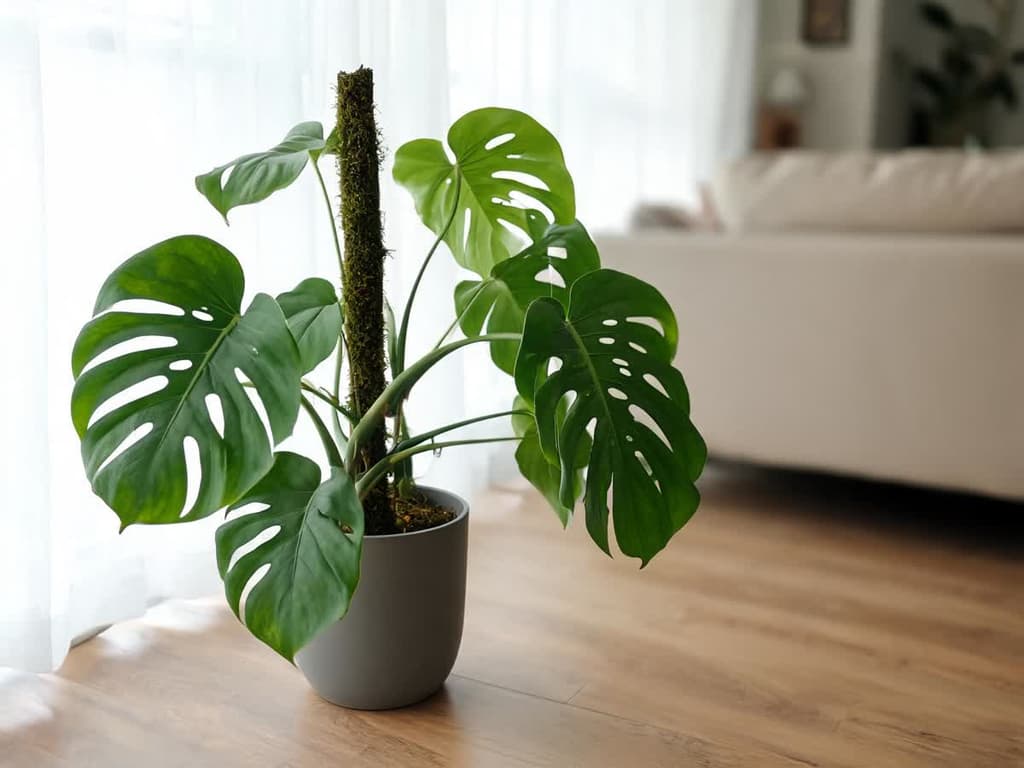
Monstera light requirements are simple: the ideal light for Monstera (Monstera deliciosa) is bright light near a window, with direct sun limited only to weak morning light. It survives in low light, but in low light the new leaves emerge without holes. In almost all of Brazil, the window that receives sun faces north. Guides and university extensions in the United States point to south-facing windows, because there the sun comes from the south.
In an apartment that gets little sun, keep your Monstera very close to the window, with its leaves 6 inches (15 cm) or more away from the glass. What burns the leaf is direct sun hitting it, not brightness. If afternoon sun reaches the plant through the glass, pull the pot back until it leaves the patch of sun, or close a sheer curtain.
Quick summary:
Monstera survives with 75 to 150 foot-candles, the American light unit (about 800 to 1,600 lux). It grows with more than 150 foot-candles (1,600 lux), according to NC State.
Leaf holes require a mature plant and light. A 2025 measurement found 2.7 times more hole area in sun leaves than in shade leaves.
An east-facing window is the safest: sun only in the morning.
Strong direct sun scorches the leaf, and afternoon sun is the hottest. The burned patch turns faded, almost white, and will not turn green again.
In low light the plant uses less water: water only when the top of the soil, down to a quarter of the pot's depth, is dry.
Monstera light requirements, in numbers
Monstera needs more than 150 foot-candles (about 1,600 lux) to grow, and survives with 75 to 150. The foot-candle is the unit of light used by American university extensions: 1 foot-candle equals 10.76 lux. The NC State Extension classifies Monstera as a "medium to low" light plant.
The same NC State publishes the numbers for each class. In medium light, the plant maintains itself with 75 to 149 foot-candles and grows with 150 to 1,500. The University of Georgia Extension (UGA) places Monstera in the high to low light classes. For UGA, high light is more than 200 foot-candles without direct sun, received for 8 hours per day.
Light | Foot-candles | Lux (conversion) | Where it goes in a home in Brazil | What the Monstera does |
|---|---|---|---|---|
Low | 25 to 75 | 270 to 800 | More than 8 feet (2.4 m) from the window, hallway, room with a south-facing window | Only maintains itself, with smaller new leaves and no holes |
Medium | 75 to 200 | 800 to 2,150 | 4 to 8 feet (1.2 to 2.4 m) from a north- or west-facing window | Lives; above 150 foot-candles (1,600 lux) it grows |
High, without direct sun on the leaves | 200 to 1,000 | 2,150 to 10,800 | Up to 4 feet (1.2 m) from a large north-, east-, or west-facing window | Grows and forms mature leaves with holes |
Direct sun | 1,500 or more | 16,000 or more | Inside the patch of sunlight coming through the window | Only morning sun, with the plant acclimated gradually |
The foot-candles in the table come from UGA, and direct sun comes from the University of Illinois Extension. The distances come from NC State and Illinois. Both write for the Northern Hemisphere, where the sunny window faces south. In Brazil, the direction is reversed, and the sunny window faces north. East and west do not change.
How to tell if a spot has bright light without measuring
Bright light, for Monstera, is a spot less than 4 feet (1.2 m) from a large north-, east-, or west-facing window. From 4 to 8 feet (1.2 to 2.4 m) from the window the light is already medium, according to NC State. More than 8 feet (2.4 m) away, in a hallway or in a room with a south-facing window, the light is low.
A light meter app on your phone (which shows values in lux) gives an idea of the number. Measure at leaf height on a bright day and compare it with the table above. Readings vary between devices, so use the number to compare two spots in the same home, not as an exact measurement.
Why a new Monstera leaf does not develop holes
A new Monstera leaf emerges without holes for three possible reasons: the plant is young, it lacks light, or it lacks support. The holes and cuts have a technical name: fenestration. Check these three causes in this order.
1. The plant is still young. According to NC State, only mature leaves have holes. A small Monstera has an entire, heart-shaped leaf, and that is normal. None of the consulted sources gives an exact age or height for the first split leaf.
2. It lacks light. The University of Wisconsin Extension states that Monstera does not form holes when light is insufficient. A large plant that keeps producing solid leaves needs a spot closer to the window.
3. It lacks support. Monstera is a climber. Attached to a support (a firm stake placed in the pot, such as a moss pole), it climbs. UConn notes that, once attached, the plant produces much larger leaves. The complete guide on how to care for Monstera shows how to assemble a moss pole.
How light affects the leaf, in numbers
A study from the University of Costa Rica, published in 2025 in the Revista de Biología Tropical, measured mature leaves from 20 Monsteras. Ten plants grew in the sun and ten in the shade, on the university campus. The sun leaf had 75.8 cm² of holes, and the shade leaf, 28.1 cm². That is about 2.7 times more hole area.
Leaf size barely changed: about 20 inches (50 cm) wide in both groups. The edge cuts were also identical in sun and shade. The sun leaves emerged thicker and with more stomata, the pores through which the leaf exchanges air. The study measured mature outdoor plants, not young potted plants.
A leaf that has already unfurled will not develop holes later. The holes form as the leaf grows, according to NC State. Because of this, after moving the pot, look at the next leaf, not the old ones.
Signs of low light in Monstera
Monstera stretches in low light. Penn State Extension warns that it grows leggy in low light. UGA lists the signs of low light in any houseplant:
the plant stops growing;
the space between leaves on the new stem becomes much larger than on the old stem;
the new leaf comes out smaller than previous ones;
the new leaf emerges lighter green than the older ones;
the oldest leaves die.
On Monstera, also count a new leaf without holes on a plant that was already making perforated leaves. Moving the plant to a new spot only fixes leaves that have yet to emerge.
The low-light plants list includes Monstera because it tolerates a dimly lit corner. It lives there, but new leaves emerge smaller and without holes. Snake plant, which grows in much less light, is the choice for a corner that will stay dark.
In low light, water less
A plant in low light uses less water than a plant in bright light, according to UGA. In the same home, a Monstera in a dark corner dries its soil slower than one by the window. Water when the top of the soil, down to a quarter of the pot's depth, is dry, not on a schedule. The guide on how often to water Monstera shows how to measure that depth in pots of different sizes.
How much direct sun Monstera can take
Monstera tolerates direct morning sun, and strong afternoon sun burns the leaf. The extensions disagree on the rest. Penn State recommends bright light, but without direct sun. UConn accepts 3 to 6 hours of direct sun per day, with the plant acclimated gradually. Wisconsin indicates direct sun in winter.
According to UGA, eastern light heats a room less than western light and makes the plant lose less water. Winter sun is weaker than summer sun, according to NC State. No source measures how many hours of sun a Monstera leaf can tolerate. For this reason, this guide follows the safest option for the plant: direct sun only in the morning.
If you want to provide more sun, make the change gradually. UConn warns that large Monstera leaves burn easily when light levels shift. Wisconsin says the same about moving plants outdoors without acclimation. Neither source provides a schedule. Start with early morning sun and increase it slightly each week. Step back to the previous level if faded patches appear.
What sunburn on a leaf looks like
Sunburn leaves faded, almost white or pale yellow patches on the leaf that eventually dry out. UGA describes plants exposed to excessive light as having bleached, scorched leaves. The patch appears on the part of the leaf facing the glass. The burned portion will not turn green again.
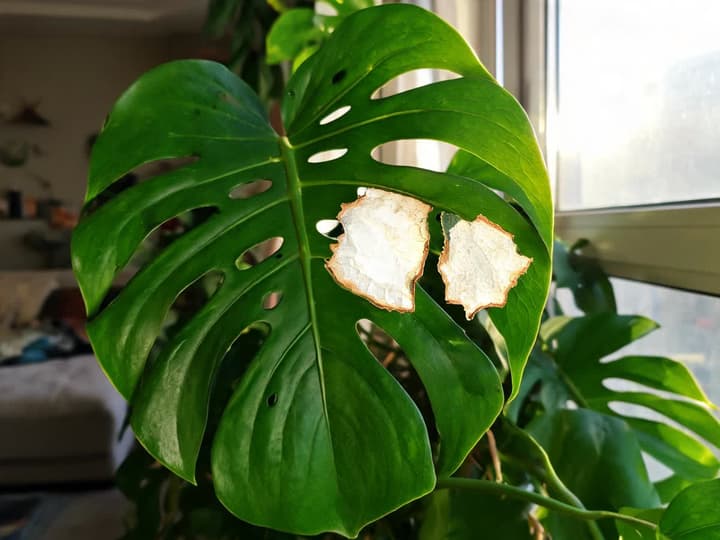
Move the plant out of the direct sunbeam on the very same day. Trimming the scorched leaf is optional: it continues to make food with its remaining green tissue. If you prefer to cut it for appearance, trim the entire leaf close to the stem using clean shears.
Yellow lower leaf with brown patches: lack of light or sunburn?
A burn appears on the leaf most exposed to sun, on the side facing the glass. A yellowing lower leaf can signal a lack of light: UGA lists the death of older leaves among the signs of insufficient light. In that case, new leaves also emerge smaller and paler.
If new leaves look normal and only the bottom leaf yellows, the cause is usually different: natural leaf aging or watering issues. Stick your finger into the soil: if it remains damp several days after watering, the likely cause is overwatering. The guide on yellow leaves on Monstera separates these causes by the pattern of the discoloration.
Where to place Monstera in a home in Brazil
The best spot for Monstera in a home in Brazil is near an east-facing window, which gets sun only in the morning. The other directions also work, with the right distance.
East-facing window: morning sun only. Keep the pot up to 4 feet (1.2 m) from the glass.
North-facing window: this is the sunny window in Brazil. In winter, from June to August, the sun sits low and cuts across the room for almost the entire day. In summer, the sun passes overhead and little light enters. Wisconsin accepts direct sun in winter, but a plant that is not used to it will burn: keep the pot out of the patch of sun or behind a sheer curtain.
West-facing window: afternoon sun, which is the hottest. Move the pot away until it leaves the patch of sun, or use a sheer curtain.
South-facing window: it is the darkest in Brazil. Keep the pot right by the glass, where the light is medium, according to Illinois. Farther inside the room, the light is too low for the plant to produce leaves with holes.
Keep leaves 6 inches (15 cm) or more away from the glass. NC State warns that direct sunlight through glass heats the leaf enough to damage it, and that a 6-inch distance from the window is usually sufficient.
Monstera leans toward the window because it grows toward light. NC State recommends rotating the pot a quarter turn every 3 months so the plant grows evenly. For a plant attached to a support, rotate the pot together with the stake.
Monstera outdoors or on a full-sun balcony
Outdoors, Monstera tolerates full sun, but choose light shade. UF/IFAS, which studies the plant in Florida gardens, says it produces more fruit in full sun. In return, the leaves turn light green and can burn. Under large trees, the leaves turn dark green and look more attractive.
The Costa Rica study, conducted on outdoor plants, found sun leaves to be thicker and to have more holes. The plants in the study had already lived in that location. A Monstera moved directly from an indoor room into full sun will burn, according to Wisconsin.
To move the pot to a balcony or yard, begin in shade. Increase sun exposure gradually and take a step back if faded patches appear.
Artificial light for Monstera
Monstera grows under artificial light, but it will not develop holes if the light is weak, according to Wisconsin. Fluorescent tubes and LED plant lights both work. Standard incandescent bulbs get too hot and deliver little useful light, according to NC State.
Artificial light loses intensity quickly with distance. By NC State's measurements, a 40-watt fluorescent tube provides 120 foot-candles at 12 inches (30 cm) and only 75 at 24 inches (60 cm). Those 120 foot-candles suffice to maintain Monstera, but it needs more than 150 to grow. For a large plant, use multiple tubes or a stronger fixture placed about 12 inches (30 cm) above the leaves.
Keep lights on for 14 to 16 hours daily, never more than 16, according to Illinois. The plant needs a dark period every day.
Does variegated Monstera need more light?
Yes. NC State notes that variegated Monsteras (with white or cream patches on their leaves) require more sun than all-green varieties. The white portion of the leaf lacks chlorophyll, the green pigment that manufactures food for the plant. In low light, UGA notes that the light color on variegated leaves tends to fade away.
Frequently asked questions
Can Monstera stay in a windowless room?
Only with artificial light. Standard ceiling lighting provides too little light for a floor plant, according to NC State. A grow light about 12 inches (30 cm) above the foliage, run 14 to 16 hours daily, will sustain Monstera. Without windows and without a grow light, it will gradually lose its older leaves and stop growing.
Can Monstera stay in shade?
It can, in a bright spot without sun hitting the foliage. NC State classifies it as a medium- to low-light plant, and it survives 6 feet (2 m) away from a window. In that light, it grows slowly and new leaves emerge smaller and without holes. If you want large leaves with splits, the plant needs to be within 4 feet (1.2 m) of a large window.
How many hours of light per day does Monstera need?
UGA calculates light classes based on 8 hours of light per day. For Monstera, that means 8 hours of bright light without direct sun hitting the foliage, near a window. With artificial light, Illinois recommends 14 to 16 hours daily, never exceeding 16.
Is a north-facing window good for Monstera?
In almost all of Brazil, yes, with care. The north-facing window receives the most sun in the Southern Hemisphere, especially in winter. Keep the pot out of the sunbeam coming through the glass. University extensions in the United States call the north window dark because there the sun comes from the south.
What to do with your Monstera today
Look at the last leaf that opened. On a plant that was already developing splits, a smaller or solid new leaf calls for more light. Move the pot to within 4 feet (1.2 m) of an east- or north-facing window. If a leaf has a faded patch facing the glass, move the plant out of the sunbeam today.
Then monitor the next 2 to 3 leaves. A leaf that is larger and has more holes than the previous one confirms the new spot is right. If you are not yet sure whether your plant is a Monstera, the Bloom app identifies the species from a photo.
Related articles
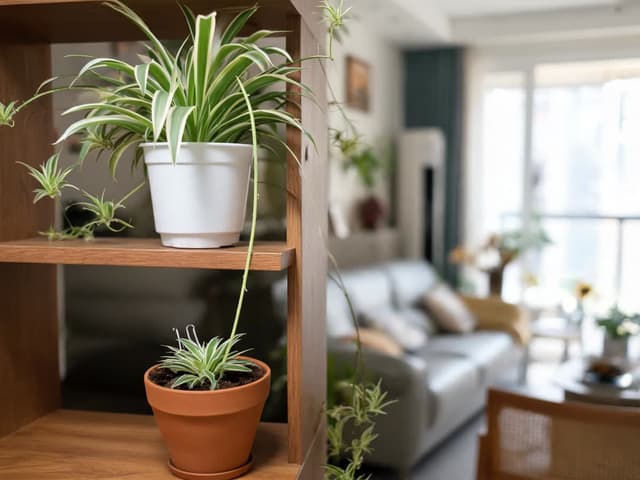
How to Propagate Spider Plants: Root the Pup Before Cutting
The safest spider plant cutting comes from a pup still attached to the mother plant: rest the plantlet on soil in a small pot, wait for roots to establish, and only then cut the stolon. Learn when the pup is ready, whether rooting in water is worth it, how to divide the clump, and why plants fail to produce babies.
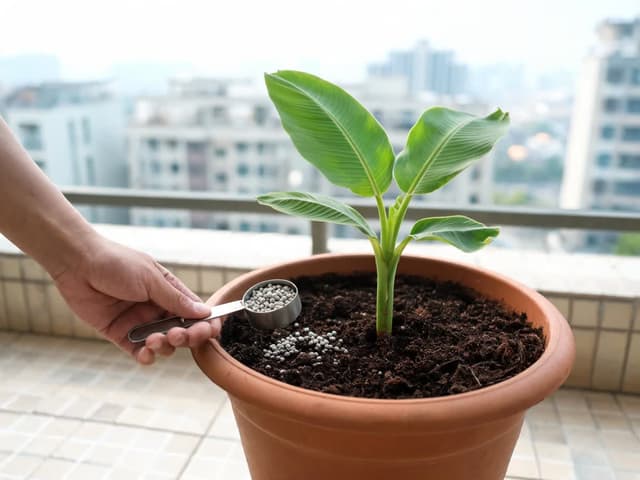
Banana plant fertilizer: fertilizing potted and backyard plants
Banana plant fertilizer needs more potassium than nitrogen, in a 3-1-6 ratio. For a potted plant on a balcony, use the label dose in spring and summer. In the backyard, fertilize every 2 months, adjusting the amount by mat age. Learn the formula, timing in Brazil, and signs of deficiency or excess.
Does lucky bamboo like sun? Ideal light and where to place it
Lucky bamboo does not like direct sun: it burns the leaves. But a dark corner also weakens the plant. Learn how much light it needs, where to place the pot in a home in Brazil, and how to read signs of too much or too little light.