Orchidaceae
Cattleya Orchid (Cattleya spp): Complete Care Guide
Cattleya spp
Cattleya orchids require bright indirect light, careful watering with dry-out periods between waterings, and high humidity. They thrive in specialized orchid bark media, moderate temperatures, and benefit from regular fertilization during the growing season. With proper care, they reward with stunning annual blooms.
Every 7 days
Bright indirect
13° - 29°C
50% - 80%
Categories
What is Cattleya Orchid?
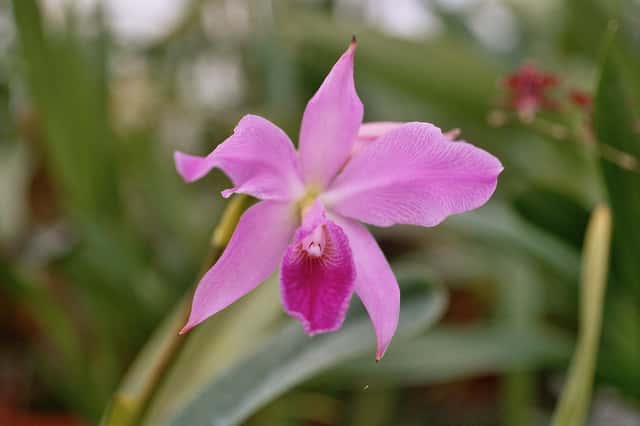
Cattleya Orchid (Cattleya spp) is a medium-care plant from the Orchidaceae family. Cattleya (Cattleya spp) is a genus of epiphytic orchids native to the Atlantic Forest of Brazil and other tropical regions of South and Central America. Known as the Queen of Orchids, it produces large, showy flowers in vibrant shades of purple, pink, white, yellow, and orange. It is among the most...
Cattleya Orchid grows up to 60cm, spread of 60cm, watering every 7 days, 13°C – 29°C, 50–80% humidity. It is suitable for indoor environments and safe for pets.
Unlike many popular species, Cattleya Orchid is safe to keep around pets. Without adequate drainage, root rot can develop within 14 days.
How to Care for Cattleya Orchid?
TLDR: Cattleya Orchid needs Bright indirect, watering every 7 days, and temperatures between 13-29°C with 50-80% humidity.
How Often Should You Water Cattleya Orchid?
Water Cattleya orchids every 7 days, or when the potting medium is completely dry. Use room-temperature water and let it drain fully — never let the pot sit in standing water. Root rot from overwatering is the most common problem. Reduce watering frequency in winter.
How Much Light Does Cattleya Orchid Need?
Place your Cattleya in a spot with bright, indirect light — an east or west-facing window is ideal. They need 2,000–3,500 foot-candles (21,000–37,000 lux) to bloom. Avoid direct midday sun, which can scorch leaves. Dark green leaves indicate too little light; yellowish leaves may indicate too much.
What Is the Best Soil for Cattleya Orchid?
Use a specialized orchid potting medium such as coarse fir or pine bark, perlite, and horticultural charcoal. Never use regular potting soil, as it retains too much moisture and suffocates the aerial roots. Repot every 1–2 years when the medium breaks down or roots outgrow the pot.
What Pot Should You Use for Cattleya Orchid?
Terracotta or plastic pots with abundant drainage holes. Specialized slotted or net pots for orchids are ideal as they allow excellent airflow to the roots. Wooden baskets also work very well, replicating the plant's natural epiphytic habitat.
Care Schedule
Fertilize
Every 14 days
Misting
Every 2 days
Rotate
Every 30 days
Repot
Every 730 days
What Is Cattleya Orchid and Where Does It Come From?
Cattleya (Cattleya spp) is a genus of epiphytic orchids native to the Atlantic Forest of Brazil and other tropical regions of South and Central America. Known as the Queen of Orchids, it produces large, showy flowers in vibrant shades of purple, pink, white, yellow, and orange. It is among the most cultivated orchids in the world, prized by collectors and orchid enthusiasts alike.
How to Propagate Cattleya Orchid?
Clump Division
Best time to divide is in spring when new growth is emerging. Always sterilize cutting tools to prevent virus transmission between plants.
- 1 Remove the plant from its pot after blooming
- 2 Identify groups with at least 3 healthy pseudobulbs
- 3 Cut the rhizome with a sterile knife or scissors
- 4 Dust cut areas with cinnamon powder or horticultural charcoal to prevent infection
- 5 Plant each division in fresh orchid bark medium
Materials needed:
Keiki Separation
Do not remove a keiki before it has developed its own robust roots. Young keikis without roots have very low survival rates.
- 1 Wait until the keiki has developed at least 2-3 roots that are 3-5 cm long
- 2 Cut the keiki at its base using sterile scissors
- 3 Plant the keiki in moist orchid medium in a small pot
- 4 Keep in a humid location with indirect light until established
Materials needed:
How Big Does Cattleya Orchid Grow?
TLDR: Cattleya Orchid can reach up to 60cm tall with Slow growth rate.
Max height
60cm
Spread
60cm
Growth rate
Slow
Foliage
Evergreen
Plant Uses
Ornamental
Great for decoration
Is your plant showing symptoms?
Click on the symptom to discover possible causes:
What Diseases Commonly Affect Cattleya Orchid?
TLDR: Cattleya Orchid is susceptible to 11 known diseases. Monitor regularly for early detection.
Root Rot
Root rot is a serious fungal disease that affects the root system of plants, causing them to decay and die. It is primarily caused by overwatering, poor drainage, or soil-borne fungi such as Pythium, Phytophthora, Rhizoctonia, and Fusarium. The disease thrives in waterlogged conditions where roots are deprived of oxygen, making them susceptible to fungal infection.
Pythium Root Rot
Pythium root rot is a serious fungal disease caused by various Pythium species including P. aphanidermatum, P. ultimum, and P. irregulare. These water molds are present in practically all cultivated soils and attack plant roots under wet conditions, causing rapid wet rot that can extend into the stem. The disease is favored by poor drainage, overwatering, and specific temperatures depending on the species.
Phytophthora Blight
Devastating fungal disease caused by Phytophthora species (primarily P. capsici and P. infestans), famously responsible for the Irish Potato Famine in the 1840s. Affects all plant parts including roots, stems, leaves, and fruits in warm, wet conditions. The pathogen is technically an oomycete (water mold) that thrives in saturated soils and can survive in soil for 5+ years.
Gray Mold (Botrytis Blight)
Gray mold, caused by the fungus Botrytis cinerea, is one of the most common fungal diseases in plants. It affects over 200 plant species, including ornamentals, vegetables, fruits, and houseplants. The disease thrives in cool, humid conditions with poor air circulation, causing grayish spots and soft rot on infected tissues.
Meaning & Symbolism
In horticultural culture, the Cattleya symbolizes elegance, refinement, and rare beauty. It represents sophisticated appreciation for nature and is associated with luxury and admiration. As Brazil's most iconic orchid, it also evokes national pride and the richness of the Atlantic Forest.
Fun Facts
Cattleya labiata was the first species of the genus to be scientifically described, in 1818, by botanist William Cattley
In Brazil's Atlantic Forest, Catleyas grow as epiphytes on tree branches — they need no soil at all
Cattleya flowers can last 1 to 4 weeks depending on conditions, making them long-lasting cut flowers
There are over 100 species of Cattleya and thousands of registered hybrids worldwide
Frequently asked questions
How often should I water my Cattleya orchid?
Are Cattleya orchids toxic to pets?
Why won't my Cattleya bloom?
What potting mix is best for Cattleya?
How often should I repot Cattleya orchids?
Compare with similar plants
| Attribute | Difficulty | Light | Watering | Pet Safe |
|---|---|---|---|---|
| Dark Fieldcap | Medium | Low light | 2d | ⚠️ |
| Azalea | Medium | Partial shade | 3d | ⚠️ |
| Muriel's Bamboo | Medium | Partial shade | 3d | ✓ |
| Bougainvillea | Medium | Direct sun | 7d | ⚠️ |




