145 Easy Succulents | 2026 Guide
Find 145 easy succulents. Complete guide for your garden.
145 Succulents with easy level
Showing 1-36 of 145
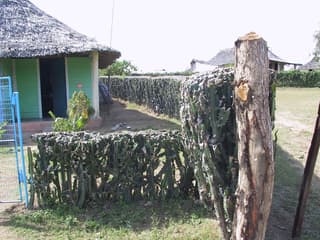
Fairy Castle Cactus
Acanthocereus tetragonus
Acanthocereus tetragonus 'Fairy Castle' is a dwarf, branching variant of the cactus native to the Americas. Its five-sided stems have short spines and grow in dense clusters, creating a silhouette reminiscent of a castle with multiple medieval towers. It is a slow-growing plant, extremely popular for interior decoration due to its sculptural appearance and ease of maintenance.
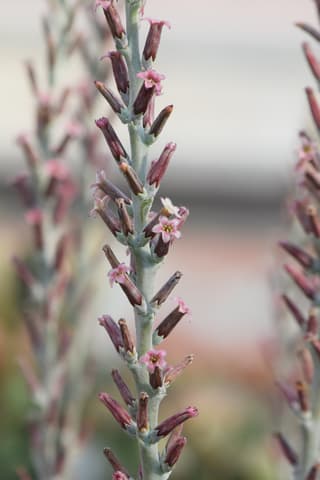
Plover Eggs Plant
Adromischus
Adromischus is a charming genus of small, clumping succulents native to Southern Africa, belonging to the Crassulaceae family. With about 28 known species, these plants are prized by collectors for their uniquely shaped, often spotted or mottled thick leaves. They thrive in bright light and are exceptionally drought-tolerant, making them ideal low-maintenance houseplants. In spring, they produce slender tubular flowers in white, pink, or red on long spikes.
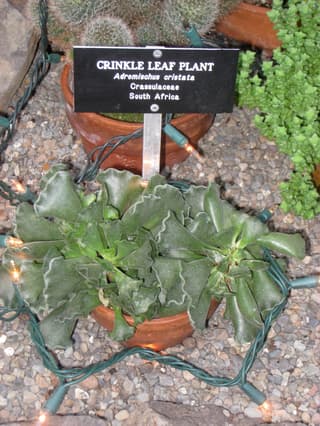
Crinkle-leaf Plant
Adromischus cristatus
Adromischus cristatus is a compact succulent native to South Africa, prized for its distinctive triangular leaves with wavy, crinkled margins and rough texture. A member of the Crassulaceae family, it is a popular ornamental houseplant ideal for beginners.
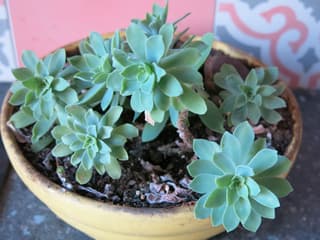
Aeonium
Aeonium
Aeonium is a genus of succulents with approximately 35 species, primarily native to the Canary Islands. Unlike most succulents, Aeonium grows actively in the fall and winter, entering dormancy during the hot summer. Its perfect rosettes of glossy leaves form stunning ornamental colonies, making it one of the most elegant succulents for Mediterranean gardens and pots.
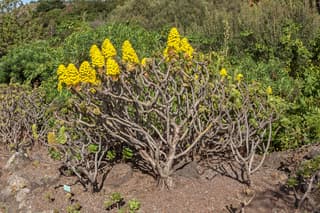
Tree Aeonium
Aeonium arboreum
Aeonium arboreum is a woody-stemmed succulent native to the Canary Islands and North Africa, renowned for its striking rosettes of fleshy leaves atop branching stems. The dark-purple cultivar 'Schwarzkopf' (also spelled 'Zwartkop') is one of the most popular ornamental succulents worldwide.
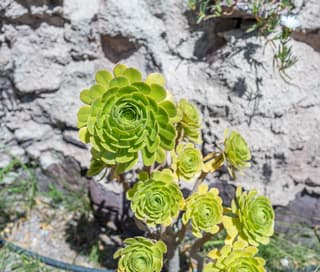
Stalked Aeonium
Aeonium undulatum
Aeonium undulatum is a striking succulent subshrub native to the Canary Islands, specifically Gran Canaria. Known for its large rosettes of bright, glossy, wavy-edged green leaves, it can grow over 2 meters tall on a single unbranched stem, making it one of the tallest species in the Aeonium genus. It is monocarpic, producing stunning pyramidal panicles of yellow star-shaped flowers after approximately 5 years.
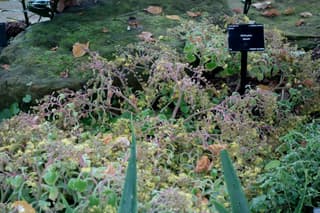
Tree of Love
Aichryson laxum
The Tree of Love (Aichryson laxum) is a compact succulent native to the Canary Islands, belonging to the Crassulaceae family. It features fleshy heart-shaped leaves arranged in rosettes at the tips of its branches, and produces small star-shaped yellow flowers in spring and summer. It is an annual or biennial plant that naturally dies after flowering.
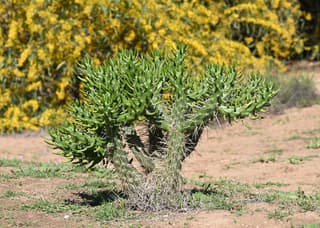
Eve's Pin Cactus / Cane Cholla (genus)
Austrocylindropuntia
Austrocylindropuntia is a genus of Andean columnar cacti native to South America, primarily Peru, Bolivia, and Ecuador. The most well-known species are A. subulata (Eve's Pin) and A. cylindrica (Cane Cholla). These are robust, fast-growing plants with cylindrical stems covered in sharp spines.
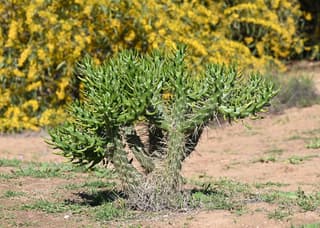
Eve's Needle Cactus
Austrocylindropuntia subulata
Austrocylindropuntia subulata, commonly known as Eve's Needle Cactus, is a columnar cactus native to the Peruvian Andes. Its dark green cylindrical stems can reach up to 4 meters in height in their natural habitat, and it is distinguished by its persistent needle-like leaves — a remarkable feature among cacti. This robust, drought-tolerant plant is highly ornamental and thrives in sunny gardens and bright indoor spaces.
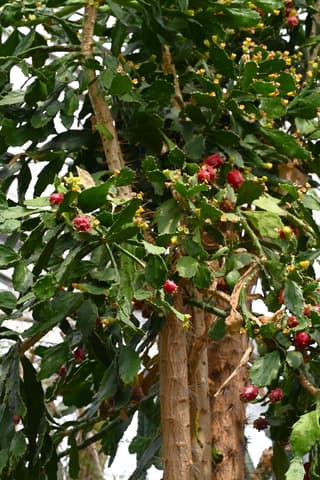
Brazilian Tree Cactus
Brasiliopuntia brasiliensis
Brasiliopuntia brasiliensis, commonly known as the Brazilian Tree Cactus, is a monotypic tree-like cactus native to Brazil, Argentina, and Paraguay. It is the sole species of the genus Brasiliopuntia and stands out for its arborescent structure — a woody cylindrical trunk topped with flattened cladodes on branch tips — which can reach over 20 meters in its natural habitat.
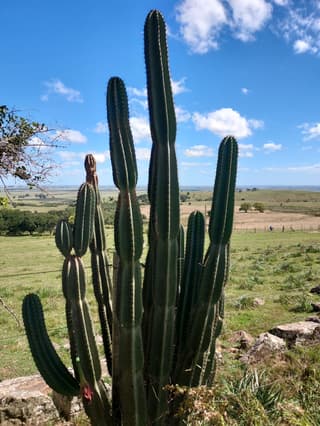
Cereus / Hedge Cactus (genus)
Cereus
Cereus is a genus of tall columnar cacti native to South America, including species like C. hildmannianus, C. repandus, and C. peruvianus. These robust, fast-growing cacti produce spectacular white nocturnal flowers and are widely grown as ornamental plants in gardens and sunny interiors.
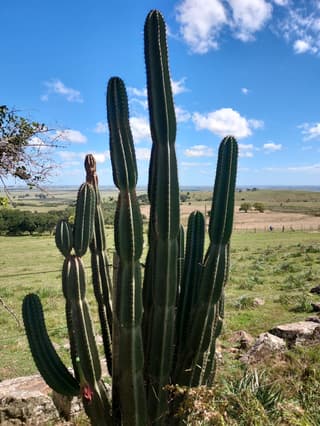
Monster Cactus
Cereus hildmannianus
Cereus hildmannianus f. monstrosus, commonly known as Monster Cactus, is a fascinating and sculptural variant of the columnar cactus native to South America. Its most striking characteristic is its irregular and twisted growth, resulting from mutations in the growth points, which creates unique and 'monstrous' forms. It has a bluish-green coloration and, although rarely in pots, can produce large nocturnal white flowers followed by reddish, sweet fruits.
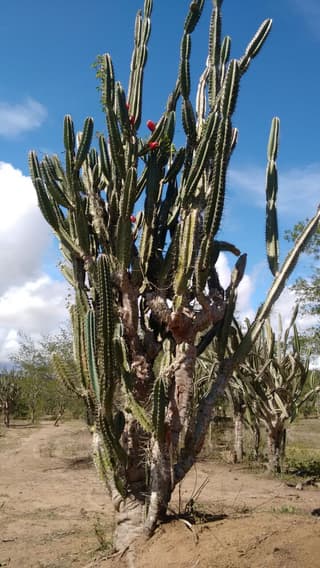
Mandacaru Cactus
Cereus jamacaru
Cereus jamacaru, popularly known as Mandacaru, is an iconic columnar cactus native to the Brazilian semi-arid region. It is characterized by its imposing stature, thorny branches, and magnificent white flowers that bloom only at night and wither by dawn. A symbol of the Caatinga's resilience and vitality, it is capable of storing large amounts of water in its succulent stem.
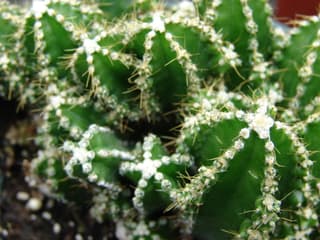
Giant Peruvian Cereus
Cereus peruvianus
The Giant Peruvian Cereus (Cereus peruvianus) is a fast-growing columnar cactus native to South America, closely related to other Cereus species and prized for its dramatic upright form and large, fragrant, night-blooming flowers. It can grow several meters tall, featuring blue-green ribbed stems armed with sturdy spines. Its cream to white flowers open only at night and wilt by morning. Extremely drought-tolerant, it is commonly grown as an ornamental accent, security hedge, or living fence in warm climates.
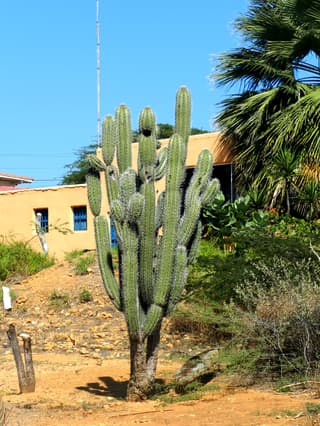
Peruvian Apple Cactus
Cereus repandus
Cereus repandus, commonly known as the Peruvian Apple Cactus, is a tall columnar cactus native to South America, particularly Venezuela and Colombia. Its gray-green to blue-green cylindrical stems can reach up to 33 feet (10m) in the wild, adorned with 8-13 ribs and robust spines. In late spring through fall, fragrant white flowers bloom for a single night before giving way to edible red fruit. This fast-growing species is celebrated worldwide for its architectural beauty and remarkable drought tolerance.
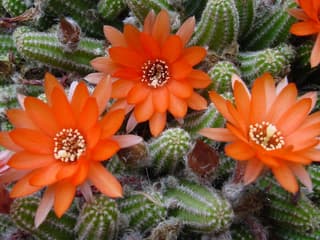
Peanut Cactus
Chamaecereus silvestrii
Chamaecereus silvestrii, commonly known as the Peanut Cactus, is a succulent native to Argentina. It features cylindrical, branched stems that grow in a prostrate manner, resembling peanuts. It is famous for its spectacular spring blooming, producing large, vibrant orange and red flowers that contrast with the light green of its stems.
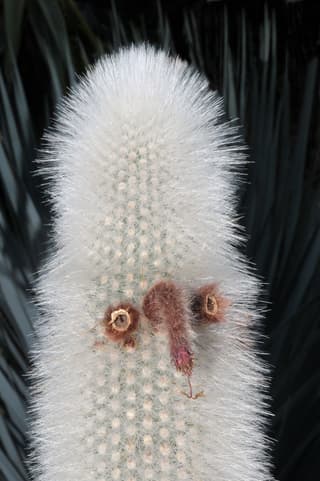
Silver Torch Cactus
Cleistocactus strausii
Cleistocactus strausii, known as the Silver Torch Cactus, is a perennial columnar cactus native to the mountainous regions of Bolivia and Argentina. It is widely appreciated for its erect stems covered in a dense layer of short white spines, which give it a distinct silvery appearance. Upon reaching maturity, it produces tubular burgundy-red flowers that do not fully open, projecting horizontally from the stems.
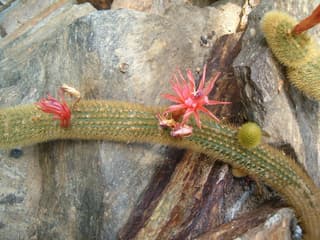
Golden Rat-tail Cactus
Cleistocactus winteri
The Golden Rat-tail Cactus (Cleistocactus winteri) is a trailing cactus native to the mountainous slopes of Bolivia. Its slender, golden-spined stems can cascade over 90 cm from a hanging basket, producing striking tubular orange to salmon-pink flowers in spring and summer. Prized as a houseplant, it is easy-going as long as its need for excellent drainage and bright light is respected.
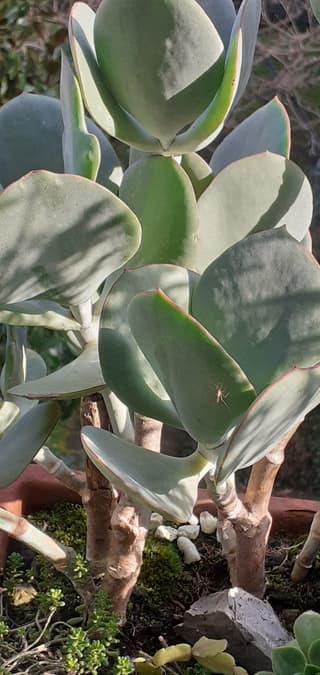
Pig's Ear
Cotyledon orbiculata
Cotyledon orbiculata, commonly known as Pig's Ear, is a robust succulent native to Southern Africa. It features distinctive rounded, silvery-white fleshy leaves often edged in red, and produces elegant orange to red tubular bell-shaped flowers on tall stems in late summer. A member of the Crassulaceae family, it is widely cultivated as an ornamental in gardens and as a houseplant.
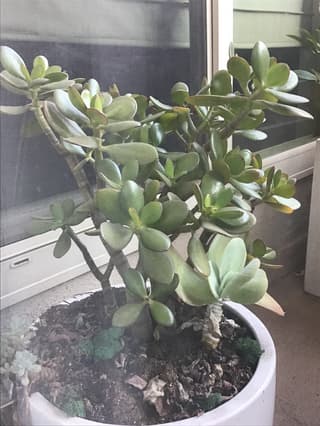
Crassula (genus)
Crassula
Crassula is a large genus of over 200 succulent species in the family Crassulaceae, native mainly to Southern Africa. Well-known species include C. ovata (jade plant), C. perforata (string of buttons), and C. capitella (red pagoda). They are slow-growing, drought-tolerant plants suited to both indoor and warm outdoor climates (zones 9–11).
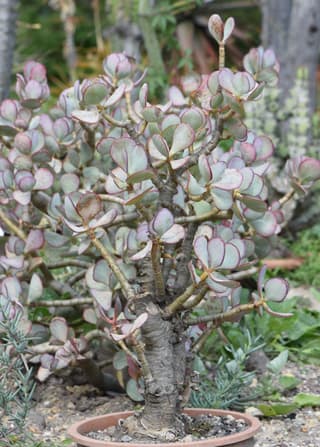
Silver Jade Plant
Crassula arborescens
Crassula arborescens, commonly known as the Silver Jade or Silver Dollar Plant, is a shrubby succulent native to the Western Cape of South Africa. Its rounded, blue-gray leaves with reddish edges provide a unique and sophisticated look. It grows slowly, reaching up to 120 cm in height, and produces small white or pink star-shaped flowers during spring and winter. It is an extremely hardy plant, perfect for both beginners and experienced growers.
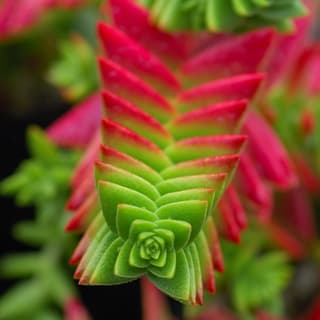
Campfire Crassula
Crassula capitella
Crassula capitella, commonly known as Campfire Crassula or Red Flames, is a low-growing succulent from the family Crassulaceae native to South Africa. It forms dense rosettes of propeller-shaped, fleshy leaves that are bright green at the base and turn vivid shades of orange, red, and scarlet when exposed to full sun or cooler temperatures. The dramatic color transformation makes it one of the most visually striking succulents for containers and garden borders. In summer it produces small clusters of white star-shaped flowers that attract bees and butterflies.
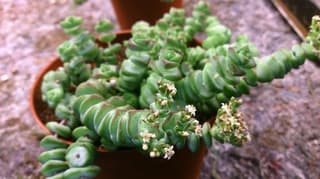
Worm Plant
Crassula marnieriana
Crassula marnieriana, commonly known as the Worm Plant or Jade Necklace, is a compact succulent native to South Africa. It forms distinctive rope-like stems of tightly stacked, fleshy round leaves that overlap in opposite pairs, creating a unique appearance. In spring, it produces delicate clusters of white to pale pink star-shaped flowers.
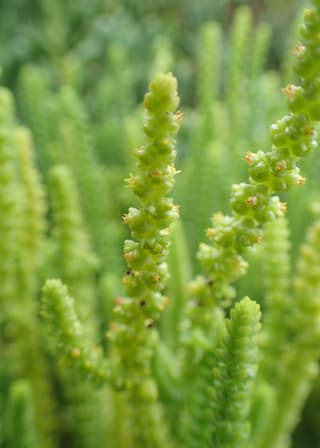
Watch Chain Plant
Crassula muscosa
Crassula muscosa, commonly known as the Watch Chain Plant or Zipper Plant, is a slow-growing succulent native to South Africa and Namibia. Its tiny, tightly overlapping scale-like leaves create a distinctive chain or zipper pattern along its stems. An excellent choice for bright windowsills, terrariums, and succulent arrangements.
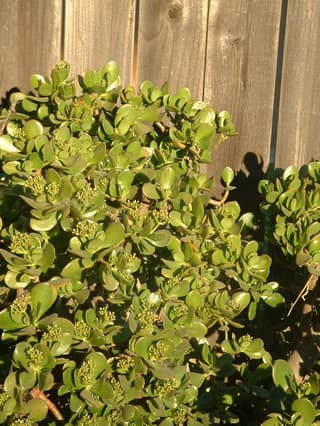
Jade Plant
Crassula ovata
The Jade Plant (Crassula ovata) is a beloved succulent native to South Africa and Mozambique, known for its thick, fleshy, oval-shaped leaves that resemble jade gemstones. This easy-care plant can live for decades, potentially reaching 70-100 years, and grows into an attractive shrub or small tree. Its compact growth and striking appearance have made it one of the most popular houseplants worldwide.
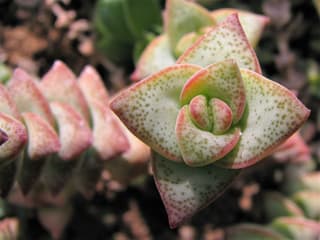
String of Buttons
Crassula perforata
Crassula perforata is a South African succulent in the Crassulaceae family, known for its distinctive stacked triangular leaves threaded along trailing stems. The leaves are grey-green with rosy pink margins that intensify under bright light. It grows upright when young and becomes trailing with age, reaching up to 60 cm. An easy-care plant that thrives in bright light and well-draining soil, it produces tiny star-shaped white to pale pink flowers in spring.
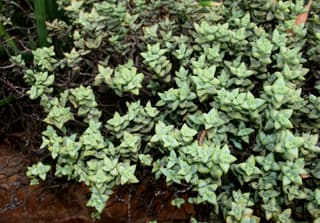
Concertina Plant
Crassula rupestris
Crassula rupestris is a charming stacked succulent native to South Africa, featuring triangular fleshy leaves threaded along creeping stems. Its geometric, bead-like foliage pattern gives it its popular names: Rosary Vine and Buttons on a String. In spring and summer it produces small star-shaped pink to white flowers.
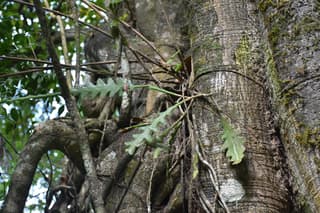
Fishbone Cactus
Disocactus anguliger
Disocactus anguliger is an epiphytic cactus native to the mountain forests of Guerrero, Mexico, prized for its flat, deeply lobed stem segments that zigzag like a fishbone. Unlike desert cacti, it grows in the dappled shade of tree canopies and produces large, fragrant, night-blooming flowers in creamy white to pale pink in autumn.
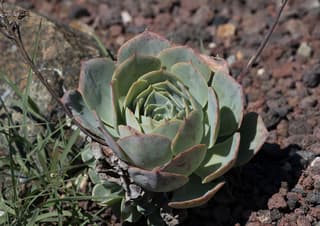
Echeveria
Echeveria
Echeveria is a large genus of succulent plants in the family Crassulaceae, native to Mexico and Central America, encompassing approximately 150 species. Known for their stunning rosette-shaped, fleshy leaves that store water, Echeverias are among the most popular succulents worldwide, prized for their ornamental beauty, diverse colors, and ease of care.
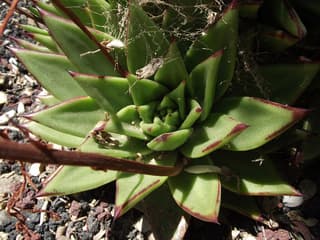
Lipstick Echeveria
Echeveria agavoides
Echeveria agavoides, commonly known as the Lipstick Echeveria or Wax Agave, is a compact rosette succulent native to rocky hillsides in Mexico. It belongs to the Crassulaceae family and is prized for its emerald-green triangular leaves tipped with deep red-pink edges, resembling a wax agave. Rosettes grow up to 20 cm tall and 36 cm wide, producing coral-pink and yellow flowers on tall stems in spring and summer.
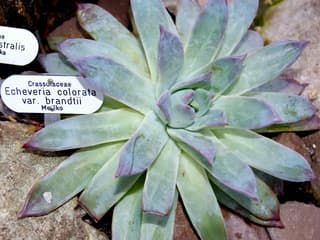
Mexican Hens and Chicks
Echeveria colorata
Echeveria colorata is a stunning rosette-forming succulent native to the mountains of Mexico (Jalisco). Its pale lavender-grey leaves are tipped with vibrant pink to red margins, creating a jewel-like appearance. In spring and summer it sends up tall arching stems bearing coral-pink to orange bell-shaped flowers beloved by hummingbirds. Like most Echeverias, it produces offsets around the base, forming a charming colony — the origin of its common name "Hens and Chicks".
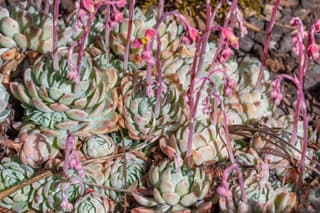
Mexican Gem
Echeveria elegans
Echeveria elegans is a rosette-forming succulent belonging to the Crassulaceae family, native to central Mexico (states of Hidalgo, Puebla, Guanajuato, and Querétaro). Its fleshy, rounded leaves display a blue-green coloration with pink edges when exposed to sunlight, covered by a fine layer of whitish pruina that gives it a soft and delicate appearance. The rosettes reach up to 10 cm (4 inches) in diameter. It is currently listed as an endangered species due to indiscriminate collection from its natural habitat.
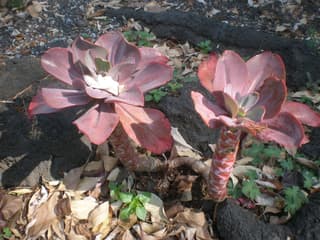
Carnival Echeveria
Echeveria gibbiflora
Echeveria gibbiflora is a large, showy succulent native to Mexico, prized for its spectacular rosettes that can reach up to 40 cm (16 inches) in diameter. Its thick, fleshy leaves display stunning hues ranging from blue-green to reddish-purple, often with wavy margins and a distinctive metallic sheen. In summer and fall, it produces tall flower stalks bearing bell-shaped blooms in shades of pink, red, and yellow.
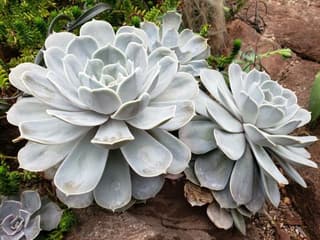
Ghost Echeveria
Echeveria lilacina
Echeveria lilacina, commonly known as the Ghost Echeveria, is a slow-growing succulent native to the rocky cliffs of Nuevo León, Mexico. It forms elegant rosettes of silvery-gray leaves with lilac and pink undertones, covered by a protective powdery coating called farina that gives the plant its characteristic ghostly appearance. It is highly prized by succulent collectors and interior designers worldwide.
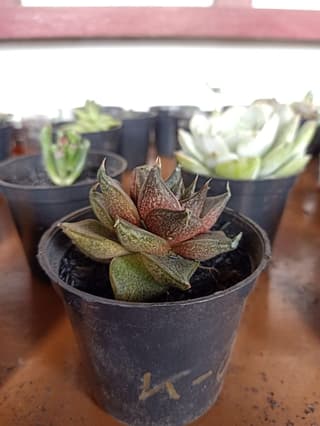
Purpus's Echeveria
Echeveria purpusorum
Echeveria purpusorum, commonly known as Purpus's Echeveria, is a slow-growing succulent native to Mexico. It forms compact rosettes with thick, dark green leaves adorned with distinctive reddish-brown mottled patterns. Highly sought after by collectors for its unique appearance and easy care requirements.
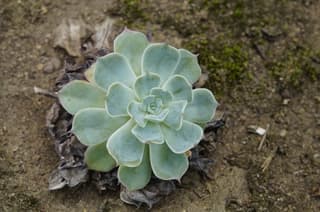
Blue Echeveria
Echeveria secunda
Echeveria secunda, commonly known as Blue Echeveria or Hen and Chicks, is a rosette-forming succulent native to the highlands of Mexico, belonging to the family Crassulaceae. Its fleshy, blue-green leaves arrange into a compact, symmetrical rosette up to 6 inches (15 cm) in diameter. In spring and summer, it produces tall slender stems bearing lantern-shaped flowers in yellow and red, making it one of the most popular ornamental succulents for both indoor and outdoor use.
Easy Care Succulents
Our selection of 145 easy succulents combines the characteristics of this category with reduced care needs. Perfect for beginners who love this category.
Why Choose Easy Succulents?
Combining the beauty of succulents with easy difficulty level lets you enjoy this category without excessive maintenance worries. Each plant was selected to offer the best characteristics of the category at the care level you are looking for.