280 Easy Succulents | 2026 Guide - Page 3
Find 280 easy succulents. Complete guide for your garden.
280 Succulents with easy level
Showing 73-108 of 280
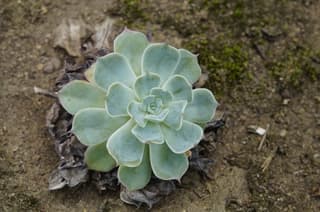
Blue Echeveria
Echeveria secunda
Echeveria secunda, commonly known as Blue Echeveria or Hen and Chicks, is a rosette-forming succulent native to the highlands of Mexico, belonging to the family Crassulaceae. Its fleshy, blue-green leaves arrange into a compact, symmetrical rosette up to 6 inches (15 cm) in diameter. In spring and summer, it produces tall slender stems bearing lantern-shaped flowers in yellow and red, making it one of the most popular ornamental succulents for both indoor and outdoor use.

Mexican Firecracker
Echeveria setosa
Echeveria setosa, commonly called Mexican Firecracker, is a rosette-forming succulent native to Mexico, covered in fine white hairs that give it a velvety appearance. In summer, it sends up tall stalks bearing urn-shaped red flowers with yellow tips that attract hummingbirds.
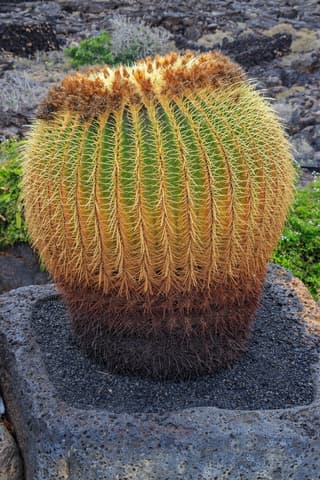
Golden Barrel Cactus
Echinocactus grusonii
Echinocactus grusonii is a spherical cactus native to central Mexico, renowned for its impressive globular shape and radiant golden spines. This majestic cactus can reach up to 1 meter in both diameter and height over many years. It is an endangered species in its natural habitat due to illegal collection and habitat loss.
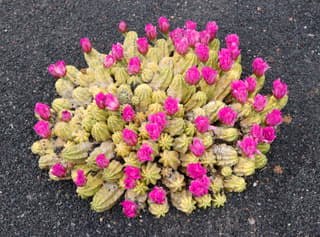
Hedgehog Cactus
Echinocereus
Echinocereus is a genus of about 70 cactus species native to the southwestern United States and Mexico. These cylindrical to columnar cacti are prized for their spectacular spring flowers — some of the largest and most colorful in the cactus world — and edible fruits in many species. Highly drought-tolerant and adapted to arid environments, they range from sea level to high mountain elevations.
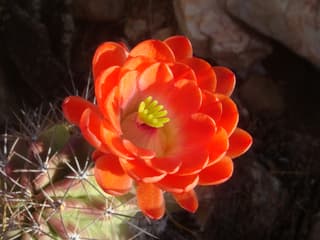
Scarlet Hedgehog Cactus
Echinocereus coccineus
Echinocereus coccineus, commonly known as the Scarlet Hedgehog Cactus, is a striking columnar cactus native to the deserts of the southwestern United States and northern Mexico. It forms dense clumps of ribbed, spine-covered stems and produces stunning scarlet to orange-red funnel-shaped flowers in spring that attract hummingbirds and pollinators. A beloved desert plant celebrated for its resilience, drought tolerance, and vibrant blooms.
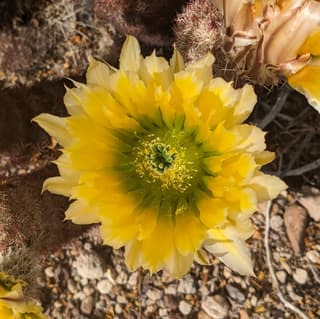
Texas Rainbow Cactus
Echinocereus dasyacanthus
Echinocereus dasyacanthus, commonly known as the Texas rainbow cactus, is native to the southwestern United States (Texas, New Mexico) and northern Mexico (Chihuahua, Coahuila, Sonora). It forms ribbed, cylindrical stems, typically solitary or loosely clustering, covered in dense spines ranging from tan and gold to pink. In spring and early summer, it produces large, funnel-shaped flowers ranging from canary yellow to deep rose-pink, which attract native desert pollinators.

Claret Cup Cactus
Echinocereus triglochidiatus
The claret cup cactus is a low-growing, clumping cactus native to the deserts and rocky slopes of the southwestern United States and northern Mexico. Over time it forms dense mounds of cylindrical, spiny stems that can spread more than a meter wide. In late spring, the plant produces a spectacular show of funnel-shaped, scarlet-red flowers that attract hummingbirds and bees.

Brain Cactus
Echinofossulocactus multicostatus
The Brain Cactus (Stenocactus multicostatus, synonym of Echinofossulocactus multicostatus) is a globular cactus native to the deserts of Mexico, famous for its dozens of thin, wavy ribs that wrap around the body like cerebral convolutions. It is a slow-growing species, usually solitary, which rarely exceeds 5 inches (12-13 cm) in height, and produces delicate flowers in shades of white to pinkish-lilac with a darker central vein during spring and summer.
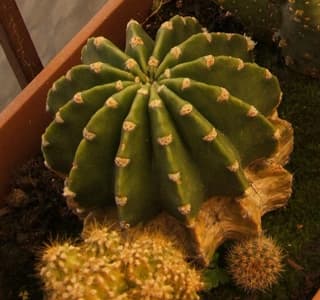
Hedgehog Cactus
Echinopsis
Echinopsis is a large genus of cacti native to South America, spanning the Andean regions of Argentina, Bolivia, Peru and Chile, with around 128 species ranging from small globular forms to tall columnar and tree-like specimens. It is prized for its enormous, fragrant, short-lived flowers, usually white, pink or red, that open at night or dawn and last only a day or two, earning several species the nickname Easter Lily Cactus.
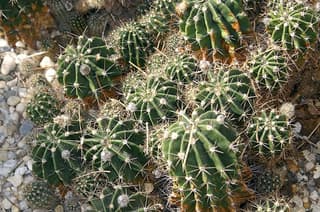
Easter Lily Cactus
Echinopsis eyriesii
Echinopsis eyriesii is a globular cactus native to South America (Argentina, Bolivia, and southern Brazil), prized for its ribbed, dark green stem and large, fragrant white flowers that open at night and last only a single day. It's a hardy, easy-to-grow species suited to beginners and collectors alike.
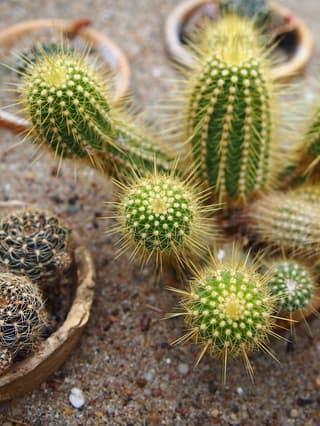
Red Torch Cactus
Echinopsis huascha
Echinopsis huascha, commonly called the red torch cactus, is a clustering columnar cactus native to the arid highlands of Catamarca and La Rioja provinces in Argentina, growing at elevations between 900 and 2,000 meters. It forms clumps of upright to sprawling stems armed with yellowish spines and can reach roughly 1 meter in height. Its large, showy flowers, ranging from orange to yellow to red, appear in spring through early summer.
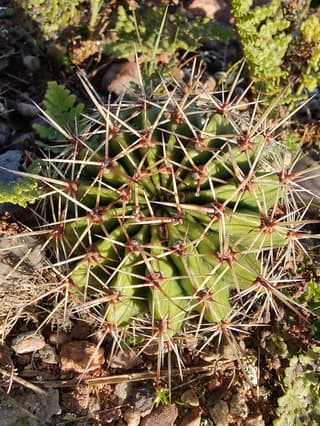
Easter Lily Cactus
Echinopsis oxygona
Echinopsis oxygona is a classic globular cactus that tends to become slightly columnar with age. It is widely appreciated for its monumental, trumpet-shaped flowers, which can be white or pinkish and emit a delicate fragrance, usually opening at night. Native to South America, it forms colonies of spiny 'balls' by producing lateral offsets.
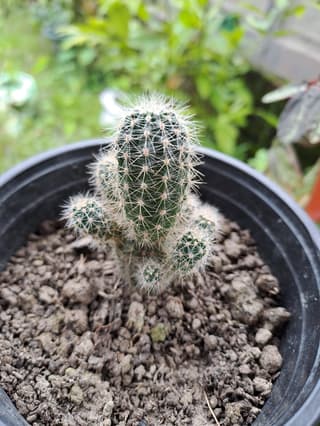
Sea Urchin Cactus
Echinopsis tubiflora
Echinopsis tubiflora, popularly known as the Sea Urchin Cactus (also called the Easter Lily Cactus), is a globular to short-columnar cactus native to the highlands of Bolivia and northern Argentina. Its dark green, ribbed stem is armed with clusters of pale, brown-tipped spines and produces spectacular funnel-shaped white flowers with a pale green throat that open at night and last only a day or two. As the plant matures it tends to offset, forming dense clumps that make a striking architectural statement in any dry garden or sunny windowsill.
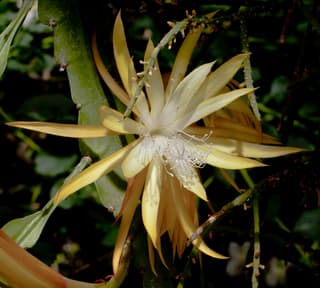
Fishbone cactus
Epiphyllum anguliger
The fishbone cactus is an epiphytic cactus native to the tropical forests of Mexico, where it grows attached to tree trunks and branches. Its flattened, deeply lobed zigzag stems resemble a fish's spine, and mature plants produce large, fragrant, night-blooming white flowers in late summer or fall.
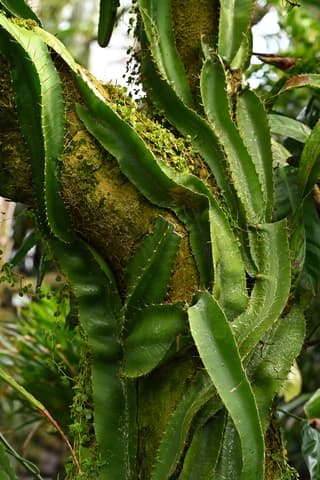
Climbing Cactus
Epiphyllum phyllanthus
Epiphyllum phyllanthus, commonly known as the Climbing Cactus or Orchid Cactus, is a tropical epiphytic cactus from the family Cactaceae, native to the forests of Central and South America. Unlike desert cacti, it grows on trees in humid, shaded environments and produces large, white, fragrant flowers that bloom only at night.

Chilean Cacti
Eriosyce
Eriosyce is a genus of slow-growing cacti native to the west coast of Chile and parts of Peru, where they are found from sea level up to altitudes of 4,000 meters. These cacti typically have a spherical to cylindrical shape with dense spines ranging in color from white to yellow, red, and black. Some members of the genus have woolly areoles. Eriosyce are popular collector's cacti due to their decorative spines and striking flowers that bloom at the top of the stem.
Chilean Pink Cactus
Eriosyce subgibbosa
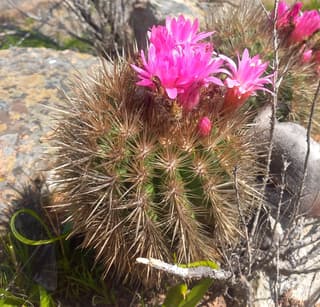
Eriosyce subgibbosa is a globular-to-columnar cactus endemic to the coastal strip of central Chile, ranging from the Biobío region to Atacama. It grows on rocky outcrops near the sea, forming a solitary stem up to 90 cm long and 25 cm wide that tends to recline with age. Flowers are pink to magenta with a paler throat and appear in late winter through spring.

Chilean Corkscrew Cactus
Eulychnia castanea
Native to the arid coastline of northern and central Chile, between Los Molles and the Talinay mountains, Eulychnia castanea is a slow-growing columnar cactus that forms creeping clumps several meters in diameter in its coastal desert habitat, surviving on sea fog (camanchaca) in one of the driest regions on the planet. The grayish-green stems, featuring 6 to 8 ribs and spines ranging from brown to yellowish, produce fragrant white flowers in summer and greenish-yellow fruits with mucilaginous pulp and a slightly acidic flavor. The 'Varispiralis' cultivar, with spiraled or crested stems, is highly sought after by collectors.
Barrel Cactus
Ferocactus
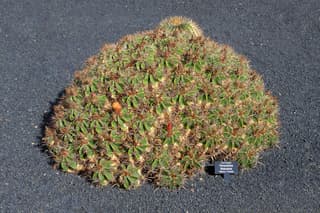
Ferocactus is a genus of roughly 30 species of barrel-shaped cacti native to the deserts of the southwestern United States and northern Mexico, ranging from California and Arizona to Sonora and Baja California. Young plants start out columnar and gradually swell into the thick, ribbed, barrel-like form that gives the genus its common name. Most species grow as solitary stems covered in dense, often hooked or brightly colored spines, though a few species such as F. robustus and F. glaucescens form clumping colonies over time. In cultivation, barrel cacti are prized as sculptural, low-maintenance succulents for xeriscapes, rock gardens, and sunny windowsills.
Emory's Barrel Cactus
Ferocactus emoryi
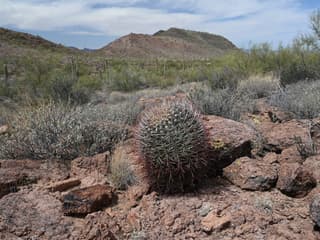
Ferocactus emoryi is a tall, barrel-shaped cactus native to the Sonoran Desert of Arizona, Sonora and Baja California. Young plants are globular and become cylindrical with age, eventually reaching barrel or column form armed with strong, hooked spines. In late summer to early fall it produces bell-shaped yellow, orange or red flowers in a crown at the apex.
Blue Barrel Cactus
Ferocactus glaucescens
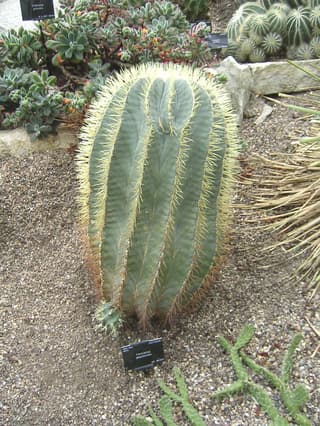
The Blue Barrel Cactus (Ferocactus glaucescens) is a globular to barrel-shaped cactus native to central Mexico, prized for its striking blue-green (glaucous) epidermis and dense crown of golden-yellow radial spines. Mature plants form a compact, ribbed barrel that can reach about 60 cm in height and 50 cm in diameter, eventually clustering into small colonies via basal offsets. In late spring and summer it produces funnel-shaped, lemon-yellow flowers near the crown, followed by small white berry-like fruits. It is a slow-growing, low-maintenance succulent that thrives in full sun and well-draining soil, making it a popular choice for xeriscaping and container gardens.
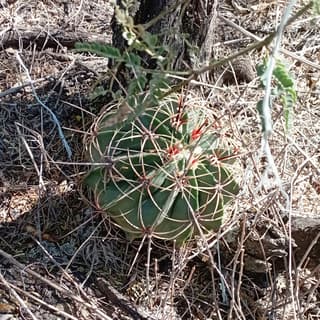
Mexican Barrel Cactus
Ferocactus histrix
Ferocactus histrix, commonly known as the Mexican Barrel Cactus, is a globular succulent species native to the arid regions of Mexico. It is characterized by its bluish-green body with prominent ribs and robust yellowish or reddish radial spines. Over time, the plant may transition from perfectly spherical to slightly columnar. It produces funnel-shaped flowers at the top of the crown, usually in shades of yellow, followed by fleshy fruits.
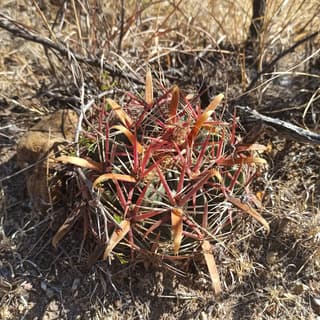
Devils Tongue Cactus
Ferocactus latispinus
Ferocactus latispinus is a solitary, globular to short-cylindrical cactus native to central Mexico, prized for its broad, flattened, hooked central spines that range from red to yellow. It grows slowly to about 30-100 cm tall and 40-45 cm wide, producing funnel-shaped pink to purple (occasionally yellowish) flowers in late autumn and early winter.
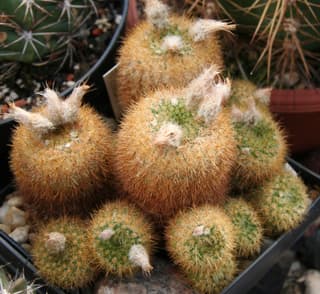
Dwarf Frailea
Frailea pumila
Frailea pumila is a tiny cactus native to the grasslands of southern Brazil, Uruguay, and Argentina. Belonging to the family Cactaceae, it rarely exceeds 5 cm in diameter. Its most remarkable trait is cleistogamous flowering: its yellow flowers develop, self-pollinate, and set seed without ever opening — a silent reproductive miracle adapted to unpredictable environments.
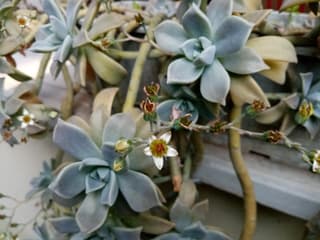
Ghost Plant
Graptopetalum
Graptopetalum is a genus of succulents in the Crassulaceae family, native to Mexico and southern Arizona. It forms compact rosettes of thick, triangular leaves in dusty grey-blue or pinkish tones with a pearlescent sheen, which is why it is nicknamed "ghost plant" or "mother-of-pearl plant". The most widely grown species, Graptopetalum paraguayense, is a popular indoor and outdoor succulent thanks to its high drought tolerance and effortless propagation from leaves.
Lavender Pebbles
Graptopetalum amethystinum
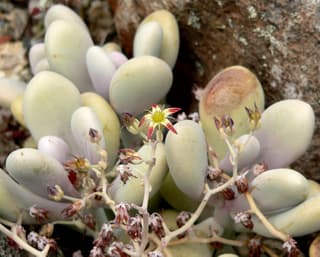
Graptopetalum amethystinum, commonly known as Lavender Pebbles or Jewel-Leaf Plant, is a stunning rosette-forming succulent native to the deserts of Mexico. Its thick, fleshy leaves display a captivating lavender-pink to blue-grey hue coated with a powdery farina, giving it the appearance of delicate gemstones. In spring, it produces charming star-shaped flowers in cream to yellow with reddish tips. A low-maintenance beauty beloved by succulent collectors worldwide.
Chihuahua Flower
Graptopetalum bellum
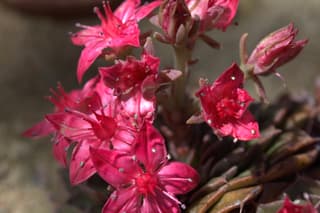
Graptopetalum bellum, commonly known as the Chihuahua Flower, is a perennial succulent in the family Crassulaceae, native to the rocky mountains of Chihuahua and Sonora in northern Mexico at elevations around 1,460 m. It forms flat rosettes up to 10 cm in diameter with smooth, triangular, gray-bronze leaves. The plant produces spectacular deep pink to red star-shaped flowers in late spring and early summer, earning the Royal Horticultural Society's Award of Garden Merit.
MacDougall's Stonecrop
Graptopetalum macdougallii
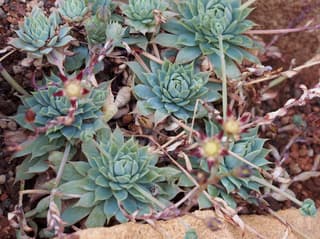
Graptopetalum macdougallii is a compact succulent endemic to the mountains of Oaxaca, Mexico. It forms elegant rosettes of blue-grey, slightly translucent leaves that can take on pink or purple hues under intense sun exposure. Highly resilient and low-maintenance, it is perfect for both beginners and experienced succulent collectors.
Ghost Plant
Graptopetalum paraguayense
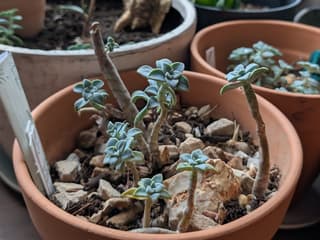
Graptopetalum paraguayense, commonly known as the Ghost Plant, is a perennial succulent native to Mexico. Its rosettes are composed of fleshy, pointed leaves that range in color from bluish-gray to lavender and pink, depending on sun exposure. It is famous for its extreme resilience and the ease with which its fallen leaves grow new roots, making it a favorite among succulent beginners.
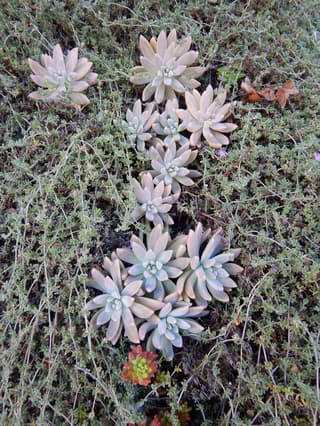
Graptosedum
Graptosedum
Graptosedum is a cross-generic hybrid between Graptopetalum and Sedum. These succulents are characterized by their thick, fleshy leaves arranged in beautiful rosettes. They are highly prized for their 'sun-stress' colors, where the foliage shifts from blue-green to vibrant shades of bronze, pink, or orange when exposed to bright sunlight. They are hardy, low-maintenance, and perfect for rock gardens or containers.
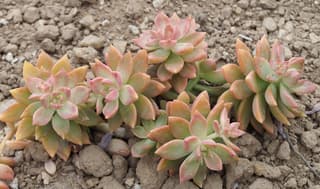
California Sunset
Graptosedum 'California Sunset'
Graptosedum 'California Sunset' is a striking hybrid succulent between Graptopetalum and Sedum, prized for its trailing rosettes that shift from soft blue-green to fiery coral-pink and orange when grown in bright, stressed light. Easy to grow and drought-tolerant, it forms dense mats or spills gracefully over pots and rock gardens.
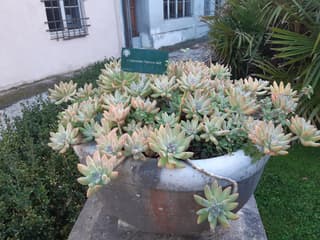
Pink Sedeveria
Graptosedum 'Francesco Baldi'
Graptosedum 'Francesco Baldi' is a succulent hybrid of Graptopetalum paraguayense and Sedum pachyphyllum, in the family Crassulaceae. It forms branching, slightly trailing stems topped with compact rosettes of plump, grayish-green leaves that blush pink and peach under bright light and cooler temperatures. A slow-to-moderate grower, it is popular in rock gardens, hanging baskets, and mixed succulent arrangements.
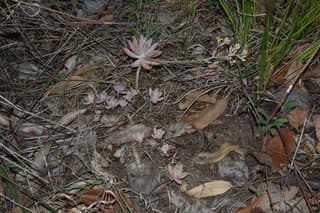
Graptosedum Ghosty
Graptosedum 'Ghosty'
Graptosedum 'Ghosty' is a hybrid succulent in the Crassulaceae family, a cross between Graptopetalum and Sedum. Its rosettes of grayish-green leaves with pink undertones give it an ethereal, "ghostly" look, hence the name. It is slow-growing, easy to care for, and very drought tolerant.
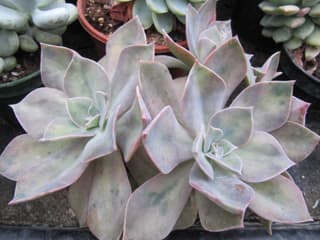
Graptoveria
Graptoveria
Graptoveria is an intergeneric hybrid genus resulting from crosses between Graptopetalum and Echeveria, part of the Crassulaceae family. It forms compact, fleshy rosettes with thick leaves ranging from grayish-green to pink and lilac tones, often covered with a fine powdery coating (farina) that protects the plant from intense sun. It is an easy-to-grow succulent, very popular among beginners for its drought tolerance and low maintenance needs.
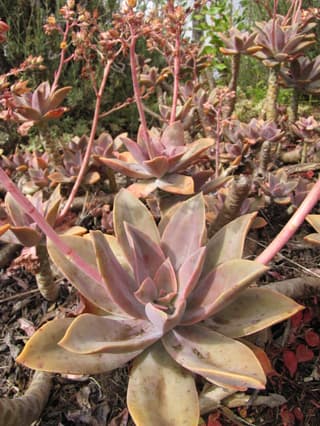
Graptoveria Ellen
Graptoveria 'Ellen'
Graptoveria 'Ellen' is a fascinating hybrid succulent that forms dense, fleshy rosettes. Its leaves feature a coloration ranging from mint green to soft pink and apricot when exposed to intense sunlight. It is a compact plant, ideal for arrangements and small pots, standing out for its hardiness and delicate beauty.

Chin Cactus
Gymnocalycium
Gymnocalycium is a genus of small, globe-shaped cacti native to Argentina, Bolivia, Brazil, Paraguay, and Uruguay. Named for the naked (spineless) flower buds that emerge from woolly areoles, these compact plants form ribbed, spherical bodies topped with short, curved spines and a distinctive chin-like bump beneath each areole — the trait that gives the genus its common name. Gymnocalycium cacti bloom generously from spring through summer, producing funnel-shaped flowers in white, pink, red, or yellow that often dwarf the plant body itself. Slow-growing and low-maintenance, they are popular beginner cacti for sunny windowsills and rock gardens in warm climates.
Easy Care Succulents
Our selection of 280 easy succulents combines the characteristics of this category with reduced care needs. Perfect for beginners who love this category.
Why Choose Easy Succulents?
Combining the beauty of succulents with easy difficulty level lets you enjoy this category without excessive maintenance worries. Each plant was selected to offer the best characteristics of the category at the care level you are looking for.