Fagaceae
American chestnut (Castanea dentata)
Castanea dentata
A demanding tree: it needs full sun, deep acidic well-drained soil and plenty of space, and pure American chestnuts are very likely to get chestnut blight. If you want to grow one, choose blight-resistant stock from a restoration programme and plant at least two trees for nuts.
Every 10 days
Direct sun
-29° - 35°C
% - %
Categories
What is American chestnut?
American chestnut (Castanea dentata) is a hard-care plant from the Fagaceae family. Castanea dentata is a large deciduous tree in the beech family (Fagaceae), native to the forests of eastern North America. It once reached about 30 m and made up a large share of Appalachian forests, but chestnut blight, a fungus brought in around 1904, killed an estimated 4 billion trees. Today it...
American chestnut grows up to 23.0m, spread of 2300cm, watering every 10 days, -29°C – 35°C. It is not suitable for indoor environments and safe for pets.
Unlike easy-care plants, American chestnut demands constant attention to humidity and light. Not recommended for beginners. Unlike many popular species, American chestnut is safe to keep around pets.
How to Care for American chestnut?
TLDR: American chestnut needs Direct sun, watering every 10 days, and temperatures between -29-35°C with 40-70% humidity.
How Often Should You Water American chestnut?
Water deeply every 10 days for the first two or three years, more often in hot, dry spells. Mature trees are fairly drought tolerant. Never let the roots sit in waterlogged soil, which invites root rot.
How Much Light Does American chestnut Need?
Full sun, at least 6 hours of direct light a day. It tolerates partial shade when young but produces few nuts there.
What Is the Best Soil for American chestnut?
Deep, loamy or rocky soil with good drainage and an acidic pH below 6. Avoid heavy, wet clay and alkaline soils.
What Pot Should You Use for American chestnut?
Only as a young seedling in a deep pot (at least 30 cm) for 1 or 2 years; it develops a long taproot and must then go into the ground.
What Is American chestnut and Where Does It Come From?
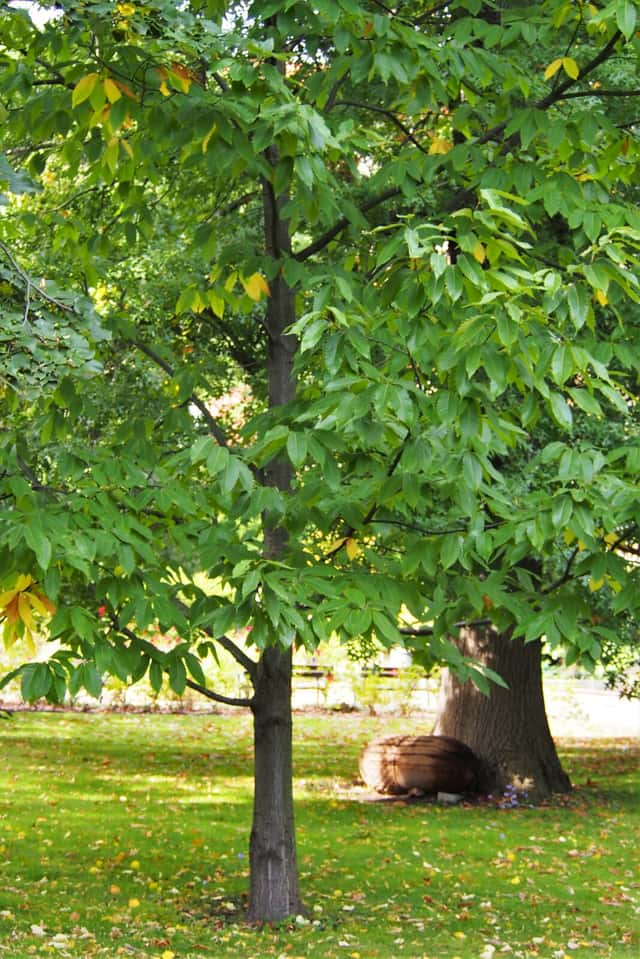
Castanea dentata is a large deciduous tree in the beech family (Fagaceae), native to the forests of eastern North America. It once reached about 30 m and made up a large share of Appalachian forests, but chestnut blight, a fungus brought in around 1904, killed an estimated 4 billion trees. Today it survives mostly as shoots from old roots that grow a few metres before the blight kills them back. The leaves are long and narrow, 10 to 23 cm, with coarse bristle-tipped teeth, and turn gold in autumn. In early summer it carries long, fragrant creamy-white catkins, and in autumn spiny burs open to drop two or three sweet, edible nuts.
How to Propagate American chestnut?
Planting nuts
Nuts lose viability fast once they dry. Two different trees are needed for cross-pollination and nut production.
- 1 Collect fresh nuts in autumn and do not let them dry out
- 2 Store them in damp peat in the refrigerator for about 3 months
- 3 Plant the sprouting nuts 2-3 cm deep in deep pots or directly outdoors in spring
- 4 Protect them from squirrels and mice with a wire cage
Materials needed:
Grafting
Chestnut grafts often fail over time from incompatibility; seed-grown trees are more common in restoration plantings.
- 1 Take dormant scion wood in late winter
- 2 Graft onto a vigorous chestnut seedling when growth starts in spring
- 3 Wrap the union and keep the rootstock shoots removed
Materials needed:
How Big Does American chestnut Grow?
TLDR: American chestnut can reach up to 23.0m tall with Medium growth rate.
Max height
23.0m
Spread
23.0m
Growth rate
Medium
Foliage
Deciduous
Plant Uses
Ornamental
Great for decoration
Edible
Can be consumed
Culinary Uses
- Sweet nuts eaten roasted, boiled or ground into flour
Is your plant showing symptoms?
Click on the symptom to discover possible causes:
What Diseases Commonly Affect American chestnut?
TLDR: American chestnut is susceptible to 6 known diseases. Monitor regularly for early detection.
Chestnut Blight
Chestnut blight is a severe fungal disease caused by Cryphonectria parasitica. The fungus enters through wounds in the bark and primarily affects the sweet chestnut (Castanea sativa) and other Castanea species. It is identified by sunken, sometimes cracked patches on the bark that turn orange to reddish-brown. Branches above these cankers wither or die back, while weak epicormic shoots often develop below the infection site. Small orange dots (fruiting bodies of the fungus) are frequently visible on the bark. Young trees can quickly become girdled and die.
Phytophthora Root Rot
Disease caused by fungus-like organisms (oomycetes) that live in soil and can survive for years. It affects roots, stem, and crown of plants, being especially severe in waterlogged or poorly drained soils. It is the second most common cause of root rot in trees and shrubs.
Leaf Spot
Leaf spot is a common fungal disease caused by various pathogens including Alternaria, Ascochyta, Colletotrichum, Septoria, and Venturia. It primarily affects leaves, causing discolored spots that can lead to premature leaf drop if left untreated.
Powdery Mildew
Powdery mildew is a common fungal disease caused by various fungi species including Erysiphe, Podosphaera, Oïdium, and Leveillula. It affects over 10,000 plant species worldwide. The disease thrives in warm, dry climates with high humidity and appears as a distinctive white powdery coating on plant surfaces.
Fun Facts
Before the blight, about one in four trees in some Appalachian forests was an American chestnut.
Its rot-resistant wood was so widely used it was called the farmer's friend.
Millions of root sprouts are still alive, kept small by the blight.
Frequently asked questions
Can I grow an American chestnut in my garden?
Are American chestnuts edible?
What is chestnut blight?
Is the American chestnut toxic to pets?
Compare with similar plants
| Attribute | Difficulty | Light | Watering | Pet Safe |
|---|---|---|---|---|
| Sticky false asphodel | Hard | Bright indirect | 1d | ✓ |
| Truckee lewisia | Hard | Bright indirect | 10d | ✓ |
| European Beech | Medium | Bright indirect | 10d | ⚠️ |
| Creeping bentgrass | Hard | Direct sun | 3d | ✓ |