53 Medium Succulents | 2026 Guide - Page 2
Find 53 medium succulents. Complete guide for your garden.
53 Succulents with medium level
Showing 37-53 of 53
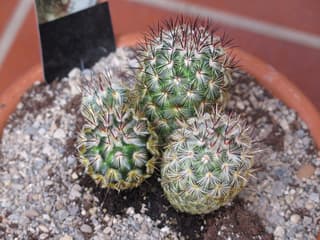
Mammillaria microhelia
Mammillaria microhelia
Mammillaria microhelia is a small pincushion cactus endemic to the state of Queretaro in central Mexico, where it grows in the Sierra del Zamorano. Its cylindrical green stems reach about 15 cm tall and 3.5-5 cm wide, alone or in small clumps. Each areole carries a dense starburst of 30-50 fine yellowish radial spines and up to eight longer reddish-brown central spines, which is where the name 'little sun' comes from. In spring it forms a ring of small funnel-shaped flowers, 12-16 mm, in greenish yellow, cream, pink or purple, followed by small pale fruits. In the wild it is listed as Endangered.
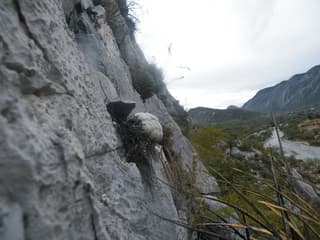
Feather cactus
Mammillaria plumosa
Mammillaria plumosa is a small cactus from north-eastern Mexico (Coahuila, Nuevo León and Tamaulipas), where it grows on limestone cliffs in dry scrub at 730-1,350 m. It forms low clumps of round heads 4-7 cm across that in time reach 12 cm tall and 40 cm wide. The pale green body is hidden under about 40 white spines per areole, so fine and branched that they look like feathers: the plant feels soft and doesn't prick. The flowers are small, whitish-yellow, sometimes with a pink stripe, and sweetly scented; they appear in late summer or, in cultivation, often in winter. In the wild it is listed as Near Threatened because of illegal collecting for sale. It holds the RHS Award of Garden Merit.
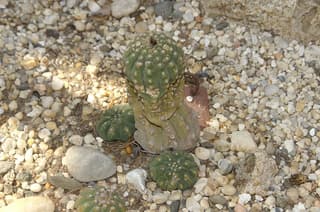
Madison Cactus
Matucana madisoniorum
Matucana madisoniorum is a small, solitary-growing, globular or slightly cylindrical cactus native to a very narrow range in the Amazon region of Peru, specifically the Marañón River valley, at elevations of only 400-1000 meters. Its grayish-green stem consists of 7-12 flat, wavy ribs, and its spination is highly variable: some individuals possess long, curved, dark brown spines, while others are completely spineless, making them easily confused with the peyote cactus (Lophophora williamsii). The funnel-shaped flowers blooming from the apical areoles are bright orange-red, or more rarely white, reaching 8-10 cm in length, and bloom in several waves during the summer. The species is listed as Critically Endangered by the International Union for Conservation of Nature (IUCN) due to habitat loss and over-collection.
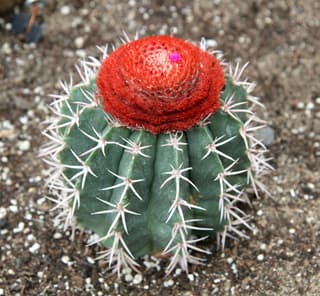
Turk's Cap Cactus
Melocactus zehntneri
Melocactus zehntneri, commonly known as Turk's Cap Cactus, is a globose cactus native to the Caatinga biome of northeastern Brazil. Its most distinctive feature is the cephalium — a cylindrical structure of white bristles and wool that develops at the apex of the plant only at maturity, from which small pink flowers and red fruits emerge. It is perfectly adapted to the harsh conditions of one of Brazil's most arid ecosystems.
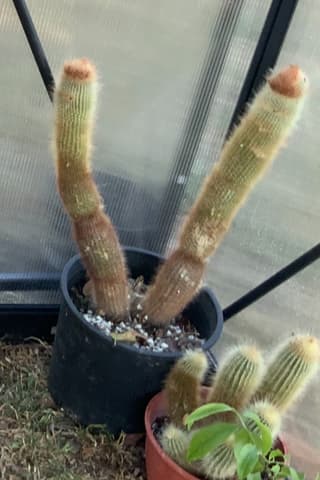
Micranthocereus
Micranthocereus
Micranthocereus is a genus of columnar cacti endemic to Brazil, with about ten species distributed mainly throughout Bahia and Minas Gerais, in Caatinga environments, rocky fields (campos rupestres), and quartzite rock outcrops. The stems are erect, branched at the base, and covered by low ribs and woolly areoles from which white to brown spines emerge. A woolly cephalium—a whitish fuzzy structure from which flowers bloom—forms at the top of older stems. The flowers are tubular, usually white, sometimes yellowish or pinkish, opening at night and pollinated by bats and moths, followed by globose and fleshy fruits. It is a hardy plant, adapted to long periods of drought, intense light, and poor, well-drained soils, making it highly sought after by cactus collectors for its sculptural form and resilience.
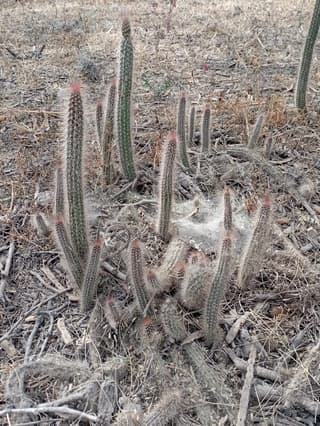
Snake Cactus, Junco, Queen of the Night
Nyctocereus serpentinus
Nyctocereus serpentinus is a night-blooming climbing cactus native to southern Mexico (Michoacán, Morelos, Oaxaca), belonging to the Cactaceae family. The plant features long, sinuous, spiny stems (up to 3 meters) that initially grow upright but sprawl horizontally without support. It is highly prized for its spectacular large white, funnel-shaped flowers measuring up to 15 cm in diameter that open at night with an intense, seductive fragrance. These nocturnal blooms attract pollinators including moths, bats, and bees. The plant produces edible fruits that change from green to bright red, ripening primarily from August to October. Widely cultivated in warm climates for its ornamental value and aromatic night-blooming flowers, this species combines functional beauty with practical food production.
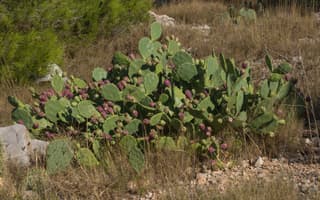
Erect Prickly Pear
Opuntia stricta
Opuntia stricta is an upright to spreading succulent shrub from the Cactaceae family, native to tropical and subtropical America including Florida, Cuba, and eastern Mexico. Typically 50-100 cm tall but can reach 2 m in height. The plant bears flat, paddle-shaped stems (cladodes) 10-35 cm long covered in sharp spines and microscopic barbed glochids. It produces bright yellow flowers in spring and summer, followed by edible red or purple fruits. Now classified as one of the 100 worst invasive species globally, it has spread throughout Africa, Australia, Mediterranean regions, and Asia.
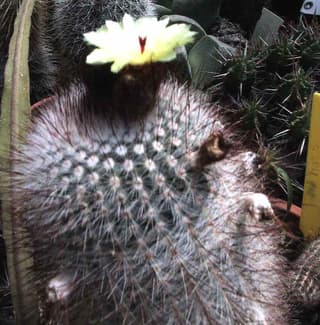
Silver Ball Cactus
Parodia scopa
Parodia scopa, commonly known as the silver ball cactus, is a globular to cylindrical cactus native to the uplands of southern Brazil and Uruguay. Its spherical body is densely covered in fine white to silvery spines that give it a shimmering, satin-like appearance. In late spring and summer, it produces bright pale-yellow flowers at the crown.

Red Mistletoe Cactus
Pseudorhipsalis ramulosa
Pseudorhipsalis ramulosa, known as the Red Mistletoe Cactus, is an epiphytic cactus native to the humid rainforests of Central and South America, where it grows clinging to tree trunks and rocks. Its flat, ribbon-like stems cascade downwards and can reach several feet in length, taking on shades ranging from deep green to ruby red when exposed to brighter light. In summer, it produces small greenish-white flowers followed by white or reddish berries, making it a highly prized ornamental plant for hanging baskets.
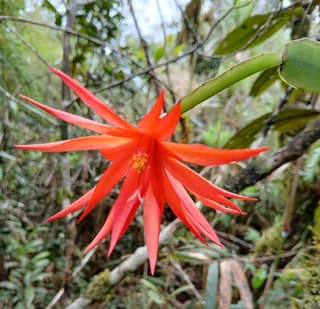
Easter Cactus
Rhipsalidopsis gaertneri
The Easter Cactus (Rhipsalidopsis gaertneri) is an epiphytic cactus native to the Atlantic Forest of Brazil, particularly Paraná and Santa Catarina states. Unlike desert cacti, it thrives in humid conditions with indirect light, producing stunning star-shaped flowers in shades of red, pink, and white during spring.
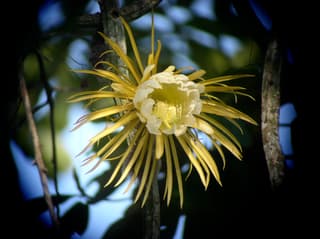
Night-Blooming Cereus
Selenicereus grandiflorus
Selenicereus grandiflorus is a climbing, epiphytic cactus native to Mexico, Central America, and the Caribbean, prized for its enormous, intensely fragrant white flowers that bloom for only one night each year. Its long, sprawling, ribbed stems climb trees and rocks using aerial roots, and by dusk on a single summer evening the plant unfurls a spectacular blossom up to 30 cm wide before it withers by morning.

Yellow Dragon Fruit
Selenicereus megalanthus
Selenicereus megalanthus (synonym Hylocereus megalanthus) is a climbing, epiphytic cactus in the family Cactaceae, native to Andean forests of Colombia, Ecuador, Peru and Bolivia. It has three-angled green stems with short spines that climb trees or supports and put out aerial roots. At night it opens some of the largest flowers of any cactus, white and fragrant, up to 38 cm long. The fruit has a yellow, spiny skin whose spines fall off as it ripens, and sweet, translucent white flesh with edible black seeds.
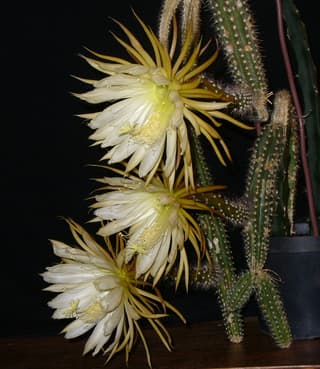
Moonlight Cactus
Selenicereus validus
The Moonlight Cactus (Selenicereus validus) is an epiphytic cactus native to Mexico and Central America, celebrated for its long, pendant cylindrical stems and spectacular nocturnal white and yellow flowers. It belongs to the family Cactaceae and thrives in tropical and subtropical forests, climbing trees and rocky outcrops.
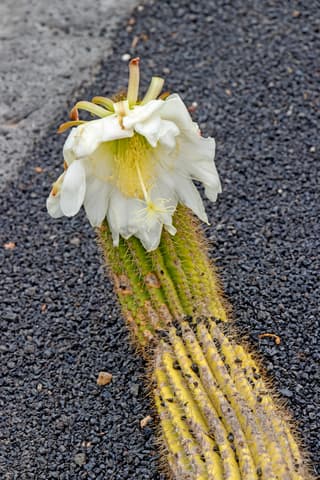
Golden Torch Cactus
Soehrensia spachiana
Soehrensia spachiana, formerly known as Echinopsis spachiana, is a columnar cactus that branches from the base and can reach up to 2 meters in height. It is famous for its spectacular, large white flowers that bloom at night. Its stems are lime green with well-defined ribs and golden-yellow spines that turn gray with age. It is a highly valued species in xeriscaping due to its hardiness and shrubby growth habit.
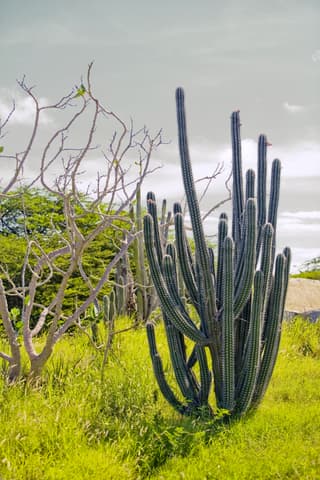
Mexican Organ Pipe Cactus
Stenocereus griseus
Stenocereus griseus, commonly known as the Mexican Organ Pipe Cactus or Dagger Cactus, is a tall columnar cactus native to Mexico and the Caribbean. It can grow up to 9 meters tall, producing white nocturnal flowers pollinated by bats and edible red fruits prized across the Caribbean. Extremely drought-tolerant, it thrives in arid landscapes and desert gardens.

Pasacana
Trichocereus pasacana
Pasacana is a giant Andean cactus from northern Argentina and Bolivia, growing between 2,000 and 4,000 m. It looks a lot like a saguaro, with a thick trunk up to 80 cm across and arms that reach upward. It grows very slowly to about 10 m and can live for more than 300 years. The rose-white flowers are 10 to 14 cm long, open in the evening and last 18 to 40 hours.
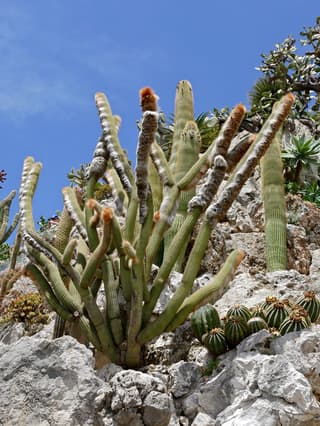
Red Fox Tail Cactus
Vatricania guentheri
Vatricania guentheri is a columnar cactus native to eastern Bolivia. Today it is officially known as Espostoa guentheri; Vatricania guentheri, Cereus guentheri, and Cephalocereus guentheri are older names for the same species. In the wild, it grows exclusively in the Río Grande valley (Chuquisaca and Santa Cruz), on slopes in seasonally dry forests between 800 and 1,300 m elevation. The light green columns reach heights of 2 to 3 m and are about 10 cm thick, featuring approximately 27 ribs and 15 to 25 straw-yellow spines per areole; it branches from the base as it matures. Its most striking feature is the lateral cephalium: a strip of reddish-brown wool with bristles and long spines, up to 50 cm long, on one side of the stem. From this cephalium, tubular yellowish to whitish flowers about 8 cm long emerge in early summer. The round, scaly fruits are edible but have a bland or unusual taste. It is a distinct species from Espostoa lanata, the well-known woolly 'Old Man Cactus' from Peru.
Medium Care Succulents
Our selection of 53 medium succulents combines the characteristics of this category with moderate care needs. Ideal for those with basic experience.
Why Choose Medium Succulents?
Combining the beauty of succulents with medium difficulty level lets you enjoy this category with a balanced care commitment. Each plant was selected to offer the best characteristics of the category at the care level you are looking for.