Salicaceae
Pussy Willow (Salix discolor): The Complete Care Guide
Salix discolor
Pussy Willow prefers full sun and consistently moist to wet soil. It is a low-maintenance shrub that grows vigorously and benefits from periodic hard pruning to keep it compact and productive. Avoid dry soils and ensure regular watering during dry periods.
Every 5 days
Direct sun
-40° - 35°C
40% - 70%
Categories
What is Pussy Willow?
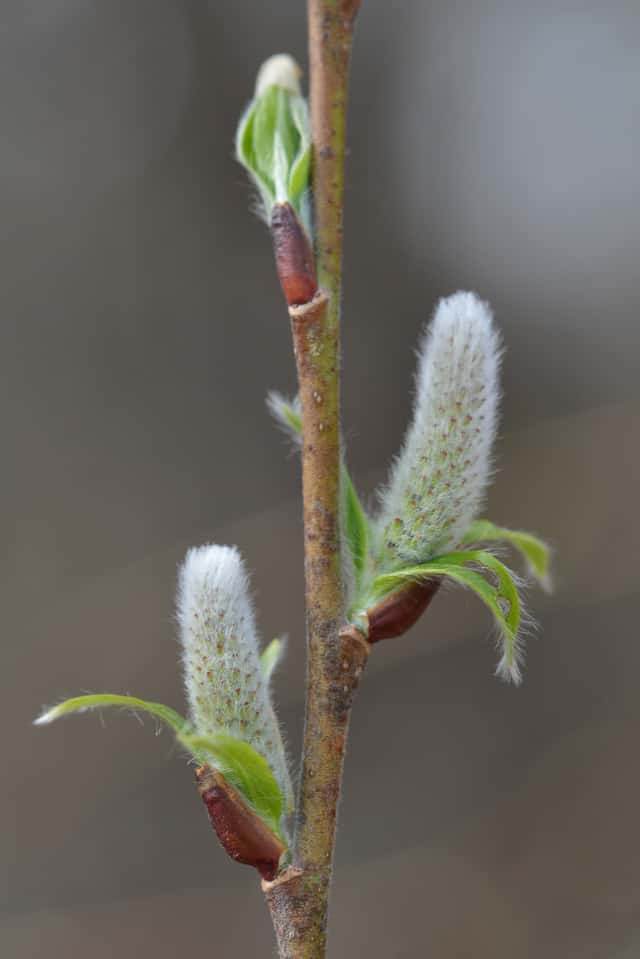
Pussy Willow (Salix discolor) is a medium-care plant from the Salicaceae family. Salix discolor, commonly known as Pussy Willow, is a fast-growing deciduous shrub or small tree native to North America. Celebrated for its silky, pearl-gray catkins that emerge in late winter before the leaves, it is one of the first plants to signal the arrival of spring. It thrives in moist to we...
Pussy Willow grows up to 4.5m, spread of 360cm, watering every 5 days, -40°C – 35°C, 40–70% humidity. It is not suitable for indoor environments and safe for pets.
Unlike many popular species, Pussy Willow is safe to keep around pets.
How to Care for Pussy Willow?
TLDR: Pussy Willow needs Direct sun, watering every 5 days, and temperatures between -40-35°C with 40-70% humidity.
How Often Should You Water Pussy Willow?
Water deeply and regularly, especially during the establishment phase and dry spells. Pussy Willow loves moisture and tolerates wet soils, making it ideal for low-lying or riparian areas. Do not let the soil dry out completely.
How Much Light Does Pussy Willow Need?
Plant in full sun (at least 6 hours of direct sunlight daily) for the best catkin production. It tolerates partial shade but may produce fewer catkins and become leggy with insufficient light.
What Is the Best Soil for Pussy Willow?
Thrives in moist, loamy to clay soils. Tolerates wet, poorly drained conditions and a wide pH range (5.5–7.5). Avoid dry or sandy soils. Excellent for rain gardens and streamside planting.
What Pot Should You Use for Pussy Willow?
Ceramic, wooden planters, or large containers with drainage holes; best suited for outdoor garden beds along streams or wet areas
What Is Pussy Willow and Where Does It Come From?
Salix discolor, commonly known as Pussy Willow, is a fast-growing deciduous shrub or small tree native to North America. Celebrated for its silky, pearl-gray catkins that emerge in late winter before the leaves, it is one of the first plants to signal the arrival of spring. It thrives in moist to wet soils and is ideal for rain gardens, stream banks, and wildlife habitats.
How to Propagate Pussy Willow?
Stem Cutting
Pussy willow roots very easily. Change water weekly if rooting in water. Use rooting hormone to speed up the process.
- 1 Take a 15–20 cm cutting from a healthy stem in late spring or early summer
- 2 Remove lower leaves, keeping 2–3 leaves at the top
- 3 Place the cutting in moist potting soil or a glass of water
- 4 Keep in a warm, bright spot out of direct sun until roots develop
- 5 Transplant to the garden once rooted
Materials needed:
How Big Does Pussy Willow Grow?
TLDR: Pussy Willow can reach up to 4.5m tall with Fast growth rate.
Max height
4.5m
Spread
3.6m
Growth rate
Fast
Foliage
Deciduous
Plant Uses
Ornamental
Great for decoration
Is your plant showing symptoms?
Click on the symptom to discover possible causes:
What Diseases Commonly Affect Pussy Willow?
TLDR: Pussy Willow is susceptible to 7 known diseases. Monitor regularly for early detection.
Aphids
Aphids are small, soft-bodied, pear-shaped insects (1/16 to 1/8 inch long) that feed by sucking nutrient-rich sap from plants. They reproduce rapidly and can quickly weaken plants, causing distorted growth and transmitting plant viruses. Aphids come in various colors including green, black, red, yellow, brown, and gray. They secrete honeydew, a sticky substance that attracts ants and encourages sooty mold growth.
Scale Insects
Scale insects are small sap-sucking pests that appear as brown, shell-like bumps on plant stems and leaves. There are over 25 species, divided into armored (hard) and unarmored (soft) scales. They feed by piercing plant tissue and extracting sap, which weakens the plant and can lead to yellowing, stunted growth, and even death if left untreated. They also excrete honeydew, which attracts ants and promotes sooty mold growth.
Caterpillars
Caterpillars are the larval stage of moths and butterflies that feed voraciously on plant foliage, stems, flowers, and fruits. Common species include cabbage loopers, tomato hornworms, armyworms, and cutworms. These pests can cause extensive damage by consuming large amounts of plant tissue in a short time. They vary in size from small (1/4 inch) to large (5 inches), with colors ranging from green to brown, often featuring stripes or spots. Caterpillars are highly mobile and can quickly spread throughout gardens, making them one of the most destructive common pests.
Leaf Spot
Leaf spot is a common fungal disease caused by various pathogens including Alternaria, Ascochyta, Colletotrichum, Septoria, and Venturia. It primarily affects leaves, causing discolored spots that can lead to premature leaf drop if left untreated.
Meaning & Symbolism
The pussy willow is a symbol of spring, hope, and the renewal of life. Its catkins, emerging while snow may still be on the ground, are cherished as one of the earliest heralds of warmer days ahead.
Fun Facts
Pussy Willow catkins are produced on male plants; female plants bear smaller, greener catkins
The catkins provide one of the earliest sources of pollen and nectar for bees in late winter
Native Americans used Salix discolor for making baskets, rope, and traditional tools
Pussy Willow branches are widely used in floral arrangements and are often forced indoors in late winter to bloom early
Frequently asked questions
How often should I water Pussy Willow?
Does Pussy Willow need full sun?
Is Pussy Willow toxic to pets?
When should I prune Pussy Willow?
Can Pussy Willow be grown in a pot?
Compare with similar plants
| Attribute | Difficulty | Light | Watering | Pet Safe |
|---|---|---|---|---|
| Dark Fieldcap | Medium | Low light | 2d | ⚠️ |
| Azalea | Medium | Partial shade | 3d | ⚠️ |
| Muriel's Bamboo | Medium | Partial shade | 3d | ✓ |
| Bougainvillea | Medium | Direct sun | 7d | ⚠️ |




