Chemical Burn: Environmental Stress | How to Fix
Chemical burn (phytotoxicity) occurs when plants are damaged by misapplication or misuse of pesticides, herbicides, fertilizers, or other chemicals. Environmental conditions like high temperatures, humidity, and plant stress increase vulnerability. Unlike diseases, chemical damage is not contagious but can severely harm or kill plants if not addressed promptly.
Fast
21 days
What is Chemical Burn?
Chemical Burn is a environmental condition with high severity that affects plants. Chemical burn (phytotoxicity) occurs when plants are damaged by misapplication or misuse of pesticides, herbicides, fertilizers, or other chemicals. Environmental conditions like high temperatures, humidity, and plant stress increase vulnerability. Unlike diseases, chemical damage is not contagious...
Chemical Burn is a environmental disease with high severity that spreads at a fast rate. Recovery typically takes approximately 21 days with proper treatment. It affects 10 plant species in our database.
Unlike infectious diseases, Chemical Burn is caused by environmental conditions. Without correcting the environment, symptoms return even after treatment. Not recommended to ignore early signs. Without early intervention, recovery can take twice as long. Unlike many common diseases, Chemical Burn is not contagious between plants.
🔍 What Are the Symptoms of Chemical Burn?
TLDR: Chemical Burn presents 7 main symptoms. Early identification is crucial for effective treatment.
Main Symptoms
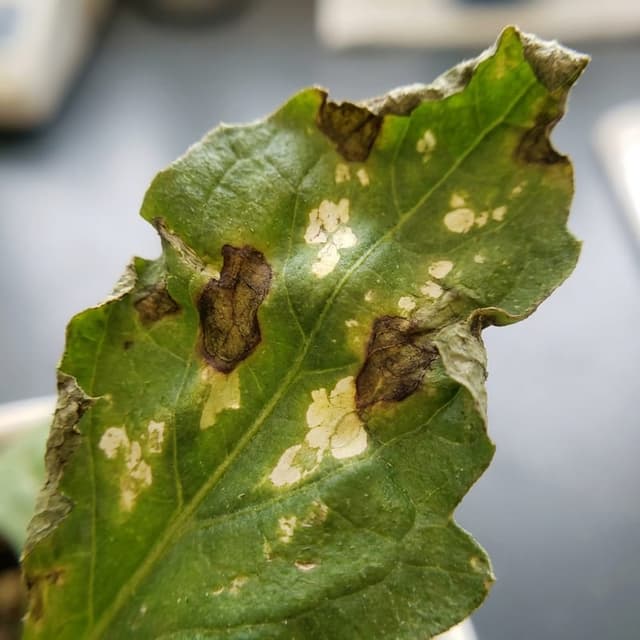
- ! Leaf spots, blotches, or irregular discolored areas
- ! Browning or yellowing of leaf margins and tips
- ! Scorched or burned appearance on foliage
- ! Distortion or curling of new leaves
- ! Chlorosis (yellowing) from herbicide exposure
- ! Wilting despite adequate watering
- ! Defoliation in severe cases
Visual Signs
❓ What Causes Chemical Burn in Plants?
- → Misapplication of pesticides or herbicides
- → Over-fertilization or fertilizer contact with foliage
- → Pesticide drift from nearby applications
- → Applying chemicals in high temperatures or humidity
- → Using chemicals on stressed, drought-affected, or diseased plants
- → Incorrect spray concentration or mixing
- → Application during vulnerable growth stages
💊 How to Treat Chemical Burn?
TLDR: Treat Chemical Burn with 11 days of quick treatment or 21 days of organic treatment. Full recovery takes approximately 21 days.
Quick Fixes
~11 days
Step 1
Immediately flush entire plant with water for 5-10 minutes to wash off chemical residue
Step 2
Remove all severely burned, wilted, or blackened leaves and stems
Step 3
Water soil thoroughly to begin leaching process
Step 4
Apply chelated micronutrient foliar spray to address deficiencies quickly
Step 5
Use root stimulator product according to package directions
Step 6
Apply anti-transpirant spray to reduce water loss from damaged foliage
Step 7
Relocate to optimal light conditions and stable temperature
Step 8
Check daily; repeat micronutrient spray every 5-7 days until recovery
Materials needed:
Organic Treatment
~21 days
Step 1
Immediately rinse all plant surfaces with clean water for 5-10 minutes to remove chemical residue
Step 2
Carefully prune away severely damaged, brown, or dead leaves to redirect energy to healthy tissue
Step 3
Water soil deeply (but avoid waterlogging) to help flush chemicals from root zone
Step 4
Apply organic seaweed extract spray (diluted per instructions) to foliage every 3-4 days
Step 5
Spray leaves with diluted fish emulsion (half-strength) weekly to provide micro-nutrients
Step 6
Add 2-3 inches of organic mulch around base to retain moisture and protect roots
Step 7
Move plant to filtered light or provide shade cloth if outdoors to reduce stress
Step 8
Monitor daily for signs of new growth; continue supportive care for 3 weeks
Materials needed:
Expert Treatment
~32 days
Step 1
Immediately wash all plant surfaces with water; if herbicide exposure, use mild soap solution then rinse thoroughly
Step 2
Assess damage severity: remove dead tissue but leave any green or partially green leaves
Step 3
Perform soil test to determine if chemicals have altered pH or nutrient balance
Step 4
Apply activated charcoal to soil if herbicide contamination is suspected
Step 5
Deep water to leach chemicals; for potted plants, flush with 2-3x pot volume of water
Step 6
Begin foliar feeding program: alternate between seaweed extract and chelated micronutrients every 3-4 days
Step 7
Apply mycorrhizal inoculant to root zone to improve nutrient uptake and stress tolerance
Step 8
Use systemic plant recovery product if tissue damage is extensive
Step 9
Monitor environmental conditions: maintain 60-75% humidity, moderate temperatures, and appropriate light
Step 10
Document recovery with photos; adjust treatment based on plant response after 10 days
Step 11
Continue intensive care for 3-4 weeks, then transition to normal maintenance
Step by Step
- 1
Stop chemical application immediately
- 2
Thoroughly wash foliage with water to dilute and remove residue
- 3
Remove severely damaged or dead leaves
- 4
Water deeply to leach chemicals from soil
- 5
Apply recovery supplements (seaweed extract, micronutrients)
- 6
Provide optimal care: proper light, water, and stable environment
- 7
Monitor daily for new growth and recovery signs
- 8
Avoid additional stressors during recovery period
🧪 Natural vs Chemical: Which Treatment Works for Chemical Burn?
🌱 Natural Solutions
- ✓ Immediately flush foliage with water if chemical exposure is suspected
- ✓ Apply seaweed extract or diluted fish emulsion to support recovery
- ✓ Spray with compost tea to provide beneficial microorganisms
- ✓ Mulch around plant base to retain moisture and stabilize roots
- ✓ Provide gentle shade to reduce additional stress during recovery
💉 Chemical Solutions
- ✓ Apply systemic plant recovery products if available
- ✓ Use chelated micronutrient sprays to address nutrient deficiencies
- ✓ Apply root stimulator products to encourage new root growth
- ✓ Use anti-transpirant sprays to reduce water loss from damaged leaves
Treatment Comparison
| Type | Estimated time | Steps | Difficulty | Best For |
|---|---|---|---|---|
| ⚡Quick | ~11 days | 8 | Advanced | Urgent cases |
| 🌿Organic | ~21 days | 8 | Advanced | Indoor plants |
| 🔬Expert | ~32 days | 11 | Advanced | Severe infections |
🛡️ How to Prevent Chemical Burn?
TLDR: Prevent Chemical Burn with 7 essential care practices. Regular monitoring is key for early detection.
- ✓ Always follow pesticide label instructions carefully
- ✓ Avoid applying chemicals in extreme heat, cold, or high humidity
- ✓ Test chemicals on a small area before full application
- ✓ Ensure plants are well-watered before chemical application
- ✓ Apply chemicals in calm weather to prevent drift
- ✓ Use proper protective equipment and application techniques
- ✓ Monitor plant health and environmental conditions regularly
🔗Related Diseases
Severe Defoliation
HighThis condition involves a sudden and massive loss of leaves caused by adverse environmental factors. The plant sheds its foliage in an attempt to survive extreme stress, such as abrupt temperature changes, improper watering, or transplant shock. If the underlying cause is not addressed, the plant may completely wither and die.
Severe Defoliation and Dormancy
HighThis condition is triggered by extreme environmental stress, such as sudden temperature fluctuations, insufficient light, or improper watering. In an effort to survive, the plant sheds its leaves and enters a dormant state to conserve energy.
Leaf Drop (Environmental Stress)
MediumLeaf drop occurs when a plant undergoes sudden environmental changes, such as insufficient light, excessive wind, or temperature fluctuations. It is not a fungal disease, but rather a physical response to stress.
Physical Leaf Damage
LowThis is not an infectious disease, but rather the result of external mechanical or environmental factors. It occurs due to rough handling, strong winds, hail, or pets. Leaves exhibit tears, cuts, or frayed edges, but the rest of the plant typically remains healthy and green.