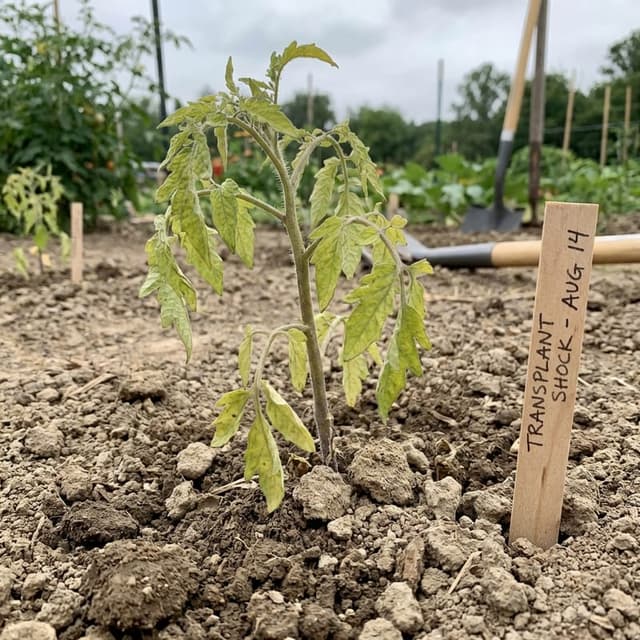
Transplant Shock: Environmental Stress | How to Fix
Transplant shock is a stress response that occurs when plants are abruptly moved from one environment to another. This environmental condition affects plants during repotting, moving between indoor/outdoor locations, or transplanting from nursery pots to gardens. Root damage during the move is the primary cause, making it nearly impossible to completely avoid some degree of stress.
Medium
14 days
What is Transplant Shock?
Transplant Shock is a environmental condition with moderate severity that affects plants. Transplant shock is a stress response that occurs when plants are abruptly moved from one environment to another. This environmental condition affects plants during repotting, moving between indoor/outdoor locations, or transplanting from nursery pots to gardens. Root damage during the move is the p...
Transplant Shock is a environmental disease with moderate severity that spreads at a moderate rate. Recovery typically takes approximately 14 days with proper treatment. It affects 10 plant species in our database.
Unlike infectious diseases, Transplant Shock is caused by environmental conditions. Without correcting the environment, symptoms return even after treatment. Unlike many common diseases, Transplant Shock is not contagious between plants.
🔍 What Are the Symptoms of Transplant Shock?
TLDR: Transplant Shock presents 6 main symptoms. Early identification is crucial for effective treatment.
Main Symptoms
- ! Wilting even when soil is moist
- ! Leaf drop or premature shedding
- ! Stunted or halted growth
- ! Leaf discoloration (yellowing or bronzing)
- ! Leaf scorch with brown, dried margins
- ! Drooping stems or overall plant wilting
Visual Signs
❓ What Causes Transplant Shock in Plants?
- → Root damage during transplanting
- → Environmental changes (light, temperature, humidity)
- → Water stress (both overwatering and underwatering)
- → Disturbance of root system
- → Transplanting during extreme weather
- → Moving plant to incompatible soil conditions
💊 How to Treat Transplant Shock?
TLDR: Treat Transplant Shock with 7 days of quick treatment or 14 days of organic treatment. Full recovery takes approximately 14 days.
Quick Fixes
~7 days
Step 1
Immediately water plant thoroughly until water drains from bottom
Step 2
Move to location with bright indirect light or create temporary shade
Step 3
Apply commercial root stimulator or vitamin B1 solution according to package directions
Step 4
Remove any severely damaged or wilted leaves with clean pruners
Step 5
Mist leaves lightly to increase humidity around plant
Step 6
Keep soil consistently moist for first 3-5 days
Step 7
Apply sugar water solution (1 teaspoon per gallon) on day 3
Step 8
Reduce watering frequency after 5 days but maintain moisture
Step 9
Watch for signs of recovery - reduced wilting, no new leaf drop
Materials needed:
Organic Treatment
~14 days
Step 1
Water thoroughly but ensure good drainage - soil should be moist, not soggy
Step 2
Apply diluted seaweed extract (1 tablespoon per gallon) to the soil around the base
Step 3
Create temporary shade using shade cloth or move to bright indirect light location
Step 4
Apply 2-3 inch layer of organic mulch (bark, compost) around plant base, avoiding stem
Step 5
Prune any severely wilted, yellowed, or dead leaves to reduce plant stress
Step 6
Monitor soil moisture daily - water when top inch feels dry
Step 7
After 1 week, apply diluted sugar water solution (1 teaspoon per gallon) to support recovery
Step 8
Continue seaweed extract applications weekly for 3-4 weeks
Step 9
Watch for new growth as sign of recovery - be patient, this can take 2-6 weeks
Materials needed:
Expert Treatment
~21 days
Step 1
Assess root damage severity and overall plant health status
Step 2
Water thoroughly with room temperature water containing root stimulator (follow product ratio)
Step 3
Implement strategic shade protocol: 70% shade first 3 days, 50% shade days 4-7, then gradual sun exposure
Step 4
Prune damaged foliage strategically - remove no more than 20-30% of leaves to balance transpiration with photosynthesis needs
Step 5
Apply professional-grade seaweed extract + vitamin B1 combination (1 tbsp seaweed + 1 tsp B1 per gallon)
Step 6
Create optimal microclimate: increase humidity to 60-70% through misting or humidity tray
Step 7
Apply 2-3 inch organic mulch layer maintaining 2-inch clearance from stem to regulate soil temperature
Step 8
Monitor soil moisture with finger test twice daily - maintain consistent moisture without waterlogging
Step 9
Day 3: Apply sugar solution (1 tsp/gallon) to provide readily available energy for stressed roots
Step 10
Week 2: Apply diluted seaweed foliar spray (half strength) in early morning
Step 11
Week 3: If recovery progressing, begin very light fertilization (1/4 strength balanced fertilizer)
Step 12
Week 4: Assess recovery - new growth indicates success; adjust care back to species-normal routine gradually
Step 13
Continue monitoring for 6-8 weeks total as some plants take months to fully recover
Step by Step
- 1
Keep soil consistently moist (not waterlogged) for the first 2 weeks
- 2
Provide temporary shade or move to bright indirect light
- 3
Prune any severely wilted or damaged foliage
- 4
Apply diluted root stimulator or seaweed extract weekly
- 5
Avoid fertilizing until plant shows new growth
- 6
Monitor daily and adjust watering as needed
- 7
Be patient - recovery can take 1-8 weeks depending on plant size
🧪 Natural vs Chemical: Which Treatment Works for Transplant Shock?
🌱 Natural Solutions
- ✓ Apply diluted seaweed extract to support root recovery
- ✓ Use sugar water solution (1 tsp per gallon) to aid recovery
- ✓ Apply organic mulch around base to conserve moisture
- ✓ Provide temporary shade cloth protection
- ✓ Maintain consistent soil moisture without overwatering
💉 Chemical Solutions
- ✓ Apply commercial root stimulator with growth hormones
- ✓ Use vitamin B1 (thiamine) solution to reduce stress
- ✓ Apply transplant fertilizer with phosphorus for root development
Treatment Comparison
| Type | Estimated time | Steps | Difficulty | Best For |
|---|---|---|---|---|
| ⚡Quick | ~7 days | 9 | Advanced | Urgent cases |
| 🌿Organic | ~14 days | 9 | Advanced | Indoor plants |
| 🔬Expert | ~21 days | 13 | Advanced | Severe infections |
🛡️ How to Prevent Transplant Shock?
TLDR: Prevent Transplant Shock with 7 essential care practices. Regular monitoring is key for early detection.
- ✓ Disturb roots as minimally as possible during transplant
- ✓ Bring as much of the root ball as possible when moving
- ✓ Choose appropriate location matching plant needs before transplanting
- ✓ Prepare soil with organic matter beforehand
- ✓ Avoid transplanting during extreme heat or cold
- ✓ Water thoroughly before and after transplanting
- ✓ Transplant during cooler parts of the day (morning or evening)
🔗Related Diseases
Severe Defoliation
HighThis condition involves a sudden and massive loss of leaves caused by adverse environmental factors. The plant sheds its foliage in an attempt to survive extreme stress, such as abrupt temperature changes, improper watering, or transplant shock. If the underlying cause is not addressed, the plant may completely wither and die.
Severe Defoliation and Dormancy
HighThis condition is triggered by extreme environmental stress, such as sudden temperature fluctuations, insufficient light, or improper watering. In an effort to survive, the plant sheds its leaves and enters a dormant state to conserve energy.
Leaf Drop (Environmental Stress)
MediumLeaf drop occurs when a plant undergoes sudden environmental changes, such as insufficient light, excessive wind, or temperature fluctuations. It is not a fungal disease, but rather a physical response to stress.
Physical Leaf Damage
LowThis is not an infectious disease, but rather the result of external mechanical or environmental factors. It occurs due to rough handling, strong winds, hail, or pets. Leaves exhibit tears, cuts, or frayed edges, but the rest of the plant typically remains healthy and green.