Can Avocado Trees Tolerate Cold? Winter, Pot, and Frost Care
Avocado trees tolerate little cold. Young saplings suffer damage between −1 and −4 °C depending on the race, and only mature Mexican-race trees reach −8 °C. Learn how to protect the plant from frost, when to bring the pot indoors, and what to do after a cold night.
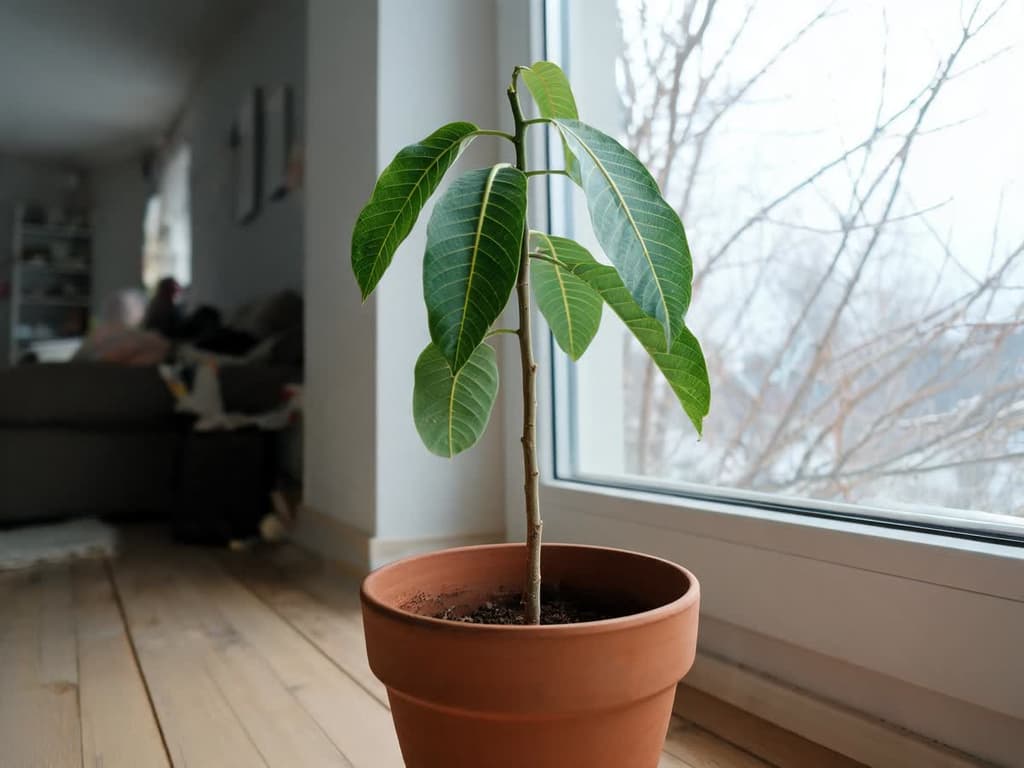
Avocado trees tolerate little cold, and how much they tolerate depends on the race (the group of varieties) and the age of the plant. Young saplings suffer damage, with burned leaves and stems, between −1 and −4 °C. Mature trees of the most hardy race, the Mexican race, reach −8 °C. The numbers come from the University of Florida (UF/IFAS), which separates the three avocado races.
Across much of Brazil, winter rarely reaches −1 °C, and the avocado tree spends the season outdoors without special care. The risk lies in regions with frost, such as the South and the high-elevation areas of the Southeast, and saplings in their first few years are the ones that suffer. Where winter brings weeks of continuous frost, such as in Central Europe, the avocado tree survives only in a pot, indoors.
Quick summary:
Young avocado saplings suffer damage at temperatures as mild as −1 to −2 °C in the West Indian race, the most sensitive to cold.
An avocado tree grown from seed does not replicate the variety of the fruit you ate. Because you do not know its race, plan for the threshold of the most sensitive race.
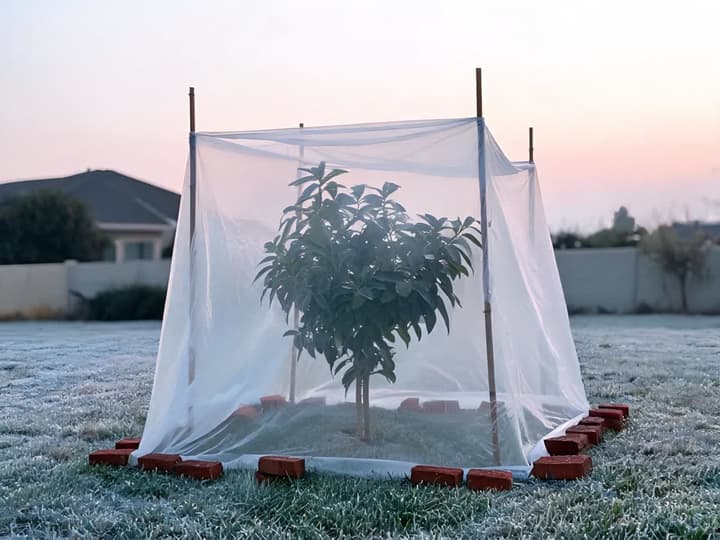
On nights with a frost forecast, bring the pot inside. A sapling in the ground should be covered down to the soil, using fabric that does not touch the leaves.
Avocado trees brought indoors usually lose leaves in the first few weeks. Strong light and more humid air reduce leaf drop.
How much cold avocado trees tolerate, race by race
Avocado (Persea americana) has three races, meaning three groups of varieties with different origins and climates. The West Indian race comes from hot lowlands. The Guatemalan and Mexican races come from the mountains, where nights are cold. The UF/IFAS table shows the temperature at which each race begins to suffer damage.
Race | Cold hardiness | Young sapling | Mature tree |
|---|---|---|---|
West Indian | low | −2 to −1 °C | −4 to −1 °C |
Guatemalan | medium to high | −3 to −2 °C | −4 to −2 °C |
Mexican | high | −4 to −3 °C | −8 to −3 °C |
Within each range, damage begins at some point between the two values, depending on the variety. When in doubt, count on the value closest to zero.
Hybrids fall between the two races that formed them. UF/IFAS notes that cold response also changes with tree health, growth stage, and care. NC State Extension (North Carolina State University) agrees on the order. According to it, the Mexican race is the most cold-hardy, and the West Indian race is "strictly tropical."
A 1998 circular from Embrapa Roraima gives similar numbers: −2 °C for the West Indian race, −4 °C for the Mexican race, and −6 °C for the Guatemalan race. The order between Guatemalan and Mexican is reversed. This guide follows UF/IFAS because its table separates saplings and mature trees, and the order matches NC State.
Seed-grown trees: use the limit of the most sensitive race
A tree that grows from a seed does not replicate the fruit's variety. UF/IFAS explains that most avocado varieties "do not come true from seed." Because of this, nurseries propagate avocado trees through grafting, which involves joining a scion from the chosen variety onto a young rootstock.
In practice, anyone who planted a pit does not know their own plant's race. The Hass avocado, for example, belongs to a Guatemalan variety, according to Embrapa. But the flower that produced that pit may have received pollen from another tree of a different race. Protect your seed-grown avocado tree as if it were West Indian: starting at −1 °C, it can already suffer damage.
A seed-grown tree also takes a long time to bear fruit, if it bears fruit at all. UF/IFAS estimates 4 to 10 years before the first flower and fruit, compared to 3 to 4 years for a grafted tree. For an avocado tree grown indoors, NC State is blunt: it "will not produce fruit."
Where avocado trees need care during Brazilian winters
Across much of Brazil, winter temperatures rarely drop to the −1 °C mark where saplings begin to suffer. There, the tree stays outdoors year-round. Check your city's low temperature on the weather forecast. For an in-ground tree established for a few years, winter requires only two changes: water less and stop fertilizing when temperatures drop.
Care begins in areas with frost: in the South, in the mountain ranges of the Southeast, and in other high-elevation areas. There, saplings in their first few years are vulnerable, as are potted avocado trees on patios. Pots lose heat through the sides and cool down faster than ground soil, according to UF/IFAS.
On clear, calm nights, leaves lose heat to the sky and become colder than the surrounding air, UF/IFAS explains. Because of this, leaves can freeze even when the thermometer reads above freezing.
How to protect an avocado tree on a frosty night
Start protection in the afternoon on days when the forecast calls for frost. The steps below come from the UF/IFAS cold-protection guide.
Water the soil in the early afternoon. Water until the ground is moist, without creating puddles. Moist soil holds more heat from the sun and releases that heat at night. Do not keep the soil soggy for days in a row, because roots will rot.
Cover the sapling all the way to the ground. Use frost cloth, a sheet, or an old blanket. Prop the fabric on stakes so it does not touch the leaves, and weigh down the hem with stones or bricks.
For small saplings, use a cardboard box. Place the box over the plant and secure it with a weight so the wind does not blow it away.
If you used plastic, remove or open the cover in the morning. In the sun, the air inside plastic heats up excessively.
Group pots together. Pots grouped side by side, with dry leaves or straw packed around them, lose less heat through their sides. If you have room inside, bring the pot indoors just for that night. After the frost passes, separate the pots again.
Protect the trunk of grafted trees. The graft union is the visible seam near the base of the trunk. Wrap the trunk with frost cloth or mound 30 to 60 cm of soil around the base. If the canopy (the upper leafy part) suffers frost damage, the tree will sprout again above the graft, retaining the correct variety. Remove the wrap or the mounded soil once the frost season ends.
UF/IFAS advises against running lawn sprinklers during a frost. Commercial growers protect crops with water, but home systems lack sufficient volume, and ice buildup breaks branches while saturating the roots.
Potted avocado trees: when to bring them inside and where to put them
Where winters bring weeks of continuous frost, potted avocado trees spend the season indoors. No research has established an exact temperature threshold for bringing avocado trees inside. Move the pot indoors before the first night with a frost forecast. For tropical potted plants in general, the University of Illinois Extension brings them inside once night temperatures drop below 13 °C.
Before moving it inside, Illinois Extension recommends a transition period of about 1 week: shift the pot into increasingly shaded spots. The plant adjusts to weaker indoor light and drops fewer leaves.
Indoors, place the avocado tree by the brightest window. In Brazil, that is the north-facing window, followed by the west-facing window. NC State recommends full sun for avocado trees, which means 6 hours or more of direct sun per day. If no window comes close to that, supplement the light with a grow light.
No research has measured the ideal room temperature for overwintering potted avocado trees. German-language gardening retailers and websites recommend between 7 and 20 °C and contradict one another. The safest choice is a bright room kept above 10 °C and away from heaters.
When cold weather passes, reverse the transition. Keep the pot in bright shade for about 1 week before exposing it to direct sun, because indoor-grown foliage scorches under intense sunlight.
Why avocado trees drop leaves when brought indoors
Leaf drop during the first few weeks indoors is common and does not indicate disease on its own. Illinois Extension explains that plants typically yellow and drop leaves when moved from outdoors to indoors. More light and higher humidity reduce leaf drop, and the plant adjusts to its new spot over time.
Be suspicious when leaves drop and the soil remains wet to the touch several days after watering. In that case, the likely problem is the roots, and the most common causes are in avocado tree losing leaves.
For outdoor avocado trees, leaf drop in late winter can be normal. Embrapa notes that some varieties shed their leaves before flowering.
Watering and fertilizing avocado trees in winter
Avocado trees grow less in cold weather and use less water. Indoors, let the top layer of soil dry out between waterings. Illinois Extension suggests a simple check: if the pot feels light when lifted, it is time to water. Empty the drip tray after each watering.
Waterlogged soil during cold weather promotes root rot. Embrapa identifies the fungus Phytophthora cinnamomi, which destroys avocado roots in wet, poorly drained soil. Pots require drainage holes at the bottom and well-draining soil.
Stop fertilizing when temperatures drop, and resume once new growth emerges. UF/IFAS explains why: late-fall fertilizer stimulates tender new growth, and young shoots are the most susceptible to cold damage.
After frost: how to tell if a branch is dead
Brown, drooping leaves the morning after a frost do not mean the avocado tree has died. Frost-damaged leaves darken, soften, and eventually dry out, but the branch itself may still be alive. If the pot stayed outdoors, move it to a frost-free spot before the next cold night.
To check whether a branch survived, gently scratch the bark with a fingernail. UF/IFAS provides the color guide: green tissue underneath means it is alive; brown or black means dead. Test several spots, working from the branch tip back toward the trunk.
Do not prune the avocado tree immediately after a frost. Wait until new growth appears, which will reveal where the wood is still alive. Then cut each dead branch just below the damaged section. Burned leaves help insulate the rest of the canopy while cold weather persists. Water the soil after a frost, as plants lose moisture during the sunny days that follow.
Darkened leaves after a cold night may stem from frost, but they can also indicate fungal infection or waterlogged roots. Bloom (available for iOS) diagnoses plant diseases from a leaf photo with its Premium plan.
Frequently asked questions
Can avocado trees stay outside in the winter?
Yes, where the temperature does not reach the limit for its race. In much of Brazil, the avocado tree stays outdoors year-round. In frost-prone regions, the sapling and the pot need cover or shelter on cold nights. In Central Europe and other places with weeks of frost, it only survives in a pot indoors.
Do potted avocado trees produce fruit?
Rarely. According to UF/IFAS, seed-grown avocado trees take 4 to 10 years to flower and bear fruit. Grafted trees start producing in 3 to 4 years. NC State notes that avocado trees grown indoors do not produce fruit. Grow potted avocados for their foliage and do not plan on a harvest.
I planted a seed in the ground. Should I leave the sapling outside in winter or bring it indoors?
That depends on winter conditions in your region. If temperatures reach −1 °C on only a few nights, the sapling can stay outdoors with protection on those nights. Where cold persists below −1 °C for weeks, move the sapling into a pot before the first frost and bring it inside.
Which avocado tree is the most cold-hardy?
Varieties of the Mexican race. According to the UF/IFAS table, mature Mexican trees suffer damage only between −3 and −8 °C, compared to −1 to −4 °C for West Indian trees. Mexican-Guatemalan hybrids also tolerate more cold than West Indian-Guatemalan hybrids. In young saplings, the difference between the most sensitive and most cold-hardy races is only 2 °C.
Do "cold-hardy" avocado varieties survive winters with hard frost?
No, if the frost is severe and lasts for weeks. UF/IFAS lists Mexicola, Brogdon, and other Mexican varieties as the hardiest, and they tolerate temperatures around −6 °C. Saplings of these varieties already suffer damage between −3 and −4 °C. In a winter colder than −6 °C, even the most cold-hardy variety needs a container and shelter.
Related articles

How to Care for Hibiscus: Sun, Watering, Fertilizer, and Pruning for Flowers
How to care for hibiscus: 6 hours of direct sun, evenly moist soil without waterlogging, half-strength fertilizer in spring and summer, and pruning in early spring. Find out why the flower lasts one day and why buds drop before opening.

Do Ferns Like Sun or Shade? It Depends on the Type
Ferns prefer bright shade: plenty of light, but no direct sun on their fronds. Tuberous sword fern is the exception that handles sun. Here is the ideal light for each type, where to place pots, and how fronds show too much or too little light.

African Violet Yellow Leaves: Causes and What to Do
Yellow leaves on an African violet usually stem from overwatering, and the first place to check is the center of the plant. Losing one lower leaf at a time is normal. Identify whether age, watering, cold water, sunlight, cold drafts, or fertilizer is the culprit based on the yellowing pattern, and see what to do today.