Can Yucca Survive the Cold? Winter Care for Spanish Dagger and Spineless Yucca
Garden yucca, Spanish dagger (Yucca gloriosa), can handle about −18 °C in garden beds. Potted spineless yucca must come indoors below 10 °C. Learn how to tell them apart, protect each from frost and soggy soil, and handle a soft trunk.
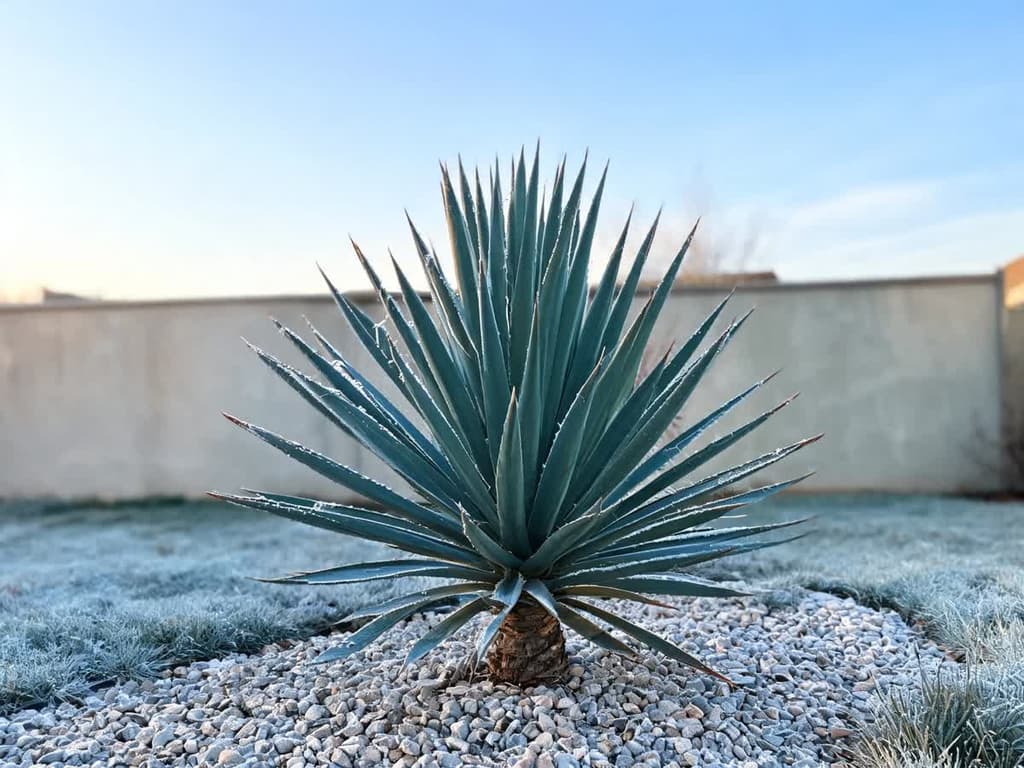
Whether yucca can handle the cold depends on the species. Spanish dagger (Yucca gloriosa), the outdoor garden yucca with stiff leaves and sharp tips, tolerates about −18 °C in a garden bed. That number comes from NC State Extension, the extension service of North Carolina State University. Potted spineless yucca (Yucca gigantea, formerly called Yucca elephantipes) is tropical. It must come indoors when the temperature drops below 10 °C.
In Brazil, frost in the South and in the highlands does not reach the limit for Spanish dagger. The cold record in Santa Catarina is −14 °C. In Brazil, the remaining risk for this yucca is waterlogged soil, and sources call for well-draining soil. Potted yucca suffers from the cold: NC State warns that cold and frost cause damage and dieback of parts of this plant.
Quick summary:
Spanish dagger (Yucca gloriosa): an established plant stays in the garden bed all winter, while a first-winter sapling gets a frost blanket on freezing nights. NC State indicates cold tolerance down to about −18 °C, and the University of Florida factsheet extends to about −23 °C.
Potted yucca (Yucca gigantea): moves indoors below 10 °C and sits near your brightest window.
In winter, Spanish dagger planted in the ground needs no watering. In pots, any yucca only receives water when the top 5 cm of soil dries out completely.
A soft trunk that smells foul indicates rot. Cold damage shows up as brown or black leaves. The firm upper section can still be propagated as a cutting.
Which yucca do you have: Spanish dagger or spineless yucca?
The leaf tip separates the two. On Spanish dagger, the leaf is rigid, blue-green, and ends in a spine that can pierce your finger. On spineless yucca, the leaf is glossy green, softer, and the tip does not prick. NC State notes that Yucca gigantea, unlike other yucca species, lacks a terminal spine on its leaf tips.
Yucca | Leaf tip and edge | Growth habit | Cold tolerance | Where it lives |
|---|---|---|---|---|
Spanish dagger (Yucca gloriosa) | sharp terminal spine, smooth margins | rosette (leaves radiating from a central point) atop a trunk, growing up to 4.9 m over the years | around −18 °C (NC State) | garden beds, outdoor pots |
Spineless yucca (Yucca gigantea) | soft tip, no spine | thick, rough trunk with foliage crowns high up | moves indoors below 10 °C | indoors |
Yucca filamentosa | sharp tip, curled white threads along margins | low clumping mound (stemless cluster close to the ground), no trunk | around −34 °C (NC State) | garden beds |
Yucca filamentosa appears in the table because it is also an outdoor garden yucca that shares the same type of garden bed, according to NC State. Filamentosa differs from Spanish dagger at first glance by the curled white threads along its leaf edges. If your plant tag is missing, Bloom (available for iOS) identifies the species directly from a photo of the plant.
Spineless yucca is sold in European garden centers as "Yucca-Palme". Yucca is not a palm tree: it belongs to the Asparagaceae family, the same botanical family as edible asparagus, according to NC State.
Yucca or agave: how to tell them apart in the garden bed
The leaf margins tell the difference. Century plant (Agave americana) features spines lining its entire margin, while Spanish dagger has smooth edges with a spine only at the very tip. Agave leaves are also much thicker and fleshier. NC State also points out that after flowering, the main agave plant dies, leaving behind basal offsets.
Their cold tolerance also differs. NC State lists Agave americana down to zone 8a, around −12 °C. Spanish dagger handles zone 7a, around −18 °C.
How much cold can Spanish dagger tolerate?
Spanish dagger tolerates about −18 °C planted in the ground, based on the most cautious figure between the two university extensions that publish a plant profile for it. NC State Extension lists Yucca gloriosa starting from hardiness zone 7a. The hardiness zone is a band on the United States climate map. Each zone is defined by the lowest temperature that typically occurs in winter. In zone 7a, that minimum falls between −18 °C and −15 °C.
UF/IFAS, from the University of Florida, indicates a colder zone. Its factsheet starts at zone 6, where winter reaches about −23 °C. The plant is the same, and both sources carry equal weight. This article follows the −18 °C from NC State, the more cautious figure of the two extensions. The RHS, the British horticultural society, classifies Spanish dagger as hardy and potted yucca as tender.
The entry for Spanish dagger in Bloom lists −12 °C, the most cautious figure of all. This article relies on university extensions that publish the specific hardiness zones behind their numbers. On German gardening websites, ratings for the same plant range from −15 °C to −30 °C, though none cite where the measurement originates. All of these numbers assume sharp drainage: in waterlogged soil, the plant can rot before surviving any of those temperatures.
Yucca in Brazilian winter: where frost hits
In Brazil, winter runs from June to August, and frost is most common in the South and in the high-elevation areas of the Southeast. In Santa Catarina, survey data from Epagri, the state's agricultural research agency, with measurements dating back to 1942, record the record low of −14 °C in Caçador, in June 1952. São Joaquim, in the Santa Catarina highlands, holds the state's second lowest mark, −10 °C, in August 1991. The numbers were published by NSC Total.
Both records stay above the −18 °C threshold from NC State. A mature Spanish dagger planted in fast-draining soil tolerates Santa Catarina's record low without protection. A young plant in its first winter is the exception: none of the sources tested the limit of young plants. For safety, cover newly planted young yuccas on nights with forecasted frost. Use a blanket that reaches down to the ground and does not touch the leaves.
Spineless yucca has a different tolerance. Wherever winter nights fall below 10 °C, it spends the season indoors.
Waterlogged soil in winter: the risk thermometers do not capture
The minimum temperature rating for Spanish dagger only applies to fast-draining soil. All three institutional sources emphasize this requirement. NC State notes the plant needs well-drained soil, preferably sandy. UF/IFAS instructs to water sparingly, "if at all": the plant frequently thrives without supplemental irrigation. The RHS calls for "any well-drained soil". The profile for Spanish dagger in Bloom explains why: the plant cannot tolerate wet feet. Drainage prevents crown rot at the base of the rosette where the foliage emerges.
The UF/IFAS cold protection guide records that soil waterlogged for too long damages the roots of most plants. Three German gardening shops repeat that water in winter kills outdoor garden yucca more than frost does. None of the extension services consulted compared the two risks, but all condition cold tolerance on dry, drained soil. Since no one has measured which risk weighs more, the safest option is draining soil and no watering in winter.
In garden beds, Spanish dagger requires three simple precautions:
Plant Spanish dagger in sandy soil where rainwater does not pool.
In dense clay that retains water, mix in coarse sand or gravel before planting, or choose an elevated spot on the property.
In winter, do not water in-ground plants. Natural rainfall is sufficient.
Root rot from overwatering turns lower foliage yellow and mushy:
Spanish dagger in containers during winter
In pots, root systems are far more vulnerable to cold than in garden soil. UF/IFAS reports that cold damage to potted plant roots is common and often only becomes visible once warm weather arrives. For containers left outside in winter, the same source suggests grouping pots together before frost sets in. Also apply a layer of organic mulch, such as dried leaves or bark, over the potting mix.
For potting mix, the RHS recommends blending in 20% to 30% grit or gravel by volume. Do not fertilize during winter. Only water once the top 5 cm of soil dries completely, adding water until it drains from the bottom hole. Empty the saucer immediately after every watering and following heavy rain.
On nights with forecasted frost, UF/IFAS recommends covering containers with a blanket, sheet, or heavy fabric anchored to the ground with stones. The fabric should not press directly against foliage. Plastic covers only work if propped away from leaves and removed promptly on sunny mornings.
Spineless yucca (Yucca gigantea) in winter: when to bring it indoors
Bring potted yucca indoors when the temperature drops below 10 °C. The instruction comes from NC State, which warns that cold and frost cause damage and dieback. The RHS adds that in winter, when the plant stops growing, it tolerates night minimums of 7 °C. This article follows NC State's 10 °C, the safer threshold. The RHS's 7 °C applies only to a dormant plant in winter, indoors.
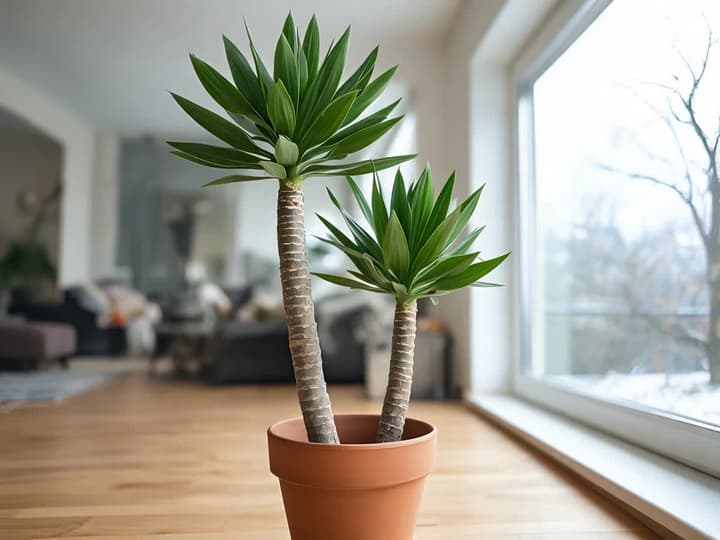
Indoors, potted yucca needs the brightest spot. For winter, the RHS recommends the window that receives the most sun. In Brazil, that is the north-facing window. Keep the pot near the brightest window, with the window closed on cold nights. NC State recommends keeping the plant away from cold drafts and sudden temperature changes.
Watering follows the same schedule as outdoor potted specimens. Let the top 5 cm of soil dry out entirely, then water until moisture runs out the drainage hole. Because cold rooms slow soil evaporation, the interval between waterings naturally lengthens.
On spineless yucca, cold damage appears first on foliage:
Soft trunk after frost: can you save the yucca?
You can save the upper section if it remains firm. Cold-damaged foliage turns brown or black starting from the margins and tips. Soft, yellow lower leaves indicate overwatering, according to the RHS. A squishy stem paired with a foul odor in the potting mix means rot has penetrated the trunk.
For potted spineless yucca, the RHS instructs unpotting the plant and trimming away any rotted roots. Repot into fresh mix using a container only slightly larger than the surviving root ball (the root mass holding soil). Water only after the top 5 cm of soil dries out. The RHS also notes that healthy top sections can serve as cuttings. If the lower trunk goes soft, cut cleanly through the firm wood above the decay. Take a 20 to 25 cm section measured from the growing tip to root as a new cutting.
The RHS recommends taking cuttings in spring. Plant into a gritty, sandy potting mix in bright, indirect light, maintaining bottom heat of at least 18 °C. For Spanish dagger, the simplest propagation method is harvesting basal suckers. In spring, sever the sucker flush against the parent plant, let the cut surface dry for two days, and plant.
After the frost: what to do with damaged foliage
Avoid cutting away cold-scorched leaves immediately after frost hits. The UF/IFAS guide points out that damaged foliage continues to shield the rest of the plant from subsequent cold snaps. Wait until fresh green growth emerges from the center of the rosette. The RHS advises removing dead foliage in spring.
Frequently Asked Questions
Which yucca can survive frost?
Spanish dagger (Yucca gloriosa) and Yucca filamentosa withstand frost outdoors in garden beds. NC State rates Spanish dagger down to about −18 °C and filamentosa down to roughly −34 °C. Potted spineless yucca (Yucca gigantea) cannot handle frost and needs to come indoors whenever temperatures dip below 10 °C.
Can spineless yucca stay outside in winter?
Only where night temperatures never fall below 10 °C. That is NC State's threshold for bringing Yucca gigantea inside, as cold and frost cause severe tissue damage and plant death. Where winter nights drop under 10 °C, keep potted yucca indoors near your sunniest window.
I have a spiky yucca in my garden bed. Will it survive the winter or do I need to wrap it?
If its leaves are stiff and end in a needle-sharp spine, it is almost certainly an outdoor garden yucca. Mature specimens stay outside uncovered. Spanish dagger tolerates about −18 °C, which is colder than any record low recorded in Santa Catarina. It only requires dry winter conditions and soil where water does not puddle at the base.
Do you need to water Spanish dagger in winter?
In the ground, no. UF/IFAS recommends watering Spanish dagger sparingly, "if at all", and ambient rainfall is plenty in winter. In containers, water only when the top 5 cm of potting mix dries out, soaking until water drains freely from the pot base. Empty the saucer immediately.
Will Spanish dagger freeze? Is it better to just dig it up?
Cold is no reason to dig up Spanish dagger in Brazil. It tolerates about −18 °C, and Santa Catarina's record low is −14 °C. The sharp leaf tip, near where children play, is a real reason to move the plant.
Related articles

How to Care for Hibiscus: Sun, Watering, Fertilizer, and Pruning for Flowers
How to care for hibiscus: 6 hours of direct sun, evenly moist soil without waterlogging, half-strength fertilizer in spring and summer, and pruning in early spring. Find out why the flower lasts one day and why buds drop before opening.

Do Ferns Like Sun or Shade? It Depends on the Type
Ferns prefer bright shade: plenty of light, but no direct sun on their fronds. Tuberous sword fern is the exception that handles sun. Here is the ideal light for each type, where to place pots, and how fronds show too much or too little light.

African Violet Yellow Leaves: Causes and What to Do
Yellow leaves on an African violet usually stem from overwatering, and the first place to check is the center of the plant. Losing one lower leaf at a time is normal. Identify whether age, watering, cold water, sunlight, cold drafts, or fertilizer is the culprit based on the yellowing pattern, and see what to do today.