Can Dahlias Tolerate Cold? Dahlia Care in Winter
Dahlias cannot tolerate frost: foliage dies near 0 °C and tubers suffer below −4 °C or in cold, soggy soil. Find out if yours need lifting in winter, how to store tubers, and when to replant.
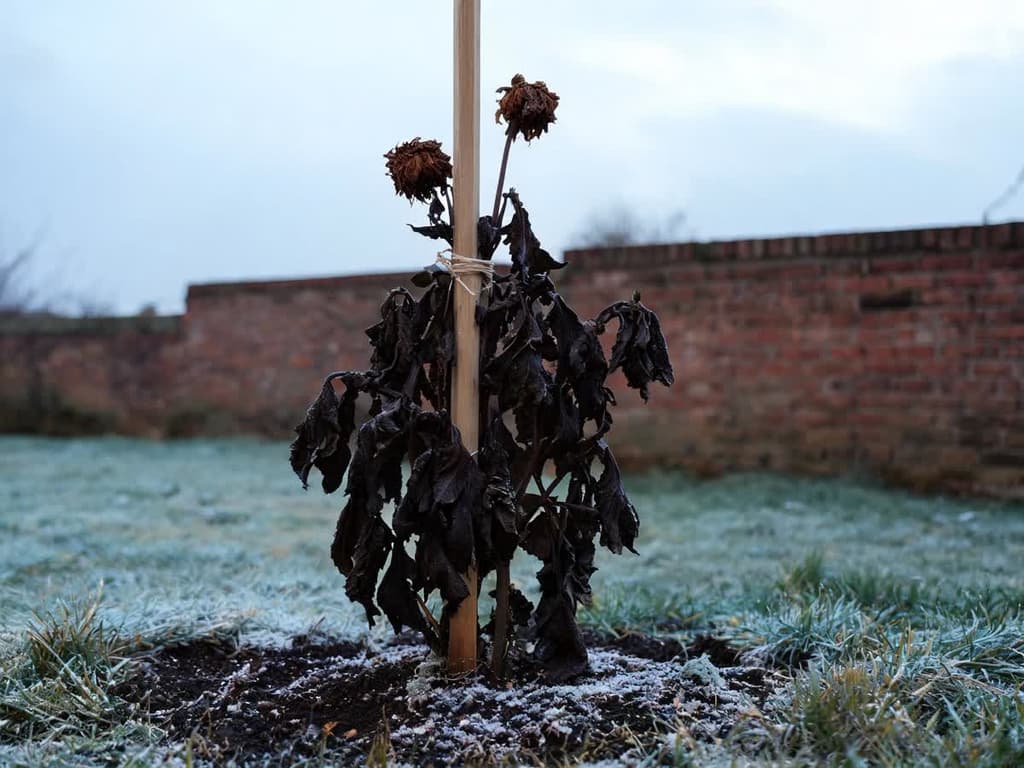
Dahlias handle cold, but not frost: they are not hardy plants (those that spend the winter outdoors where it freezes). The foliage and buds die near 0 °C. The data comes from a field study from the Federal University of Santa Maria (UFSM) in Rio Grande do Sul. The tuber is the thick root that stores the plant's reserves underground. It suffers damage below about −4 °C, according to NC State Extension, and rots in cold, waterlogged soil.
Where frost is heavy or the soil becomes waterlogged in winter, lift the tuber from the ground when the foliage darkens. Then dry it, store it in a cool, dry place, and replant in spring. In Brazil, heavy frost is concentrated in the southern highlands. Outside this region, lift the tuber only if the soil becomes waterlogged in winter. Where it does not freeze and the soil drains well, the tuber can stay in the garden bed. October, in Brazil, is spring and the time to plant dahlias.
Quick summary:
Dahlia leaves and flower buds die near 0 °C; the tuber suffers damage below about −4 °C.
Dig up the dahlia where frost is severe and frequent or where the soil stays waterlogged in winter.
Leave the tuber in the flowerbed where frost is light or absent and the soil drains well.
Store the dry tuber in the dark in a cool spot that never reaches 0 °C, and check it once a month.
In Brazil, plant dahlias in spring after the last frost: September and October in the South.
What temperatures dahlias can handle
Dahlias handle cold above 0 °C without damage. Near 0 °C, dahlia leaves, buds, and flowers suffer irreversible damage. The underground tuber withstands down to about −4 °C and dies when ground freezing reaches a depth of 15 cm.
Botanically, the dahlia tuber is a tuberous root: a thick root that stores water and nutrient reserves for the plant. This reserve is what allows the dahlia to sprout again in spring after its top growth dies back.
Dahlia part | What happens | Source |
|---|---|---|
Leaves, buds, and flowers | Irreversible damage near 0 °C (lows of 0.1 °C and 0.2 °C on two consecutive days) | UFSM, Ornamental Horticulture, 2025 |
Tuber | Damage below −4 °C (25 °F) | NC State Extension |
Tuber in the flowerbed | Destroyed when soil freezing reaches 15 cm (6 inches) deep | WSU Extension, 2018 |
How many nights the cold lasts also determines the damage. In the UFSM study, two consecutive nights near 0 °C damaged dahlias in Santa Maria and Jaguari. In Esteio, a single night at 0.5 °C caused no visible damage.
Compare the forecast's minimum temperature with these numbers and count how many nights in a row the cold lasts. Frost burns the foliage. The tuber dies only when the cold penetrates the soil down to it, as the Washington State University (WSU) Extension explains.
Dahlias in winter in Brazil: digging up or leaving in the ground
The decision depends on two questions: does hard frost reach your bed? Does the soil stay waterlogged in winter? In Brazil, winter runs from June to August, and hard frost concentrates in the southern highlands. In much of the Southeast, Central-West, and Northeast, it never arrives.
Your winter conditions | What to do with dahlias |
|---|---|
Heavy and frequent frost, or soil that stays waterlogged | Lift the tuber from the ground when frost blackens the foliage or by mid-May in Brazil, whichever comes first, and store it until spring. |
Light frost and well-draining soil | Leave in the bed, with stems cut flush and dry mulch on top |
No frost and well-draining soil | Leave in the flowerbed year-round |
No frost, but waterlogged soil | Dig it up or move the bed to a well-draining location |
Where frost is rare, the winter risk to the tuber is standing water. The Royal Horticultural Society (RHS), the British horticultural society, only accepts leaving dahlias in the ground in mild, sheltered spots with good drainage. WSU gives the same warning: dahlias stay in the flowerbed only if water does not reach the tuber and rot it.
How to leave dahlias in the bed over winter
Dahlias spend winter in the flowerbed with three care steps, taken from WSU and the RHS:
Cut the stem flush with the ground after the foliage dies back. The dahlia stem is hollow and carries rainwater to the tuber. Because of this, WSU instructs cutting off any hollow portion that remains.
Cover the bed with a dry layer of straw, dry leaves, or compost. The RHS calls for at least 5 cm (2 inches). WSU suggests plastic sheeting under the mulch so winter rain does not waterlog the soil.
Remove the mulch in early spring (September, in Brazil), after the last frost in your area has passed.
Where it does not freeze, dahlias stay in the bed without mulch. After a few years in the same spot, the tubers become crowded in the clump, which is the cluster of tubers attached to the same stem. According to WSU, stems grow weak and flowers remain small. When this happens, lift the clump in spring and divide the tubers.
How to dig up dahlias in autumn
Dig dahlias out of the ground when the first frost blackens the foliage or by mid-May, whichever comes first. The deadline comes from WSU: mid-November in the northern hemisphere, meaning mid-May in Brazil. It also applies where the soil becomes waterlogged without frost.
Cut stems back to 15 cm (6 inches) from the ground. The RHS cuts lower, to 5 cm. This guide follows WSU, because 15 cm leaves a larger handle to hold the clump when digging.
Wait one week before digging. During this week, the eyes become more visible, according to WSU. The eyes are the points where the new sprout emerges, at the base of the old stem.
Dig with a garden fork about 30 cm (1 foot) away from the stem, on all four sides. Lift the clump gently: the "neck," the narrow link between the tuber and the stem, snaps easily.
Remove soil by hand, without washing. NC State advises against washing the tuber, while WSU washes it with a hose. This guide follows NC State, because the RHS also calls for the tuber to be thoroughly dry before storage.
Dry the clump upside down for a few weeks in a cool, covered spot. The RHS recommends this position so water drains out from inside the hollow stem.
Write the variety name on a label or directly on the tuber, with a permanent marker.
Where to store dahlia tubers until spring
Store dahlia tubers in a dark, dry, ventilated, and cool spot that never reaches 0 °C. The sources do not give the exact same temperature range:
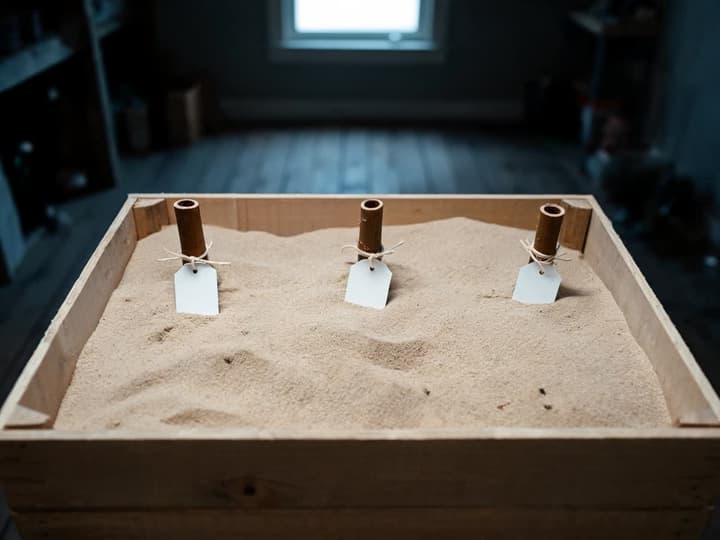
NC State calls for 2 °C to 7 °C (35 °F to 45 °F), with the tuber buried in vermiculite (a lightweight mineral sold in garden centers) or dry sand;
WSU accepts 4 °C to 16 °C (40 °F to 60 °F);
the RHS calls for a cool but frost-free spot, with a minimum of 4 °C at night, and the tuber kept in a box with dry sand.
The range where all three agree is 4 °C to 7 °C. This guide recommends that range. If no space in your home stays that cold in winter, choose the coolest spot that receives neither sun nor moisture. Above 7 °C, only WSU gives an upper limit (up to 16 °C), noting that tubers shrivel when kept too warm. In a spot warmer than 7 °C, inspect the tuber every month.
Use a cardboard or wooden box, never a sealed plastic bag. The RHS points out that stored tubers rot when they become damp and lack air.
Shriveled or rotted tubers: how to tell them apart and what to do
Open the box once a month and squeeze each tuber, following WSU instructions. Shriveled tubers and rotten tubers require opposite care.
Shriveled tuber: the skin wrinkles and the tuber shrinks, but it does not become soft. WSU explains that tubers shrivel when the storage spot is too warm. During your monthly check, lightly mist water over the shriveled tuber and move the box to a cooler corner.
Rotten tuber: the tuber feels soft when squeezed. Remove that tuber from the box right away, as directed by WSU, to prevent rot from spreading to the others.
Tubers damaged during digging rot most often in storage, according to the RHS: dig without slicing or bruising them. In spring, when dividing the clump, discard any piece without an eye, since it will not sprout (WSU instruction).
Root rot, caused by fungi, also attacks dahlias in the flowerbed. The disease guide shows the signs and treatment:
Potted dahlias in winter
Potted dahlias can spend the winter inside the pot itself, without removing the tuber from the soil. The German gardening guide Plantura directs cutting the plant back to 10 cm and moving the pot to a cool, frost-free place. None of the university extensions among the sources of this guide cover pots, so use the same range as stored tubers, from 4 °C to 7 °C.
Keep the potting soil almost dry until spring. The German dahlia nursery Joradahl waters the stored pot only once a month, with little water, so the tuber does not dry out completely.
Move the pot to the coolest spot in the house that does not drop to 0 °C, strictly during the months when the dahlia has no leaves. During the growing season, dahlias require sunlight: NC State calls for full sun to partial shade.
Blackened or soft leaves after the cold: is the dahlia dead?
Blackened foliage after frost means the top growth of the dahlia has died, which is normal. The RHS uses this blackened foliage as the signal that it is time to lift the tubers from the ground. If the soil did not freeze down to the tuber, it remains alive and will sprout again in spring.
The UFSM study described cold damage in dahlias. Leaves curl, wilt, and develop dark, dry patches (necrosis), flower buds rot, and open flowers dry up. The UFSM study does not describe soft leaves after cold rain. To be safe, cut away soft foliage and inspect the tuber using the test below.
To tell if the dahlia tuber survived, dig by hand next to the stem and squeeze a tuber. If firm, it is alive: cut away the dead foliage and follow the row in the table that matches your frost and soil conditions. If mushy, it has rotted: separate it from the rest and check the signs of dahlia rot to inspect neighboring tubers.
Outside cold weather, leaves wilt from other causes, such as underwatering or sick roots: check the page on dahlias with wilting leaves. The Bloom app (available for iOS) matches photos of your dahlia against disease symptoms, and photo diagnosis is included in the Premium plan.
When to plant dahlias again in Brazil
Plant the dahlia again after the final frost in your region, as WSU advises. In southern Brazil, plant in September and October, after the final frost. Where it does not freeze, also plant in spring.
Anyone who stored tubers can get earlier blooms. Plant the tuber in a pot about 6 weeks before the outdoor planting date, as WSU does. Keep the pot in a location above 15 °C (60 °F), keeping the soil merely moist. Transplant the start into the garden bed after the final frost.
Planting dates determine whether blooming collides with the cold. The UFSM field trials monitored dahlias outdoors from January to July in Rio Grande do Sul, and frost damaged plants still in leaf and bloom. The authors recommend adjusting the planting date to bypass frost.
Amaryllis also stores its reserves underground in a bulb, and amaryllis winter dormancy changes watering and pot placement. In southern beds, chrysanthemums in winter call for different care: hardy garden mums remain in the ground with old stems standing.
Frequently asked questions
Are there dahlias that survive winters with frost?
There is no proven frost-hardy dahlia variety: no source in this guide lists one that withstands frozen soil. The UFSM study tested five cut dahlia varieties (grown for flower sales), and all suffered damage near 0 °C. The authors recommend choosing more cold-tolerant varieties, without naming any, and protecting the bed with a plastic low tunnel or row cover.
Are dahlias toxic to dogs and cats?
Yes, but mildly. The ASPCA, an American animal welfare organization, lists dahlias as toxic to dogs, cats, and horses. Signs are mild: an upset stomach and intestines, and mild skin irritation. If your animal ate a tuber or leaf, call the vet.
Do I need to divide dahlia clumps when digging them up?
Do not divide the clump right when you lift it. Divide in spring when the eyes become visible, as WSU does. Every division needs at least one eye at the base of the old stem. Cut with a sharp knife and let the cut dry overnight before planting.
Can I plant dahlias in autumn, in March or April?
In Brazil, March and April are autumn, and dahlias planted in these months reach winter still in leaf. Where there is frost, the flower and the bud die near 0 °C, as the UFSM study showed. The authors recommend adjusting the planting date to escape the frost. Plant in spring, after the last frost.
Dahlia winter care: next steps
Dahlias cannot tolerate frost: the leaves die near 0 °C. Tubers are damaged below about −4 °C or in cold, waterlogged soil. Where frost is heavy or the soil becomes waterlogged, lift the tuber from the ground in late fall and store it dry and cool. Where the soil drains, dahlias stay in the bed. In October, in Brazil, it is time to plant the tuber in a sunny bed that drains well.
Sources
Fernandes, M. E. S. et al. Damage by frost and lower lethal temperature in field-grown cut dahlia. Ornamental Horticulture, v. 31, 2025 (UFSM).
NC State Extension. Dahlia. North Carolina Extension Gardener Plant Toolbox.
Wolfe, K. Overwintering Dahlias. Washington State University Extension, Oct. 12, 2018.
Royal Horticultural Society. Overwintering tender plants: lifting or mulching.
ASPCA. Dahlia. Toxic and Non-toxic Plants.
Related articles
How to Care for Hibiscus: Sun, Watering, Fertilizer, and Pruning for Flowers
How to care for hibiscus: 6 hours of direct sun, evenly moist soil without waterlogging, half-strength fertilizer in spring and summer, and pruning in early spring. Find out why the flower lasts one day and why buds drop before opening.

Do Ferns Like Sun or Shade? It Depends on the Type
Ferns prefer bright shade: plenty of light, but no direct sun on their fronds. Tuberous sword fern is the exception that handles sun. Here is the ideal light for each type, where to place pots, and how fronds show too much or too little light.

African Violet Yellow Leaves: Causes and What to Do
Yellow leaves on an African violet usually stem from overwatering, and the first place to check is the center of the plant. Losing one lower leaf at a time is normal. Identify whether age, watering, cold water, sunlight, cold drafts, or fertilizer is the culprit based on the yellowing pattern, and see what to do today.