Can amaryllis handle cold? Amaryllis winter care
Amaryllis cannot handle frost and is damaged below 1.7 °C (35 °F). See where to keep the pot in winter at each bulb stage, when to bring it inside and what to do after the cold.
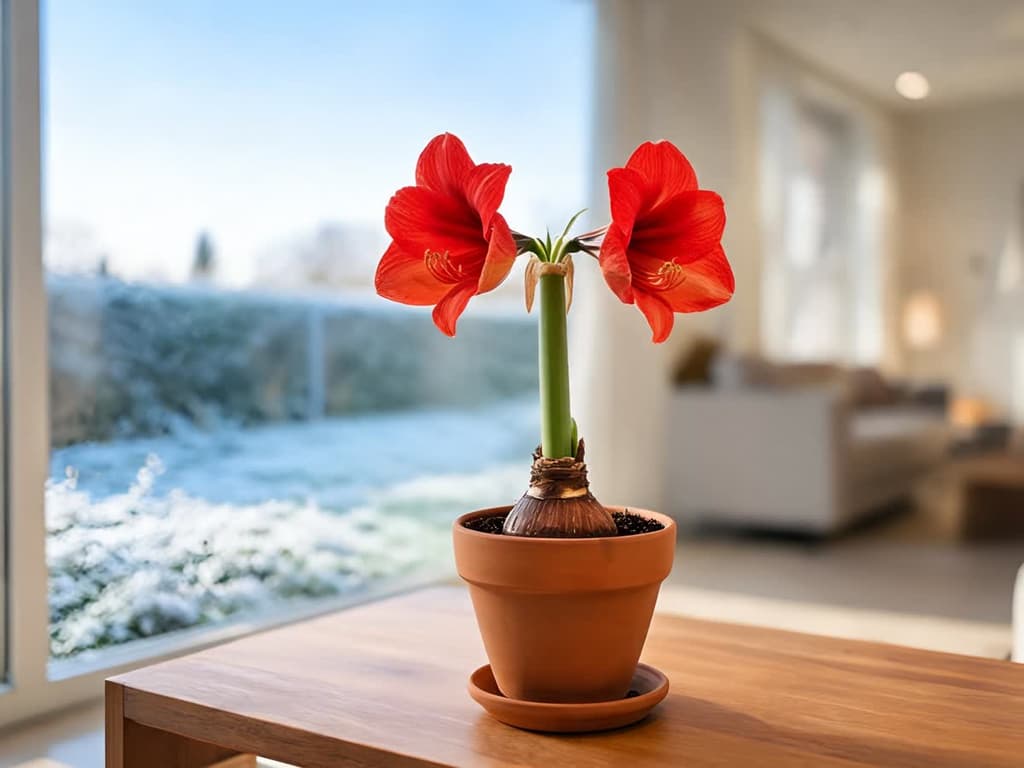
Amaryllis cannot tolerate freezing temperatures. Potted amaryllis (Hippeastrum) suffers damage below 1.7 °C (35 °F), according to the NC State Extension, and frost can kill the plant. Where there is frost, the pot spends the winter indoors. With the bulb dormant, without leaves and without water, amaryllis tolerates a cool place, from 4 to 13 °C.
If your amaryllis is on the porch and the forecast calls for frost, bring the pot indoors before the first cold night. The University of Maryland and UW-Madison instruct growers to do this before the first frost, not after. Leaves that turn yellow slowly in the fall are not cold damage: it is the plant entering dormancy.
In Brazil, winter runs from June to August and coincides with the dormancy of the bulb that bloomed in the spring. The numbers in this guide come from university extensions in the United States, university services that advise plant growers. They also come from the Royal Horticultural Society (RHS), in the United Kingdom. Both are in the Northern Hemisphere. There, amaryllis blooms at Christmas, in the middle of winter. That is why the guide talks about temperature and bulb phase, and only mentions a month when it says "in Brazil."
How much cold amaryllis can tolerate at each stage
The cold that amaryllis can tolerate changes with the phase of the bulb and where it is located. The table gathers the number from each source:
Phase or place | Temperature | Source |
|---|---|---|
In bloom | 15 to 18 °C makes the flower last longer | RHS |
With leaves, growing | 18 to 24 °C; damage below 1.7 °C | UW-Madison, Iowa State, NC State |
Green dormancy (the plant keeps its leaves, in a bright and cool place) | 10 to 13 °C | Iowa State, RHS |
Dry rest (without leaves and without water, in the pot) | 4 to 13 °C, depending on the source | University of Maryland, UW-Madison, Iowa State, NC State |
Bulb planted in the garden | Zones 7 and 8 in the United States, with mulch (NC State); zones 8 to 10 (UF/IFAS, UW-Madison) | NC State, UF/IFAS, UW-Madison |
Frost, with the bulb in the pot | It can kill the plant | NDSU |
The buried bulb tolerates more cold than the leaf. NC State records damage below 1.7 °C. In the same factsheet, it says that the covered bulb can overwinter outdoors in zones 7 and 8. For potted amaryllis, NDSU says that excessive cold and frost can kill the plant.
Can amaryllis tolerate frost?
No. NDSU Extension (North Dakota State University) states that excessive cold and frost can kill amaryllis. According to NC State, the plant suffers damage below 1.7 °C. The RHS classifies Hippeastrum as a tender bulb, to grow in pots indoors in the United Kingdom climate.
None of the consulted extensions cites a frost-resistant Hippeastrum variety. If you bought a bulb sold as cold-hardy, check which plant it is before leaving the pot outside in the winter. Amaryllis belladonna, another plant with the same common name, is the one grown in the garden.
Light frost in the garden burns amaryllis leaves, but does not kill the buried bulb. UF/IFAS says that, in zones 8 to 10 in the United States, leaves suffer frost damage and are replaced promptly in the spring. Hardiness zones are bands of the average lowest temperature of each winter, defined by the USDA map. Zone 8 ranges from -12.2 to -6.7 °C, and zone 10, from -1.1 to 4.4 °C.
The 10 °C minimum does not apply to the dormant bulb
An amaryllis bulb in dry rest tolerates temperatures below 10 °C. The Austrian gardening store Geomall writes that below 10 °C the bulb already suffers severe damage. Four university extensions and a study give another range for the dormant bulb. Three of these sources go below that number: University of Maryland, UW-Madison, and the study.
Source | Dormancy temperature |
|---|---|
University of Maryland | 4.4 to 10 °C (40 to 50 °F) |
UW-Madison | 7.2 to 12.8 °C (45 to 55 °F) |
Iowa State and NC State | 10 to 13 °C (50 to 55 °F) |
Kuehny and Miller, Acta Horticulturae, 2008 | 5 and 9 °C produced good quality plants in the three tested varieties |
The study by Kuehny and Miller kept dry commercial bulbs, without soil and without leaves, at 5, 9, 13, 21, and 29 °C. In the same study, the dry bulbs kept colder had a higher chance of reaching the end of storage in poor condition. That is why this guide does not go below the 4 °C from the University of Maryland. Between 4 and 10 °C, the dry bulb tolerates it, but with more risk. The safest range is 10 to 13 °C, from Iowa State and NC State.
For the plant with leaves, 10 °C is the lowest temperature that the sources recommend. Iowa State carries out the green rest (with leaves, in a bright place) at 10–13 °C, and the RHS, at about 13 °C. Below 10 °C with the plant in leaf, none of the sources consulted measured the effect. The safest option is to keep the amaryllis with leaves above 10 °C.
Hippeastrum or Amaryllis belladonna: which is yours
The potted amaryllis sold as a gift bulb is a Hippeastrum, a plant from South America and Central America. Amaryllis belladonna is a different plant, from South Africa, grown in gardens and in full sun, according to the NC State factsheet.
The two spend the winter in different ways. NC State instructs digging up Amaryllis belladonna where winter is colder than zone 8. The bulb is stored in a warmer place, at 13 to 21 °C. Dormant Hippeastrum stays cooler, at 10 to 13 °C. Amaryllis belladonna has fragrant, light pink flowers that appear after the leaves dry up. Large red, white, pink, or striped flowers in a pot are Hippeastrum.
Where to keep amaryllis in the winter, according to the phase of the bulb
Where amaryllis belongs in the winter depends on what the bulb is doing: blooming, growing leaves, or dormant.
In bloom. Leave the pot in a bright spot, out of direct sun, at 15 to 18 °C. In this range, the flower lasts longer, according to the RHS. Keep the pot away from hot or cold drafts, as the Chicago Botanic Garden instructs. NDSU directs moving the amaryllis away from cold, drafty windows.
With leaves. Amaryllis with leaves needs bright light to store reserves in the bulb. The leaves make the food that the bulb stores for the next bloom, as shown in the guide on how to care for amaryllis. Leave the pot in the brightest window, which in Brazil is the north-facing one, in a place that does not drop below 10 °C.
Dormant. The bulb without leaves and without water stays in a cool, dry place, at 10 to 13 °C. Dormancy lasts 8 to 10 weeks, according to Iowa State and NC State. The University of Maryland indicates 6 to 8. This guide follows the 8 to 10 that Iowa State requires for the flower. In this phase, light does not matter, according to the University of Maryland.
The waxed bulb (the amaryllis sold covered in wax, without a pot) receives neither water nor soil. Iowa State instructs leaving the waxed bulb in bright indirect light. Keep the waxed bulb away from cold windows and drafts, just like the blooming bulb.
Amaryllis on the porch or outdoors in the cold
Bring the amaryllis inside from the porch before the first frost. The University of Maryland and UW-Madison instruct doing this before any risk of frost. Michigan State University brings the pot indoors only after a light frost, according to HortiDaily. This guide follows the University of Maryland and UW-Madison. The leaf suffers damage below 1.7 °C, and a light frost is already below that temperature.
In Brazil, a covered porch in the South Region or in the mountains can work for dormancy, as long as there is no frost. The nighttime temperature must stay above 4 °C, the minimum accepted by the sources. The ideal remains 10 to 13 °C. Rain cannot wet the pot. Cold, wet soil rots the dormant bulb.
A potted amaryllis with leaves does not stay on a cold porch. Move the pot to the brightest window indoors and keep the plant above 10 °C.
Amaryllis dormancy in the Brazilian winter
In Brazil, the amaryllis dormancy period falls in winter, from June to August. Amaryllis blooms in the spring, according to UF/IFAS, and spends the summer with leaves, storing reserves in the bulb. In the fall, the leaves turn yellow. The bulb enters dormancy after they dry up, in the winter.
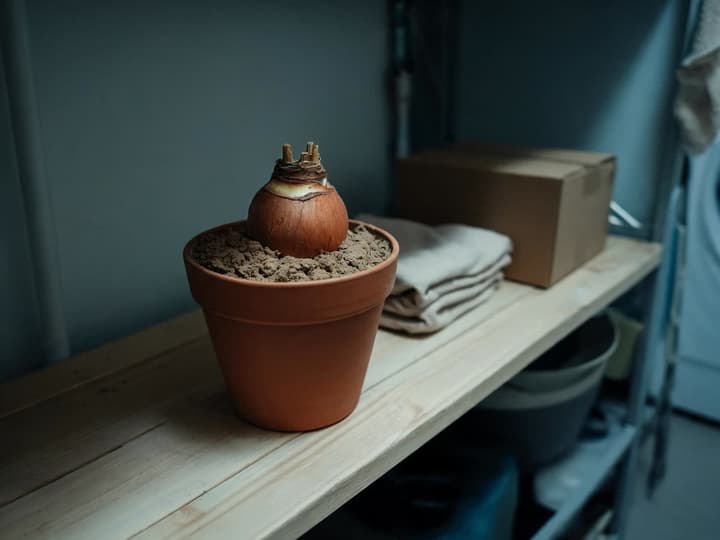
For dormancy, stop watering, wait for the leaves to dry, and cut off the dry leaves. Leave the pot for 8 to 10 weeks at 10–13 °C, in the coolest and driest place in the house. In warmer houses, no corner cools down to 13 °C in winter. The highest temperature that the consulted sources give for dormancy is 15.6 °C, from the NYBG (New York Botanical Garden). In this case, use the coolest and driest place in the house, without water, for the same 8 to 10 weeks.
Do not store the pot in the refrigerator. None of the consulted extension services advise doing this with a planted bulb. The study that approved 5 and 9 °C tested dry commercial bulbs, without soil and without leaves. After 8 to 10 weeks, resuming watering, light, and warmth of 21 to 24 °C makes amaryllis bloom again, according to NC State.
Amaryllis planted in the garden in winter
Garden-planted amaryllis survives frost, as long as the bulb stays buried and covered. NC State says the bulb spends the winter outside in zones 7 and 8 in the United States, if it is covered. The mulch is a 5 to 7.5 cm (2 to 3 inch) layer of straw, bark, or dry leaves on top of the soil. UF/IFAS and UW-Madison are more cautious and indicate the garden only from zones 8 to 10. In these zones, the average winter minimum is between -12.2 °C and 4.4 °C. This guide follows the two more cautious ones.
Where frost is heavy, dig up the bulb before the cold and plant it in a pot indoors. NC State says that, below zone 7, amaryllis is grown as an indoor potted plant. Out of the ground, UF/IFAS keeps the bulb in a dry, shady place for 6 to 8 weeks before planting. Wait for the leaves to yellow before digging it up: UF/IFAS says digging up too early is one of the reasons amaryllis fails to bloom.
A large bulb found in a flowerbed, without a name, could belong to another red-flowered bulb plant. Before deciding whether it stays in or comes out of the ground, confirm the plant. Bloom (available for iOS) identifies the plant by photo, and the amaryllis factsheet shows what it looks like.
Watering amaryllis in the winter
Watering amaryllis in the winter follows the bulb's phase. During dormancy, do not water: the bulb without new roots does not use the water, and cold, wet soil rots the bulb. In flower or with leaves, water when the top 1.3 cm of the soil dries out, as directed by the University of Maryland.
With the cold, the soil takes longer to dry out. Stick your finger 1.3 cm (0.5 in) into the soil before watering. If the soil is dry, water it, instead of watering on a fixed schedule. Empty the saucer after watering: the RHS instructs avoiding standing water in the saucer.
Amaryllis leaf yellow or soft after the cold
An amaryllis leaf that yellows slowly in the fall, with a firm bulb, marks the end of the foliage cycle. Iowa State and NC State instruct cutting the leaf only when it is brown. This yellowing does not call for more water or a change in location.
Soft, dark leaves or leaves that look like wet glass after a cold night are cold damage. Cut off only the dead part and bring the pot indoors, to the brightest window, in a spot above 10 °C. New leaves emerge from the bulb if it is firm. The cold damage page gathers the signs:
Soft amaryllis bulb after the cold: can it be saved?
Squeeze the base of the bulb before deciding. A firm bulb can recover, according to NC State. A soft bulb, with soft spots or a bad smell should go in the trash. Iowa State also advises discarding a bulb with soft, sunken, or dark areas, which indicate disease.
Drying the soil and stopping watering will not save a bulb that has already softened. The rot is already inside the bulb. The page on amaryllis rot shows the causes and what to do with neighboring bulbs.
A photo of the spot on the bulb helps distinguish disease from cold damage. Photo diagnosis makes this comparison:
Frequently asked questions
Can amaryllis stay outdoors in the winter in Brazil?
Only the dormant bulb, without leaves, where there is no frost and the night stays above 4 °C. With leaves, no: keep the amaryllis above 10 °C and in the light. In dormancy, the bulb tolerates a cool place from 4 to 13 °C, as long as rain does not wet the soil. Where there is frost, bring the pot inside before the first frost.
Why does amaryllis bloom at Christmas in Europe and in the spring in Brazil?
In Europe and the United States, the bulb sold at the end of the year has already gone through dormancy, according to the University of Maryland. It blooms 6 to 8 weeks after planting, according to Iowa State. In the garden, amaryllis blooms in the spring, according to UF/IFAS. In Brazil, spring runs from September to November.
Can I store the amaryllis bulb in the refrigerator?
Not with the bulb planted. None of the extensions consulted instruct putting the pot in the refrigerator. The study that approved 5 and 9 °C used dry commercial bulbs, without soil and without leaves. For dormancy at home, use the coolest and driest place, from 10 to 13 °C.
Can amaryllis tolerate cold indoors in the winter?
It can, if kept away from cold windows and drafts. According to NC State, the plant suffers damage below 1.7 °C, a rare temperature indoors. In flower, 15 to 18 °C makes the bloom last longer, according to the RHS. With leaves, the pot stays in the brightest window.
Conclusion
Amaryllis cannot tolerate frost: below 1.7 °C the leaf suffers damage, and the pot comes indoors before the first frost. While dormant, the dry bulb tolerates a cool place from 4 to 13 °C, and in Brazil this dormancy falls in the winter. After a cold night, squeeze the bulb: firm, it can recover; soft, it goes in the trash.
Related articles
How to Care for Hibiscus: Sun, Watering, Fertilizer, and Pruning for Flowers
How to care for hibiscus: 6 hours of direct sun, evenly moist soil without waterlogging, half-strength fertilizer in spring and summer, and pruning in early spring. Find out why the flower lasts one day and why buds drop before opening.

Do Ferns Like Sun or Shade? It Depends on the Type
Ferns prefer bright shade: plenty of light, but no direct sun on their fronds. Tuberous sword fern is the exception that handles sun. Here is the ideal light for each type, where to place pots, and how fronds show too much or too little light.

African Violet Yellow Leaves: Causes and What to Do
Yellow leaves on an African violet usually stem from overwatering, and the first place to check is the center of the plant. Losing one lower leaf at a time is normal. Identify whether age, watering, cold water, sunlight, cold drafts, or fertilizer is the culprit based on the yellowing pattern, and see what to do today.