Can Chrysanthemums Tolerate the Cold? Winter Care in Pots and Garden Beds
Hardy garden mums tolerate frost down to about −5 °C (23 °F), while florist pot mums usually will not survive winter outdoors. See which one you have, whether to cut it back, how to mulch, and where to keep pots in the cold.
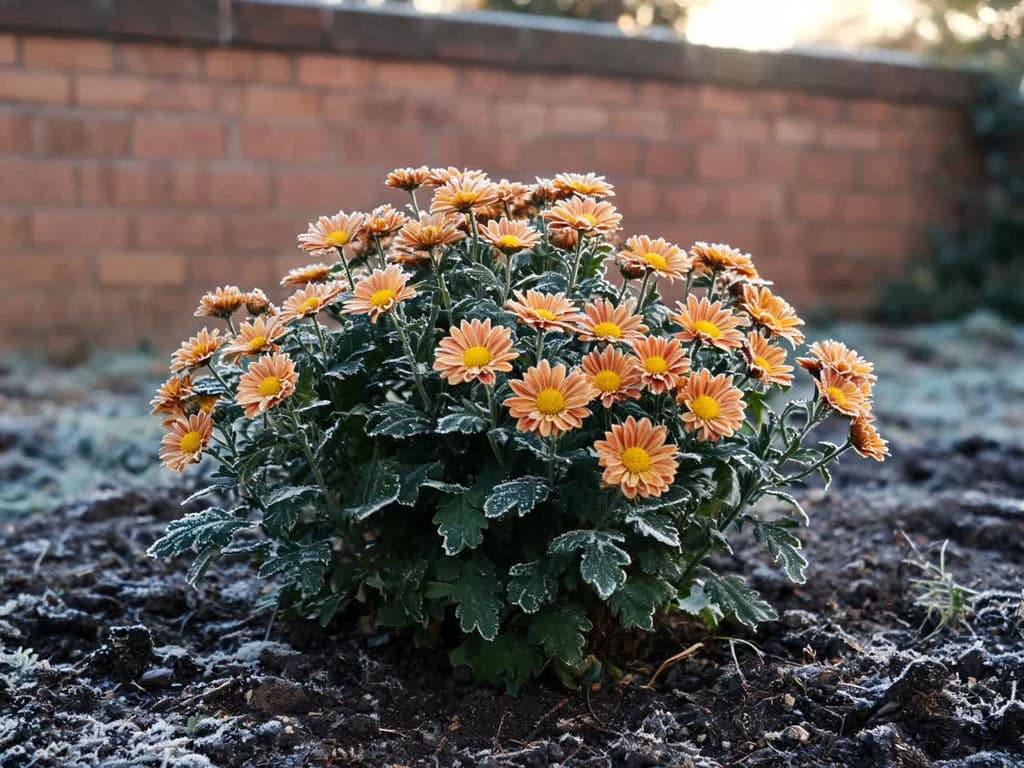
Chrysanthemums tolerate the cold when they are hardy garden mums (the cold-hardy type). They overwinter in the garden bed and handle frost down to at least −5 °C (23 °F). The source is the Royal Horticultural Society (RHS), the British horticultural society. Potted chrysanthemums sold in bloom at florists and supermarkets are a different story. Most of them do not survive the winter outdoors in Iowa, a US state with cold winters, according to the Iowa State University Extension.
In Brazil, frost falls in the South and in the high-altitude areas of the Southeast from June to August. In the rest of the country, winter poses no threat to chrysanthemums: it is the short-day season, when they set buds and bloom.
Quick summary:
Hardy garden mums handle frost down to about −5 °C (23 °F) in the ground. Below that, the RHS instructs you to lift the plant from the soil and store it in a frost-free place.
Florist potted mums are not made to overwinter outdoors. Where frost hits, keep them indoors during the cold.
Do not cut back garden-bed chrysanthemums in the fall: they survive winter better with the old stems left standing.
Well-draining soil is part of winter protection: the RHS instructs lifting chrysanthemums planted in poorly drained beds.
The two chrysanthemums: garden mums and florist pot mums
The garden chrysanthemum and the florist pot chrysanthemum are the same hybrid, Chrysanthemum × morifolium, formed by five Chinese species, according to NC State Extension at North Carolina State University. What differs between the two is the cultivar (the man-made variety): some were selected for the flowerbed, others to bloom in a pot.
Hardy garden chrysanthemum | Florist pot chrysanthemum | |
|---|---|---|
Where to buy | Nurseries and garden centers, sold as a bedding plant | Florist shops and supermarkets, in full bloom, year-round |
Cold hardiness | Hardier; tolerates about −5 °C (23 °F) in the ground (RHS) | Less hardy; most do not survive winter outdoors in Iowa (Iowa State) |
Flowering | Blooms as the days shorten | Requires long, dark nights to set buds (Iowa State) |
After flowering | Stays in the flowerbed and sprouts again in spring | Iowa State recommends treating it as a single-season plant |
Potted chrysanthemums are sold in bloom year-round because growers control the light in the greenhouse. Chrysanthemums are short-day plants: they form buds when the day has fewer than 13 hours of light. This data comes from the book Crisântemo: do plantio à colheita, by the Federal University of Viçosa (UFV). Using artificial lights at night, growers hold back flowering until the sale date.
There is no single physical feature on the plant that reliably separates the two types of chrysanthemums. What separates them is the label or information from the seller: look for "garden mum" or "hardy." Iowa State gives a clue based on flower shape. Cushion, anemone, and single-flowered types feature many hardy cultivars. Spider and quill types have few.
Caring for cyclamen in winter follows the same distinction: potted florist cyclamens die in frost, while hardy outdoor cyclamens tolerate much colder weather.
How much cold a chrysanthemum can take
Hardy garden chrysanthemums tolerate temperatures down to at least −5 °C (23 °F) in the flowerbed, according to the RHS. The same source notes that where temperatures drop lower than that, the safest route is to lift the plant from the ground and store it in a frost-free spot. The RHS defines "frost-free" as a place that does not drop below 4 °C (39 °F) at night, such as an unheated greenhouse (cold greenhouse) or an enclosed porch. Even above −5 °C (23 °F), the RHS advises protecting chrysanthemums from frost, and the straw mulch described below provides that shield.
For florist potted chrysanthemums, no source in this guide gives a measured minimum temperature. Iowa State only states that most do not survive the winter outdoors in Iowa, a US state with cold winters. Without that number, the safest option is to bring the pot indoors every night frost is predicted.
In southern and mountainous regions of Brazil, compare the forecasted low temperature against the RHS benchmark of −5 °C (23 °F). Down to −5 °C (23 °F), hardy garden chrysanthemums can overwinter right in the bed. Florist potted mums must come indoors every night frost is predicted.
Chrysanthemums in the garden bed where frost occurs
Where frost occurs, garden chrysanthemums overwinter in the ground with three care steps: do not cut back in fall, mulch the soil, and do not fertilize in summer.
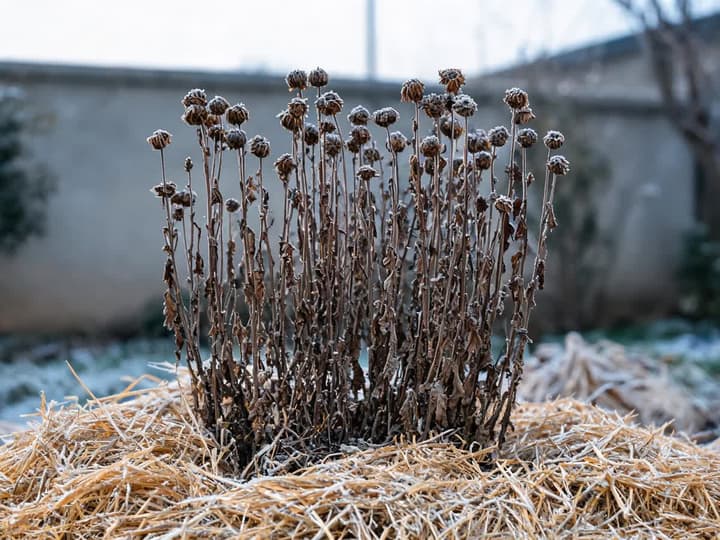
Do not cut back the stems in fall. Iowa State cites research showing that garden chrysanthemums survive winter better when the old stems stay standing. The University of Illinois gives the same instruction: the top growth protects the plant, and pruning should wait until new growth appears in spring.
The RHS takes a different approach: they instruct cutting the plant back to 20 cm (8 inches) tall once flowering finishes. This guide follows Iowa State for chrysanthemums remaining in the flowerbed because their guidance is grounded in research. Cutting back to 20 cm (8 inches) makes sense for the lifting method described below.
Mulch the soil in late fall. After the first frost, spread clean straw or pine needles (the slender leaves of pine trees) over the soil and around the base of the stems. The RHS recommends a layer of at least 5 cm (2 inches) over the roots. Iowa State discourages using dry tree leaves, which mat down into a wet layer and can rot the plant.
Mulch keeps the ground evenly cold. Without it, the soil freezes at night and thaws by day, and this cycle heaves the roots right out of the ground, according to Iowa State. Pull the mulch away in early spring once new shoots emerge at the base.
Do not fertilize in summer. Iowa State recommends withholding fertilizer from garden mums during that season, because fertilizing prompts the plant to produce tender new shoots right before the cold. Frost burns those tender shoots first.
Leave in the garden bed or lift from the ground
Leave the garden chrysanthemum in the flowerbed when winter does not drop below −5 °C and the soil drains water well, according to the RHS. In a colder winter, or in a flowerbed that becomes waterlogged, the RHS recommends lifting the plant out of the ground:
When flowering finishes, cut the stems down to 20 cm (8 inches) in height. What remains is called a stool.
Lift the stool out of the soil and gently shake loose dirt from the roots.
Place the stool in a shallow tray over 5 cm (2 inches) of slightly damp potting mix, and cover the roots with a little loose soil.
Store the tray in a cool, frost-free location, such as an unheated greenhouse or a garage.
Keep the soil in the tray barely moist throughout winter. In spring, after the final frost, replant the stool back in the bed.
For chrysanthemums that stay in the ground in an open bed, the RHS suggests using a cloche, a transparent cover that shields the plant from winter rain.
Chrysanthemums in winter where frost does not occur in Brazil
Where frost does not occur, garden chrysanthemums stay outdoors in the bed all year long without any protective cover. NC State notes that in the southern United States, where winters are mild, chrysanthemums overwinter outdoors with ease.
In this climate, winter is flowering season. The University of Florida (UF/IFAS) notes that there, chrysanthemums set buds and bloom from fall to spring, when days are short. Florida has mild winters, like much of Brazil.
In a frost-free climate, chrysanthemums require the same conditions in winter as they do during any blooming period: direct sun and well-draining soil. Iowa State calls for at least 6 hours of direct sun per day. In Brazil, north-facing windows and flowerbeds receive the most sun.
Potted chrysanthemums in winter
Potted chrysanthemums feel the cold more keenly than in-ground plants because the potting mix provides little insulation. For hardy garden chrysanthemums grown in pots, the RHS recommends moving the container to a frost-free location once flowering wraps up, such as an unheated greenhouse or an enclosed porch. The RHS also stresses keeping the potting soil from becoming waterlogged: elevate the pot on pot feet or bricks so the bottom drainage hole flows freely.
Indoors, position your florist pot mum near a window with bright light but no direct sun, keeping temperatures between 16 °C and 21 °C (60 °F and 70 °F), according to Iowa State. Base your watering on soil moisture: once the surface feels dry to the touch, water until moisture drains from the bottom hole. Take the pot out of its cachepot (the decorative outer container) to water, and return it once it finishes draining.
Keep chrysanthemums away from artificial lighting at night if you want them to bloom again. Iowa State explains that light in the middle of the night delays blooming or stops flower buds from forming entirely. The same source points out a garden chrysanthemum that failed to bloom on the side facing an outdoor street light.
Dropping flowers and brown leaves: watering or cold?
Flowers that wilt and drop while the leaves stay green simply signal the end of the bloom cycle, not a plant health issue. Chrysanthemums will only set fresh buds once days shorten back below 13 hours of light.
Brown leaves combined with constantly soggy soil point to overwatering or poor drainage. Lift the pot out of its cachepot and check for standing water at the bottom. If you see water, pour it out and allow the soil surface to dry before watering again.
Why chrysanthemums die in winter
Garden chrysanthemums die in winter due to three main factors, according to Iowa State, the University of Illinois, and the RHS:
Shallow roots and frost-heaving soil. Chrysanthemums have shallow, fibrous roots. Without snow cover or mulch, the freeze-thaw cycle pushes the plant out of the ground, leaving roots exposed to freezing air.
Planting too late. Chrysanthemums purchased and planted in the fall often lack enough time to establish their root systems before winter sets in, even when dealing with hardy cultivars.
Waterlogged soil. The RHS notes that poorly draining beds are the primary reason to lift plants from the ground.
Cold, soggy ground also encourages root rot. Rot turns the roots brown and mushy, causing the plant to wilt even while sitting in damp soil:
When to plant mums so they survive the winter
Plant garden mums in spring so they have the entire season to establish roots before the cold sets in. Iowa State says spring is the best time, and that chrysanthemums planted in late summer or fall often do not survive the winter. In Brazil, spring runs from September to December.
If you received or bought a blooming chrysanthemum in the spring, plant it in the garden bed while it is still that season. Iowa State also recommends dividing garden chrysanthemums every 2 to 3 years in early spring, as soon as the new growth appears.
Chrysanthemums are toxic to dogs, cats, and horses, according to the ASPCA, the American Society for the Prevention of Cruelty to Animals. Symptoms include vomiting, diarrhea, drooling, incoordination, and skin irritation:
Frequently asked questions
How can you tell if an outdoor plant is a chrysanthemum or an aster?
Asters (genera Aster and Symphyotrichum) also bloom in fall with similar daisy-like flowers, but they are an entirely different plant, and the care instructions in this guide do not apply to them. The fastest way to confirm is to identify the plant with a photo. Bloom (available for iOS) identifies species directly from a snapshot of the flower or foliage. Once you have the accurate name, you will know whether this guide's instructions apply to your plant.
Will a potted florist mum bloom again?
Florist potted chrysanthemums can bloom again once days become short once more. Iowa State notes that florist mums planted outdoors flower quite late because they require long, dark nights. In areas where frost hits, the cold usually ruins the buds before they ever open.
Can I plant a gift pot mum in the garden?
You can, though there is no guarantee it will survive the winter. Iowa State points out that florist chrysanthemums are not truly hardy, and the few that do survive winter rarely flower outdoors. None of the sources cited in this guide have tested these plants in frost-free climates. Your safest approach is planting in spring in full sun and well-draining soil, without counting on flowers.
Do chrysanthemums need to be cut back before winter?
No, not when the chrysanthemum stays in the bed. Iowa State and the University of Illinois recommend leaving the old stems standing until spring, because they protect the plant. Cut the old stems once new growth appears at the base. Cutting back to 20 cm (8 inches) in the fall applies only when you are going to remove the plant from the ground.
Conclusion
Hardy garden chrysanthemums withstand cold and frost down to around −5 °C (23 °F) in garden beds when you leave stems standing and mulch the soil with straw. Florist pot chrysanthemums need frost nights indoors, with bright light and no indoor lamps on after dark. Where frost never arrives, such as across large parts of Brazil, winter serves as the chrysanthemum's natural blooming season.
Related articles

How to Care for Hibiscus: Sun, Watering, Fertilizer, and Pruning for Flowers
How to care for hibiscus: 6 hours of direct sun, evenly moist soil without waterlogging, half-strength fertilizer in spring and summer, and pruning in early spring. Find out why the flower lasts one day and why buds drop before opening.

Do Ferns Like Sun or Shade? It Depends on the Type
Ferns prefer bright shade: plenty of light, but no direct sun on their fronds. Tuberous sword fern is the exception that handles sun. Here is the ideal light for each type, where to place pots, and how fronds show too much or too little light.

African Violet Yellow Leaves: Causes and What to Do
Yellow leaves on an African violet usually stem from overwatering, and the first place to check is the center of the plant. Losing one lower leaf at a time is normal. Identify whether age, watering, cold water, sunlight, cold drafts, or fertilizer is the culprit based on the yellowing pattern, and see what to do today.