Dieffenbachia Leaves Turning Yellow: Normal Aging, Cold, or Stem Rot?
One or two lower leaves yellowing while a new one unfurls up top is completely normal for a dumb cane. Multiple yellow leaves at once mean it is time to check the stem base, recent cold drafts, and the soil.
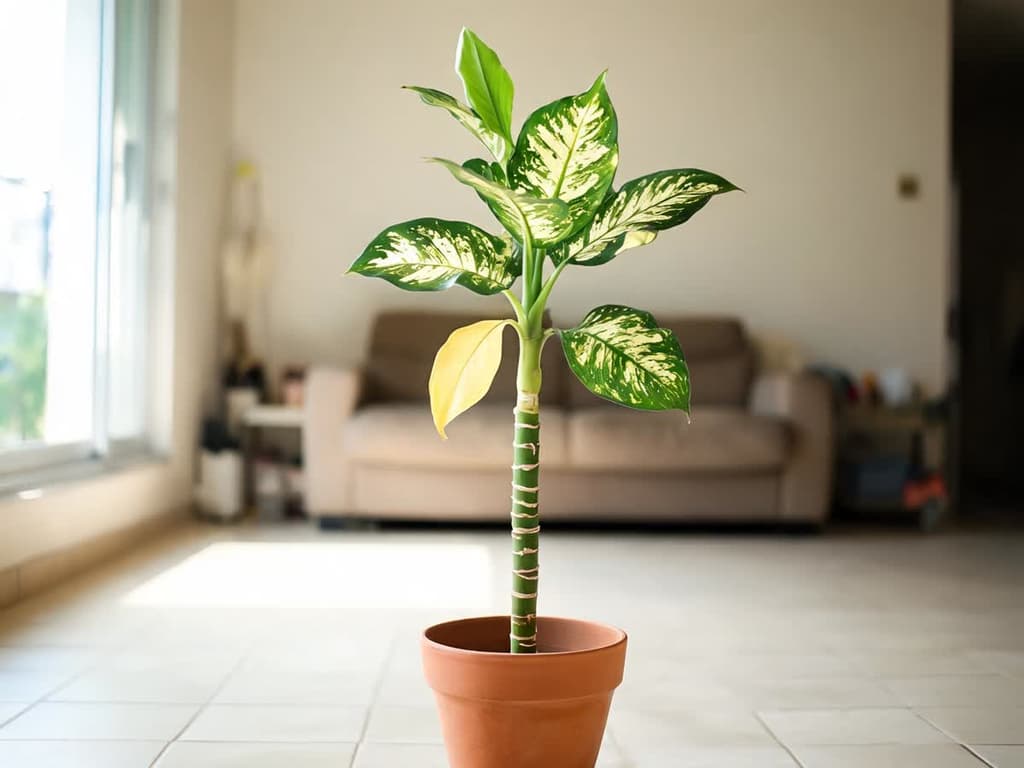
When a dumb cane gets yellow leaves, it usually happens near the bottom. If it is only one or two lower leaves at a time while fresh growth emerges up top, that is just natural aging: snip them off close to the cane and let the plant grow. If several leaves turn yellow all at once, check three things in this order: the base of the stem (is it mushy?), the lowest recent temperature (did it dip below 55 °F / 12.8 °C?), and the potting soil (is it soggy or bone dry?).
Dumb cane (Dieffenbachia) is a thick-stemmed plant that grows upright like a cane. The bottom leaves drop as the stem grows taller, leaving the plant bare at the base with a tuft of foliage at the top. Because of this, some general rules about yellow leaves do not apply to it.
Quick summary:
One bottom leaf at a time, with new leaves unfurling on top: Normal aging. Snip it off close to the stem while wearing gloves.
Tall, leggy stem: Prune it down to 6 inches (15 cm). The stump will push out fresh growth, and the top cutting will root in water.
Yellow patches between the veins after a cold night: Cold damage from temperatures under 55 °F (12.8 °C). The damaged leaf will not recover, but subsequent growth should look fine.
Mushy stem base with a foul smell: Stem rot. No spray can restore rotten tissue, so propagate the firm top section to save the plant.
Yellow lower leaves with parched soil: Underwatering or dry indoor air around the foliage.
Where are the yellow leaves located on your dumb cane?
Pinpointing where the yellowing occurs reveals the underlying issue almost every time. Check the plant from top to bottom, squeeze the lower stem between two fingers, and poke your finger an inch deep into the soil.
What you see | Stem base and soil | Likely cause | What to do |
|---|---|---|---|
1 or 2 bottom leaves turning yellow, new leaf unfurling up top | Firm stem, normal moisture in the soil | Natural aging | Prune the leaf clean at the stem |
Several lower leaves yellowing weekly, no new growth | Firm stem, plant placed far from a window | Low light | Move closer to a window, out of direct sun |
Yellow or pale tan patches between leaf veins | Firm stem, recent cold snap or draft | Cold damage | Move away from drafty windows and AC vents |
Lower leaves yellow and drooping, soft water-soaked patches | Soft base, waterlogged soil, foul odor | Stem base rot | Unpot immediately and save the healthy top |
Bottom leaves turning yellow, dry, and crispy | Firm stem, dry soil an inch down | Underwatering or very low humidity | Drench thoroughly until it drains, boost humidity |
Tiny yellow speckles with fine webbing underneath | Any condition | Spider mites | Wipe and rinse the undersides of the leaves |
New leaf emerges yellow with an even pattern | Firm stem, thriving plant | Natural cultivar variegation | Nothing |
For most indoor plants, moisture problems are the first suspect behind yellow foliage. Our guide to yellow leaves explains how soil moisture distinguishes underwatering from overwatering. With dumb cane, however, you need to answer two specific questions before blaming the watering schedule: is the yellow leaf near the bottom, and does the cane feel firm? If adjusting your watering routine made no difference, the real culprit lies in those two checks.
Yellow lower leaves and bare stems: normal aging in dumb cane
A yellow bottom leaf on a dumb cane is usually just a sign of maturity. The Clemson University Extension describes this natural cycle: as the plant grows, older lower leaves drop off to reveal a bare, tree-like cane. The University of Florida Extension (UF/IFAS) offers practical guidance on this pattern: simply remove the lower leaves as they shed.
As a rule of thumb for houseplants, losing one lower leaf occasionally is expected, while losing three or four in a single week raises a red flag. Yet dumb canes shed lower leaves consistently because their growth happens entirely at the tip of the stem. Track the new leaves coming in up top as well. As long as every yellow leaf at the base is matched by a fresh leaf unfurling above, your plant is healthy, even if it gets taller and leggier over time.
Light exposure directly affects how fast these leaves shed. Darryl Cheng, author of Houseplant Journal, explains how low light accelerates leaf loss. A dumb cane placed too far from a window sheds lower leaves until its canopy matches the limited energy it receives. Moving it closer to natural light will not stop leaf turnover entirely, but it will slow down the drop. UF/IFAS notes another classic sign of insufficient light: foliage loses its vibrant pattern and stems stretch out.
Aging stops being the explanation in three cases:
middle or upper leaves begin yellowing;
multiple bottom leaves drop in a week with zero new growth up top;
the base of the cane turns soft, dark, or mushy.
When pruning yellow leaves, wear gloves and use clean shears to trim the petiole flush with the main stem. Every part of this plant contains microscopic calcium oxalate crystals, and the sap causes skin irritation according to UF/IFAS. NC State Extension warns that getting sap in your eyes can cause serious corneal injury, so keep your hands well away from your face while trimming.
What to do with tall, leggy canes
A bare cane can be revitalized with a straightforward pruning cut. UF/IFAS recommends cutting the stem back to 6 inches (15 cm) above the soil line when the foliage looks sparse. Clemson Extension recommends that same height, noting that the stump will sprout fresh shoots just below the cut.
The removed top section makes an excellent cutting. The University of Illinois Extension recommends cutting the leafy top off a leggy stem and rooting it in water or moist sand. Strip off any lower leaves that would sit below the water line, and change the water whenever it looks cloudy.
Clemson Extension recommends taking cane cuttings in the spring or early summer. The source is from the United States. In Brazil, this period runs from September to December, and that is when it is worth cutting the bare cane.
Three rules to follow when pruning:
Wear gloves and wash your shears afterward. Cutting the stem releases significantly more sap than trimming a leaf.
Keep the stump in the pot and water less. A leafless stump uses little water, so only water when the top inch (2 cm) of soil dries out.
Keep plant scraps out of reach of children and pets. The cut stem contains the same sap until it dries up or is planted.
Yellowing between leaf veins after a cold night
Dumb cane suffers cold damage below 12.8 °C (55 °F), according to UF/IFAS. The symptom described by the same publication is distinct: the areas between the main veins turn light yellow or pale tan. The comfortable indoor range for the plant is 21 to 29 °C.
This pattern is deceptive, because the general rule for yellow leaves attributes yellowing between the veins of lower leaves to magnesium deficiency. On a dumb cane, consider the last cold night first. If the plant spent the night pressed against a windowpane, near an open door, or in the air conditioner's airflow, the cold explains the pattern. In this case, Epsom salt (magnesium sulfate) will not solve the problem.
Cold damage does not reverse. The marked leaf stays marked, and new leaves emerge normal if the plant stays in a stable place. Cut the damaged leaf when it dries out or bothers you.
In Brazil, nights below 55 °F (12.8 °C) occur from June to August, mainly in the South, in São Paulo, and in the mountains of the Southeast. During these months, move the plant away from windowpanes at night and away from exterior doors. In the summer, cold drafts come from air conditioning.
Soft lower stems: rot from overwatering
Yellow lower leaves with a mushy stem base indicate rot. The University of Illinois Extension notes that dumb canes are often overwatered, which quickly rots the roots and the base of the stem. This is the most serious issue on the list, and the test takes 5 seconds: press the stem just above the soil.
UF/IFAS describes a dumb cane rot caused by Erwinia bacteria, known as soft rot. The signs, in the order they appear:
lower leaves turn yellow and develop spots;
the spots become soft and waterlogged to the touch;
the rotting tissue has a strong rotten odor, similar to a fishy smell;
the center of the spots can fall out and leave holes.
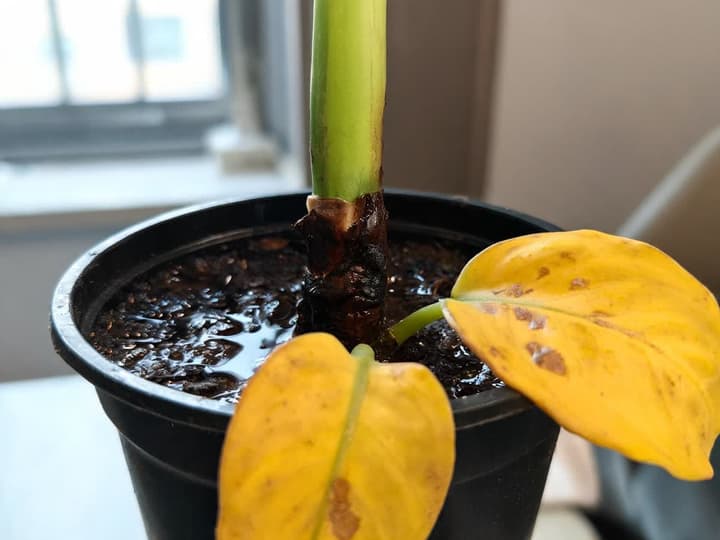
The same publication cautions that no chemical treatment saves an infected plant. Copper-based products only slow down the bacteria. A rot caused by the Fusarium fungus causes similar symptoms at the base, with soft reddish or purple tissue.
In typical home conditions, Clemson Extension notes that true infectious plant diseases are uncommon, with improper watering causing the vast majority of problems. In practice, a mushy stem is gone for good regardless of the specific pathogen. Your only option is salvaging the firm tissue above the rot:
Wearing gloves, remove the plant from the pot and look at the roots. Healthy roots are firm and pale. Rotted roots are brown, soft, and their skin slips off when pulled.
Using clean shears, cut the stem at least a few centimeters above where the soft tissue ends. The cut must show only firm, pale tissue.
Root this top in water, as you would when pruning a leggy cane. If the top turns soft too, discard it.
Discard the soft part and the old soil. For Fusarium rot, UF/IFAS recommends not reusing either the soil or the pot.
Disinfect your shears with bleach between cuts. UF/IFAS notes that the bacteria spread from plant to plant through the tool.
To avoid repeating the problem, water the new plant only when the top inch (2 cm) of potting soil dries out. Empty the saucer 15 minutes after watering.
Yellow lower leaves with dry potting mix: underwatering or dry air
If the base of the stem is firm and the soil is dry an inch deep, it needs water. Water until it drains through the drainage hole, and empty the saucer afterward. Leaves that have already turned yellow will not recover, but the next ones will stop yellowing.
If watering is on track and the lower leaves keep yellowing and drying out, the problem could be the air. UF/IFAS lists yellow lower leaves on dumb cane as a result of excessive moisture loss, recommending higher air humidity. The air gets drier in apartments with air conditioning running all day and during the dry months of the year.
Misting the leaves does not solve the problem. Penn State Extension explains that the extra humidity from misting disappears in minutes once the water evaporates. A tray of wet pebbles also barely changes the room's humidity. What really helps is a humidifier near the plant. Grouping several plants together in the same corner also helps, especially in a small room with many plants.
Yellow speckling and fine webs: spider mites
Tiny yellow dots scattered across the leaf, along with fine webbing on the underside, indicate spider mites. Dry air favors the pest. NC State Extension lists spider mites, scale, whiteflies, fungus gnats, and aphids among the pests to watch for on dumb cane. Check the underside of the leaf with your phone's flashlight before changing your watering routine. The guide on spider mites shows how to confirm and treat an indoor infestation.
Hard brown bumps clinging to the stems and leaf joints, paired with sticky residue on lower foliage, signal scale insects, which also cause yellowing. You can find treatment steps in our scale insect guide.
Leaves that emerge yellow: yellow varieties
Not every yellow leaf on a dumb cane is a symptom. Some varieties sold in Brazil naturally have leaves that are almost entirely light yellow or cream from the start. The UF/IFAS cultivar list includes 'Tropic Marianne', with nearly entirely yellow leaves and a thin green border. Clemson Extension describes 'Camille' as having a cream center and a green margin. The same extension also mentions 'Paradise', which is light yellow with green speckles.
Three signs show that the yellow color is a characteristic of the variety:
the new leaf unfurls with the yellow pattern already present, matching the older leaves;
the color forms a consistent pattern mirroring the central midrib on both sides;
the leaf is firm and glossy, without wilting or dry edges.
If you do not know which variety you have at home, snapping a photo of the leaf in the Bloom app identifies the plant and displays its care guide. The app is only for iPhone.
Can a yellow dumb cane leaf turn green again?
No. A yellow leaf has lost its chlorophyll, the green pigment, and that tissue does not regenerate. What recovers is the plant itself, through new leaves emerging at the top after you fix the underlying cause. Cut off the yellow leaf once it turns completely yellow or dries out. As long as it still has green parts, it continues producing energy for the plant.
Frequently asked questions
Should I cut off yellow leaves on my dumb cane?
Yes, once the leaf has turned completely yellow or dried up. Trim the stalk flush against the cane using clean shears while wearing gloves, as the sap irritates bare skin. If a yellow leaf feels slimy or smells bad, remove it immediately and inspect the stem base for signs of rot.
Why is my dumb cane dropping its bottom leaves?
Because dieffenbachias grow exclusively from the terminal tip, and lower leaves naturally shed as the plant matures. This is standard behavior for the species. If the cane becomes unpleasantly leggy, cut it back to 6 inches above the soil line: the stump will branch out beneath the cut, and the severed top can be rerooted in water.
Can dumb canes tolerate cold temperatures?
It does not handle it well. Below 55 °F (12.8 °C) it suffers cold damage, with yellow or light brown between the leaf veins, according to UF/IFAS. The comfortable range is 70 to 85 °F (21 to 29 °C). In winter, move the plant away from the window glass at night and from doors that open to the street.
Do yellow dumb cane leaves mean it needs fertilizer?
Rarely, if the plant has been in your home for less than two months. UF/IFAS notes that dumb cane usually does not need fertilizer during this period. After that, fertilize once a month with liquid fertilizer at the weakest dose on the package. Nutrient deficiency makes the whole plant pale, with smaller leaves, according to Clemson. Too much fertilizer gives another sign: the leaf edges burn.
What to do today for a dumb cane with yellow leaves
Squeeze the base of the stem. If it is soft, remove the plant from the pot and save the firm top.
Take inventory of the leaves: one yellowing lower leaf paired with fresh growth at the top is simply normal aging.
Remember the last cold night: yellow between the veins after it means cold.
Poke your finger an inch (2 cm) into the soil: dry soil needs watering, while soggy soil needs less water.
If the plant is tall and bare, cut it back to 15 cm in spring or early summer (in Brazil, between September and December).
If none of these scenarios fits your plant's symptoms, the issue might be something else entirely. Our houseplant diagnosis guide walks you through a complete root-to-leaf inspection for any indoor plant.
Bloom is currently available only for iPhone.
Sources
UF/IFAS Extension, Cultural Guidelines for Commercial Production of Interiorscape Dieffenbachia (EP137; Chen, McConnell, Henny, and Everitt): remove lower leaves as they drop, cut back to 15 cm (6 in), 21 to 29 °C (70 to 85 °F), chilling injury below 12.8 °C (55 °F), interveinal yellowing from cold, lower leaves turning yellow from moisture loss, loss of variegation and stretched stems in low light, no fertilizer for two months, calcium oxalate crystals, cultivar 'Tropic Marianne'.
UF/IFAS Extension, Dieffenbachia Diseases: Identification and Control in Commercial Greenhouse Operations (PP286; Norman, 2017): Erwinia soft rot, Fusarium stem rot, transmission by tools.
Clemson Cooperative Extension, Home & Garden Information Center, Dieffenbachia: lower leaves drop with age, cut to 6 inches / 15 cm and it resprouts below the cut, disease is rare indoors, nutrient deficiency, stem cuttings in spring or early summer, cultivars 'Camille' and 'Paradise'.
University of Illinois Extension, Dieffenbachia (Houseplants): overwatering rots the root and the base of the stem, root the top in water or sand.
NC State Extension, Gardener Plant Toolbox, Dieffenbachia seguine: pests, sap in the eye and corneal damage, wearing gloves.
Penn State Extension, Humidity and Houseplants (updated 12/13/2024): misting, pebble tray, grouping plants, and a humidifier.
Darryl Cheng, Houseplant Journal, Dieffenbachia yellowing: loss of lower leaves in low light.
Related articles
How to Care for a Maidenhair Fern: Light, Water, and Revival Tips
Learn how to care for a maidenhair fern indoors: bright indirect light, consistently moist soil, high humidity, and how to revive it if it dries out completely.
How to Propagate Spider Plants: Root the Pup Before Cutting
The safest spider plant cutting comes from a pup still attached to the mother plant: rest the plantlet on soil in a small pot, wait for roots to establish, and only then cut the stolon. Learn when the pup is ready, whether rooting in water is worth it, how to divide the clump, and why plants fail to produce babies.
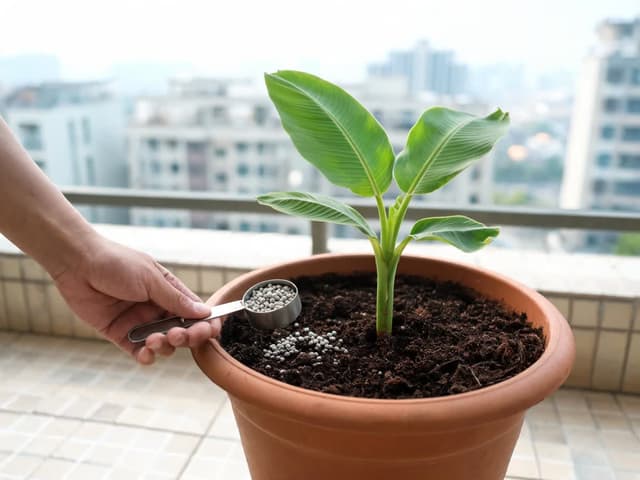
Banana plant fertilizer: fertilizing potted and backyard plants
Banana plant fertilizer needs more potassium than nitrogen, in a 3-1-6 ratio. For a potted plant on a balcony, use the label dose in spring and summer. In the backyard, fertilize every 2 months, adjusting the amount by mat age. Learn the formula, timing in Brazil, and signs of deficiency or excess.