Spider mites on houseplants: how to identify by the web and eliminate for good
Fine webbing on the back of the leaf and light speckling on the surface mean you have spider mites on houseplants, not dust. Here is how to confirm with the white paper test, why common insecticide doesn't work, and the 3-week protocol that does.
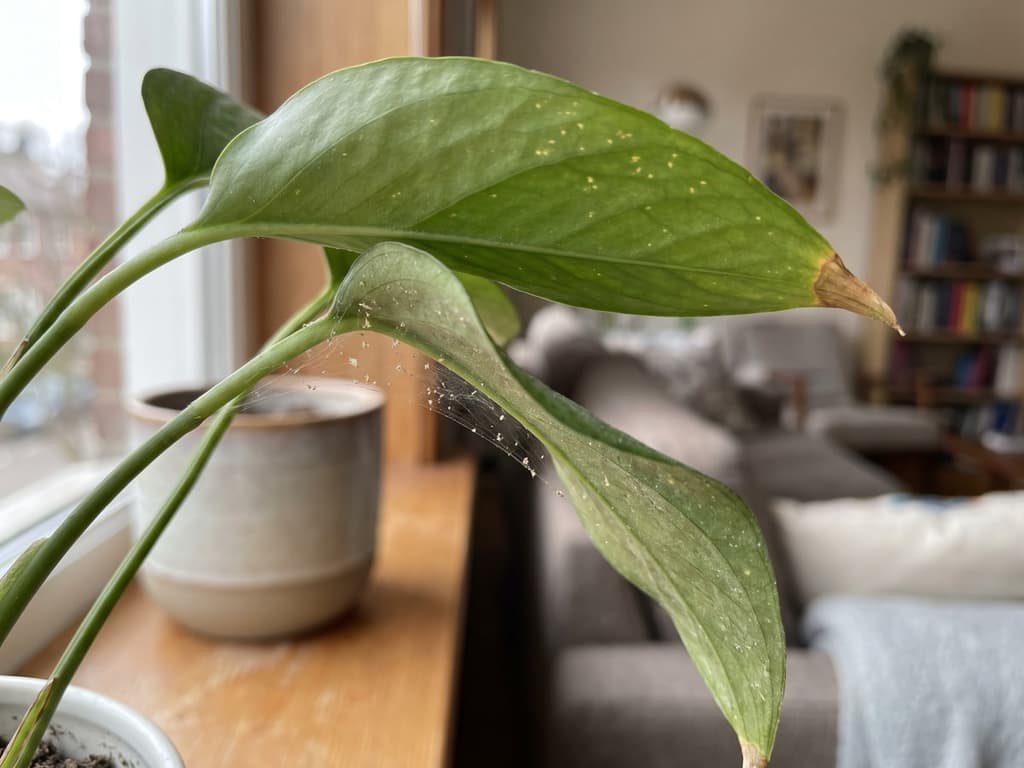
Finding spider mites on houseplants means dealing with an arachnid less than 0.5 mm long that lives in colonies on the underside of leaves, sucks cell contents, and leaves two main signs: light-colored speckles scattered across the leaf and very fine webbing between the leaf and stem. To eliminate them: isolate the plant, wash the underside of the leaves with a stream of water, apply horticultural oil or insecticidal soap making sure to wet the undersides, and repeat every 5 to 7 days for 3 to 4 weeks.
This guide is for anyone growing potted plants indoors. Almost everything written about mites is geared toward soybean, cotton, and strawberry crops—those dosages and products won't work for the Monstera in your living room.
Quick summary:
Mites are not insects: they have eight legs and a single body segment, whereas insects have six legs and three body segments (Missouri Botanical Garden). This is why common insecticides do not work—and some can even make the problem worse.
The cycle from egg to adult takes 8 days at 28 °C (82 °F) and 28 days at 16 °C (61 °F) (UC IPM). A heated living room and dry air shorten the cycle to just over a week—which is why the colony seems to appear out of nowhere.
Oil and soap kill on contact and have no residual effect (Clemson HGIC). A single application doesn't fail because it is weak—it fails because it is only done once.
What are the spider mites on houseplants
The mite that appears on indoor potted plants is almost always the twospotted spider mite (Tetranychus urticae). It measures 0.4 to 0.5 mm, has an oval body with two dark spots on its sides, and lives in colonies that can number hundreds of individuals on the underside of a single leaf (UC IPM). Their color changes with the season: greenish in warm weather, orange-red in cold weather.
They feed by piercing cell after cell and sucking out the contents. The empty cell turns white, and the accumulation of thousands of these dead cells produces the characteristic speckled pattern on the leaf. In advanced infestations, the entire leaf turns grayish or bronze, yellows, and drops off.
The name "spider" comes from their web: most species produce silk threads, and the Colorado State University Extension notes that this webbing provides the mites and their eggs with some protection from predators and environmental fluctuations. For you, it is the most reliable diagnostic sign.
Is it really spider mites?
You won't easily see the pest with the naked eye—you will see their tracks. Do this:
Hold a sheet of white paper under a branch or a few leaves.
Tap the leaves firmly 3 or 4 times.
Look closely at the paper under good light for about 20 seconds.
If the specks move, they are mites. If they stay still, it is dust.
This last step is what almost everyone misses, and it is the entire test. The Purdue Extension is direct: "crawling is the characteristic that most clearly distinguishes mites from dust that also falls from the plant" (Purdue E-42). A 10× jeweler's loupe helps; your phone camera's zoom works too.
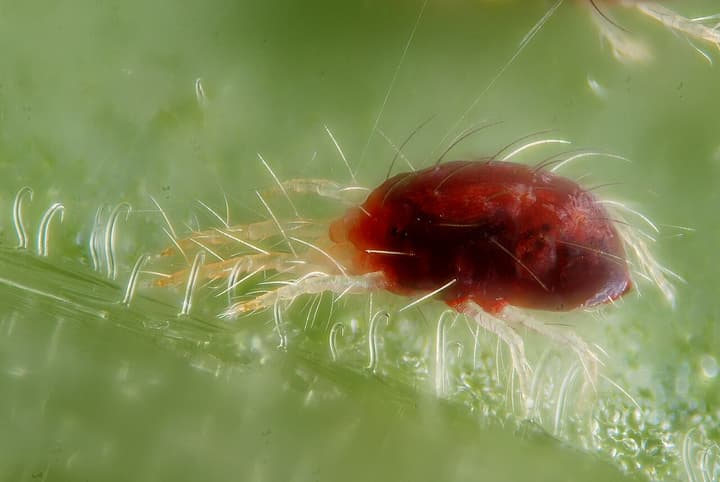
Once confirmed as mites, it is still worth checking that it isn't another pest—the treatment changes in each case:
Sign | Mite | Mealybug | Aphid | Fungus Gnat | Thrips |
|---|---|---|---|---|---|
Size | 0.4–0.5 mm | 2–5 mm | 1.5–3 mm | 2–4 mm | 1–2 mm |
What you see | Specks crawling on paper | White cottony masses | Pear-shaped bodies in colonies on new growth | Tiny black gnats flying from the pot | Tiny, dark, slender lines |
Fine webbing | Yes | No | No | No | No |
Leaf damage | Light speckling, then bronzing | Sticky leaves, sooty mold | Sticky leaves, distorted growth | None (damage is to the roots) | Silvery scarring |
Location | Underside of leaves | Leaf axils, stems | New growth | Potting soil | Underside of leaves |
Worsened by | Dry, warm air | Poor ventilation | Over-fertilization | Overwatering | Dry air |
Webbing is the ultimate divider. The UC IPM notes that the presence of webbing is the easiest way to separate spider mites from other tiny pests that also occupy the underside of leaves, such as aphids and thrips. If the pest is white and looks like a clump of cotton sitting in the leaf axil, it is a mealybug, and the treatment is different—our guide to the most common houseplant pests separates all six by their leaf symptoms.
They are not insects—and that is why insecticides don't work
Mites are arachnids, related to spiders and ticks: eight legs, a single fused body segment, no antennae. Insects have six legs and three body segments. This difference isn't just a taxonomic curiosity—it dictates what you buy at the store.
Broad-spectrum insecticides are formulated against insects, and the Colorado State University Extension is explicit: "few insecticides are effective against spider mites, and many actually aggravate problems" (CSU Extension). The reason is that they kill the mite's natural predators without killing the mites. CSU names them: carbaryl (Sevin) devastates natural enemies, malathion can worsen infestations despite being sold as a solution, and soil applications of imidacloprid have been shown to cause pest flare-ups. The UC IPM notes the same effect with pyrethroids.
The right product is not called an insecticide, but a miticide (or acaricide)—or, for houseplants, the two generics that work by physical contact: horticultural oil and insecticidal soap. They coat the mite's body and suffocate it, without relying on any metabolic pathways.
Why they appeared indoors (and why they get worse in winter)
Spider mites enter your home on newly purchased plants, cuttings traded with friends, or through windows—adults can ride the wind. What changes everything is not how they get in, but what happens next.
Two conditions dictate their speed: heat and dry air.
Average temperature | Egg to adult time |
|---|---|
16 °C (61 °F) | ~28 days |
28 °C (82 °F) | ~8 days |
These numbers are from UC IPM for the twospotted spider mite. With every generation, a mature female lays about a dozen eggs a day for two weeks (CSU Extension)—so the interval between generations is what decides if you have a small issue or a massive outbreak.
Dry air fuels the fire from the other side. CSU explains the mechanism: under low humidity, mites can easily evaporate the excess water they excrete, allowing them to feed more, while almost all of their predators require high humidity and fall behind. Clemson confirms the practical effect: in closed environments, higher humidity reduces populations and damage.
Put these two together and you understand the pattern everyone reports: a closed room, heater or air conditioning running, dry air, and a plant sitting by a sunny window. It is permanent summer for the spider mites, with zero predators.
How to eliminate them—the 3-week protocol
You will need: horticultural oil or neem oil (or pure castile soap), water, a spray bottle, and a soft cloth. Time: 20 minutes per application. Level: easy.
Isolate the plant today. Mites crawl from pot to pot when leaves touch. Move the affected plant to another room before starting any treatment.
Prune and bag heavily infested leaves. Leaves covered in webbing will not recover and act as nurseries for the colony. CSU recommends pruning, bagging, and disposing of heavily infested parts before treating the rest.
Wash the underside of leaves with a stream of water. In the sink or shower, use lukewarm water, paying close attention to the undersides. UC IPM recommends repeating this spray on the undersides every day while the infestation is active—this is physical removal, and it is the free part of the treatment.
Mix a 2% oil solution. That is 20 ml of horticultural oil per liter of water—about 1.5 tablespoons—plus a few drops of mild dish soap to emulsify. CSU considers oil at this concentration "perhaps the most effective miticide available for home use". Insecticidal soap at 1–2% is the alternative.
Test on one leaf and wait 24 hours. Oil and soap can burn leaves on plants stressed by lack of water, and Clemson warns of phytotoxicity above 32 °C (90 °F). Ferns, succulents, and fuzzy-leaved plants are the most sensitive. Water the plant the day before and apply in the late afternoon, never in direct sunlight.
Spray thoroughly, wetting the undersides. Contact is everything: any mite missed by the spray won't die. Turn every leaf over, and include the stems and axils. Avoid drenching the soil with oil.
Repeat every 5 to 7 days, at least 4 times. Horticulturist Justin Hancock from Costa Farms summarizes: "doing it once won't work"—he recommends weekly repetitions for at least three to four weeks. The reason is two-fold: oil has no residual effect and most miticides do not kill the eggs, so each application only catches the generation active on that day.
Boost humidity and check neighboring plants. Grouping pots, using pebble trays, or running a humidifier works against mites while your treatment is underway. Check the undersides of leaves on nearby plants twice a week.
The most common application mistake is in step 6: spraying only the top of the leaf wets the plant but never touches the pest, because the entire colony lives on the underside.
What does not work (and what makes it worse)
Vinegar. Acetic acid is a contact herbicide—it burns the tissue of any leaf it touches. No university extension recommends vinegar for spider mites.
Baking soda. This is a surface fungicide used against powdery mildew. Mites are not fungi; there is no backing for this treatment.
Broad-spectrum insecticides. Carbaryl, malathion, imidacloprid, and pyrethroids kill natural mite predators and can cause populations to boom (CSU Extension, UC IPM).
Treating the soil. Twospotted spider mites live and reproduce on the leaves, not in the substrate. Costa Farms IPM Manager Michelle Opela is categorical: "spider mites aren't breeding in your soil—don't worry about treating the substrate". If pests are flying out of the soil when you water, you are dealing with fungus gnats, not spider mites.
A single application of anything. Oil and soap leave no protective residue and won't reach every egg hidden in leaf folds. The next generation will rebuild the colony in about a week.
Will the plant recover?
Damaged leaves will not turn green again: the pierced cells are dead, and the speckling is permanent on those specific leaves. What recovers is the plant itself—new foliage will grow clean once the colony is gone.
The practical decision rule is this: if there are enough healthy leaves left for the plant to photosynthesize, treat it. If the plant is entirely draped in webbing, with most leaves bronzed and dropping, CSU recommends discarding it—and treating all other susceptible plants in the house at the same time to avoid a hidden source of reinfestation.
Once eliminated, the old speckling becomes your marker: if new spots appear on previously clean leaves, the infestation has returned.
Most susceptible plants and how to prevent them
Twospotted spider mites attack dozens of species, but some take a harder beating. The most common indoor targets are palms, calatheas, and ivy—and horticulturist Justin Hancock calls palms "mite magnets" (Costa Farms):
Prevention is simple and worth more than any recipe:
Quarantine new plants: Keep them away from others for 2 weeks, checking the undersides of leaves every 3 days. This is how most pests get in.
Wipe down leaves: Use a damp cloth on the undersides every 2 weeks. This removes dust, which hinders predators, and lets you spot colonies early.
Keep your plants hydrated: Drought-stressed plants are the first to be attacked, and they are also the most prone to leaf burn from oils and soaps (UC IPM).
Watch out for dry winter air: Heaters and AC units create the exact low-humidity conditions that spider mites love.
If you don't know which species you have at home—and oil sensitivity depends entirely on the species—you can identify it by photographing the leaf with Bloom, which identifies the plant and displays its care requirements. The app is available on iPhone.
Frequently Asked Questions
What kills spider mites on houseplants?
A 2% horticultural or neem oil solution, or 1–2% insecticidal soap, applied directly to the undersides of leaves and repeated every 5 to 7 days for 3 to 4 weeks. Both kill by physical contact by suffocating the mites. Common insecticides do not work and can make things worse.
Are spider mites on houseplants the same ones that cause allergies?
No. Houseplant mites are twospotted spider mites, which suck plant sap and live on leaves. Allergy-causing mites are house dust mites, which live in mattresses and carpets and feed on dead skin cells. Plant mites do not bite humans, do not transmit disease, and do not damage furniture, according to the Colorado State University Extension.
Does dish soap kill spider mites?
Avoid using it. Dish detergent is not insecticidal soap: it strips the protective waxy cuticle from the leaf, which can dehydrate and burn the plant. Opt for 2% horticultural oil, ready-to-use insecticidal soap, or pure castile soap, always testing on one leaf first and waiting 24 hours.
Does vinegar kill spider mites?
It is not recommended. Acetic acid acts as a contact herbicide and burns leaf tissue upon contact without effectively wiping out the colony. You risk killing the plant before resolving the pest. No university extension recommends vinegar for spider mites.
Do spider mites spread from plant to plant?
Yes, by crawling between touching leaves and, in high populations, by riding indoor drafts. This is why affected plants should be isolated immediately and neighboring plants checked twice a week until the cycle is completely finished.
Conclusion
Solving a spider mite infestation on houseplants comes down to diagnosis and repetition, not harsh chemicals. Confirm them with the white paper test (if the speck crawls, it is a mite; if it stays still, it is dust), skip the common insecticides, apply 2% oil to the undersides of the leaves, and repeat four times at 5 to 7-day intervals.
Your next step today: isolate the affected plant, wash the undersides of the leaves in the shower, and mark those four application dates on your calendar. Consistency, not the formula, dictates your success.
Related articles
How to Care for a Maidenhair Fern: Light, Water, and Revival Tips
Learn how to care for a maidenhair fern indoors: bright indirect light, consistently moist soil, high humidity, and how to revive it if it dries out completely.
How to Propagate Spider Plants: Root the Pup Before Cutting
The safest spider plant cutting comes from a pup still attached to the mother plant: rest the plantlet on soil in a small pot, wait for roots to establish, and only then cut the stolon. Learn when the pup is ready, whether rooting in water is worth it, how to divide the clump, and why plants fail to produce babies.
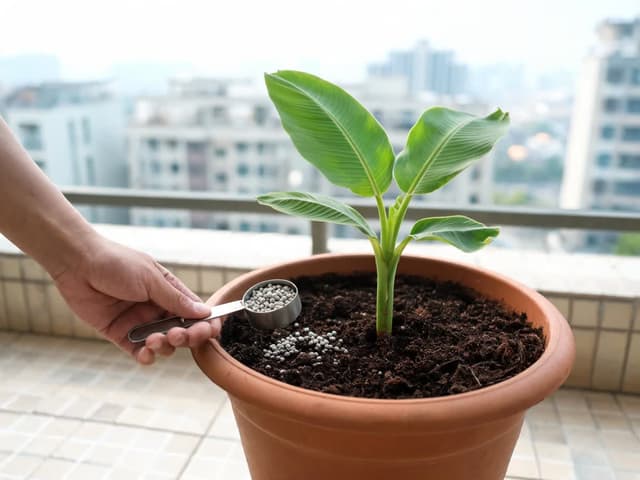
Banana plant fertilizer: fertilizing potted and backyard plants
Banana plant fertilizer needs more potassium than nitrogen, in a 3-1-6 ratio. For a potted plant on a balcony, use the label dose in spring and summer. In the backyard, fertilize every 2 months, adjusting the amount by mat age. Learn the formula, timing in Brazil, and signs of deficiency or excess.