How Often to Water Roses: Pots, Garden Beds, and the Seasons
Roses in garden beds need a deep watering every 7 to 10 days in dry weather. The same rose in a pot, during summer, might need water every day. Learn at what depth to check the soil, how many gallons to give per plant, and why water should never go on the leaves.
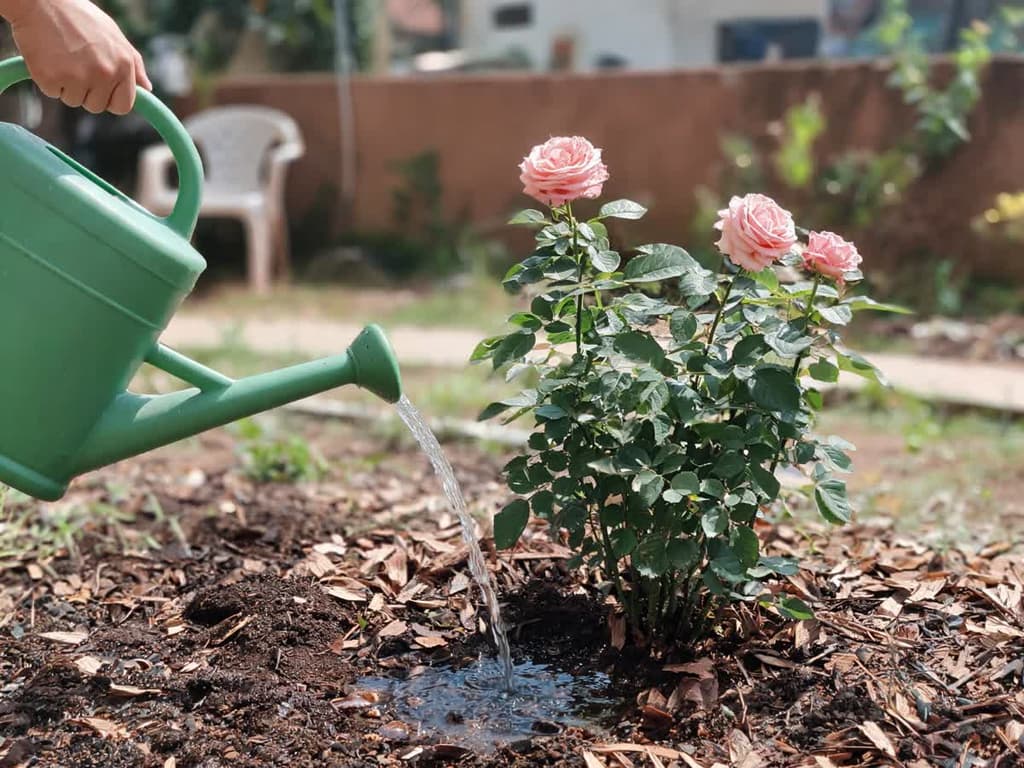
There is no single number of days that works for every rose. The answer to how often to water roses depends on where they are planted. In garden beds, an established rose needs a thorough watering every 7 to 10 days in dry weather. This figure comes from the Iowa State University Extension and Outreach. The same rose in a pot, on a summer day reaching 90 °F (32 °C), might need water every day.
The watering interval changes with the volume of soil the roots can reach, not with the rose variety.
Quick summary:
Established garden beds: a thorough watering every 7 to 10 days during a dry week, soaking the soil down to 5 to 6 inches (13 to 15 cm) deep.
Pots: check every day in summer and water until it runs out the drainage hole. On days above 90 °F (32 °C), a small pot may need two waterings.
Newly planted: every 2 to 3 days for the first few weeks, checking the nursery root ball, not the surrounding garden soil.
The cue that replaces the calendar: in garden beds, soil that is dry 2 to 4 inches (5 to 10 cm) down. In pots, the top 1 inch (2 to 3 cm) dry.
Always at the base and in the morning. Wet leaves for several hours are the open door to black spot.
This guide covers garden and patio roses: hybrid tea, floribunda, shrub, and climbing roses. The desert rose (Adenium obesum) is not a true rose and is not included here.
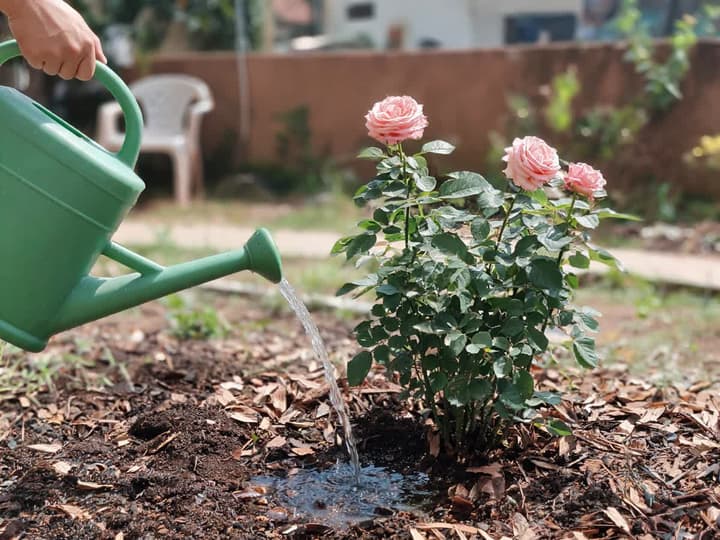
How often to water roses in pots and in garden beds
An established rose in a garden bed has roots spread through dozens of liters of soil and keeps pulling water after the surface dries. A potted rose has only what fits inside the pot. Once that soil dries out, that is it, there is no water left.
Two identical roses, planted on the same day in the same yard, can require watering intervals that differ by a factor of seven. Use the table below as a starting point and always confirm in the soil.
Situation | Interval in dry weather | How much water | How to confirm |
|---|---|---|---|
Garden bed, established | every 7 to 10 days | about 1.3 gallons (5 liters) per bush; 2.6 gallons (10 liters) for climbers | soil dry at 2 to 4 inches (5 to 10 cm) |
Garden bed, planted less than a year ago | every 2 to 3 days for the first few weeks | soak the root ball and the soil around it | the root ball dries out before the surrounding bed |
Large pot on a patio with 6 hours of sun | almost daily in summer, every 3 to 4 days in winter | until it drains through the hole | top 1 inch (2 to 3 cm) dry |
Small pot on a day above 90 °F (32 °C) | daily, sometimes twice | until water exits the drainage hole | the pot feels noticeably light |
Roses require at least 6 hours of direct sun per day, according to the University of Florida Extension. None of these situations happen indoors. Roses kept in a living room die from lack of light, and no watering adjustment fixes that.
Kitty Belendez, Master Rosarian with the American Rose Society, publishes a temperature-based table that helps when the soil is sandy and dries out quickly. At 90 °F (32 °C), the chart indicates daily watering; at 80 °F (27 °C), every two days. At 70 °F (21 °C), every three days; at 60 °F (16 °C), every four days; at 50 °F (10 °C), every five. She notes that the table applies to light to medium soils, with no rain and no heavy wind.
When this table and the Iowa State Extension disagree, this guide follows the university extension, which measures in the field and publishes its methodology. The temperature chart is useful for shortening intervals in sandy soil without mulch—the layer of straw or bark spread over the ground. The chart does not replace checking the soil.
The test that replaces the calendar
Stick your finger or a wooden dowel into the soil and check how deep it is dry. In garden beds, check 2 to 4 inches (5 to 10 cm) deep, after pushing aside the mulch with your hand. In full sun, the first inches of the surface dry out within hours and say nothing about the moisture available to the roots.
In pots, the rule is different: 1 inch (2 to 3 cm) of dry soil is already the signal to water. This is the same test used for potted palms and most container plants. It works there because the entire pot dries out almost uniformly.
The weight of the pot is the second check, and the fastest. Lift the pot right after watering and remember how it feels. A pot with dry soil weighs significantly less than the same pot soaked with water.
Texas A&M AgriLife Extension measures why shallow watering is misleading. A light watering soaks less than 1 inch (2.5 cm) of soil, and that thin layer dries out again in a single day. A dark surface after the watering can does not prove that water reached the roots.
How much water to give at each watering
In garden beds, the goal is to soak the soil down to 5 to 6 inches (13 to 15 cm) deep all at once. How much water that takes depends on the soil type, and Texas A&M publishes three cases. In sandy soil, it takes about 0.5 inch (1.3 cm) of standing water depth; in loam, 0.8 inch (2 cm); in clay soil, 1 inch (2.5 cm).
In volume per plant, David Austin Roses, the English rose breeder, recommends 1.3 gallons (5 liters) per watering for shrub and potted roses. For climbing and standard (tree) roses, they recommend 2.6 gallons (10 liters).
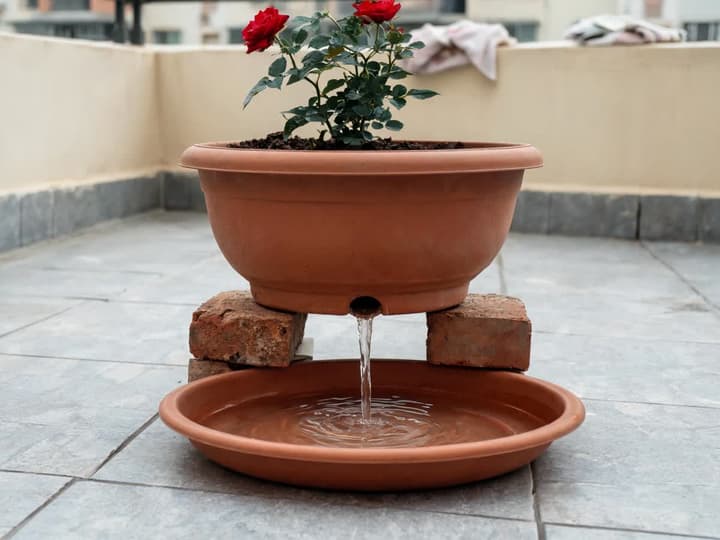
In pots, the target is different and simpler: water slowly until it runs out the bottom drainage hole. This is the same dose that applies to snake plants, and it ensures the soil is soaked all the way down. Empty the saucer as soon as it stops draining, because roots sitting in standing water rot.
Water sometimes pools on the surface and runs off to the sides before sinking in. If that happens, build a shallow soil basin around the base of the plant, roughly 24 inches (60 cm) across. Water in two stages, pausing between them so the first half can soak in.
Deep, spaced-out watering builds deep roots
Watering heavily and less often is better for roses than watering lightly every day. Clemson Cooperative Extension explains the mechanism: deep watering encourages roots to grow downward. That growth creates a robust root system that survives dry spells. Shallow, frequent watering causes roots to form near the surface, leaving the plant vulnerable to any hot day.
Deep watering goes against the "little and often" advice common for small potted plants. Garden roses have room to send roots deep, and giving them that opportunity pays off.
In a pot, roots have nowhere deeper to go, which is why the answer there remains daily watering in high heat.
The rose care card says "water every 7 days": when it gets it right and when it misses
The rose care card here in Bloom says "water every 7 days." That number is useful in one specific situation: an established garden-bed rose during a dry week. It falls right into the 7- to 10-day window from the Iowa extension.
It misses in three common situations. It is far too long for a potted rose in summer, where the answer is almost every day. It is unnecessary during a rainy week, when the garden bed has already received more water than a watering can would provide. And it is too short for garden beds in winter, when growth slows down and soil takes longer to dry.
A set number of days serves as a reminder to check the soil, not as an order to water.
Newly planted roses are watered differently
The rose you bought last month still has nearly all of its roots inside the root ball from the nursery. That root ball is small, contains different soil than the surrounding bed, and dries out before the garden soil does. That is why a newly planted rose can wilt while the surrounding bed is still moist.
Water every 2 to 3 days during the first few weeks, and always check the root ball rather than the surrounding soil. Place your finger where the plant emerged from its nursery pot, not 8 inches (20 cm) away from it.
More frequent watering continues throughout the first year, with intervals stretching out as roots grow beyond the root ball into the bed. Bare-root roses are sold without soil in winter. Soak their roots in a bucket of water for an hour or two before planting.
Why water should never go on rose leaves
Wetting rose foliage opens the door to black spot. The University of Florida (UF/IFAS) describes this disease as the most significant problem for roses grown outdoors. In the cycle documented by UF/IFAS, fungal spores spread via splashing rain and overhead watering. They need several hours of wet leaves to penetrate the tissue. Symptoms appear 3 to 16 days later. Germination occurs between 59 and 80 °F (15 and 27 °C), with the optimum around 65 °F (18 °C).
The black spot cycle sets two practical rules for watering roses. First, water at the base, directly onto the soil, never over the foliage. Second, water in the morning so any accidental splashes dry before nightfall. The University of Wisconsin-Madison recommends using a soaker hose or drip irrigation, never overhead sprinklers.
Powdery mildew, which forms the white powdery coating on leaves and flower buds, behaves in the opposite way. Clemson notes that a continuous film of water on leaves actually inhibits powdery mildew infection. Because of this, powdery mildew causes fewer issues in rainy springs and summers, peaking during dry spells.
Powdery mildew thrives in temperatures between 70 and 80 °F (21 and 27 °C), with humid nights and dry days. Dry foliage alone does not stop powdery mildew. What stops it is full sun, good spacing between plants, and good air circulation. Foliage that dries quickly after morning dew spends less time exposed to fungal spores.
Keeping foliage dry prevents black spot without eliminating powdery mildew. Watering in the morning at the base remains the correct practice for both, because neither disease improves when leaves stay soaked overnight.
Overwatering vs. underwatering: the soil decides, not the leaves
Wilting rose foliage can mean opposite things depending on the time of day and soil moisture. Wilting late in the afternoon on a hot day is normal if the plant perks up on its own by morning. Morning wilting is what signals a need for water, according to the American nursery Certified Nurseries.
Before watering, always check the soil at the depth that matches your situation. The table below outlines the two most frequently confused cases.
What you see | What the soil says | Diagnosis |
|---|---|---|
Leaves wilt in afternoon, perk up by morning | dry only on the surface | normal on hot days; do not water just for this |
Leaves wilt in the morning | dry 2 to 4 inches (5 to 10 cm) deep in beds | underwatering; water thoroughly today |
Leaves wilt all day long | soggy for several days | root problem; stop watering and check drainage |
Yellow leaves dropping from bottom to top | wet for several days | overwatering; space out your waterings |
Soil that stays waterlogged for days while leaves wilt indicates suffocated roots, not thirst, and adding more water makes it worse.
Yellow leaves on roses can also stem from nitrogen deficiency, black spot, or spider mites, and each issue requires a distinct remedy. A complete troubleshooting breakdown is in our guide on yellow leaves on houseplants and garden plants. When multiple symptoms appear together, the step-by-step diagnostic guide for plant problems helps separate the causes.
The rose year: what changes with each season
A rose's water intake shifts with the season, and which months mark each season depends on the hemisphere. In the Southern Hemisphere, where Brazil is located, spring runs from September through November and winter from June through August. In the Northern Hemisphere, spring runs from March through May and winter from December through February.
Spring. This is the peak blooming period and the window of highest water demand. The rose carries full foliage with opening buds, making the watering interval the shortest of the year.
Summer. High heat shortens the time between waterings. In regions where summer also brings frequent rain, like most of Brazil, rainfall stretches that interval back out: check the soil before reaching for the watering can. A week of heavy rain eliminates the need to water garden beds, though it does not replace watering a potted rose tucked under a covered patio.
Fall. The interval stretches naturally as temperatures drop and day length decreases.
Winter. Structural pruning takes place in late winter. During this dormant stage, dial back watering, but never let the soil dry out completely. Clemson warns that dormant roses can still die of dehydration during a rainless winter.
Two caveats for those growing in Brazil. In the South, where frost occurs, roses enter true dormancy and the interval can exceed two weeks. In the North and Northeast, roses do not enter dormancy, and the watering interval changes little throughout the year.
Mulch reduces watering frequency
A layer of bark, wood chips, straw, or dry leaves spread across the soil cuts down surface evaporation, according to Texas A&M. This decreases the overall volume of water your rose needs. The Iowa State Extension recommends maintaining a 2 to 4-inch (5 to 10 cm) layer around each bush or across the entire bed. Clemson advises a 3-inch (7.5 cm) depth.
Keep a buffer of a few inches clear around the base of the stems. Mulch piled against the canes traps moisture on the bark and encourages rot.
Refresh the mulch layer once a year, right before spring growth resumes. Clemson recommends replacing it for sanitation as well: fallen leaves buried underneath can harbor black spot spores that carry over into the next season.
Do you actually have a rose?
Anyone who inherited plants when moving into a house may not know exactly what is growing in the yard. Three features confirm a rose: woody stems with thorns, compound leaves with 5 or 7 serrated leaflets, and a full-sun location. Bougainvillea (Bougainvillea) and citrus trees also have thorny stems, yet their watering requirements are completely different.
Bloom identifies plants from a leaf photo on your iPhone and brings up the exact care card for the species it finds. With the right name in hand, the watering intervals in this guide apply directly, or you may find you are caring for a different plant altogether.
Frequently asked questions
Can you water roses every day?
In pots during summer, yes: that is typical on hot days, and small pots in temperatures over 90 °F (32 °C) might need watering twice. In garden beds, no. Daily watering in garden beds wets less than an inch (2.5 cm) of soil. It causes roots to concentrate near the surface and leaves the bush more vulnerable to heat stress.
How do you know if a rose needs water?
Check the soil, not the leaves. In garden beds, move the mulch aside and insert a finger or wooden stick 2 to 4 inches (5 to 10 cm) deep. Dry soil at that depth means it is time to water. In pots, 1 inch (2 to 3 cm) of dry soil is enough. Wilted leaves in the morning confirm dehydration; wilting only in the afternoon does not.
How long can a rose go without water?
An established garden rose handles the 7 to 10 days between waterings in dry weather without issue, and survives even longer during winter. In pots, that window shrinks to 1 to 3 days in the heat, depending on container size. A rose planted within the past year tolerates the least drought.
Can you overwater roses?
Yes, and the symptom is misleading: leaves wilting while the soil has stayed damp for days. Waterlogged soil drives out oxygen, causing root rot so the plant wilts despite being surrounded by moisture. Pots without drainage holes, saucers left full of water, and low spots in garden beds are the three most common causes.
How often should roses be watered in 90 °F (32 °C) heat?
Potted roses need water daily at that temperature, and small containers may need it twice, once in the morning and again in late afternoon. In garden beds, shorten the interval instead of watering every day. In sandy soil, Rosarian Kitty Belendez's chart does suggest daily watering at 90 °F (32 °C).
At your next watering
Start by checking the soil at the depth suited to your setup: 2 to 4 inches (5 to 10 cm) in garden beds, 1 inch (2 to 3 cm) in pots. If dry, water deeply all at once: down to 5 to 6 inches (13 to 15 cm) in beds, or until water drains out the bottom of a pot. A little water every day does the opposite of what roses need.
Water in the morning and always at the base of the plant. A succulent sits at the complete opposite end of the spectrum and is only watered when soil dries to the bottom of the container. In both cases, the soil dictates the timing, not the day of the week.
Sources consulted
When the sources below disagree, this guide follows the university extension, then the rose society, and finally the nursery.
Iowa State University Extension and Outreach, How often should I water my roses? and Growing Roses in Iowa, updated on December 3, 2024 (yardandgarden.extension.iastate.edu).
Clemson Cooperative Extension, Home & Garden Information Center, Growing Roses (hgic.clemson.edu).
Clemson Cooperative Extension, Home & Garden Information Center, Rose Diseases (hgic.clemson.edu).
University of Florida IFAS Extension, Black Spot of Rose, publication PP268 (edis.ifas.ufl.edu).
Texas A&M AgriLife Extension, Earth-Kind Landscaping, Efficient Use of Water in the Garden and Landscape (aggie-horticulture.tamu.edu).
University of Wisconsin-Madison, Plant Disease Facts D0020, Black Spot, revised on February 28, 2024 (hort.extension.wisc.edu).
Kitty Belendez, Master Rosarian of the American Rose Society, The Right Amount of Water for Roses, Santa Clarita Valley Rose Society (santaclaritarose.org).
David Austin Roses, How to Water Roses (davidaustinroses.com).
University of Florida IFAS Extension, Gardening Solutions, Roses (gardeningsolutions.ifas.ufl.edu).
Certified Nurseries, The Essential Guide to Watering Roses (certifiednurseries.com).
Related articles
How to Care for a Maidenhair Fern: Light, Water, and Revival Tips
Learn how to care for a maidenhair fern indoors: bright indirect light, consistently moist soil, high humidity, and how to revive it if it dries out completely.
How to Propagate Spider Plants: Root the Pup Before Cutting
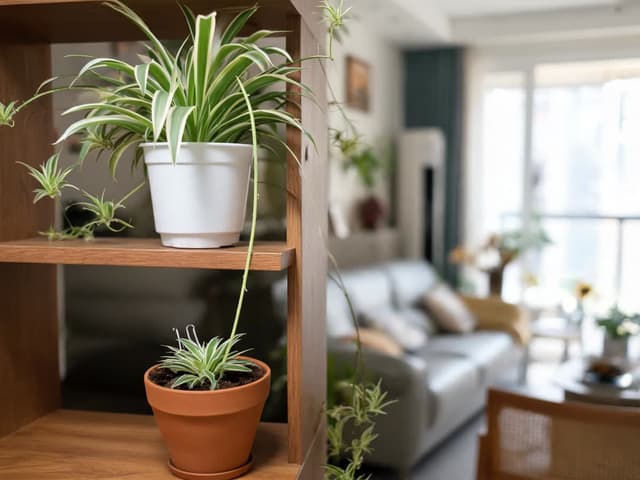
The safest spider plant cutting comes from a pup still attached to the mother plant: rest the plantlet on soil in a small pot, wait for roots to establish, and only then cut the stolon. Learn when the pup is ready, whether rooting in water is worth it, how to divide the clump, and why plants fail to produce babies.
Banana plant fertilizer: fertilizing potted and backyard plants
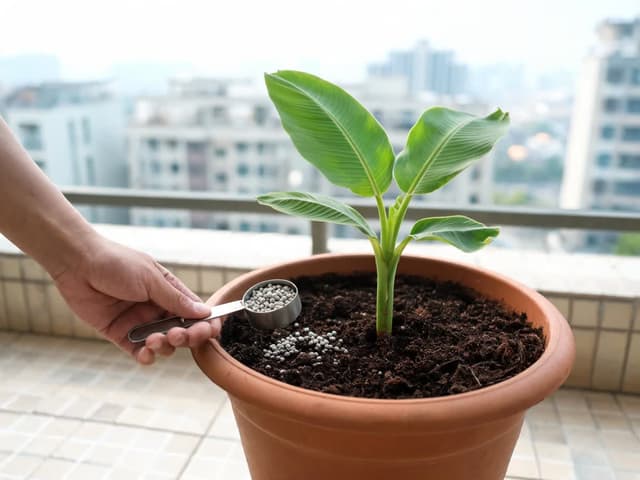
Banana plant fertilizer needs more potassium than nitrogen, in a 3-1-6 ratio. For a potted plant on a balcony, use the label dose in spring and summer. In the backyard, fertilize every 2 months, adjusting the amount by mat age. Learn the formula, timing in Brazil, and signs of deficiency or excess.