iNaturalist Alternatives: The Best Apps for Every Plant Query
iNaturalist is a massive, free citizen science project. But since 9 out of 10 plant observations in its database are wild species, it might not be the right fit for your living room. Here is where it falls short and which app to use instead.

People looking for an iNaturalist alternative usually fall into one of two camps. Either you pointed your camera at a houseplant and got back a broad genus instead of the specific species, or you went to download the app and found three different versions in the app store, leaving you unsure which one to choose. Both situations are a direct result of what the project is designed to do, which is stated clearly in its own documentation.
The short answer: iNaturalist is a non-profit citizen science organization, and all three of its apps are free. The project exists to document wild organisms, and 9 out of 10 plant observations in its database are wild species. For a struggling potted plant in your living room, you need a different tool, and Bloom is built for that job.
Quick summary:
The iNaturalist public database had 380,058,472 observations on August 24, 2026, with 155,682,008 being plants. Of these, only 15,478,432 (9.9%) are marked as cultivated (official API).
Seek identified the exact species in 52.14% of photos with flowers and 22.86% of photos with only leaves in the six-app test by Campbell, Peacock, and Bacon in PLOS ONE (2023).
All three apps are free, rated 4+ stars, and none of them list in-app purchases on the App Store, as verified across all three identifiers on August 22, 2026.
Which App to Use for Your Specific Needs
The apps below do not actually compete for the same tasks, so let us start with a comparison table.
App | Price | Platform | Best For | Measured Accuracy | Provides Plant Care? | Diagnoses Diseases? | Rating |
|---|---|---|---|---|---|---|---|
Bloom | Free mode, with optional Premium | iOS | Houseplants, from identification to care | 93% via the Plant.id engine (reported by developer) | yes | yes, with Premium | 4.8 stars with over 1,000 reviews |
iNaturalist | Free, no ads | iOS, Android, web | Wild biodiversity verified by humans | 3.6% flower, 6.8% leaf (see disclaimer below) | no | no | 4.11 stars (1,153 reviews) |
Seek | Free, no ads | iOS, Android | Instant, offline ID with no account required | 52.1% flower, 22.9% leaf (PLOS ONE 2023) | no | no | 4.72 stars (47,589 reviews) |
iNaturalist Classic | Free, no ads | iOS, Android | Longtime users of the original app | Not tested separately | no | no | 4.56 stars (9,328 reviews) |
Pl@ntNet | Free, no ads | iOS, Android, web | Exact species match for wild plants | 88.2% flower, 80.4% leaf (PLOS ONE 2023) | no | 72 species, currently in testing | 4.65 stars (46,709 reviews) |
PictureThis | Free with in-app purchases | iOS, Android | Large, well-curated catalog | 59% on toxic plants (2021) | yes | yes | 4.74 stars (over 2 million reviews) |
Notice the plant care and disease columns: out of the six rows, four of them say "no" for both. Most identification apps tell you the name and stop there, and those four are precisely the free citizen science apps that state this limitation in their own documentation.
The rating figures come from a store-by-store sweep of App Store listings on August 22, 2026, using a weighted average based on the number of ratings in each country. Relying only on the US store gives an inaccurate picture, because user distribution varies wildly from app to app.
Also, the accuracy percentages cannot be compared directly across rows: the 93%, 88.2%, and 59% scores come from different studies, using different flora and sample sizes. Only the rows citing the 2023 PLOS ONE study can be compared directly, as they were part of the same test.
What Is iNaturalist?
iNaturalist is a social network for naturalists: you photograph a wild organism, the app suggests an identification using image recognition, and a global community of naturalists confirms or corrects the suggestion. When two or more people agree, the observation becomes research-grade data used by biodiversity scientists worldwide.
The official App Store listing describes the project as "free, nonprofit, and community-powered". iNaturalist is the non-profit organization itself, which is a detail that often gets misreported. The California Academy of Sciences, the National Geographic Society, WWF, HHMI Tangled Bank Studios, and Visipedia are credited as supporters of the project, not its owners.
Its scale explains why it is taken so seriously. As of August 24, 2026, the public database held 380,058,472 observations, with 215,032,216 already validated by the community as research-grade data. Plant records alone account for 155,682,008 entries.
iNaturalist, Seek, or Classic: Why Are There Three Apps?
These are three different apps, from the same project, published by the same developer, designed for three different audiences.
iNaturalist | Seek | iNaturalist Classic | |
|---|---|---|---|
Launched | September 2024 | March 2018 | February 2011 |
Account Required | Yes, ages 13+ | no | Yes, ages 13+ |
Results | AI suggestion, confirmed by community | Instant, on-screen | AI suggestion, confirmed by community |
Offline Functionality | No | yes | No |
Your Data | Becomes a public observation | Stays on your device | Becomes a public observation |
AI Model | Latest version | Older version | Latest version |
Languages | 66 | 30 | 33 |
Ratings (Weighted Average) | 1,153 (4.11 stars) | 47,589 (4.72 stars) | 9,328 (4.56 stars) |
The first five rows are the official comparison table from the iNaturalist help center, which is honest and is the best source that exists on this. The last three come from the App Store listings.
The Classic app is the original 2011 version. Its own description notes that it is "the original version of our app" and recommends using the new one instead. It remains available for users who prefer their established workflow.
The new iNaturalist app, launched in September 2024, is the current recommended option. It has the lowest rating of the three, though this requires some context: a completely rebuilt app launched after thirteen years inevitably receives initial pushback from users accustomed to the old interface, and 1,153 ratings is a small sample size compared to Seek's 47,589. The score indicates that the transition frustrated some existing users, not that the app is bad at identifying plants.
Seek is by far the most popular of the three, and it is the simplest: it does not require an account, does not upload anything to servers, works without internet access, and delivers instant on-screen results. If you just want a plant name and nothing else, Seek is the iNaturalist app you want. The trade-off is that it uses an older AI model than the main app, as noted in their help center.
Are All Three Truly Free?
They are. All three apps cost $0.00, are rated 4+, and none of the three list in-app purchases on their App Store page, verified under identifiers 1353224144, 6475737561, and 421397028 on August 22, 2026. There are no ads and there is no hidden paid version.
This is due to the way the project is structured: iNaturalist is a non-profit organization funded by donations and the institutional partners listed in Seek's App Store description. There is no paid tier because there is no commercial product to sell.
However, being free is not what separates these two families of apps. Most apps that offer care schedules after identification require a paid subscription. Bloom offers a free tier: 2 identifications per month and a watering schedule, with photo-based disease diagnosis reserved for Premium.
How Accurate Is Seek, Really?
Almost everything you read about plant app accuracy is someone testing half a dozen pots at home. Neil Campbell, Julie Peacock, and Karen Bacon published in PLOS ONE in 2023 a test of six apps with 38 herbaceous species, 280 flower photos, and 280 leaf-only photos, all taken with the same phone and without editing.
The strictest criterion required the app's first suggestion to be the exact species. Under this metric:
App | Photos with Flowers | Leaf-Only Photos |
|---|---|---|
Pl@ntNet | 88.21% | 80.36% |
Leaf Snap | 83.57% | 77.14% |
Seek | 52.14% | 22.86% |
iNaturalist | 3.57% | 6.79% |
Google Lens and PlantSnap were also included in the test and performed worse than Leaf Snap.
The 3.57% score for iNaturalist does not mean the app gets it wrong 96 times out of 100. iNaturalist often suggests a genus rather than guessing a species, and the study's criteria counted any answer that was not the exact species in the top spot as a failure. This is a design difference: the app is built to provide an ID that the community can safely verify, and humans are meant to finalize the species name, not the AI. The comparable standalone AI score in this study belongs to Seek, which is designed to make decisions on its own.
The other takeaway from this table applies to any app: take photos of flowers. Seek's accuracy drops from 52.14% to 22.86% when there is no flower in the photo, losing more than half its precision. Flowers and fruits carry much more diagnostic information than leaves, as they are often the only way to tell similar species apart. Before switching apps, look for a flower, bud, or fruit on the plant and get closer. This will improve your results more than changing software.
Where iNaturalist Stops: Your Living Room Plant
The answer to why the app might ignore your potted plant is written on the iNaturalist website itself. The help center page explaining what it means to mark an observation as cultivated states:
"iNat is primarily about observing wild organisms, not pets, animals in zoos, garden plants, specimens in drawers, etc."
In other words: iNaturalist is primarily about observing wild organisms, not pets, zoo animals, garden plants, or drawer specimens. The official page explains that many scientific partners have no interest in this type of record, which is why it exists as a flag.

In practice, cultivated plant observations are downgraded to "casual" status and excluded from scientific research. This effect becomes obvious when looking at individual species. I checked the public API on August 24, 2026, comparing seven popular houseplants with three common wild sidewalk plants:
Species | Observations | Marked as Cultivated | Became Research Grade |
|---|---|---|---|
Pilea peperomioides (Chinese money plant) | 3,486 | 96.5% | 0 |
Zamioculcas zamiifolia (ZZ plant) | 10,089 | 94.8% | 92 |
Ficus lyrata (fiddle-leaf fig) | 7,871 | 90.0% | 267 |
Chlorophytum comosum (spider plant) | 19,736 | 86.4% | 1,174 |
Spathiphyllum wallisii (peace lily) | 16,263 | 85.1% | 455 |
Monstera deliciosa (split-leaf philodendron) | 21,366 | 66.5% | 5,966 |
Epipremnum aureum (golden pothos) | 38,356 | 65.7% | 11,407 |
Taraxacum officinale (common dandelion) | 285,427 | 0.5% | 164,559 |
Achillea millefolium (common yarrow) | 337,776 | 1.9% | 261,455 |
Trifolium repens (white clover) | 257,278 | 0.5% | 245,631 |
The dandelion alone has more research-grade observations (164,559) than all seven houseplants combined (117,167). Pilea, one of the most common houseplants in the world, has zero research-grade entries.
There is also an automatic rule that almost no one knows about, which completes this logic. The Data Quality Assessment documentation states that the system itself votes that the observation is not wild when there are already at least 10 other observations of that genus in the same municipality, state, or country, and 80% or more of them are marked as not wild (help center).
In other words, your potted Monstera does not even need a human to flag it. If enough people in your area have photographed potted Monsteras, the system flags it automatically to protect its dataset. From your side of the screen, however, it simply looks like the app does not care about your plant.
The Best Alternative for Every Use Case
Different apps excel at different tasks. For some of these needs, the best option is still iNaturalist.
Your plant is indoors, and it is struggling
Basic identification apps cannot help you here, because knowing the name does not solve the problem. You need an app that reads symptoms from a photo and tells you what to do regarding watering, light, and treatment.
Bloom. Identification runs on Plant.id by Kindwise, which according to the provider has 93% accuracy in independent university tests. This number is for the AI engine, not the entire app, and comes from the manufacturer. The independent test you can verify is from 2020: Hamlyn Jones, from the University of Dundee, compared nine apps on British flora and Plant.id ranked first (AoB PLANTS).
The exact percentage matters less than what happens after the plant is named. Bloom analyzes your symptom photo and generates a care plan covering watering, light, and treatment. It offers a free tier with 2 identifications per month and a watering schedule, with photo-based disease diagnosis included in Premium. It has a 4.8-star rating with over 1,000 reviews and is available on iOS.
You want your photos to contribute to real scientific research
Stick with iNaturalist, as there is no substitute. No other app on this list turns your observations into verified records used by biodiversity researchers. The 215 million validated observations are exactly that. If you are documenting wild plants on trails or weeds in sidewalk cracks, switching to a commercial app means losing the one feature none of them offer.
You want instant identification with no account and no internet
Seek. This is the app developed by the project for this exact scenario: it identifies plants in real time on your screen, requires no registration, works offline, and keeps your data on your device. It is also the only one of the three safe for children to use unsupervised since it requires no account. The main limitation is that its AI model is older than the main app's, meaning it finds the exact species in only about half of flower photos.
You want the exact species name of a wild plant
Pl@ntNet. In the PLOS ONE test, it was the best-placed in both columns, with 88.21% in photos with flowers. It is free, maintained by public research institutes in France, and lets you choose the regional flora before taking a photo. If your complaint with iNaturalist is "it only answers the genus," this is the app that answers the species. The complete comparison is in the alternativa ao Pl@ntNet.
You just want to satisfy your curiosity in five seconds
Google Lens. This is the most convenient option but also the least accurate of those mentioned. In the PLOS ONE test, it ranked behind Leaf Snap and Pl@ntNet. It is great for quick curiosity, not for making care decisions. You can read about how it works and where it fails in our guide on identifying plants with Google Lens.
If you want to compare options before choosing, we have a ranking of the best plant identification apps and a direct comparison between Pl@ntNet and Bloom.
None of these apps should be used for toxic or edible plants
Otter, Mayer, and Tomaszewski tested three apps against 17 common toxic plants and published the results in the Journal of Medical Toxicology in 2021. PictureThis correctly identified 10 of the 17 species (59%), Pl@ntNet 8 of the 17 (47%), and PlantSnap 1 of the 17 (5.8%).
The authors of the PLOS ONE study write that these apps "should not be trusted to identify toxic species". If you are asking "my child or pet ate this leaf, is it dangerous?" or "is this edible?", the answer will not be found in an app. Contact poison control, go to a hospital, or consult a botanist.
For prevention, checking a species' toxicity within a care app can help you decide where to place a pot before a problem arises. It just cannot replace emergency medical services.
Frequently Asked Questions
Is iNaturalist free?
Yes, all three apps from the project are completely free. iNaturalist, Seek, and iNaturalist Classic cost $0.00, contain no ads, and feature no in-app purchases on the App Store. Because iNaturalist is a non-profit organization funded by donations and supporting institutions, there is no paid version.
What is the difference between iNaturalist and Seek?
iNaturalist uploads your observations to a global community for identification and scientific tracking, which requires an account and internet access. Seek provides instant, on-screen results with no account, no internet, and without sending data to any servers. One is a citizen science network, while the other is a pocket identifier.
iNaturalist vs. iNaturalist Classic: Which one should I download?
The new one. The Classic app's App Store description notes that it is the original version and recommends downloading the redesigned iNaturalist app, which receives regular updates. Classic remains available for users who prefer their old workflow, not as the recommended starting point for new users.
Pl@ntNet vs. iNaturalist: Which is better?
For finding the exact species of a wild plant, Pl@ntNet is much more accurate, scoring 88.21% compared to iNaturalist's 3.57% in the 2023 PLOS ONE study. iNaturalist tends to suggest the genus level but excels at community verification, animal and fungi tracking, and generating scientific data. Many people use both.
Why does iNaturalist fail to recognize my houseplant?
Because it was not designed for them. The help center states that the project focuses on wild organisms, and observations of cultivated plants are marked as casual. There is also an automatic system rule that flags observations as non-wild if 80% of local entries for that genus are already marked that way.
What to Do Next
iNaturalist does not need an alternative if you are documenting wild nature. It has no real competitors there: 215 million community-verified observations form a massive public biodiversity infrastructure that no commercial app can duplicate. If your only issue is that it suggests a genus when you want a species, Pl@ntNet can solve that while keeping you within the free, non-profit ecosystem.
You need an alternative when your question shifts from "what plant is this" to "what is wrong with my plant". These are different problems requiring different tools, and using the wrong app makes it seem like the software is failing. If you have a struggling houseplant, the easiest path is an app that handles both identification and care on the same screen: Bloom does both, offers a free mode, and runs on iOS. If you prefer to diagnose the issue first, you can read our guides on what is wrong with my plant or how to handle yellow leaves, which is the most common symptom for indoor plants.
Related articles
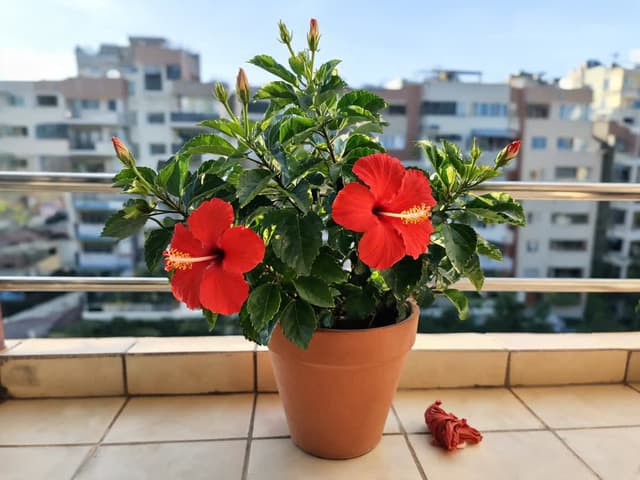
How to Care for Hibiscus: Sun, Watering, Fertilizer, and Pruning for Flowers
How to care for hibiscus: 6 hours of direct sun, evenly moist soil without waterlogging, half-strength fertilizer in spring and summer, and pruning in early spring. Find out why the flower lasts one day and why buds drop before opening.
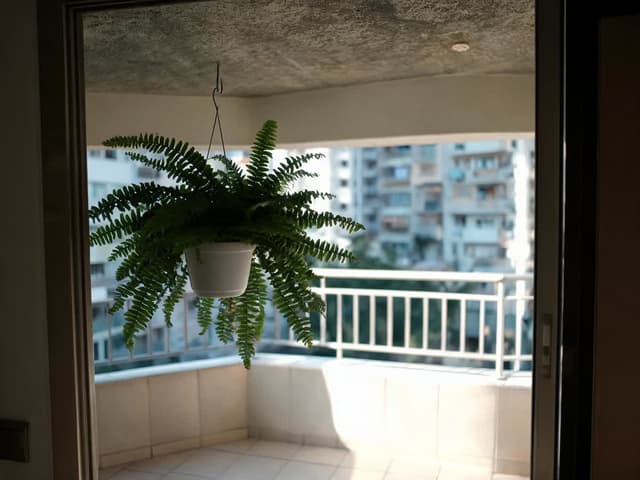
Do Ferns Like Sun or Shade? It Depends on the Type
Ferns prefer bright shade: plenty of light, but no direct sun on their fronds. Tuberous sword fern is the exception that handles sun. Here is the ideal light for each type, where to place pots, and how fronds show too much or too little light.
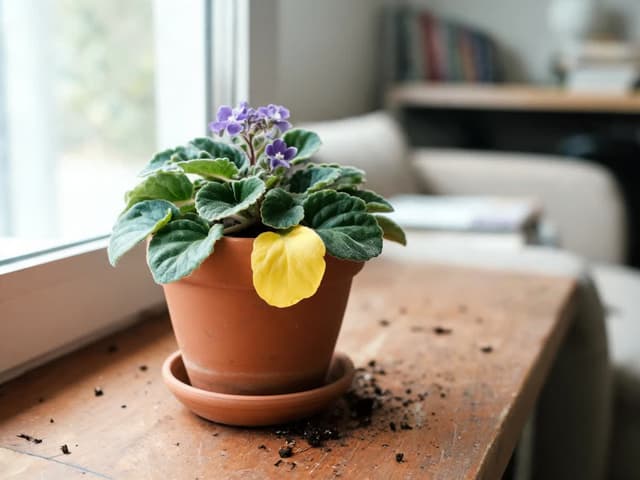
African Violet Yellow Leaves: Causes and What to Do
Yellow leaves on an African violet usually stem from overwatering, and the first place to check is the center of the plant. Losing one lower leaf at a time is normal. Identify whether age, watering, cold water, sunlight, cold drafts, or fertilizer is the culprit based on the yellowing pattern, and see what to do today.