Can Oleander Tolerate Cold? Temperatures and Winter Care
Oleander suffers leaf damage starting at 0 °C and survives down to about −7 °C with scorched foliage. Learn how to protect in-ground plants on frosty nights, where to keep pots, and when to prune after winter.
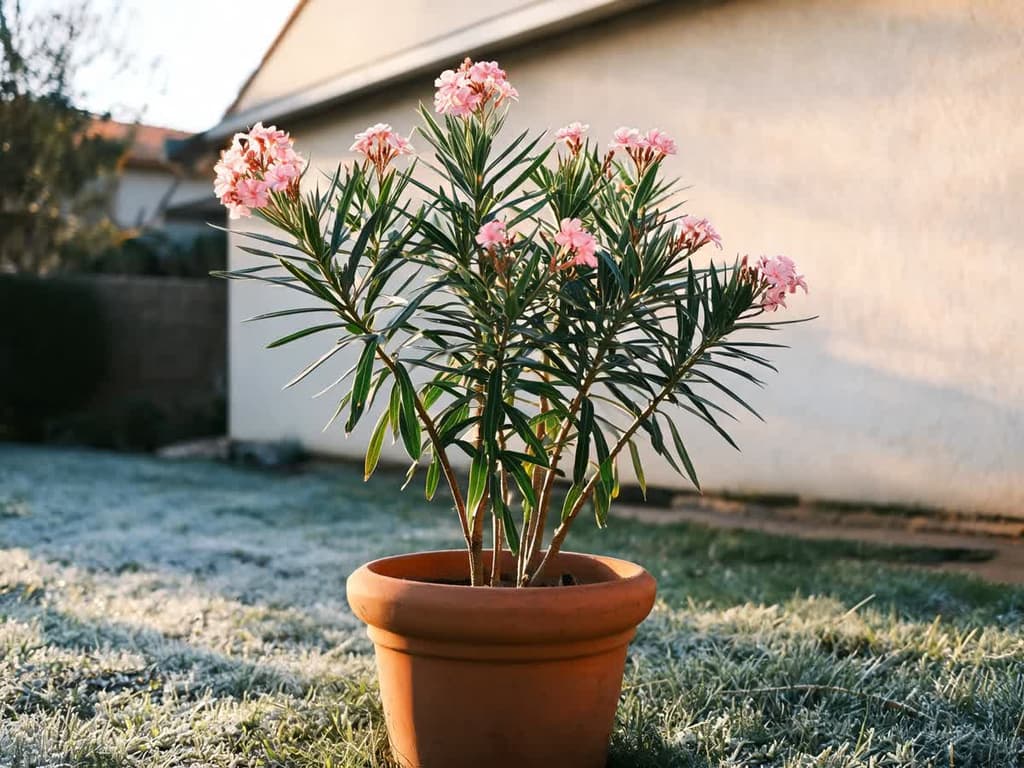
Oleander (Nerium oleander) tolerates mild cold: leaves begin to suffer starting at 0 °C, according to the NC State Extension, a gardening service from a US university. Plants in the ground survive down to about −7 to −9 °C, but with damaged foliage. This is reported by Clemson University, also in the United States.
In most of Brazil, oleander spends the winter outdoors without any special care. Winter care applies to regions with frost, such as the South and the high-altitude areas of the Southeast. There, potted oleanders face the greatest risk because their roots are exposed to the cold.
Quick summary:
Starting at 0 °C, oleander leaves can scorch. Close to −9 °C, even plants in the ground can die.
Potted oleanders need a bright, cool shelter between 5 °C and 10 °C whenever nighttime lows drop below 0 °C. The low is the coldest temperature reached overnight.
On frosty nights, cover in-ground plants with fabric that reaches the soil without touching the foliage.
Cold-damaged leaves do not mean the plant is dead: wait for new growth before pruning, and always wear gloves.
How much cold can oleander tolerate?
Oleander tolerates brief frost, and damage increases as temperatures fall. Leaves suffer starting at 0 °C. The RHS places the species in the range of −5 °C to 1 °C, which is the range for plants that only overwinter outdoors in mild climates. The plant survives down to −7 °C to −9 °C with damaged foliage. Each number answers a different question: when foliage starts to suffer, where the plant overwinters outside, and when it dies.
Minimum temperature | What happens to the oleander | Source |
|---|---|---|
0 °C | Foliage suffers damage at 0 °C or below. The plant usually survives, with damaged foliage | NC State Extension |
From −5 °C to 1 °C | Cold hardiness range for the species: overwinters outdoors only in mild, sheltered locations | RHS (United Kingdom) |
Around −5 °C | Limit cited by German gardening guides for short-term frost | 4 guides from Germany |
From −7 °C to −9 °C | Most oleanders survive, with damaged foliage | Clemson University |
The Royal Horticultural Society (RHS), from the United Kingdom, recommends growing oleander outdoors in a sheltered, frost-free spot. This guide follows the 0 °C threshold from NC State to decide when to protect the plant. It is the university extension's number and the safest option: protecting at 0 °C prevents damage, while the −7 °C threshold only guarantees that the plant does not die.
The duration of the cold also matters. Two of the German guides citing −5 °C warn that oleander does not survive continuous frost lasting several days in a row. A single night at −3 °C burns leaves, while weeks below 0 °C can kill the entire plant.
In-ground vs. potted oleanders: why potted plants suffer first
In-ground oleanders have roots protected by surrounding soil. When the cold kills the top growth of an oleander, it resprouts quickly in spring. The condition, according to Clemson, is that the roots remain undamaged.
In a pot, only the container wall separates the roots from the cold air. The University of Florida (UF/IFAS) notes that cold damage to potted plant roots is common. The soil in a small pot can freeze for several hours on a frosty night.
Root damage takes time to appear. According to the same UF/IFAS publication, it only becomes visible once temperatures rise again. Because of this, a potted oleander that looks fine after a frost can still wilt weeks later.
Oleander in Brazilian winters: when it needs care
In Brazil, winter runs from June to August, but what determines care is the nighttime low temperature where the plant is located. During cold weeks, check the weather forecast for the predicted nighttime low and follow the list below.
Lows above 5 °C: the oleander stays where it is, in the ground or in a pot, without protection.
Lows between 0 °C and 5 °C: in-ground plants need nothing. Move pots close to a wall protected from wind and cold rain.
Lows below 0 °C or frost forecast: cover in-ground plants at night and bring pots into a shelter.
True frost, with white grass in the morning, appears in the South and in the high-altitude areas of the Southeast. In these regions, follow the list above with every cold forecast. According to the UF/IFAS fact sheet, oleander blooms year-round where winter is mild and blooms less where winter is colder.
How to protect in-ground oleanders on a frosty night
Protecting oleander begins weeks before the cold arrives. UF/IFAS advises against fertilizing in late fall and pruning in late summer or early fall. Both practices stimulate new growth, which is the part most vulnerable to frost. Clemson gives the same advice regarding pruning.
On nights when frost is forecast, follow these steps, all from the UF/IFAS publication on cold protection:
Water the soil during the day before the frost until it is moist without pooling. Moist soil absorbs more heat from the sun and releases that heat during the night. Do not leave the soil waterlogged for days, as this damages roots.
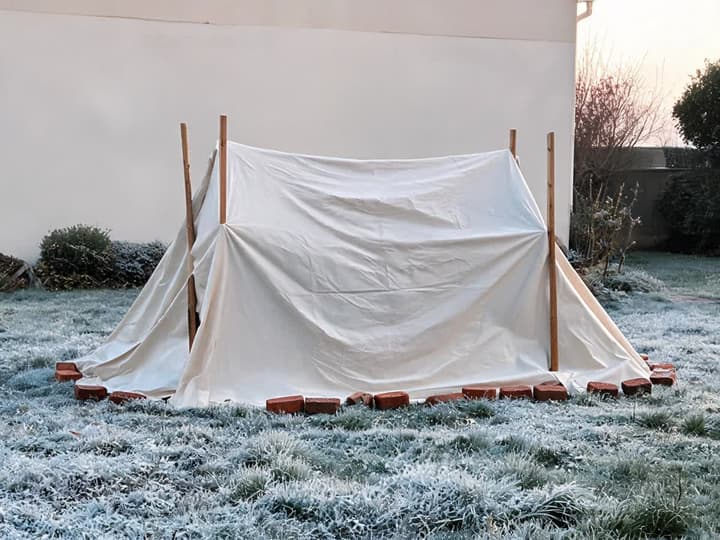
Cover the oleander with a thick cloth in the late afternoon. Bed sheets, old blankets, tarps, or frost blankets work well. A frost blanket is fabric specifically designed to cover plants, sold at garden centers.
Make sure the cloth reaches the ground. The cover traps heat rising from the soil. Fabric that stops halfway down the plant lets that heat escape.
Keep the cloth from touching the leaves. Foliage in direct contact with the fabric can burn. Use stakes or chairs to keep the cloth elevated away from the foliage.
Weigh down the edges of the cloth with stones or bricks if it is windy.
Remove the cloth in the morning once the sun comes out. If you use plastic, remove or vent the cover during the day, as recommended by UF/IFAS.
A thick layer of dry leaves or pine bark around the base protects the root system. The roots are where oleanders resprout from after cold spells. According to UF/IFAS, mulch protects more against frost than against extreme cold.
Potted oleanders in winter: when to bring them inside and where to keep them
Bring potted oleanders into shelter when the forecast predicts lows below 0 °C. Two German guides wait for a forecast of −5 °C before bringing pots inside. This guide follows the NC State threshold of 0 °C because potted roots are the most exposed part of the plant.
Nighttime low | Where to keep the pot | Watering |
|---|---|---|
Above 5 °C | Outdoors in full sun | Normal, whenever the soil dries out to a depth of 3 cm |
Between 0 °C and 5 °C | Tucked against a wall sheltered from wind and cold rain | Significantly less: only when the soil dries out completely |
Below 0 °C | In an enclosed shelter, as bright as possible, between 5 °C and 10 °C | Hardly any: just enough to keep the root ball from drying out entirely. No fertilizer |
Any enclosed space that does not freeze and receives light works as a shelter: a garage with a window, an unheated room, an enclosed glass porch, or a laundry room. Oleanders keep their leaves in winter and therefore need bright light. The darker the location, the colder it needs to be. In warm, dark spots, the plant puts out weak, leggy growth and drops leaves.
If you have no shelter, cluster the pots together near a wall and mulch the soil with dry leaves or pine bark. UF/IFAS recommends grouping pots left outdoors because they lose less heat through their sides. Separate the pots again once the frost passes.
Before moving the pot indoors, inspect the undersides of leaves and the stems. In dry, enclosed spaces, scale insects (small sap-sucking pests covered by a shell) multiply unnoticed. Any oleander pests brought indoors will flourish in the shelter through winter. If you find scale, treat the plant before moving the pot inside.
Watering and fertilizing oleander during cold weather
In cold weather, water oleanders based on the soil, not a set calendar. The plant barely grows, and roots sitting in cold, wet soil rot. In shelter, water sparingly and only when the soil is dry, just to keep the root ball (the mass of roots and soil) from drying out entirely.
No university extension has measured winter watering for oleander. Three of the German guides agree on watering sparingly without letting the root ball dry out completely. One recommends watering once a week in winter quarters. That same guide notes that the interval depends on the shelter's temperature. In colder spaces, the same soil takes longer to dry.
Do not fertilize oleanders while they are dormant in the cold. UF/IFAS points out that late-fall fertilizer induces tender new growth that is more sensitive to frost. Resume fertilizing once the plant starts growing again and nights stay consistently above 5 °C.
Check the soil after a frosty night. According to UF/IFAS, on sunny days following frost, leaves lose moisture and cold roots cannot always replace it. Water that freezes in a pot's soil is unavailable to the roots. Water as soon as the soil thaws.
Frost-damaged oleander: how to tell if it is still alive
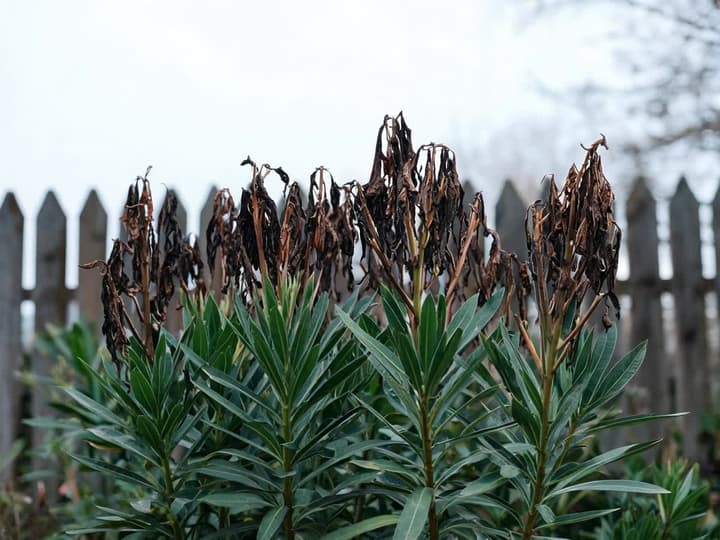
Do not prune any branches off an oleander right after a freeze, even if every leaf has turned brown or soft. Foliage burned by cold turns brown, black, or limp and wilted, dropping over the following weeks. Clemson notes that an oleander losing its top growth to cold recovers quickly, provided the roots remain alive.
To see whether a branch is alive, use the scratch test described by UF/IFAS:
Gently scrape the branch bark with your fingernail and wash your hands afterward.
Check the layer just beneath the bark. Green indicates the branch is alive at that point. Brown or black indicates dead tissue.
Repeat further down toward the base until you find where green appears.
Dead leaves still protect the rest of the plant from cold, according to UF/IFAS. If in doubt, wait until new growth emerges before cutting anything off. New shoots show exactly how far down each stem survived.
After a hard freeze, plants are more susceptible to Botryosphaeria fungus, according to Clemson. This fungus causes stems and shoots to die back and turn dark brown. If a branch keeps darkening weeks after the freeze while the rest of the plant is already sprouting, this fungus may be responsible. Prune the branch back until no dark tissue remains in the cut.
Brown leaves in winter can also signal waterlogged roots or disease. Bloom (available for iOS) identifies plants and, on the Premium plan, diagnoses diseases from a photo of the leaf. When leaves drop in large numbers, check also the causes of falling oleander leaves and dry tips.
Post-winter pruning: when to cut and how to handle toxicity
Prune once frosts are over and the oleander begins sprouting again. NC State recommends removing freeze-damaged branches after winter passes. Cut each branch just below the dark dead section, into the green wood revealed by the scratch test. Clemson states that oleanders tolerate hard pruning at this stage. The plant flowers on new seasonal wood, so this pruning will not sacrifice that year's blooms.
Clemson classifies oleander as extremely poisonous: eating small amounts of any part can make a person or animal severely ill. The toxins are cardiac glycosides, compounds that disrupt heart rhythms. Pruning involves the closest contact with the plant, so follow these four precautions:
Wear gloves and long sleeves. The RHS recommends gloves when handling the plant. UF/IFAS notes that the sap irritates skin and eyes.
Never burn pruning debris. The RHS and NC State warn that smoke from burning oleander is toxic. UF/IFAS explains that toxins become airborne and can cause respiratory issues.
Bag clippings and discard them in regular trash. Do not leave pruned stems and leaves on the ground within reach of children and pets.
Wash your hands after pruning, even if you wore gloves.
The ASPCA, the American animal protection organization, classifies oleander as toxic to dogs, cats, and horses. Signs of poisoning include drooling, abdominal pain, diarrhea, and depression, and severe cases can be fatal. Pruned branches left on the ground remain within reach of dogs and cats, so bag the debris and throw it in the trash.
For dog and cat owners, oleander ranks among toxic plants for pets. Keep it out of reach of pets year-round, not just during pruning.
Returning to the sun after shelter
Move potted oleanders back outside once nighttime temperatures stay reliably above 5 °C. After weeks in lower light, foliage scorches under sudden intense sun. Place the pot in a bright spot without direct sun for several days before moving it into full sun.
Sunburn shows up as brown patches on the upper, most exposed leaves. If these appear, move the pot back into partial shade for a few more days.
Frequently asked questions
How often should you water oleander in winter?
There is no set schedule. In cold weather, water oleanders sparingly and only when the soil has dried out. In winter shelter, water only enough to keep the root ball from drying out completely. In the ground, winter rainfall is usually sufficient. The plant barely grows in cold weather, and roots in wet, cold soil rot.
Can oleander stay indoors during winter as a houseplant?
Yes, near the brightest window in the house. NC State mentions potted oleanders brought indoors for winter and even grown as houseplants. In a heated home with low light, oleander produces weak growth and sheds foliage. The best location is bright and cool, between 5 °C and 10 °C.
Are there frost-hardy oleander varieties?
Hardier varieties exist, but none emerge unscathed from a hard freeze. Clemson lists 'Hardy Red' and 'Hardy Pink' as the hardiest selections, noting that thick, dark green leaves indicate greater cold resistance. Even 'Hardy Red' can suffer damage in certain winters. The same source notes that nurseries often sell oleanders by flower color rather than cultivar name.
My oleander lost its leaves in the cold. Is it dead?
Probably not. If the roots survived, oleanders resprout from the base, according to Clemson. Scratch a stem's bark with your fingernail: green underneath means the branch is alive. Wait for new spring growth before pruning so you can see what survived. If the root system remained protected, the plant usually bounces back.
Conclusion
Oleanders tolerate short-term frosts, but leaves suffer starting at 0 °C, which is the cue to protect the plant. In the ground, fabric draped to the soil on frosty nights handles most situations. For pots, provide a bright, cool shelter between 5 °C and 10 °C with minimal water. If foliage burns, wait for new shoots to emerge and prune while wearing gloves.
Related articles
How to Care for Hibiscus: Sun, Watering, Fertilizer, and Pruning for Flowers
How to care for hibiscus: 6 hours of direct sun, evenly moist soil without waterlogging, half-strength fertilizer in spring and summer, and pruning in early spring. Find out why the flower lasts one day and why buds drop before opening.
Do Ferns Like Sun or Shade? It Depends on the Type
Ferns prefer bright shade: plenty of light, but no direct sun on their fronds. Tuberous sword fern is the exception that handles sun. Here is the ideal light for each type, where to place pots, and how fronds show too much or too little light.
African Violet Yellow Leaves: Causes and What to Do
Yellow leaves on an African violet usually stem from overwatering, and the first place to check is the center of the plant. Losing one lower leaf at a time is normal. Identify whether age, watering, cold water, sunlight, cold drafts, or fertilizer is the culprit based on the yellowing pattern, and see what to do today.