Potting Soil for Fig Trees: What Soil to Use in Pots and in the Ground
Potting soil for potted fig trees needs to drain well and last for years without breaking down. Learn the university-backed mix, the 6.0 to 6.5 pH, the right pot size, when to repot, and what soil figs tolerate in the ground.
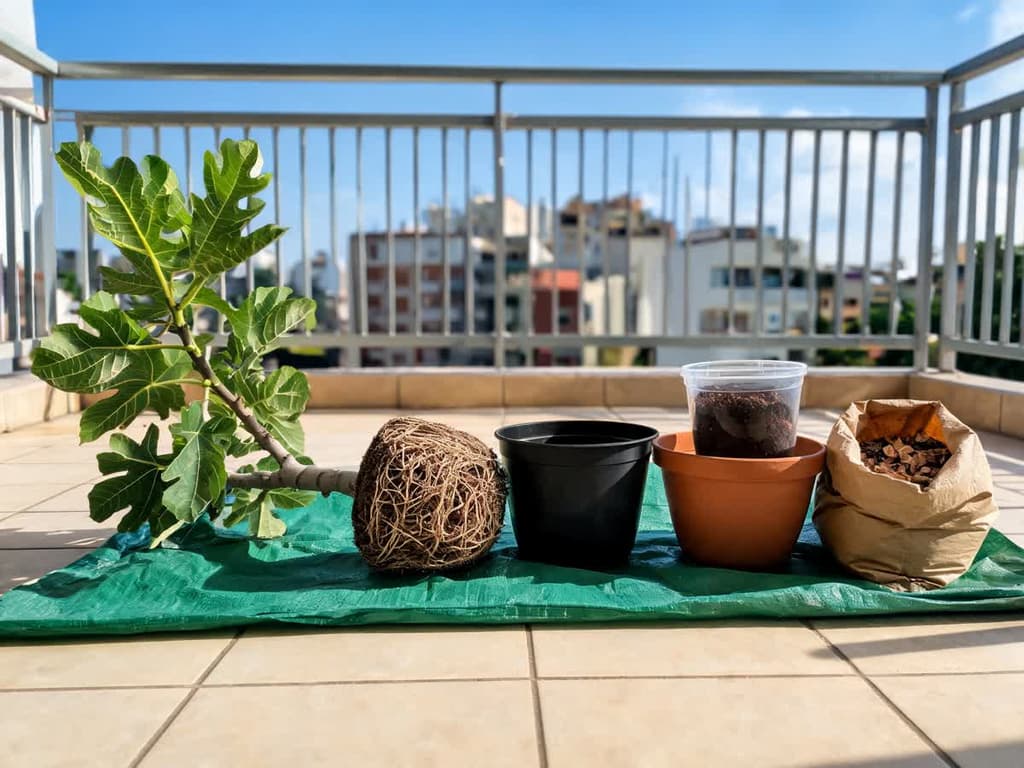
The best potting soil for a fig tree in a container is a potting mix that drains well and does not break down in just a few months. The University of Maryland uses half organic compost and half commercial potting mix. The Royal Horticultural Society (RHS) in the United Kingdom prefers soil-based potting compost made with sterilized soil, which lasts 3 to 4 years. The ideal pH is between 6.0 and 6.5.
This guide covers the edible fig (Ficus carica), the fig tree. In Brazil, almost every fig tree belongs to the Roxo de Valinhos variety. Potting mix here refers to potting soil for containers; soil refers to ground soil.
Quick summary:
Published mix for potted fig trees: 1 part organic compost to 1 part commercial potting mix, according to the University of Maryland.
The ideal potting mix pH for a fig tree is between 6.0 and 6.5. Lime is only used to correct acidic soil based on a soil test.
Start with a pot 12 inches wide and 12 inches deep. A mature fig tree needs at least 15 gallons, and 20 gallons or more once it is bearing fruit.
Replace the potting mix every 2 years, at the end of the winter (in September, in Brazil), in a pot that is only slightly larger.
The soil is hard and roots are growing out of the drainage hole: repot now or wait?
Roots growing out of the container drainage hole do not require urgent repotting. The urgency comes from soil that does not dry out or water that drains straight through without wetting the root ball. The root ball is the mass of soil and roots that comes out of the container. The RHS repots the fig tree in March, at the end of the winter in the United Kingdom. In Brazil, the same time falls in September.
What you see | What it means | When to repot |
|---|---|---|
Roots growing out of the hole, plant with firm green leaves | Roots have filled the pot | In late winter |
Soil hard and cracked, water pools or runs down the sides without sinking in | Old potting mix has broken down and compacted | In late winter; until then, water slowly, in multiple passes, waiting for the water to soak in between each one |
Soil stays wet for days after watering, leaves turn yellow or drop outside of fall | Lack of oxygen at the roots, danger of root rot | Right away, after inspecting the roots (see the section on soil that will not dry out) |
Roots circling the bottom of the pot | Root-bound plant | In late winter, with root pruning |
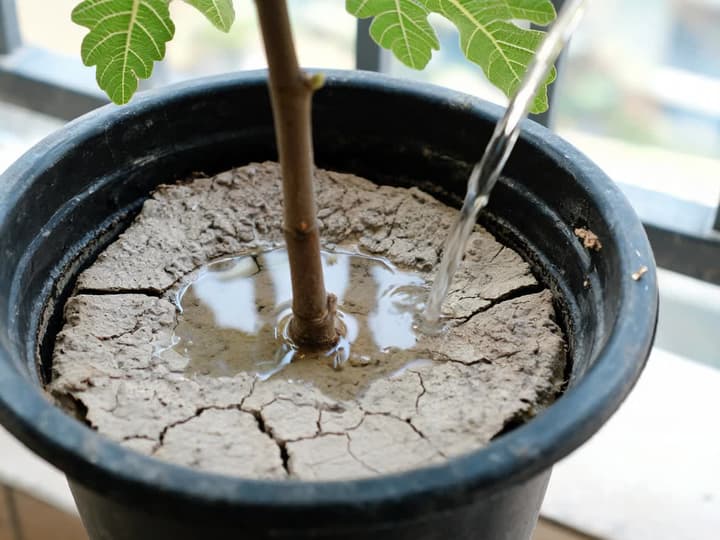
If your fig tree came from someone else and you do not know the age of the soil, treat it as old soil. During the first repotting, remove as much of the old mix as possible without tearing the roots.
The best potting soil for potted fig trees
The best potting mix for a potted fig tree drains irrigation water well and holds its structure for years. A fig tree spends a long time in the same container. Because of that, the potting soil must hold up for at least 2 years without turning into a dense, waterlogged sludge.
The two cited recipes come from different institutions and call for different bases:
Source | Recipe | What it solves |
|---|---|---|
1 part organic compost to 1 part commercial soilless potting mix | Made with ingredients available at any garden center | |
Potting soil with sterilized soil, without peat (decomposed moss) | Soil does not break down like organic matter, and the soil lasts 3 to 4 years |
The RHS publishes the recipe for soil-based potting compost, the English standard called John Innes. It uses 7 parts sterilized soil, 3 parts peat substitute, and 2 parts coarse sand. The mix comes in versions with more or less fertilizer. No. 3, the richest in fertilizer, is the one the RHS recommends for a fruit tree that will stay in a container for years.
Raw garden soil does not replace the sterilized soil in the RHS recipe. The NC State gardening handbook explains that soil from the ground holds too much water, has little air space, and weighs a lot. It can also bring diseases, insects, and weed seeds.
How to mix fig tree potting soil with ingredients available in Brazil
The University of Maryland recipe is the easiest to put together in Brazil. You need two bags:
Potting mix: the bag sold under this name, made of pine bark, coco coir, peat moss, or vermiculite (a flaky mineral that holds water). It contains no soil.
Organic compost: decomposed plant remains, sold in bags. Worm castings are a type of compost, made by earthworms.
Mix 1 bucket of each on a tarp until the color is uniform. Moisten the mix until it feels like a wrung-out sponge, and only then fill the pot.
If you find soil-based potting compost with sterilized loam, use that mix on its own instead of blending the two bags, just as the RHS does. Perlite consists of lightweight volcanic rock granules, and expanded clay consists of baked clay pebbles. None of the consulted sources specify proportions of sand, perlite, or expanded clay for fig trees.
Is regular potting mix good enough for fig trees?
Regular all-purpose potting soil works fine to start. It belongs to the same type as the commercial soilless mix in the Maryland recipe. The NC State handbook explains that container mixes sold today contain no real soil. According to the RHS, organic matter breaks down over time, while mineral soil does not. Because of that, soilless mixes do not last as long as soil-based compost: repot every 2 years without delay.
Soil sold with added fertilizer already contains nutrients. Do not fertilize a fig tree planted in that mix until it puts out new growth. The University of Florida (UF/IFAS) notes that too much fertilizer on a fig tree produces excessive shoots and leaves with very few figs.
What is the ideal pH for fig potting soil, and can it handle lime?
The pH measures soil acidity: below 7 it is acidic, above 7 it is alkaline. The ideal potting soil pH for a fig tree is between 6.0 and 6.5, slightly acidic. This range appears in Incaper (Espírito Santo) and the University of Tennessee. Virginia Tech accepts slightly more acidic, from 5.5 to 6.5.
Sources diverge on alkaline soil (pH above 7). The University of Tennessee accepts a pH up to 8.0. NC State says that the fig tree does not tolerate alkaline soil. This guide follows the 6.0 to 6.5 range, on which all sources agree.
Agricultural limestone is a ground rock powder that raises the pH of acidic soil, and the application rate comes from a soil test. Embrapa recommends applying limestone when the test shows base saturation below 60%, to raise it to 70%. Base saturation measures how much of the soil is occupied by calcium, magnesium, and potassium. Without a soil test, do not add limestone to a potted fig tree.
Pots for fig trees: size, weight, and drainage holes
Fig trees produce more fruit when their roots are confined in a pot. The RHS explains that restricting root space curbs vegetative shoot growth and spurs fruit production. The University of Maryland adds that container growing can increase yields and encourage earlier ripening.
Because of that, move the tree up in pot size gradually:
For the first pot, use about 30 cm wide and 30 cm deep, according to the RHS.
With each repotting, move up to a pot only slightly larger. Virginia Tech calls for 2.5 to 5 cm of space between the roots and the pot wall. According to the university, starting small and repotting gradually reduces the risk of root rot.
For a mature fig tree, use at least 57 liters, according to the University of Maryland. The University of Tennessee recommends 76 liters or more for a mature plant that is already producing.
The container must have drainage holes at the bottom. Large pots become heavy and difficult to move, as the University of Maryland warns. Pick a permanent spot before filling the pot, or place it on a rolling plant caddy. The University of Maryland also uses fabric pots, which air-prune fine roots as they grow through the fabric.
Never let a potted fig tree sit in a saucer of standing water, especially in winter, according to the RHS. Empty the saucer after every watering.
Drainage rock layers at the bottom of the pot: helpful or harmful?
The evidence on a rock layer at the bottom is divided. Washington State University (WSU) says that water only moves from fine soil into rock when the soil becomes waterlogged. For WSU, the layer gets in the way. An experiment published in PLOS ONE in 2025 measured the opposite: almost every layer reduced the water retained in the pot.
In soil-based potting compost, like the RHS recipe, the 2025 experiment found no effect for most layers. The author of the experiment tested only wet, drained pots without growing plants. With or without rocks, the fig tree needs an unobstructed drainage hole and a potting mix that drains, with the pot kept out of standing water in the saucer. In a new pot, fill the bottom with potting mix instead, because the rock layer takes away space from the roots.
When to repot a fig tree and refresh the soil
Change the potting mix and container for the fig tree every 2 years, at the end of winter, moving it to a pot that is only slightly larger. The RHS repots in March, at the end of winter in the United Kingdom. In Brazil, that same timing falls in September. During the same repotting, the RHS trims the roots lightly.
When your fig tree reaches the largest pot size you can handle, repotting shifts to root pruning. The University of Tennessee does this root pruning every 3 to 4 years. Take the plant out of its pot, prune away about one-third of the root ball, and return the tree to the same container with fresh potting soil. Circling roots along the pot walls also require pruning, according to the University of Maryland.
In winter, the fig tree loses its leaves and goes dormant. Repotting takes place at the end of this dormancy, before new growth begins. To protect the plant in the cold, follow the guidelines for fig tree winter care.
Step-by-step potting soil replacement for fig trees
Wear gloves. Fig sap, the milky white latex from cut stems, irritates the skin, according to UF/IFAS. It can also cause sun-induced skin blistering and staining, according to NC State.
Water the fig tree the day before so the root ball slides out intact.
Lay the container on its side and slide the tree out by supporting the base of the trunk.
Use your fingers to tease away old potting soil from the outer edges and bottom of the root ball.
Prune away any circling roots and any roots that look dark and mushy.
Add fresh potting soil to the bottom of the new container. Keep the top of the root ball slightly below the container rim to leave room for watering.
Center the tree and fill the gaps along the sides with potting soil, firming it gently with your fingers.
Water thoroughly until moisture runs out the drainage holes, then empty the saucer.
Leaf drop after repotting
None of the consulted sources measure how many leaves a fig tree drops after being repotted. What the RHS documents is that fig trees shed leaves and fruit whenever the root zone dries out. After repotting, the interior of the old root ball can dry out even while the fresh potting mix around it stays moist.
Stick your finger halfway into the root ball. If it is dry, water slowly until water runs out of the hole. If repotting happened in the fall (from April to June in Brazil), leaves might be dropping due to the season: the fig tree loses its leaves every year before winter. Do not fertilize the plant until it puts out new shoots.
The potting mix will not dry out and the fig tree is losing leaves
Soil that stays soggy for days after watering suffocates the roots and triggers root rot. Embrapa notes that fig trees adapt to many soil types, but wet, waterlogged soils are an exception. The RHS warns that leaf symptoms from root rot only show up after the root system is already severely damaged.
To see if there is still time, take the plant out of the pot and look at the roots. Living roots are firm. With root rot, the fine roots disappear and the thick ones turn brown or black inside, soft and brittle, according to the RHS.
If most of the root system is firm, cut away the rotted parts and replace all the potting mix. Use a pot with 1 to 2 inches (2.5 to 5 cm) of space around the remaining root ball. Do this right away without waiting for the end of winter. If almost the entire root system is soft and dark, none of the consulted sources guarantee recovery. Cut away what is soft and repot in fresh potting mix. The page on fig tree rot shows the other signs and the treatment.
Yellow leaves can also stem from underwatering, pests, or fig rust. If you are not sure of the cause, Bloom (available for iOS) diagnoses the issue from a photo of the leaf with its Premium plan.
Fig trees in the ground: what soil they tolerate
Fig trees planted in the ground tolerate soils ranging from coarse sand to heavy clay, as long as they drain well, according to Texas A&M AgriLife. Embrapa considers deep, well-drained soil that retains moisture to be ideal. Avoid low spots and places where water stands after rain.
Sandy soil presents a distinct hazard: root-knot nematodes, microscopic roundworms that form root galls and weaken the plant. They cause more damage in sandy soils, according to Embrapa and Texas A&M. Embrapa and Incaper advise against planting figs in sandy soil. UF/IFAS notes that organic amendments and mulching help reduce nematode damage.
Sources diverge here: Texas A&M accepts sandy ground, while Embrapa and Incaper avoid it. This guide follows Embrapa and Incaper, because Incaper notes that there are no nematode-resistant fig varieties available. If your yard has sandy soil, mix organic compost into the backfill soil in the planting hole. Then mulch the ground around the trunk with straw or dried leaves. None of the consulted sources specifies an exact compost quantity.
Before planting, Incaper advises avoiding garden beds where you recently grew okra or lettuce, which also host root-knot nematodes. Test your soil. If base saturation is below 60%, apply lime to bring it up to 70%, as recommended by Embrapa.
Frequently asked questions
Do fig trees have shallow or deep roots?
Most fig tree roots grow near the soil surface, but they can run deep. Embrapa describes the root system as fibrous and relatively shallow, spreading extensively near the surface well beyond the trunk. UF/IFAS notes that in well-draining soils, fig roots can penetrate very deep. Shallow or compacted soils keep the root system right near the surface, according to Embrapa.
Can I use garden soil in a potted fig tree?
Do not use raw garden dirt in a fig container. The NC State Extension Gardener Handbook explains that native soil holds too much water, lacks air space, and is too heavy in pots. It can also introduce plant diseases, garden pests, and weed seeds. The soil-based potting compost recommended by the RHS uses sterilized loam blended with coarse sand.
How often should you replace fig tree potting soil?
Change the potting mix of a container fig tree every 2 years, in late winter (in September in Brazil), according to the RHS. The RHS changes it every 2 years even when using soil-based potting compost, which lasts 3 to 4 years. If the plant does not fit into a larger pot, prune the roots every 3 to 4 years.
What size pot does a fig tree need?
Start with a container about 12 inches wide and 12 inches deep, as recommended by the RHS. Step up to a slightly larger pot every 2 years. Mature fig trees need containers of at least 15 gallons according to the University of Maryland, and the University of Tennessee recommends 20 gallons or more.
Next steps
Set aside the two bags of the mix today and mark the end of winter (September, in Brazil) for the next potting soil change. If the container soil has not dried out in weeks, check the roots now. For watering and pruning, follow the guide on how to care for a potted fig tree.
Related articles

How to Care for Hibiscus: Sun, Watering, Fertilizer, and Pruning for Flowers
How to care for hibiscus: 6 hours of direct sun, evenly moist soil without waterlogging, half-strength fertilizer in spring and summer, and pruning in early spring. Find out why the flower lasts one day and why buds drop before opening.

Do Ferns Like Sun or Shade? It Depends on the Type
Ferns prefer bright shade: plenty of light, but no direct sun on their fronds. Tuberous sword fern is the exception that handles sun. Here is the ideal light for each type, where to place pots, and how fronds show too much or too little light.

African Violet Yellow Leaves: Causes and What to Do
Yellow leaves on an African violet usually stem from overwatering, and the first place to check is the center of the plant. Losing one lower leaf at a time is normal. Identify whether age, watering, cold water, sunlight, cold drafts, or fertilizer is the culprit based on the yellowing pattern, and see what to do today.