How to Care for a Fig Tree in a Pot or Yard: Sun, Water, Pruning, and Fruit
How to care for a fig tree in a pot or backyard: 8 hours of sun, large pot with drainage, sparse fertilizer, and late-winter pruning. Learn what to do if leaves drop or scale appears.
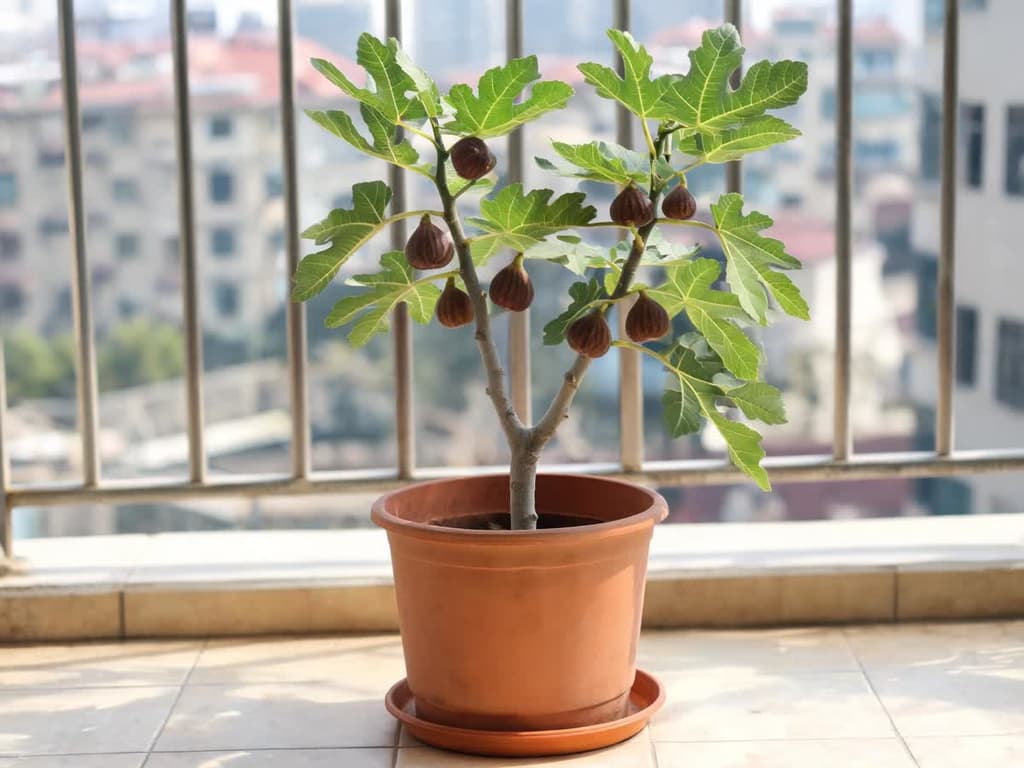
To care for a fig tree in a pot or backyard, provide at least 8 hours of direct sun per day and use a large pot with a drainage hole. Water without letting the soil get waterlogged and fertilize lightly. Prune in late winter, in July or August. This guide covers the edible fig (Ficus carica), the plant that produces figs. In Brazil, almost every fig tree belongs to the Roxo de Valinhos variety, according to EPAMIG.
The figures in this guide come from university extensions in the United States (UF/IFAS is from the University of Florida, and UC IPM is from California) and the Royal Horticultural Society (RHS, from the United Kingdom). Brazilian research comes from EPAMIG, Embrapa, and the Instituto Agronômico (IAC). An extension is a university service that advises plant growers. The foreign sources are from the northern hemisphere, and the months and sun directions have already been converted for Brazil.
Quick summary:
A fig tree needs at least 8 hours of direct sun per day to produce figs, according to Penn State Extension and Clemson Extension.
Figs grow on branches that sprout in the same year, according to NC State. In Brazil, Roxo de Valinhos receives heavy pruning every winter, in July or August, using the IAC technique.
Fertilize only when branches grow less than 12 in (30 cm) per year, according to UF/IFAS. Too much fertilizer produces foliage and little fruit.
The white sap of the fig tree can burn skin exposed to the sun, according to NC State. Wear gloves and long sleeves when pruning.
Fig tree in a pot or in the backyard: care at a glance
Care | What to do | Source |
|---|---|---|
Light | At least 8 hours of direct sunlight per day | Penn State, Clemson |
Pot | Start with 12 in (30 cm) wide and deep; mature plants require 18 in (45 cm) or more | RHS, Penn State |
Soil | Well-draining potting soil, pH 6.0 to 6.5 | Penn State, NC State |
Watering | In hot weather, check the pot daily; never leave standing water in the saucer | RHS |
Fertilizer | Only if branches grew less than 12 in (30 cm) per year; stop in February | UF/IFAS |
Pruning | Late winter (July and August), before new growth begins | Clemson, Bragantia 2010 |
Cold | Dormant plants tolerate 15 to 20 °F (−9 to −7 °C); young plants suffer at 25 to 26 °F (−4 to −3 °C) | UF/IFAS, UC IPM |
Sap | Irritates skin and burns with sun exposure; wear gloves | NC State, UF/IFAS |
Pets | Listed as a hazard for dogs, cats, and horses | NC State |
How to tell if your plant is an edible fig tree
The edible fig (Ficus carica) has large, rough leaves cut into 3 to 5 lobes, like an open hand. The leaf measures 13 to 25 cm long, and the plant loses all its leaves in fall, according to NC State. Two houseplants are also called fig trees and require different care:
Fiddle-leaf fig (*Ficus lyrata*): smooth, glossy, entire leaf without lobes, shaped like a violin. It is an indoor plant and does not lose its leaves in fall.
Weeping fig (*Ficus benjamina*): small, smooth, pointed leaves on slender drooping branches.
If your indoor plant has smooth leaves without lobes, it is not an edible fig tree, and this guide does not apply to it. When in doubt, Bloom (available for iOS) identifies the plant from a photo of the leaf.
How much sun a fig tree needs
The fig tree needs at least 8 hours of direct sun per day during the growing season, according to Penn State Extension and Clemson Extension. NC State considers full sun to be 6 hours or more and says that the fig tree tolerates partial shade. This guide follows the 8 hours from Penn State and Clemson, the two extensions that treat the fig tree as a fruit crop. In Brazil, the sunniest spot is a north-facing wall or window.
In cold climates, the RHS plants the fig tree against a sunny, sheltered wall (in Brazil, north-facing) so the figs ripen. Place the pot or plant the sapling next to a wall or fence that breaks strong winds, according to Clemson and Penn State.
Fig trees indoors
The edible fig tree is a full-sun tree. Indoors, place the pot in the sunniest window, close to the glass. NC State and the RHS treat indoor spaces only as winter shelter in harsh cold climates. The consulted sources do not measure fig production indoors, and the safest option is to keep the plant outside in the sun all year round.
Pot, soil, and repotting
Plant the sapling in a pot about 12 in (30 cm) wide and 12 in (30 cm) deep with a drainage hole at the base, according to the RHS. Penn State recommends a container at least 18 in (45 cm) in diameter for mature fig trees. Step up the size gradually with each repotting.
A snug pot encourages fig production. Confining the roots restricts leafy growth and prompts the plant to channel energy into fruit, according to the RHS. Repot every 2 years, in September, into a container only slightly larger. When the plant becomes too large to move to a bigger pot, remove loose soil and trim back some of the roots. Then return the plant to the same pot with fresh soil.
Use potting mix (container soil) that drains well and has a pH between 6.0 and 6.5 (slightly acidic), according to Penn State. NC State notes that fig trees prefer neutral to acidic soil and do not tolerate alkaline soil. The RHS uses potting mix blended with sterilized loam, which lasts 3 to 4 years without breaking down.
How to water a fig tree
Water a potted fig tree whenever the soil surface begins to dry out, during spring and summer, until water drains through the hole. The RHS advises keeping the soil evenly moist during this period. In hot weather, check the pot daily: confined roots dry out quickly. In dry soil, the fig tree drops leaves and fruit, according to the RHS. Clemson points to yellowing and dropping leaves in summer as a sign of drought.
Excess water also harms the fig tree. Never leave the pot sitting in a saucer of water, especially in winter, according to the RHS. In the yard, Clemson recommends about 1 in (2.5 cm) of water per week (25 liters per square meter), combining rainfall and irrigation. Dry soil causes leaves and fruit to drop, and waterlogged soil rots the roots.
Fertilizer for fig trees: sparingly and only when needed
Fertilize the fig tree only if branches grew less than 12 in (30 cm) in the previous season, according to UF/IFAS. Excessive fertilizer causes the plant to produce abundant foliage and little fruit. Clemson advises stopping fertilizer on plants that are already growing vigorously and cutting back when figs fail to ripen.
Sources differ on the type of fertilizer:
UF/IFAS recommends a balanced fertilizer, NPK 10-10-10 (equal parts nitrogen, phosphorus, and potassium), applied 3 to 5 times during the growing season. Clemson uses 10-10-10 or 8-8-8.
Penn State uses a high-nitrogen fertilizer in spring to encourage potted fig trees to branch out.
The RHS applies a high-potassium liquid fertilizer every 2 weeks to potted fig trees until the figs begin to ripen.
This guide follows the UF/IFAS rule, because the measurement is based directly on shoot growth. A branch that grew less than 12 in (30 cm) requires fertilizer, while vigorous growth does not. When needed, use NPK 10-10-10 3 to 5 times between August and February and stop afterward. Fertilizing or watering excessively in late summer prompts tender new shoots, and frost kills those shoots, according to UF/IFAS.
Pruning fig trees: when and how much to cut
Prune the fig tree in late winter, in July or August, after the coldest weather and before bud break. This is the period that Clemson recommends. In Botucatu (SP), August pruning with supplemental watering produced the highest yield of Roxo de Valinhos figs. The study was published in the journal Bragantia in 2010.
You can prune heavily because figs grow on branches that sprout in the same year, according to NC State. In Brazil, annual heavy pruning of Roxo de Valinhos (called drastic pruning by technicians) was developed by the IAC. It renews all fruiting branches every winter, according to a 2025 EPAMIG technical circular. Along with disease control, this pruning extended the harvest from about 2 months to 6 to 8 months per year.
UF/IFAS warns that heavy winter pruning can eliminate the following crop. For Roxo de Valinhos, this guide follows heavy pruning in July or August, because EPAMIG documents the technique and the Bragantia study recorded good yields with it. Heavy pruning eliminates one crop while preserving the other:
What heavy pruning eliminates: the small figs that overwintered on the tips of old branches. They form the first crop, known as breba.
What heavy pruning preserves: the main crop, which develops on new shoots. On Roxo de Valinhos pruned in August, this harvest runs from December to April, according to the Bragantia study.
To train a young fig tree, Embrapa Clima Temperado cuts the trunk at 20 in (50 cm) in height and allows 3 branches to grow. The following winter, cut each branch back to 8 in (20 cm) from the base. Each branch produces 2 shoots, bringing the plant to 6 branches. After budding, keep only 1 or 2 shoots on each pruned branch.
Fig tree sap burns skin in sunlight
The white sap that oozes from cuts on a fig tree can cause phytophotodermatitis, according to NC State. Phytophotodermatitis is a skin burn that develops when skin contaminated with sap is exposed to sunlight. The sap contains furanocoumarins, substances that make skin sensitive to light. UF/IFAS also cites ficin, an enzyme in the sap that irritates the skin.
Prune and harvest figs wearing gloves and long sleeves. If sap drips onto skin, wash with soap and water before going into the sun. The RHS recommends pruning from the base upward to avoid falling drips of sap. NC State lists the fig tree as toxic to dogs, cats, and horses, without detailing specific symptoms. Do not let animals chew on leaves or branches.
How a fig tree produces fruit
A fig is a fleshy pouch called a syconium, and the tiny flowers of the fig tree remain hidden inside it. The common fig develops fruit without pollination, according to UF/IFAS and NC State. This type of fruit, formed without pollination, is called parthenocarpic.
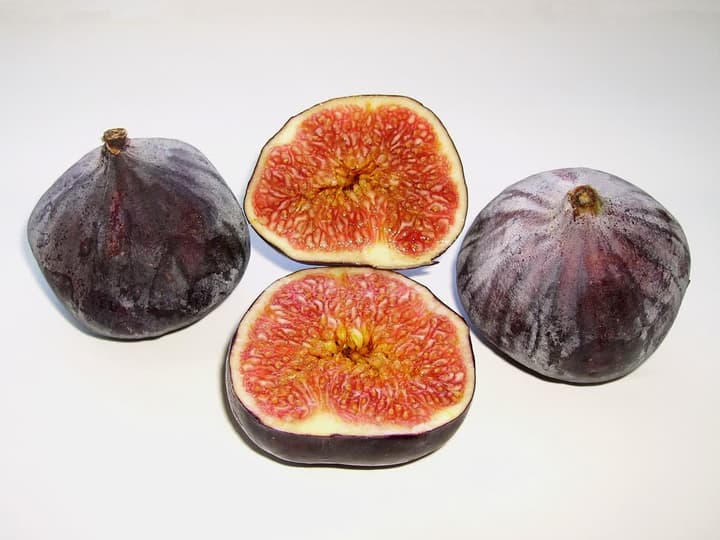
Other types of fig trees rely on a wasp to develop fruit. The fig wasp (Blastophaga psenes) does not exist everywhere, and common fig varieties do not require the wasp, according to UF/IFAS. Figs dropping while still green can result from a plant that is too young or from dry heat, according to Clemson.
A fig tree can yield two crops per year. The first, the breba, comes from small figs formed the previous year. The second, the main crop, appears on new growth about 1 month later in the case of Brown Turkey, according to UF/IFAS. EPAMIG notes that Roxo de Valinhos is the same variety known globally as Brown Turkey.
A young, vigorous plant can take 3 to 4 years to ripen figs, according to Clemson. Small figlets take about 90 days to mature, according to Penn State. A fig is ripe when it turns soft and droops from the stem, according to the RHS.
Cold and frost: what a fig tree can tolerate
A dormant fig tree, leafless after autumn, tolerates 15 to 20 °F (−9 to −7 °C) without severe damage, according to UF/IFAS. Young fig trees suffer frost damage at 25 to 26 °F (−4 to −3 °C), according to UC IPM. Buds, which are still closed shoots, suffer before the wood does.
A fig tree needs minimal chill hours to break dormancy: 100 hours or fewer below 45 °F (7 °C) during winter are sufficient, according to UF/IFAS. EPAMIG records Roxo de Valinhos producing from Rio Grande do Sul to the Northeast. A dormant fig tree tolerates more cold than a young potted avocado tree, which sustains damage between 25 and 30 °F (−4 and −1 °C), also according to UF/IFAS. Young plants are the most vulnerable, with damage starting at 25 to 26 °F (−4 to −3 °C).
Dropping, yellow, or spotted leaves: what is normal
Start with the time of year. The fig tree is deciduous: a plant that drops all its leaves in autumn and sprouts again in spring. In Brazil, leaf drop begins in April and lasts until the beginning of winter, in June.
What you see | When | Probable cause | What to do |
|---|---|---|---|
Leaves turn yellow and all drop | Autumn and early winter (April to June) | Normal pre-winter drop (NC State) | Nothing; avoid leaving standing water in the saucer |
Leaves turn yellow and drop with dry soil | Spring and summer | Lack of water (RHS, Clemson) | Water until moisture drains through the hole |
Wilting leaves with wet soil | Any time | Waterlogging (poorly draining soil, according to RHS) | Empty the saucer and wait for the soil to dry |
Golden-yellow dust and reddish-brown leaf undersides | Late summer (February and March) | Rust, a fungal disease (Clemson) | Collect and discard fallen leaves, keeping them out of compost (Penn State) |
Rust is the main fig tree disease in Brazil, according to Embrapa Clima Temperado. The fungus (Cerotelium fici) can drop all leaves prematurely, according to UF/IFAS. Clemson notes that, in the yard, spraying is rarely worth it unless rust returns every year.
White bugs and sticky spots: scale and mealybugs on fig trees
White bugs sitting motionless on branches and sticky spots on leaves indicate mealybugs. This pest sucks sap and excretes a sweet, sticky liquid called honeydew, according to UC IPM. Sooty mold, a black fungus, grows on honeydew. NC State also lists aphids, other scale insects, and spider mites among fig tree pests.
If leaves turn brown and dry after multiple sprays, the product itself may have scorched the foliage. UC IPM instructs testing insecticidal soap, neem oil, and horticultural oil on a single leaf or small shoot 1 to 2 days before treating the entire plant. On potted plants, wipe each insect with a cotton swab dipped in isopropyl alcohol diluted to 70% or less, according to UC IPM. Test the alcohol on a leaf 1 to 2 days prior.
In the yard, Embrapa Clima Temperado points to twig borers and beetle borers, insects that bore into branches, alongside scale insects. Embrapa directs growers to prune and destroy infested shoots as soon as the first signs appear.
How to propagate a fig tree
A fig tree propagates from cuttings (branch sections that grow roots), taken from a leafless shoot in winter, according to UF/IFAS. Use a 6 in (15 cm) piece that is less than 1 in (2.5 cm) thick. Bury at least half of it in moist perlite (lightweight rock granules that loosen soil).
The base forms callus, the tissue from which roots emerge, in 2 to 3 weeks at 50 to 60 °F (10 to 16 °C), according to UF/IFAS. The RHS uses cuttings about 8 in (20 cm) long; this guide follows the 6 in (15 cm) guideline from UF/IFAS. The cutting roots slowly over several months, according to the RHS.
Frequently asked questions
How often should you water a potted fig tree?
There is no set schedule. In hot weather, check the pot daily and water when the surface begins to dry out, as confined roots dry quickly, according to the RHS. In winter, with the plant leafless, no source specifies a watering frequency. Water less and empty the saucer after each watering: the RHS instructs never to leave the pot sitting in water.
How many years does a fig tree take to bear fruit?
A young, vigorous plant can take 3 to 4 years to ripen figs, according to Clemson Extension. Before that, small figlets frequently drop while green. Clemson recommends withholding fertilizer from plants that are growing overly vigorously.
Can you prune a fig tree in summer?
Yes, if it is light pruning. The RHS pinches back the tips of new shoots in early summer to promote branching and help the plant hold fruit. Heavy pruning is reserved for late winter, in July or August. UF/IFAS prefers pruning right after harvest, in late summer. This guide follows July or August, the timing recommended by Clemson and tested on Roxo de Valinhos in the Bragantia study.
Do figs stay on the tree over winter?
Only the small figlets. Pea-sized ones at the shoot tips survive the winter and form the first crop, the breba, according to the RHS. The RHS recommends removing larger figs in late summer because, in the United Kingdom, they do not ripen in time. In Brazil, Roxo de Valinhos pruned in August yields through April. During heavy pruning, the winter figlets are removed along with the old branches.
What are the downsides of growing a fig tree?
The sap irritates skin and burns under sunlight, according to NC State. Roots spread beyond the canopy, according to UF/IFAS. Fig trees send up basal suckers that form thickets, and dropped fruit litters the ground, according to NC State.
Conclusion
A well-tended fig tree needs at least 8 hours of direct sunlight per day, a container with drainage holes that avoids waterlogging, light fertilization, and one heavy pruning per year in late winter. Leaves dropping in autumn is normal; leaves dropping in summer indicates drought or rust. If your plant has unlobed leaves, confirm the species before following this guide.
Related articles
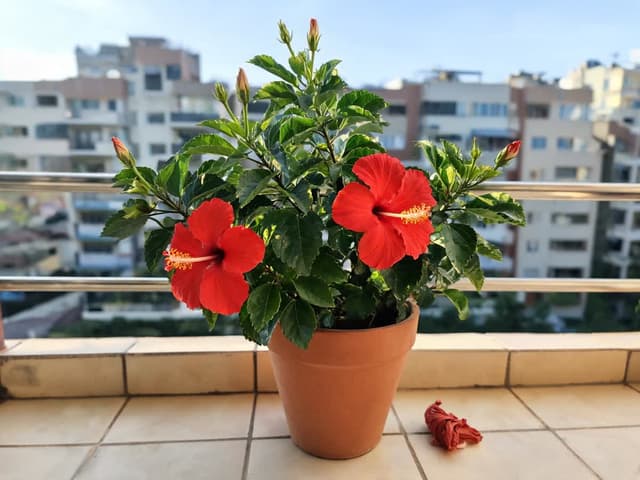
How to Care for Hibiscus: Sun, Watering, Fertilizer, and Pruning for Flowers
How to care for hibiscus: 6 hours of direct sun, evenly moist soil without waterlogging, half-strength fertilizer in spring and summer, and pruning in early spring. Find out why the flower lasts one day and why buds drop before opening.
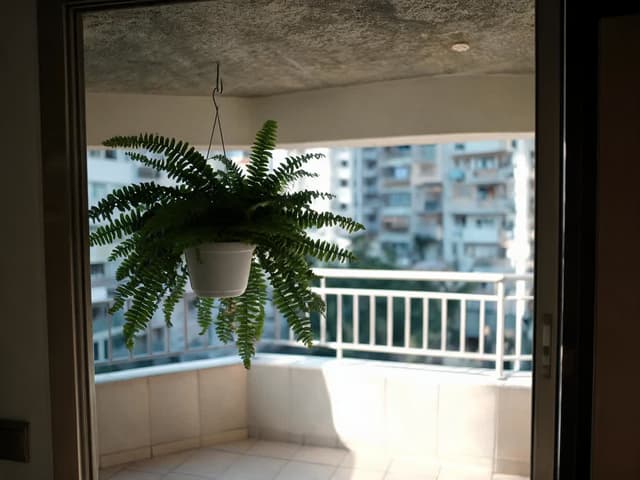
Do Ferns Like Sun or Shade? It Depends on the Type
Ferns prefer bright shade: plenty of light, but no direct sun on their fronds. Tuberous sword fern is the exception that handles sun. Here is the ideal light for each type, where to place pots, and how fronds show too much or too little light.
African Violet Yellow Leaves: Causes and What to Do
Yellow leaves on an African violet usually stem from overwatering, and the first place to check is the center of the plant. Losing one lower leaf at a time is normal. Identify whether age, watering, cold water, sunlight, cold drafts, or fertilizer is the culprit based on the yellowing pattern, and see what to do today.