How Often to Water a Rubber Plant: The Test That Decides Before Leaves Drop
Water your rubber plant when the top 2 inches of soil are dry, until water drains out. In practice, that means every 1 to 2 weeks in warm weather. Learn the test, why thick leaves show thirst late, and how to tell overwatering from underwatering.
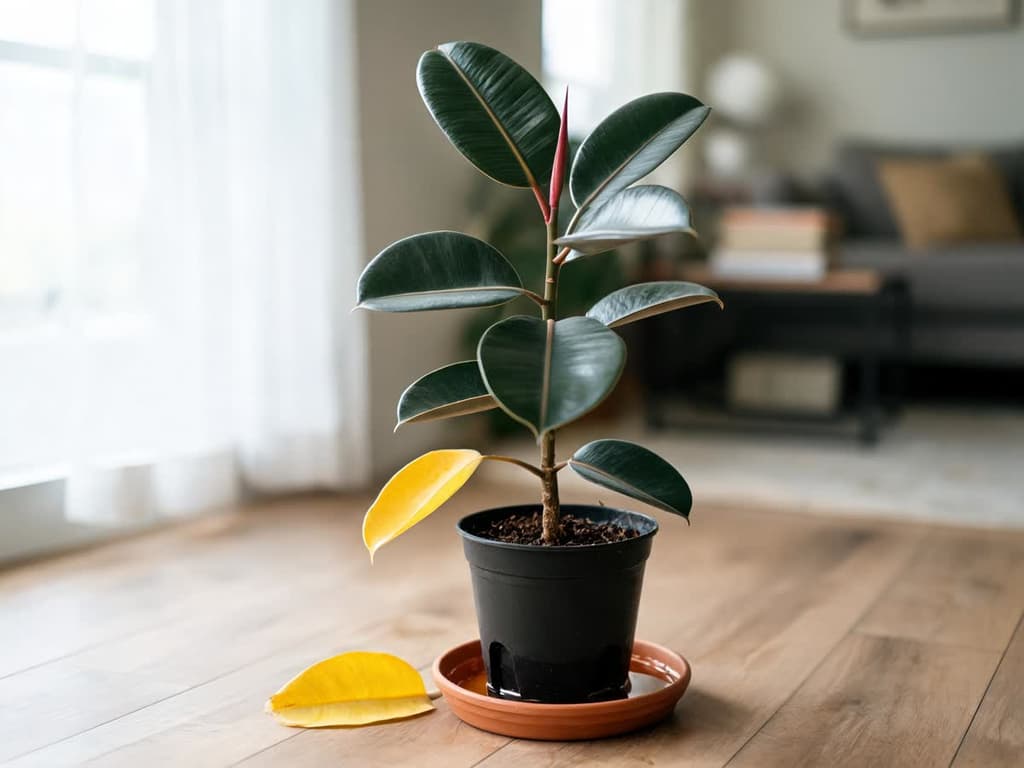
How often to water a rubber plant: when the top 2 inches of soil are dry, and not before. Water until it runs out the drainage hole and discard the runoff in the saucer. In warm weather, that usually means watering every 1 to 2 weeks. Check the soil every 3 or 4 days so you do not miss the right moment.
The potted rubber plant (Ficus elastica) is the tall plant with thick, glossy, dark green leaves and a red sheath protecting each new leaf. It is related to fig trees and is not the Pará rubber tree from the Amazon, the tree tapped for commercial rubber. The two share a name because both produce latex, the milky white sap that oozes when a leaf or stem breaks.
Quick summary:
The test decides the day. Stick your finger 2 inches into the soil, up to the second knuckle. Dry: water. Moist: wait and check again in 3 or 4 days.
Every watering soaks the entire root ball. Water slowly until it drains through the hole, and empty the saucer 15 minutes later.
Do not wait for leaves to show thirst. Rubber plant leaves are thick and take a long time to wilt, and wilting leaves can also mean root rot.
Yellow lower leaves dropping from moist soil means overwatering. Adding more water makes it worse.
Soil takes longer to dry in winter. The test stays the same, and the interval between waterings stretches on its own.
How often to water a rubber plant
Water your rubber plant when the top 2 inches of soil are dry, and only then. The number of days between waterings is simply the result of this test. It changes with the room's light levels, the pot size, and the season.
None of the six technical sources consulted for this guide publishes an interval in days. The extension at Clemson University directs you to water thoroughly and let the soil dry slightly between waterings. NC State, the Missouri Botanical Garden, and the Royal Horticultural Society (RHS) also provide only the criterion. The University of Maryland Extension goes further and advises against watering houseplants on a schedule.
The day counts that circulate come from shops and blogs. The British shop Jungle Houseplants mentions watering a rubber plant every 1 to 2 weeks. The gardener behind the blog Joyus Garden waters hers every 7 to 10 days in warm weather and every 14 to 21 in winter. Her plant is 11 feet tall, lives in a 16-inch pot, and sits in the Sonoran Desert in the United States, with sun almost every day.
Use those numbers as a reminder to check the soil, not as watering days. You can find your rubber plant's exact rhythm in a single watering cycle. Water until it drains, note the date, and test the soil every 3 or 4 days. The number of days it takes for the top 2 inches to dry out is the interval for that specific plant, in that spot, during that season.
The test that decides: 2 inches of dry soil
Insert your index finger into the soil near the rim of the pot, down to your second knuckle. That is roughly 2 inches. If your fingertip comes out clean and dry, water. If it feels moist or has soil clinging to it, wait.
A wooden skewer performs the same test without dirtying your hands and reaches deeper. Push the skewer into the soil near the edge and pull it out. Dark, damp soil sticking to the tip means it is not time to water yet.
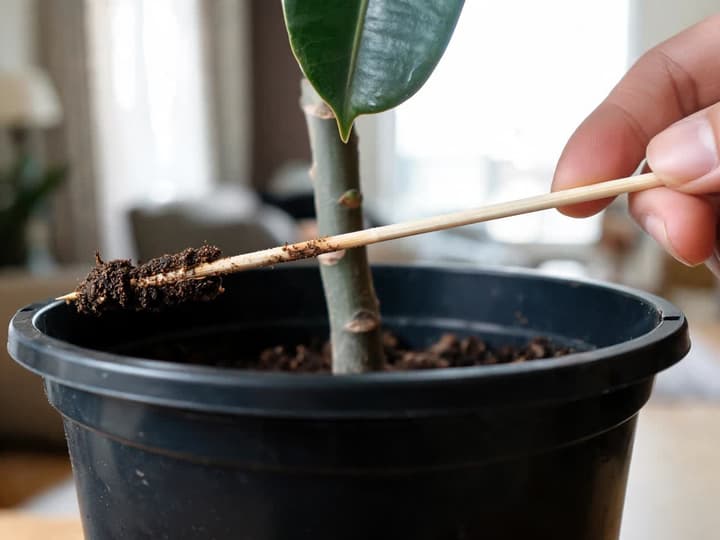
Pot size changes the depth of the test. The fertilizer brand Espoma recommends scaling the depth to the container size. For a 4-inch pot, drying out 0.5 inches down is enough. For a 15-inch pot, the top quarter of the soil should dry out. In practice: pots up to 6 inches require testing to the first knuckle (1 inch). Pots between 6 and 12 inches require 2 inches. Containers larger than that require a long skewer pushed down through the top quarter of the soil volume.
Sources differ on the exact depth for standard pots. Clemson mentions soil that is "slightly dry to the touch," while the shop Patch Plants advises inserting your finger 3 inches deep. The University of Maryland recommends 2 inches for most houseplants. NC State classifies the rubber plant as tolerant of dry soil and notes that overwatering causes leaf drop. Nobody has measured this threshold precisely for rubber plants. This guide follows the 2-inch rule from the University of Maryland, which is the safest approach against overwatering.
Lifting the pot confirms the test. The University of Maryland points out that a pot with dry soil weighs significantly less than one with wet soil. Lift the pot right after watering and again on the day you test the soil. After two or three waterings, your hands will learn the difference. For a rubber plant too large to lift, tilt the container to one side: you will feel the weight change just the same.
Rubber plant leaves give late warnings
Do not wait for rubber plant leaves to droop before watering. NC State describes the foliage as rigidly leathery, meaning thick and tough like leather. Missouri Botanical Garden and Clemson also highlight its thick leaves. Foliage with this structure holds its shape much longer than thin leaves.
The peace lily is the exact opposite. It wilts completely when the soil dries out and perks back up within hours of watering. With a rubber plant, that quick visual cue never happens: by the time the leaves soften and droop, the soil is long past due for water. None of the sources for this guide measured how many days of delay that represents.
Wilting leaves do not always mean thirst either. In its indoor watering guide, Clemson notes that any root damage robs the plant of its ability to take up water. Roots rotted from overwatering leave the plant wilting in wet soil. That is why the routine never changes: check the soil with your finger first, read the leaves second.
How to water a rubber plant
Pour water slowly over the soil around the stem until it begins running out the drainage hole at the bottom. Clemson calls for thorough watering. Clemson's watering guide explains why: draining water flushes out accumulated fertilizer salts. It also ensures moisture reaches the bottom two-thirds of the pot, where most roots live.
Wait 15 minutes and empty the saucer. Clemson advises emptying the saucer under a rubber plant after every watering. Standing water in the saucer keeps the bottom of the root ball soggy for days, which is where root rot starts.
A pot without a drainage hole will not work for a rubber plant. Many arrive from the nursery in a plastic nursery pot set inside a cachepot, the decorative outer container without drainage holes. Remove the plastic pot to water the plant, and only return it to the cachepot once it stops dripping.
Target the water at the soil and keep the leaves dry. UF/IFAS at the University of Florida studied a bacterial leaf spot (Xanthomonas) on Ficus elastica. According to publication PP305, the bacteria spread with splashing water. Misting the leaves also does not count as watering: the water the roots use is the water that enters through the soil. To dust the leaves, NC State recommends a soft, damp cloth.
Dropping leaves: is your rubber plant overwatered or thirsty?
Check the soil 2 inches down before looking at the leaves. Yellow lower leaves dropping while the soil is moist point to overwatering. Soft, droopy, dull leaves with dry soil and a light pot point to thirst. Both problems start on the bottom leaves, which is why people confuse them.
Three extension services link dropping leaves to overwatering. Clemson links yellow leaves to soil that stays too wet. NC State says overwatering causes rubber plants to drop leaves. The University of Maryland sums up the general rule: an overwatered plant yellows or drops leaves. The Jungle Houseplants shop simplifies it as "drooping leaves mean thirst, yellow leaves mean excess," and the soil breaks the tie between the two.
What you see | Soil at 2 inches | Probable cause | What to do |
|---|---|---|---|
Yellow lower leaves dropping one after another | Moist | Overwatering | Stop watering until the top 2 inches dry out |
Soft, drooping, dull leaves; lightweight pot | Dry | Lack of water | Water slowly until it drains from the bottom hole |
An occasional yellow lower leaf with new growth emerging on top | Dry at the expected time | Normal aging | Nothing. Snip the leaf off once it turns fully yellow |
Multiple leaves dropping during the first few weeks at home | Any | Light change from nursery to indoors | Place the plant near a bright window and keep your watering routine steady |
Leaves dropping after a cold night or near an air conditioner | Any | Cold temperatures or drafts | Move it away from open windows and air conditioning vents |
Three of these causes have nothing to do with watering. NC State notes that it is normal for some lower leaves to yellow and drop. UF/IFAS, in the Ficus production guide RH-91-16, explains leaf drop on newly purchased plants. A plant grown in full nursery sun loses many leaves when it moves to low indoor light. Clemson advises avoiding temperatures below 55 °F (12.8 °C), sudden temperature drops, and cold drafts.
Adding more water when leaves drop only helps if the soil is actually dry. In every other scenario, extra water keeps the soil soggy longer and adds a second problem on top of the first. The yellow leaves guide covers how to read discoloration patterns when checking the soil does not settle the question.
Already overwatered your rubber plant: what to do now
Stop watering and wait for the top 2 inches of soil to dry out, however long that takes. Empty the saucer and take the plant out of its cachepot. Move the pot to a bright spot without direct midday sun so the soil dries faster.
Gently squeeze the stem just above the soil line. A firm stem means the root system is likely still functioning, and the plant will recover with proper watering going forward. Leaves that have already turned yellow will not turn green again. Look for a new leaf emerging from the red sheath at the top as the true sign of recovery.
A soft, dark stem base, or a plant wilting in wet soil, means you need to inspect the roots. Take the plant out of its container. The University of Maryland describes rotted roots as brown or black, mushy, with the outer sheath sliding off easily in your hand. Trim away rotting roots with clean shears and repot into fresh soil in a container with drainage holes.
If rot has taken over the entire root system, salvage the top of the plant. The University of Maryland instructs taking cuttings only from healthy tissue, and Clemson lists stem cuttings among the propagation methods for rubber plants. Cut off a firm section from the top and root it. The milky sap oozing from the cut can irritate skin, according to Clemson. Wear gloves when cutting the stem.
How long a rubber plant can go without water
None of the technical sources in this guide measured the exact number of days a rubber plant can survive without water. NC State classifies the species as tolerant of dry soil, and its thick leaves retain their shape much longer than thin leaves. A trip lasting 1 or 2 weeks easily falls within the warm-weather timeframe suggested by the shop Jungle Houseplants, provided the plant starts with completely saturated soil.
Check the soil before leaving on a trip. If the top 2 inches are dry, water until it drains and empty the saucer. Move the plant away from direct sun, which dries soil out faster. Never leave standing water in the saucer for the plant to drink while you are gone: that is the quickest way to rot the roots.
When you return, inspect the soil and the stem. Dry soil alongside limp foliage indicates thirst: water slowly until it drains freely. Extremely dry soil can pull away from the edges, letting water rush down the sides of the pot without wetting the center. If water pours out the drainage hole on the first cup, water it again thirty minutes later.
Rubber plant soil takes longer to dry in winter
In winter (in Brazil, from June to August), the rubber plant receives less light and grows less. The potting soil takes longer to dry. NC State and the Missouri Botanical Garden advise reducing watering from fall through late winter. The RHS recommends moderate watering during the growing season and little water in winter.
The test does not change: water when the top 2 inches dry out. The amount of water per session stays the same as well, wetting the soil until it runs out the bottom. What changes is the number of days between waterings, which increases naturally without you having to calculate anything.
In Brazil, spring begins in late September. From then on, the plant starts putting out new leaves again and the soil dries faster. Pay closer attention when doing the test during the first weeks of warm weather. Keeping the winter watering pace during summer leaves the plant thirsty, and keeping the summer pace during winter rots the roots.
Frequently asked questions
Does bottom watering work for a rubber plant?
It works to rescue soil that is too dry and does not absorb water from the top. Place the pot in a basin of water until the surface feels moist, then let it drain. For your regular routine, water from the top. The Colorado State University Extension explains that bottom watering builds up fertilizer salts in the soil.
Can I water my rubber plant with tap water?
Yes. None of the technical sources consulted for this guide advise against tap water for rubber plants. Over time, salts from tap water and fertilizers can burn leaf margins, as noted by the gardener behind the Joyus Garden blog. The University of Maryland recommends flushing the soil with double the pot's volume in water, letting it all drain out.
Should I mist rubber plant leaves?
No. Misting foliage does not hydrate the plant, because the water roots need is taken up through the soil. UF/IFAS notes that the bacteria causing leaf spot on Ficus elastica spread through splashing water. To clear dust and keep leaves shiny, wipe them down with a damp cloth.
How can I tell if my plant is really a rubber plant?
A potted rubber plant features thick, glossy, oval leaves between 8 and 12 inches long, along with a red sheath enclosing the emerging leaf at the top of the stem. If you received or inherited the plant without a label, the Bloom app identifies species from a photo and displays tailored care guidelines.
What to do with your rubber plant today
Insert your finger 2 inches into the soil. Dry: water until it runs out the hole. Moist: wait.
Empty the saucer 15 minutes after watering.
If lower leaves are dropping, check the soil moisture before reaching for the watering can.
Gently squeeze the stem near the soil line. Firm means it is healthy; soft means you should inspect the roots.
Write down the day you watered and retest the soil in 3 or 4 days.
The free tier of Bloom includes a watering reminder. For a rubber plant, use the schedule as a prompt to perform the 2-inch test, and let the soil determine whether it is time to water.
Bloom is currently available only for iPhone.
Sources
Clemson Cooperative Extension, Home & Garden Information Center, Rubber Plant: water thoroughly and let the soil dry slightly, empty the saucer, yellow leaves from overly wet soil, leaf drop from low light, dry air, and cold drafts, avoid below 55 °F (12.8 °C), sap irritates skin, stem cuttings.
Clemson Cooperative Extension, Indoor Plants: Watering (HGIC 1459; Shaughnessy and Pertuit, revised in 2024): water until it drains to flush salts and wet the lower two-thirds of the pot; wilting also occurs from root damage.
University of Maryland Extension, Watering Indoor Plants: do not water on a schedule, finger test at 5 cm (2 inches), pot weight, overwatered plants yellow or drop leaves, flush salts with twice the volume of the pot.
University of Maryland Extension, Root Rots of Indoor Plants: rotten roots brown or black, soft, with the outer layer sloughing off; cuttings only from healthy tissue.
NC State Extension, Gardener Plant Toolbox, Ficus elastica: stiffly leathery leaf, tolerates dry soil, reduce watering from fall to late winter, excess water and cold cause leaf drop, yellowing and dropping bottom leaves is normal, damp cloth to clean the leaf.
Missouri Botanical Garden, Plant Finder, Ficus elastica: thick, leathery leaf, regular watering during the growing season, reduce from fall to late winter, avoid excess.
Royal Horticultural Society, Ficus elastica: water moderately during growth and sparingly in winter.
UF/IFAS Extension, Bacterial Blight of Ficus Caused by Xanthomonas (PP305): the bacterium spreads by water splashing; water without wetting the foliage.
UF/IFAS, CFREC Apopka, Ficus Production Guide (RH-91-16; Henley, Chase, and Osborne, archived copy): plants not acclimatized to shade drop a lot of leaves when moved indoors.
Colorado State University Extension, PlantTalk, Houseplants: Watering: bottom watering accumulates salt.
Espoma, Rubber Plant Care and FAQs: test depth proportional to the pot.
Joyus Garden, Rubber Plant Care: 7 to 10 days in warm weather and 14 to 21 in winter, in the author's home; salt in the water burns the edges.
Jungle Houseplants, How Often Should I Water My Rubber Plant?: every 1 to 2 weeks.
Related articles
How to Care for a Maidenhair Fern: Light, Water, and Revival Tips
Learn how to care for a maidenhair fern indoors: bright indirect light, consistently moist soil, high humidity, and how to revive it if it dries out completely.
How to Propagate Spider Plants: Root the Pup Before Cutting
The safest spider plant cutting comes from a pup still attached to the mother plant: rest the plantlet on soil in a small pot, wait for roots to establish, and only then cut the stolon. Learn when the pup is ready, whether rooting in water is worth it, how to divide the clump, and why plants fail to produce babies.
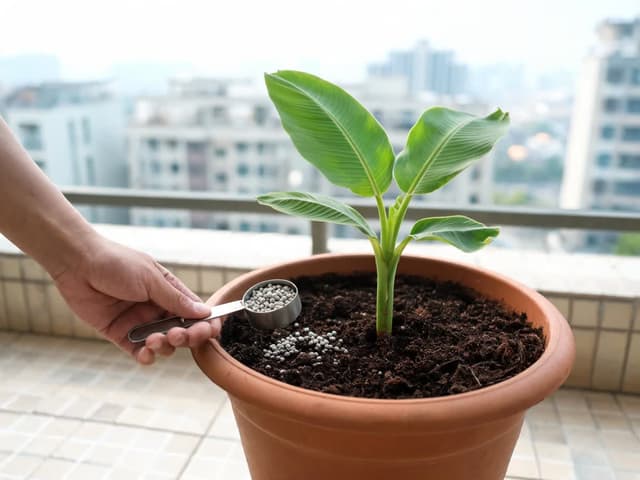
Banana plant fertilizer: fertilizing potted and backyard plants
Banana plant fertilizer needs more potassium than nitrogen, in a 3-1-6 ratio. For a potted plant on a balcony, use the label dose in spring and summer. In the backyard, fertilize every 2 months, adjusting the amount by mat age. Learn the formula, timing in Brazil, and signs of deficiency or excess.